


1


Updated October 2026 · ranked by our popularity score (searches, visits and orders for each work) · 81 works by Gustaf Lundberg in our catalogue
In short
To the gallery's eye, Gustaf Lundberg's most famous painting is Sofia Albertina (1753-1829), prinsessa av Sverige, som vestal (1750), whose original hangs in the Nationalmuseum, Stockholm. Nils Palmstierna, 1696-1766, friherre (1750) and Karl XIII (1748-1818), konung av Sverige och Norge (1753) complete the trio every eye recognises. Of the 81 works by Gustaf Lundberg in our catalog, the gallery presents the 79 most famous below, each original with its year, its museum and what makes it unique.


 The Philologist and the Counsellor of Secretary Johan Ihre1780 · Finnish National Gallery
12
 Gustav IV Adolf (1778-1837), king of Sweden, married to Fredrika Dorotea Vilhelmina of Baden1779 · National Portrait Gallery of Sweden
13
 Baron H.I. von Düben1780 · Nationalmuseum
14
 Gustav III (1746-1792), King of SwedenNationalmuseum
15
 Karl Gustav (1782-1783), prince of Sweden, duke of SmålandNationalmuseum
16
 Johan Henning Gyllenborg (1756-1830), count, judge, accountant, married to baroness Albertina von AxelsonNationalmuseum
17
 Gustav IV Adolf (1778-1837), konung av SverigeNationalmuseum
18
 Sofia Albertina (1753-1829), prinsessa av SverigeNationalmuseum
19
 Sofia Albertina (1753-1829), prinsessa av Sverige, abbedissa i QuedlinburgNationalmuseum
20
 Hedvig Elisabet Sack (1708-1760), friherrinna, gift med greve Nils BielkeNationalmuseum
21
 Fredrica Falkenberg af Trystorp, ca 1724-1806, friherrinna, hovfröken, gift med greve Ulrik Gustaf De la GardieNationalmuseum
22
 Abraham Henrik Ulfvenklou (1726-1784), colonelNationalmuseum
23
 Fredrik Gyllenborg, 1698-1759, greveNationalmuseum
24
 Mrs Petronella Schützer, née PsilanderhjelmNationalmuseum
25
 Frau Werner, född Keilhorn, kammarfru hos Drottning Lovisa UlrikaNationalmuseum
26
 King Gustav III of SwedenNationalmuseum
27
 Unknown woman, member of the Gyllenborg familyNationalmuseum
28
 Fredrik Adolf (1750-1803), hertig av ÖstergötlandNationalmuseum
29
 Countess Poaton (?)Finnish National Gallery
30
 Juliana Elisabet KönigFinnish National Gallery
31
 Mary Ulrika DahlFinnish National Gallery
32
 Baron Johan Wilhelm SprengportenFinnish National Gallery
33
 The Poet Gustaf Fredrik GyllenborgFinnish National Gallery
34
 Baroness Maria Sofia Juliana von BlixenFinnish National Gallery
35
 A young aristocratFinnish National Gallery
36
 Countess Ulrika Charlotta SprengtportenFinnish National Gallery
37
 Volter Reinhold Stackelberg (1705-1801), count, generalNational Portrait Gallery of Sweden
38
 Marie-Anne, princess of Bourbon-Condé 1697-1741Nationalmuseum
39
 Pontus Fredrik De la Gardie, 1726-1791, greve, generallöjtnant, en av Rikets herrar, kammarherreNational Portrait Gallery of Sweden
40
 Portrait of Gustaf Fredrik GyllenborgNational Portrait Gallery of Sweden
41
 Adolf Fredrik, kung av SverigeNationalmuseum
42
 Gabriel Kristian Koschell, Esq. as a ChildNationalmuseum
43
 Baroness Ulrika Maria Sparre, née TessinNationalmuseum
44
 Portrait of a Young LadyNationalmuseum
45
 Anna Johanna GrillNationalmuseum
46
 Company director and ironmaster Claes GrillNationalmuseum
47
 Portrait of Middle-Aged GentlemanNationalmuseum
48
 Engraved Portrait Of Charles De Geer
49
 Portrait Of Baron Adolf Ludvig Stierneld
50
 Greve Claes Julius EkebladNational Portrait Gallery of Sweden
51
 Portrait of Adolf Frederick, King of SwedenHermitage Museum
52
 Portrait Of Henning Adolf GyllenborgNational Portrait Gallery of Sweden
53
 Carl Gustaf Piper
54
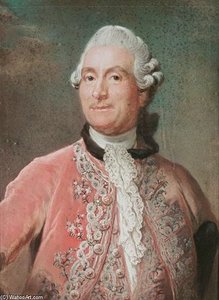 Monsieur De Vergennes
55
 Portrait Of Charles-joseph Natoire
56
 Portrait Of Ulla Von HöpkenFinnish National Gallery
57
 Hovkansler Nils Barck
58
 Portrait Of Count Carl Gustaf Tessin
59
 James Waldegrave
60
 Portrait Of Charles De Geer
61
 Portrait Of Eva Helena Ribbing
62
 Portrait Of Herman Petersen
63
 Louis Xv
64
 Portrait Of Johan Abraham Grill
65
 Portrait Of Catharina Charlotta Ribbing
66
 Mattias Von Hermansson
67
 Portrait Of Francois BoucherNationalmuseum
68
 Princess Sofia Albertina Of Sweden
69
 Portrait Of Adolf Frederick Of Sweden
70
 Portrait Of Marie Anne De Bourbon Conde
71
 Portrait Of Carl Gustaf Tessin
72
 Portrait Of Carl Gustaf Tessin
73
 Greve Mattias Von Hermansson
74
 Baroness Ulrica CedercreutzFinnish National Gallery
75
 Baron Charles De Geer
76
 Portrait Of Juliana Dorotea Henck
77
 Bildnis Des Schwedischen Feldmarschals Frederik Graf Von Fersen
78
 Portrait Of Anders Rudolf Du Rietz Af Hedensberg
79
 Portrait Of Kristina Sofia Sack
The four subjects that come back most often in these originals, each with its finest example.
The 4 museums that hold the most of the paintings on this page.
| Museum | City | Works by Gustaf Lundberg | Paintings from this list |
|---|---|---|---|
 Nationalmuseum |
Stockholm | 33 | Sofia Albertina (1753-1829), prinsessa av Sverige, som vestal, Nils Palmstierna, 1696-1766, friherre, Karl XIII (1748-1818), konung av Sverige och Norge |
 Finnish National Gallery |
Helsinki | 11 | The Philologist and the Counsellor of Secretary Johan Ihre, Countess Poaton (?), Juliana Elisabet König |
 National Portrait Gallery of Sweden |
Strängnäs | 8 | Fredrik Axel von Fersen (1719–1754), Count and Field Marshal, Fredrik Ulrik Insenstierna (1723-1768), governor, married to Sofia Charlotta Kjerrmansköld, Gustav IV Adolf (1778-1837), king of Sweden, married to Fredrika Dorotea Vilhelmina of Baden |
 Hermitage Museum |
Saint Petersburg | 1 | Portrait of Adolf Frederick, King of Sweden |
Pick a decade to see the original that defines it.


Sofia Albertina (1753-1829), prinsessa av Sverige, som vestal (1750), Nationalmuseum, Stockholm. Nils Palmstierna, 1696-1766, friherre (1750) and Karl XIII (1748-1818), konung av Sverige och Norge (1753) come next.
55 years old: Sofia Albertina (1753-1829), prinsessa av Sverige, som vestal dates from 1750, and Gustaf Lundberg was born in 1695.
Sofia Albertina (1753-1829), prinsessa av Sverige, som vestal, Nils Palmstierna, 1696-1766, friherre, Karl XIII (1748-1818), konung av Sverige och Norge, Portrait of a Lady, Fredrik Axel von Fersen (1719–1754), Count and Field Marshal, Prélude de la Gloire, Countess Lovisa Ulrika Tessin, née Sparre, Hedvig Ulrika Taube, Countess von Hessenstein, Sofia Charlotta Kjerrmansköld (1731-1782), married to governor Fredrik Ulrik Insenstierna and Fredrik Ulrik Insenstierna (1723-1768), governor, married to Sofia Charlotta Kjerrmansköld. The ranking above gives each one's year and museum.
Our catalog holds 81 works by Gustaf Lundberg, dated from 1750 to 1780.
Mostly in Nationalmuseum (Stockholm), Finnish National Gallery (Helsinki) and National Portrait Gallery of Sweden (Strängnäs). The museum table above lists them all.
In 1750s: 8 of the 79 works on this page were made then, Sofia Albertina (1753-1829), prinsessa av Sverige, som vestal among them.
On this page, the earliest is Sofia Albertina (1753-1829), prinsessa av Sverige, som vestal (1750) and the latest The Philologist and the Counsellor of Secretary Johan Ihre (1780).
Portraits (16), Portrait (6) and 18th century (5), across the 79 works on this page.
Rococo, judging by the originals on this page.
Sofia Albertina (1753-1829), prinsessa av Sverige, som vestal, Nils Palmstierna, 1696-1766, friherre and Karl XIII (1748-1818), konung av Sverige och Norge: the Nationalmuseum, Stockholm holds 33 of the works on this page.
In the grand tapestry of eighteenth-century European art, few threads shimmer with as much delicate brilliance as the works of Gustaf Lundberg. A master of the pastel medium, Lundberg did not merely paint faces; he captured the very essence of an era defined by grace, light, and aristocratic splendor. Born in Stockholm in 1695 to a family touched by the culinary and artistic arts, his early years were shadowed by the profound tragedy of orphanhood. Yet, from this loss emerged a resilient creative spirit, nurtured under the watchful eye of his grandfather, the goldsmith Fredrik Richter. This early exposure to the meticulous precision of fine craftsmanship would later become a cornerstone of Lundberg’s ability to render the intricate textures of silk, lace, and skin with unparalleled sensitivity.
The trajectory of Lundberg’s life took a transformative turn in 1717 when he ventured from the familiar streets of Stockholm to the vibrant, intellectual heart of Paris. It was in this epicenter of culture that his talent truly blossomed. Immersed in the rigorous traditions of French academies, he studied under luminaries such as Hyacinthe Rigaud and Nicolas de Largillière, absorbing the grandiosity of classical portraiture. However, perhaps the most profound influence on his soul was the Venetian master Rosalba Carriera. Her ethereal use of pastel allowed Lundberg to move beyond mere representation, teaching him how to manipulate light and soft color to evoke emotion and movement. This fusion of French structure and Venetian luminosity became the hallmark of his distinctive style.
As his reputation ascended, Lundberg became a fixture in the most prestigious circles of the French and Swedish courts. His ability to immortalize the nobility was not merely a matter of skill, but of psychological insight. He possessed a rare gift for portraying the grandeur of power alongside the intimate vulnerability of the individual. His portfolio serves as a visual chronicle of the 18th-century elite, featuring breathtaking depictions of Louis XV and his queen, Maria Leszczyńska. The artist’s connection to royalty was so profound that he even provided pastel painting lessons to the deposed King Stanisław Leszczyński, demonstrating a level of intimacy with his subjects that transcended the typical relationship between painter and patron.
Beyond the halls of Versailles, Lundberg maintained deep ties to his Swedish roots, acting as a cultural bridge between Paris and Stockholm. His later appointment as a court portrait painter in Sweden allowed him to bring the sophisticated aesthetics of the Rococo movement back to his homeland. Through his work, the Swedish aristocracy could see themselves reflected in the fashionable, luminous style of the French salons. His life’s work remains a testament to several key artistic achievements:
The historical significance of Gustaf Lundberg lies in his role as a definitive voice of the Rococo period. While the era eventually gave way to the more austere Neoclassical movement, the elegance and charm found in Lundberg’s portraits remain timeless. He captured a fleeting moment in history—a time of powdered wigs, opulent fabrics, and a profound belief in the beauty of the decorative arts. Even today, when one gazes upon his work, there is a palpable sense of the atmosphere of 1750: a world of soft light, whispered secrets, and an unwavering pursuit of aesthetic perfection. His legacy survives not just in museums, but in the enduring way we perceive the grace of the Rococo age.