In short
Of all the originals George Clare left, the most famous is Basket Of Flowers. Close behind it come Still Life With Primroses and A Still Life Of Pelargoniums In A Pot With Camellias. Our catalog holds 16 works by George Clare; the gallery has kept the 16 the world admires most, each shown with its date, its museum and its story.
George Clare's top 10 paintings: the gallery's choice
The George Clare selection continues, 11 to 16
The subjects that held George Clare's eye
The four subjects that come back most often in these originals, each with its finest example.
Flowers 8 works
Life 6 works
Still life 4 works
The museums that keep George Clare's originals
The museum that holds the most of the paintings on this page.
| Museum | City | Works by George Clare | Paintings from this list |
|---|---|---|---|
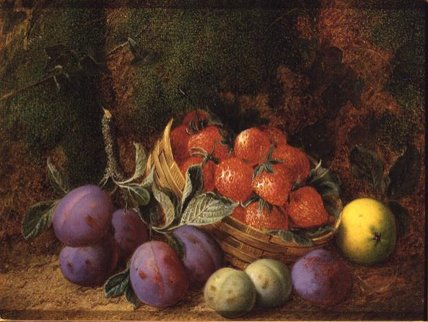
| La Fère | 1 | Plums And Stawberries |
Collectors' questions about George Clare's paintings
Which work is George Clare most famous for?Reveal the answer
Basket Of Flowers. Still Life With Primroses and A Still Life Of Pelargoniums In A Pot With Camellias come next.
What are the ten most famous George Clare paintings?Reveal the answer
Basket Of Flowers, Still Life With Primroses, A Still Life Of Pelargoniums In A Pot With Camellias, A Bird's Nest And Blossom, Still Life With Bird's Nest, Blossom And Geraniums, Spring Flowers In Baskets, Plums And Stawberries, Still Life With Bird's Nest And Wild Flowers and Still Life Of Apple Blossom And Violets With Primulas In Wicker Basket. The ranking above gives each one's year and museum.
How many paintings did George Clare leave?Reveal the answer
Our catalog holds 16 works by George Clare.
In which museums do George Clare's masterpieces hang?Reveal the answer
Mostly in Musée Jeanne-d'Aboville (La Fère). The museum table above lists them all.
Which subjects did George Clare choose most often?Reveal the answer
Flowers (8), Life (6) and Still life (4), across the 16 works on this page.
George Clare: life and work
George Clare (1835-1890): A Victorian Master of Still Life
George Clare, born in Barnet, Hertfordshire, England in 1835, was a British Victorian artist whose career blossomed during the latter half of the nineteenth century. Though overshadowed by his more famous brother, Frederic William Clare, George established himself as a respected painter specializing in meticulously rendered still lifes depicting fruit and flowers—a genre deeply rooted in Dutch Golden Age traditions. His artistic legacy resides primarily in these evocative depictions of natural beauty, reflecting a profound appreciation for observation and skillful execution.- Early Life & Family Background: Clare’s family were prominent figures in the art world, with Frederic William Clare achieving considerable acclaim as a portrait painter. George received his initial artistic training under Frederic's tutelage, absorbing influences from the Romantic movement and honing his technical abilities through diligent practice.
- Formal Training & Artistic Style: He studied at the Royal Academy of Art in London, immersing himself in the prevailing stylistic conventions of the Victorian era. Clare’s distinctive approach centered on capturing the subtle nuances of light and texture—a technique heavily indebted to the Dutch Masters who predated him. This meticulous attention to detail is evident throughout his oeuvre.
Notable Works & Artistic Achievements
Clare's artistic output consisted largely of still lifes, characterized by their exceptional realism and luminous color palettes. Among his most celebrated paintings are “Still Life With Plums, Apples And Baskets Of Grapes,” “Basket Of Flowers,” and “Still Life With Apples And Baskets Of Grapes And Plums.” These works exemplify the Clare family’s commitment to portraying the natural world with unwavering accuracy and conveying a sense of serene contemplation. The artist's masterful use of glazing techniques—applying thin layers of translucent paint—created depth and vibrancy, mirroring the stylistic innovations championed by artists like Johannes Vermeer.- Recurring Themes: Clare consistently explored themes of seasonality and beauty, capturing the fleeting moments of blossom and fruit ripening with remarkable sensitivity.
- Influence & Legacy: His work stands as a testament to the enduring power of observation and artistic discipline—qualities that resonated deeply within the Victorian aesthetic. Although he didn’t achieve widespread fame during his lifetime, Clare's paintings continue to be admired for their technical brilliance and expressive qualities.