Portrait of Armand Guillaumin

The 100 Most Famous Armand Guillaumin Paintings, Each One of a Kind

Updated October 2026 · ranked by our popularity score (searches, visits and orders for each work) · 344 works by Armand Guillaumin in our catalogue

In short

Place Valhubert (1872) is the Armand Guillaumin painting that draws the most eyes; the original belongs to the Musée d'Orsay, Paris. After it, the eye goes to River Scene (1890) and Paris - Quai de la Rapee (1885). Among the 344 works of Armand Guillaumin in our catalog, these 100 are the most famous, each a unique original presented with its year, its museum and the reason it endures.

1841 – 1927, Paris Impressionism Most works: Musée d'Orsay

Top 10 paintings by Armand Guillaumin, through the gallery's eye

1
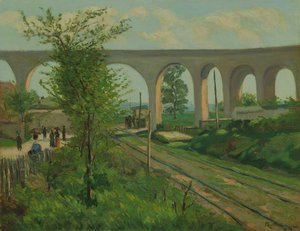
Place Valhubert (1872) by Armand Guillaumin

Place Valhubert

1872 · Acrylic On Canvas · Musée d'Orsay, Paris

'H2>Introduction to Impressionism and Guillaumin's Work Jean Baptiste Armand Guillaumin, a French artist, created the masterpiece Place Valhubert in 1872. This painting is now housed at the Musée d'Orsay in Paris, France. It exemplifies the Impressionist style, which was popular during that era. Impressionism focuses on capturing moments and light effects rather than precise details. The Painting's Composition and Elements The painting depicts a serene city street scene with trees…

2
River Scene (1890) by Armand Guillaumin

River Scene

1890 · Oil On Canvas · The Israel Museum, Jerusalem

Around 1890, the banks of the Seine became a stage for the tension between nature and the encroaching modern age. This work captures a bustling waterway where the quietude of leisure meets the grit of commerce. Several boats navigate the expanse—some barges laden with cargo, others smaller vessels drifting through calmer stretches. In the distance, the horizon is punctuated by the dark, vertical silhouettes of smoking factory chimneys, a subtle…

6
Still Life with Box with Blue Gloves (1873) by Armand Guillaumin

Still Life with Box with Blue Gloves

1873 · Oil On Canvas

A vase of flowers sits at the center of a wooden table, holding its position with a heavy, silent grace. Around this floral heart, the world is composed of everyday things: a suitcase tucked into the upper corner, a bowl, a cup, and several books. Two volumes rest near the bottom left, while another lies to the right. The scene is a study in stillness. A pair of blue gloves…

7
Portrait of Madame Guillaumin (1898) by Armand Guillaumin

Portrait of Madame Guillaumin

1898 · Oil On Canvas · Musee du Petit Palais, Geneva

To gaze upon this portrait is to be invited into a moment suspended in time—a quiet afternoon steeped in the cultivated elegance of late 19th-century Parisian life. The subject, seated within an ornate chair, embodies a serene contemplation, her posture suggesting both intellectual engagement and profound repose. She is captured mid-activity, seemingly absorbed by the pages of a book, yet the surrounding details whisper tales of a richer, more decorative…

9
The Bouchardon Mill, Crozant (1898) by Armand Guillaumin

The Bouchardon Mill, Crozant

1898 · Oil On Canvas · Metropolitan Museum of Art, New York

The river flows with a steady, rhythmic grace, carving its way through a rocky bed that catches the soft, diffused light of an overcast sky. Along the banks, the trees are heavy with the weight of the changing season, their leaves glowing in shades of golden yellow, orange, and pink. These bursts of color dominate the upper reaches of the scene, casting deep shadows of green, blue, and purple into…

10
Self Portrait with Easel (1878) by Armand Guillaumin

Self Portrait with Easel

1878 · Oil On Canvas · Van Gogh Museum, Amsterdam

In the quiet, contemplative depths of Self Portrait with Easel, we are invited into a private moment of creative gestation. Painted in 1878 by the French Impressionist master Ferdinand Guillaumin, this work serves as more than just a likeness; it is a window into the psychological landscape of a creator at work. The painting captures the artist seated before his easel, his gaze directed toward the viewer with an expression…

Armand Guillaumin's famous paintings, numbers 11 to 100

11Rocks at Trayas (1915) by Armand GuillauminRocks at Trayas1915 12La Seine by Armand GuillauminLa Seine 13The Arcueil Aqueduct at Sceaux Railroad Crossing by Armand GuillauminThe Arcueil Aqueduct at Sceaux Railroad CrossingArt Institute of Chicago 14Nanteuil-sur-Marne (1911) by Armand GuillauminNanteuil-sur-Marne1911 15The Sand Quarry (1895) by Armand GuillauminThe Sand Quarry1895 16Seaside at Agay (1900) by Armand GuillauminSeaside at Agay1900 17Self-Portrait (1895) by Armand GuillauminSelf-Portrait1895 · Ohara Museum of Art 18Paysage boise à l'étang by Armand GuillauminPaysage boise à l'étang 19The Seine at Charenton (1878) by Armand GuillauminThe Seine at Charenton1878 · Musée d'Orsay 20Villiers-sur-Morin (1905) by Armand GuillauminVilliers-sur-Morin1905 21Paysage de la Creuse 1 by Armand GuillauminPaysage de la Creuse 1 22The Banks of the River by Armand GuillauminThe Banks of the River 23Madame Guillaumin Sitting in a Garden (1890) by Armand GuillauminMadame Guillaumin Sitting in a Garden1890 24Mill of Pont Maupuit (1900) by Armand GuillauminMill of Pont Maupuit1900 · Art Institute of Chicago 25The Ruins of the Chateau at Crozant (1899) by Armand GuillauminThe Ruins of the Chateau at Crozant1899 26Hollow in the snow (1869) by Armand GuillauminHollow in the snow1869 · Musée d'Orsay 27Still Life with Casserole (1867) by Armand GuillauminStill Life with Casserole1867 28The Seine at Paris (also known as Quai de la Rapee) (1871) by Armand GuillauminThe Seine at Paris (also known as Quai de la Rapee)1871 · Museum of Fine Arts 29Painting (1876) by Armand GuillauminPainting1876 · National Museum of Art, Architecture and Design 30Quai de Bercy, circa 1874 (1874) by Armand GuillauminQuai de Bercy, circa 18741874 · Carnavalet Museum 31Les Environs de Paris (1874) by Armand GuillauminLes Environs de Paris1874 · Birmingham Museum and Art Gallery 32La Seine (1874) by Armand GuillauminLa Seine1874 · Fine Arts Museums of San Francisco 33The Seine at Charenton (1874) by Armand GuillauminThe Seine at Charenton1874 · Norton Simon Museum 34The Bridge of Louis Philippe (1875) by Armand GuillauminThe Bridge of Louis Philippe1875 · National Gallery of Art 35Snow (1876) by Armand GuillauminSnow1876 36Rue de Clamart at Vanves (1873) by Armand GuillauminRue de Clamart at Vanves1873 37Pont Marie, Quai Sully (1878) by Armand GuillauminPont Marie, Quai Sully1878 38The Seine (1873) by Armand GuillauminThe Seine1873 39La Route Tournante (1877) by Armand GuillauminLa Route Tournante1877 40Portrait of a Young Woman (1875) by Armand GuillauminPortrait of a Young Woman1875 41Damiette - Apple Trees (1884) by Armand GuillauminDamiette - Apple Trees1884 · Musée d'Orsay 42The Path to the Valley (1885) by Armand GuillauminThe Path to the Valley1885 · Petit Palais 43Painting (1880) by Armand GuillauminPainting1880 · National Museum of Art, Architecture and Design 44Quai de Bercy (1881) by Armand GuillauminQuai de Bercy1881 45Confluence of the Marne and the Seine, Île de France (1885) by Armand GuillauminConfluence of the Marne and the Seine, Île de France1885 46Pont Marie from the Quai d'Anjou (1883) by Armand GuillauminPont Marie from the Quai d'Anjou1883 47Palaiseau - Snow Effect (1883) by Armand GuillauminPalaiseau - Snow Effect1883 48Le Charrois au bord de la Seine (1882) by Armand GuillauminLe Charrois au bord de la Seine1882 49The Quay at Rouen (1882) by Armand GuillauminThe Quay at Rouen1882 50Quai de Bercey (1880) by Armand GuillauminQuai de Bercey1880 51Damiette (also known as Vallee de Chevreuse) (1880) by Armand GuillauminDamiette (also known as Vallee de Chevreuse)1880 52The Seine at Charenton (1880) by Armand GuillauminThe Seine at Charenton1880 53Quai Saint Bernard in the Snow (1882) by Armand GuillauminQuai Saint Bernard in the Snow1882 54Laundry Boat at Charenton (1880) by Armand GuillauminLaundry Boat at Charenton1880 55The Little Thieves (1885) by Armand GuillauminThe Little Thieves1885 56Epinay-sur-Orge (1884) by Armand GuillauminEpinay-sur-Orge1884 57Vase of Chrysanthemums (1885) by Armand GuillauminVase of Chrysanthemums1885 58Saint-Palais, the Pointe de la Douane, August 92, 10 o'clock in the morning (1892) by Armand GuillauminSaint-Palais, the Pointe de la Douane, August 92, 10 o'clock in the morning1892 · Petit Palais 59Village in Ile-de-France (1888) by Armand GuillauminVillage in Ile-de-France1888 60Woman and Child in Landscape (1892) by Armand GuillauminWoman and Child in Landscape1892 · Davis Museum and Cultural Center 61Ile de France (1888) by Armand GuillauminIle de France1888 62Quay de Bercy (1891) by Armand GuillauminQuay de Bercy1891 63The Quay d'Austerlitz, Morning (1886) by Armand GuillauminThe Quay d'Austerlitz, Morning1886 64Landscape at Breuillet (1890) by Armand GuillauminLandscape at Breuillet1890 65Pond with Willows, Îli-de-France (1889) by Armand GuillauminPond with Willows, Îli-de-France1889 66Le Pleteau Bromant a Pontgibaud (also known as Puy de Dome) (1890) by Armand GuillauminLe Pleteau Bromant a Pontgibaud (also known as Puy de Dome)1890 67la Manche Landscape (1890) by Armand Guillauminla Manche Landscape1890 68Landscape - the Creuse in the Snow (1890) by Armand GuillauminLandscape - the Creuse in the Snow1890 · Musee du Petit Palais 69Grainstacks (1891) by Armand GuillauminGrainstacks1891 · Musee du Petit Palais 70Damiette Landscape (1890) by Armand GuillauminDamiette Landscape1890 71Horses in the Sand at Ivry (1891) by Armand GuillauminHorses in the Sand at Ivry1891 72The Rock Breaker (1890) by Armand GuillauminThe Rock Breaker1890 · Rhode Island School of Design Museum of Art 73The Sea at Pointe de la Perriere, Saint-Palais (1892) by Armand GuillauminThe Sea at Pointe de la Perriere, Saint-Palais1892 74Small Valley at Pontgibaud (1890) by Armand GuillauminSmall Valley at Pontgibaud1890 75Sifting Sand (1891) by Armand GuillauminSifting Sand1891 76Passers-by in Paris in Winter (1888) by Armand GuillauminPassers-by in Paris in Winter1888 77Portrait of Madame Guillaumin (1892) by Armand GuillauminPortrait of Madame Guillaumin1892 78Rock Cliff on the Baumette Headland (1893) by Armand GuillauminRock Cliff on the Baumette Headland1893 · Wallraf-Richartz-Museum 79Rocks at Agay (1895) by Armand GuillauminRocks at Agay1895 · Petit Palais 80Les ruines du château de Crozant (1898) by Armand GuillauminLes ruines du château de Crozant1898 · Musée d'Unterlinden 81Vallée de la Creuse (1895) by Armand GuillauminVallée de la Creuse1895 · Musée d'Unterlinden 82Mountainous landscape (1895) by Armand GuillauminMountainous landscape1895 · Bavarian State Painting Collections 83Grainstacks in Île-de-France (1894) by Armand GuillauminGrainstacks in Île-de-France1894 · Museum Barberini 84View of Crozant (1898) by Armand GuillauminView of Crozant1898 85The Sea at Saint-Palais (1895) by Armand GuillauminThe Sea at Saint-Palais1895 · Wallraf-Richartz-Museum 86The Ruins at Crozant (1897) by Armand GuillauminThe Ruins at Crozant1897 87La Creuse Landscape (1895) by Armand GuillauminLa Creuse Landscape1895 88Madame Guillaumin Writing (1894) by Armand GuillauminMadame Guillaumin Writing1894 89Madame Guillaumin Reading in the Garden (1895) by Armand GuillauminMadame Guillaumin Reading in the Garden1895 90Landscape in the Vicinity of Rouen (1898) by Armand GuillauminLandscape in the Vicinity of Rouen1898 91The Platin Rock at Saint-Palais (1893) by Armand GuillauminThe Platin Rock at Saint-Palais1893 92Child Eating Soup (1894) by Armand GuillauminChild Eating Soup1894 93Ile de France Landscape (1895) by Armand GuillauminIle de France Landscape1895 94Saint-Julien-des-Chazes, Allier (1895) by Armand GuillauminSaint-Julien-des-Chazes, Allier1895 95Orchard at the Edge of the Woods in Saint-Cheron (1893) by Armand GuillauminOrchard at the Edge of the Woods in Saint-Cheron1893 96Snow at Crozant (1898) by Armand GuillauminSnow at Crozant1898 97Saint Palais, Pointe de la Perriere (1893) by Armand GuillauminSaint Palais, Pointe de la Perriere1893 98Landscape - the Creuse (1897) by Armand GuillauminLandscape - the Creuse1897 99Sunset on the Creuse (1898) by Armand GuillauminSunset on the Creuse1898 100Red Rocks (1894) by Armand GuillauminRed Rocks1894

Armand Guillaumin's famous paintings, period by period

The subjects that held Armand Guillaumin's eye

The four subjects that come back most often in these originals, each with its finest example.

The museums that keep Armand Guillaumin's originals

The 8 museums that hold the most of the paintings on this page.

Museum City Works by Armand Guillaumin Paintings from this list
Musée d'Orsay, ParisMusée d'Orsay Paris 10 Place Valhubert, The Seine at Charenton, Hollow in the snow
Petit Palais, ParisPetit Palais Paris 5 The Path to the Valley, Saint-Palais, the Pointe de la Douane, August 92, 10 o'clock in the morning, Rocks at Agay
Musee du Petit Palais, GenevaMusee du Petit Palais Geneva 3 Portrait of Madame Guillaumin, Landscape - the Creuse in the Snow, Grainstacks
Wallraf-Richartz-Museum, CologneWallraf-Richartz-Museum Cologne 3 Rock Cliff on the Baumette Headland, The Sea at Saint-Palais
Musée d'Unterlinden, ColmarMusée d'Unterlinden Colmar 3 Les ruines du château de Crozant, Vallée de la Creuse
Art Institute of Chicago, ChicagoArt Institute of Chicago Chicago 2 The Arcueil Aqueduct at Sceaux Railroad Crossing, Mill of Pont Maupuit
National Museum of Art, Architecture and Design, OsloNational Museum of Art, Architecture and Design Oslo 2 Painting, Painting
Indianapolis Museum of Art, IndianapolisIndianapolis Museum of Art Indianapolis 2 The Quai d'Austerlitz

Armand Guillaumin across the decades: one unique original for each

Works per decade

Pick a decade to see the original that defines it.

Armand Guillaumin's paintings: questions for the gallery

What is the single most famous work of Armand Guillaumin?Reveal the answer

Place Valhubert (1872), Musée d'Orsay, Paris. River Scene (1890) and Paris - Quai de la Rapee (1885) come next.

At what age did Armand Guillaumin create Place Valhubert?Reveal the answer

31 years old: Place Valhubert dates from 1872, and Armand Guillaumin was born in 1841.

Which ten paintings by Armand Guillaumin are the most famous?Reveal the answer

Place Valhubert, River Scene, Paris - Quai de la Rapee, Madame Guillaumin Reading, The Quai d'Austerlitz, Still Life with Box with Blue Gloves, Portrait of Madame Guillaumin, The Bouchardon Lock, The Bouchardon Mill, Crozant and Self Portrait with Easel. The ranking above gives each one's year and museum.

How many works by Armand Guillaumin are known?Reveal the answer

Our catalog holds 344 works by Armand Guillaumin, dated from 1867 to 1915.

Where can the most famous Armand Guillaumin originals be seen?Reveal the answer

Mostly in Musée d'Orsay (Paris), Petit Palais (Paris) and Musee du Petit Palais (Geneva). The museum table above lists them all.

During which period did Armand Guillaumin create the best-known paintings?Reveal the answer

In 1890s: 46 of the 100 works on this page were made then, River Scene among them.

Which famous Armand Guillaumin painting is the earliest, and which the latest?Reveal the answer

On this page, the earliest is Still Life with Casserole (1867) and the latest Rocks at Trayas (1915).

What subjects did Armand Guillaumin favour?Reveal the answer

Landscape (17), France (8) and Trees (7), across the 100 works on this page.

What materials did Armand Guillaumin paint with most?Reveal the answer

Oil On Canvas, for 12 of the 100 works on this page.

Which movement does the work of Armand Guillaumin belong to?Reveal the answer

Impressionism, judging by the originals on this page.

What Armand Guillaumin originals can I see at the Musée d'Orsay?Reveal the answer

Place Valhubert, The Seine at Charenton and Hollow in the snow: the Musée d'Orsay, Paris holds 4 of the works on this page.

Armand Guillaumin: a portrait of the artist

Early Life and Artistic Training

Born Jean-Baptiste Armand Guillaumin on February 16, 1841, in Paris, the man who would become known as Ferdinand Guillaumin spent his early years balancing labor with a quiet interest in drawing. Before he could commit himself to the canvas, he worked in his uncle's lingerie shop. During the evenings, he attended drawing lessons to sharpen his hand. This period of work was interrupted by a stint working for a French government railway, a job that preceded his formal entry into the art world.

In 1861, he moved toward more serious study at the Académie Suisse. It was within these walls that his path crossed with Paul Cézanne and Camille Pissarro. These early connections were not merely passing acquaintances; they were the beginnings of lifelong friendships. The shared experiences of the studio and the lessons learned in those rooms helped shape the direction of his later work.

Technique and Artistic Style

His brushwork carries a certain certainty, applied with a loose and assured hand. In his early years, he focused on capturing the fleeting effects of light and color, a hallmark of the Impressionist movement. He often worked with oil paint to translate the atmosphere of a scene, whether it was a snowy Parisian streetscape or a quiet riverbank. His approach was never about precise, photographic detail, but rather about the immediate sensation of a moment.

As his career progressed, his use of color became increasingly intense. By 1886, his palette had earned him a reputation for being a furious colorist. He moved away from the subtle, naturalistic tones of his contemporaries, opting instead for a much bolder application. By the 1890s, this shift had become even more pronounced. His colors grew less faithful to the actual appearance of nature, leaning into a heightened, almost aggressive intensity. This evolution suggests he was exploring a path toward Fauvism a full decade before that movement emerged.

The way he handled light often leaned toward the symbolic, using bold hues to evoke a sense of dreamlike mysticism. This tension between capturing a real landscape and using color to express an emotive, internal state defines much of his output. His work often sits between the observation of the natural world and a more subjective, expressive interpretation of it.

Circle of Artists and Influences

Guillaumin moved within the core of the Impressionist circle, participating in six of the eight exhibitions held by the Société anonyme des artistes peintres, sculpteurs et graveurs between 1874 and 1886. His presence in these gatherings placed him alongside the very people shaping the era's visual language. He shared a studio space on the Île Saint-Louis with Paul Cézanne, and the two artists were close enough that Cézanne produced etchings of him. This proximity allowed for a constant, quiet exchange of ideas and methods during the 1870s.

His studio often functioned as a gathering point for a younger generation of painters. Names like Paul Gauguin, Paul Signac, and Georges Seurat were known to meet within his walls, finding a space to congregate. This connection to the emerging avant-garde suggests a bridge between the established Impressionist group and the movements that would follow. Even Vincent van Gogh found much to admire in Guillaumin's approach, holding his work in high regard through numerous letters exchanged between 1888 and 1890.

Key Works and Collections

Much of his output remains held in major institutions across the globe. The Musée d’Orsay in Paris houses 48 of his works, providing a significant look at his development. Among these is Place Valhubert, Paris, which he created in 1872. This piece captures a winter streetscape, showing people walking through a snowy urban landscape near a riverbank.

His focus on the landscape often led him to the banks of the Seine. The Seine at Charenton is another notable work from his collection. His ability to handle light and color is evident in these studies of the natural world and city life. Many of these paintings are preserved in various museums, ensuring his visual language remains accessible to those studying the era.

Legacy and Later Life

A shift in Guillaumin's life occurred in 1891. After winning 100,000 francs in the state lottery, he was finally able to quit his government job. This allowed him to concentrate on painting full-time. His palette grew even bolder in the years that followed, moving away from a strict faithfulness to nature toward a style that some saw as a precursor to Fauvism.

His presence in the art world remained steady until his death on June 26, 1927. The works he left behind are held in various collections, including the Musée d’Orsay and the Petit Palais in Paris. His contributions to the Impressionist movement remain invaluable to those studying the development of light and color in the late 19th century.