Read More


 For artworks or reproductions larger than 105 cm (approximately 41 inches) on any side, the frame will be shipped as a kit, disassembled. This method ensures safe delivery and prevents damage during transport.


More about this painting
Text size
() ·
A painting made for you, by hand
Hand Made Oil Reproduction
Hand-painted oil on canvas in your size and frame, made to order by our artists. ( Switch to Print Switch to Digital Image)
Collectible Description
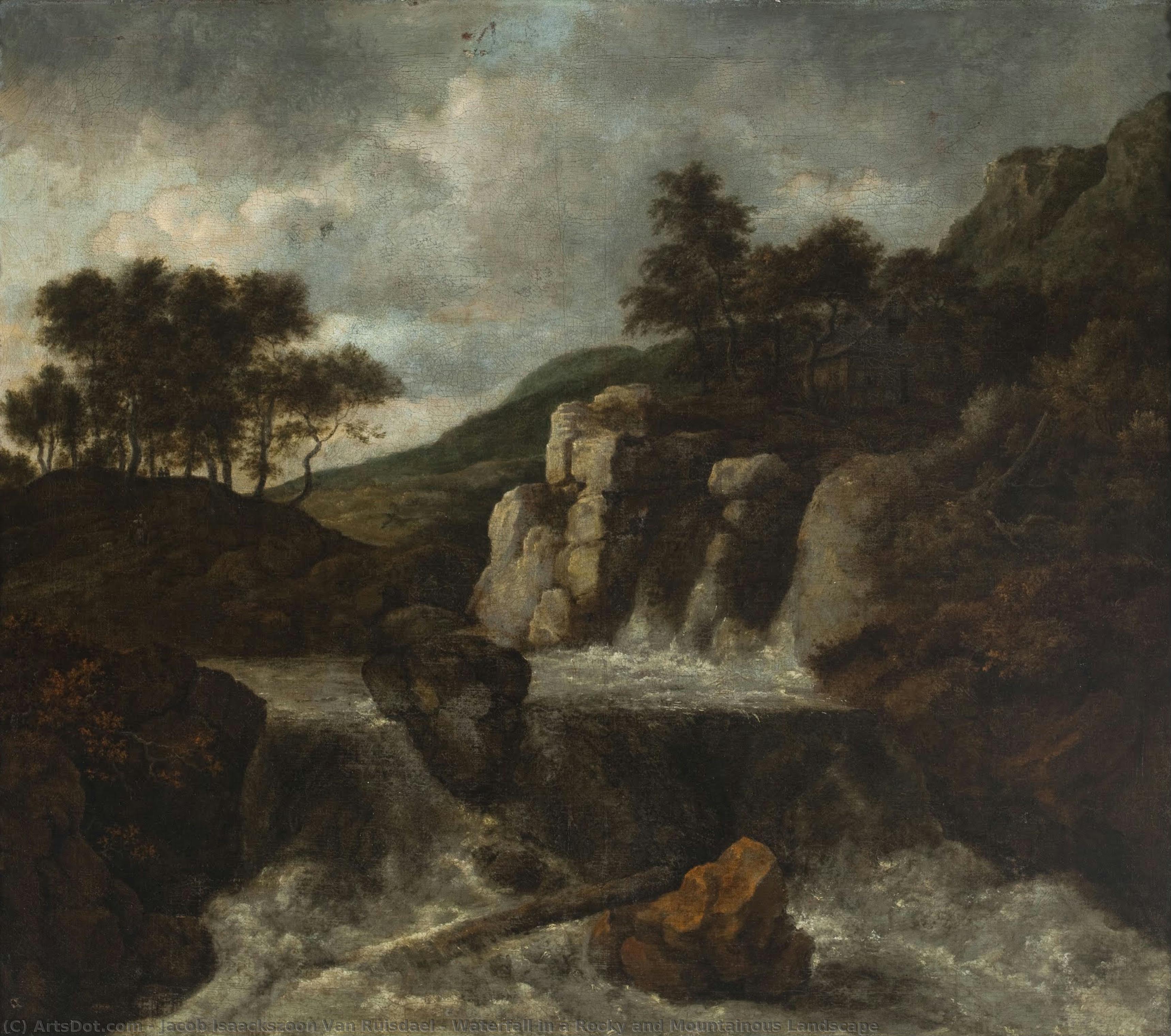
Explore Jacob Isaacszon van Ruysdael’s ‘Waterfall,’ a quintessential Dutch Golden Age landscape. Admire its atmospheric perspective & realistic detail of this serene, timeless scene.
Artist Biography
A master of Dutch Golden Age landscapes like View of Haarlem. Explore his dramatic and atmospheric works today.
from ·
Chapter 1
How large should it be?
Slide to change the size; the picture on the left shows the frame at its real width. The proportions of the original are kept.
Standard
custom
CM
INCH
Pick from our preset sizes that match the artwork's original proportions.
Loading sizes...

width
height
Type the width and the height you need, to fit your frame or your wall. This is hand-painted, so for a size with a different shape the artist can paint a bit more around the picture, or cut a bit — you choose. We send you a digital mockup to approve before the painting starts. The picture shown on this page does not show the real result — only the mockup does.
Chapter 2
How should it arrive?
Choose the edges of the stretched canvas
Choose your frame

White $1

Blurside $1

Extended $1

P118B $10

P118H $10

P118W $10

P438Z $10

P508JH $12

P508YH $12

P805H $10

P805Z $10

P919BZ $10

P919G $10

P919XJ $10

P959ZH $10

P968JZ $12

W106C $8

W218G $10

W218JH $8

W218Y $10

W307PJ $10

W316G $10

W316PJ $8

W316Y $10

W398PJ $8

W4111J $10

W500HY $15

W500JH $15

W692G $12

W849H $8

W940BG $15

W953PJ $8

H24-GOLD $30

H24-SILVER $30

H36-GOLD $45

H36-SILVER $45
Framed
Moulding: . Overall size with the frame: .
Chapter 3
Who paints it, and should anything change?
Examples of what can be changed: Replace face with customer photo; Add pet (e.g., replace cat with dog); Include hidden message in background; Change background landscape or elements.
After order, OriginalUniqueArt.com team will email client for instructions and provide a mockup preview
After order, OriginalUniqueArt.com team will email client for instructions and provide a mockup preview
Worldwide Delivery () in 3/4 weeks instead of standard 5 weeks. (11 November). No compromise on quality.
Chapter 4
The finishing touches
A nameplate, as in a museum?
Engraved Bronze Plaque Details
This elegant plaque features the artist's name and the title of the artwork, finely engraved for a timeless presentation.
It is made from bronze with a refined, elegant finish. The text is precisely laser-engraved for a sharp and permanent result. Measuring 9x2 cm, the plaque is compact yet easy to read. It's built to be durable and scratch-resistant, offering a professional, museum-quality look. Mounting is simple thanks to the included adhesive backing.
Transparent Acrylic Plaque Details
The plaque includes essential engraved details such as the artist's name, the title of the artwork, the date it was created, the type of media used-like oil on canvas or watercolor-a brief description of the piece, and a QR code that links to the complete artwork information.
It is crafted from clear acrylic, offering a sleek, modern appearance. The text is UV-engraved in black to ensure strong visual contrast. With a size of 10x15 cm, it ensures optimal readability. It comes equipped with two metal hooks for secure wall mounting. The plaque is designed to be weather-resistant, making it suitable for various environments, and it includes interactive features that work seamlessly with smartphone scanning.
Black Acrylic Plaque Details
This elegant plaque includes engraved information such as the artist's name, the title of the artwork, the date it was created, the type of media used (like oil on canvas or watercolor), a short description of the artwork, and a QR code for quick access to more information.
The plaque itself is made from refined black acrylic with a premium finish. The text is laser-engraved in white for high contrast and readability. Its size is 10x15 cm, designed to be easy to read. It comes with two metal hooks for professional mounting. The design is sleek and fits any interior style. It is also weather-resistant and durable, with built-in digital integration for mobile compatibility.
A protective varnish?
When do you need it?
Chapter 5
Your painting, as you ordered it
Waterfall in a Rocky and Mountainous Landscape
Reproduction Medium
Reproduction Size
-
Elite Senior Artist
More detail, finesse, and extra production time
-
Reproduction Frame
-
-
For artworks or reproductions larger than 105 cm (approximately 41 inches) on any side, the frame will be shipped as a kit, disassembled. This method ensures safe delivery and prevents damage during transport.
Professional assembly required - this is not a DIY product.
The kit must be assembled and the canvas stretched by an experienced professional framer, using wood glue (not supplied), a canvas stretching plier and clamps to hold the bars square while the glue dries. Incorrect assembly or uneven canvas tension can permanently damage the artwork and is not covered by our warranty.
All solid wood bars are included, precisely cut to size.
Assembled with the screws provided, plus wood glue for the corner joints, which is not supplied and must be sourced by your framer.
Professional tools are required and not included: a canvas stretching plier (tensioner) and clamps to hold the bars square while the glue dries.
Important:
The corner joints require wood glue, the bars must be held with clamps until the glue is fully dry, and tightening the canvas on the assembled frame requires a canvas stretching plier. None of these are included in the kit. Please arrange an experienced professional framer before ordering this size.
Nameplate
-
-
Protective Varnish
Glossy Varnish (enhances colors, protects against light/moisture)
-
Customize My Artwork
Examples of what can be changed: Replace face with customer photo; Add pet (e.g., replace cat with dog); Include hidden message in background; Change background landscape or elements.
-
Urgent
Worldwide Delivery () in 3/4 weeks instead of standard 5 weeks. (11 November). No compromise on quality.
-
Express Shipping
Worldwide Delivery () in 5 weeks. (18 November).
Included
Total Price
$ 300
Glass option is only available in size under 110 CM
Included with every order
- Free Worldwide Express Shipping
- High-Quality Linen Canvas
- Full Shipping Insurance
- Customs Tax Refund Guarantee
- True Color Matching Guarantee
- 100-Day Return Policy (Defects Only)
- 100% Money-Back Guarantee
- Bulk Discount Offer
 Preview
 Send
Send Share
Share
 Details
 Guide
Guide

 Download
 Similars
 X-Ray
X-Ray Diaporama
 Q&A
Q&A Stats
StatsIn numbers
- 29frames to choose from
- standard sizes, in its own proportions
- 5weeks to paint and deliver it
About the original


Jacob Isaackszoon Van Ruisdael
1628 - 1682, Netherlands
Quick facts about Jacob Isaackszoon Van Ruisdael
- Artistic Movement Or Style: Dutch Golden Age
- Artists Or Movements Influenced By This Artist:
- English Romantics
- Barbizon school
- Hudson River school
- Artists Who Influenced This Artist:
- Cornelis Vroom
- Allart van Everdingen
- Full Name: Jacob Isaackszoon Van Ruisdael
- Nationality: Dutch
- Notable Artworks:
- Glade in a Wood
- Landscape with a Village in the Distance
- The Thicket
- The Cloister
- Rough Sea at a Jetty
- Two Watermills and an Open Sluice
- Landscape with a Traveller
- Countryside
- Edge of a Forest with a Grainfield
- Woodland Scene with Lake
- The Forest Stream
- Waterfall in a Rocky Landscape
- Landscape with Shepherds and Peasants
- Grainfields
- An Extensive Landscape with a Ruined Castle
- Landscape with Church and Village
- The Waterfall
- Landscape with Waterfall
- The Windmill at Wijk bij Duurstede
- Landscape with Ruined Castle and Church
- Winter Landscape
- Wheat Fields
- The Breakwater
- Mountain Torrent
- Chapel by a Waterfall
- Beach View
- View of Haarlem with Bleaching Grounds
- View of the Dam and the Damrak
- Place Of Birth: Haarlem, Netherlands
- Date Of Birth: 1628
- Date Of Death: 1682
Artist Biography
Early Life, Family and Training
Born in Haarlem, Netherlands, in 1628, Jacob Isaackszoon Van Ruisdael entered a world where art was a family trade. He was the son of Isaack van Ruisdael and Maycken Cornelisdochter, growing up within a lineage of skilled makers. His grandfather, Jacob de Goyer, worked as a furniture maker, establishing a domestic environment defined by craftsmanship and technical precision. This heritage of making provided the foundation for a life dedicated to the visual arts.
The trajectory of his development was likely shaped by those closest to him. He was the nephew of Salomon van Ruysdael, a prominent landscape artist of the era. It is widely believed that Jacob Isaackszoon Van Ruisdael received his formal training under the guidance of his uncle, absorbing the nuances of the Dutch landscape through direct apprenticeship. This familial connection offered more than just instruction; it provided a direct link to the established traditions of the Haarlem school.
By 1648, his professional standing was formalized when he became a member of the Haarlem painters' guild. This membership marked his transition from a student of his family's craft to a recognized practitioner in his own right. His early years were spent establishing a presence in this competitive artistic hub, preparing for the broader career that would eventually lead him away from his birthplace.
Life and Career in Amsterdam
The transition from the quietude of Haarlem to the bustling commerce of Amsterdam marked a definitive shift in Ruisdael's life. He moved to the city around 1656 or 1657, seeking the broader markets offered by the Dutch Republic's commercial heart. This period of relocation was accompanied by personal milestones, including his baptism on 17 June 1657 in Ankeveen, near Naarden. Once settled, he remained in Amsterdam for the rest of his life, establishing himself within the urban landscape he would so frequently document.
His professional life in the city was characterized by a steady output of diverse subjects, ranging from expansive cityscapes to the intricate details of the Damrak. As he matured, his interests appeared to expand beyond the canvas. In his later years, he is said to have practiced as a physician, a pursuit that suggests a life of intellectual variety alongside his visual observations. This dual existence in the city reflects the multifaceted nature of a man deeply embedded in the social and professional fabric of the Dutch Golden Age.
Technique and Artistic Style
Ruisdael’s approach to the canvas was defined by a restless versatility. He did not settle into a single mode, instead producing a prolific body of work that shifted from quiet countryside scenes to more heroic, expansive landscapes. His technical precision relied heavily on the layering of thin glazes of oil paint. This method allowed him to achieve subtle gradations of color and tone, building a sense of depth that felt lived-in rather than merely painted. Through this patient application, he mastered atmospheric perspective, using the hazy quality of the air to push distant hills and forests into a soft, silvery recession.
The mood of his work often carried a weight that transcended simple topography. He possessed a particular ability to instill a poetic, sometimes brooding or tragic quality into his compositions. This was achieved through a masterful command of light and shadow. Rather than relying on harsh, jarring contrasts, he used light to shape the emotional temperature of a scene. His compositions were often dramatic, utilizing the vastness of the sky to dwarf the terrestrial elements below. In many of his later works, the sky occupies a significant portion of the frame, acting as a primary driver of the work's internal tension and atmosphere.
Notable and Key Works
The early output of his career reveals a painter already deeply engaged with the textures of the Dutch countryside. In 1646, he produced Glade in a Wood and Landscape with a Village in the Distance, works that established his ability to organize natural elements into coherent, atmospheric scenes. By 1649, his focus shifted toward the specific topography of his home region, as seen in The Thicket (Path in the Haarlem Dunes). These early years were marked by a growing command over the interplay of light and shadow within dense foliage and open vistas.
As his technical proficiency matured, his subject matter expanded to include more dramatic and varied environments. The year 1650 proved particularly prolific, yielding works such as The Cloister and the more turbulent Rough Sea at a Jetty. During this period, he also explored the intersection of human industry and nature in Two Watermills and an Open Sluice near Singraven, and captured the quiet solitude of the landscape in Landscape with a Traveller. These compositions demonstrate a sophisticated understanding of scale and the way light defines a specific moment in time.
His later compositions often emphasized the structural beauty of the natural world. In 1656, Edge of a Forest with a Grainfield showcased his skill in balancing the heavy presence of woodland with the openness of agricultural land. His ability to render these shifting perspectives helped define the visual language of the Dutch Golden Age.
- Glade in a Wood (1646)
- Landscape with a Village in the Distance (1646)
- The Thicket (Path in the Haarlem Dunes) (1649)
- The Cloister (1650)
- Rough Sea at a Jetty (1650)
- Two Watermills and an Open Sluice near Singraven (1650)
Legacy and Influence
The reach of Ruisdael’s vision extended far beyond the borders of the Netherlands, reaching into the very foundations of later landscape traditions. He was a Romantic before Romanticism, imbuing the natural world with a sense of moral weight and a brooding, poetic mood that anticipated the emotional intensity of later centuries. This ability to infuse a scene with a specific psychological atmosphere allowed his work to resonate with movements long after his death. His influence helped shape the English Romantics and the Barbizon school in France, and his impact crossed the Atlantic to inform the Hudson River school in the United States.
Within his own country, he inspired generations of Dutch landscape artists, setting a standard for how the countryside could be interpreted through light and shadow. His approach to the environment was never merely topographical; he sought to capture the essence of the land, often using dramatic skies and heavy textures to convey a sense of the sublime. This focus on the atmospheric qualities of nature ensured that his stylistic choices became a cornerstone for those who followed in his footsteps.
Where to See the Works Today
The physical presence of his canvases remains scattered across the major repositories of European and American art. In the Netherlands, the Rijksmuseum in Amsterdam maintains a significant collection of his output, offering a concentrated look at his development. Nearby, the Mauritshuis in The Hague also holds several of his paintings, providing a window into the landscapes that defined his career. His reach extends to the National Gallery in London, where his works are held alongside other significant Dutch masters.
Beyond the borders of the Netherlands, his influence is visible in the permanent collections of several international institutions. The Louvre in Paris and the Hermitage Museum in St. Petersburg both contain his works, ensuring his visual language remains part of the global canon. In the United States, the Metropolitan Museum of Art in New York preserves his paintings, allowing for a continued study of his approach to light and atmosphere.
- Landscape with Waterfall, about 1668
- The Windmill at Wijk bij Duurstede, 1670
- View of Haarlem with Bleaching Grounds, 1675
- The Dam Square in Amsterdam (detail), 1670
Related Articles

Dutch Masters: 10 Golden Age Paintings That Still Inspire |
Journey into the Dutch Golden Age! Explore 10 iconic paintings by Rembrandt, Vermeer & Hals. Discover the stories behind these Baroque masterpieces and find museum-quality art reproductions to elevate your home decor on .
Jacob van Ruisdael: Master of Dutch Landscape & the Evocation of National Identity
Explore the life & work of Jacob van Ruisdael, the preeminent Dutch landscape painter. Discover his technical brilliance, symbolic depth, and lasting influence on art history. Learn about collecting Ruisdael's masterpieces.

Masterpieces of Light: The Top 25 Artworks by Rembrandt van Rijn
Explore 25 iconic Rembrandt masterpieces from the Dutch Golden Age. Discover the genius of light and shadow. Explore the full collection online.

Golden Light & Dutch Skies: The Timeless Magic of Dutch Golden Age Landscapes
Discover the breathtaking beauty of Dutch Golden Age landscapes. Explore the mastery of light, chiaroscuro, and 17th-century realism through an expert art history lens, celebrating the enduring legacy of the Dutch Masters for discerning collectors and art lovers.
Explore artworks organized by themes, styles, and characteristics.