Impressionistic Landscape · 1890
Kaukola Ridge at Sunset (Albert Edelfelt, 1890)
Albert Edelfelt (1854–1905) made Kaukola Ridge at Sunset. It dates from 1890. It belongs to the Impressionistic Landscape movement. It is made in acrylic on canvas. It is kept at Ateneum Art Museum in Helsinki, Finland. It measures 116 × 83 cm.
- 1890
- Acrylic On Canvas
- 116 × 83 cm
- Ateneum Art Museum, Helsinki

 Preview

 Hand Made Oil Painting
 Send
 Share
 Fact sheet


 Download
 Similars
 X-Ray
 Diaporama
 Q&A

 Stats
Kaukola Ridge at Sunset, in brief
- Title
- Kaukola Ridge at Sunset
- Artist
- Albert Edelfelt (1854–1905)
- Artist born in
- Kiala manor, Finland
- Date
- 1890
- Medium
- Acrylic On Canvas
- Dimensions
- 116 × 83 cm
- Where to see it
- Ateneum Art Museum, Helsinki, Finland
- Movement
- Impressionistic Landscape
- Subject
- landscape, sunset, lake, ridge, finland, impressionism
What does Kaukola Ridge at Sunset depict?
Kaukola Ridge at Sunset: A Symphony of Light and Landscape
This breathtaking panorama by Albert Edelfelt—titled “Kaukola Ridge at Sunset”—captures the serene beauty of Finland’s Lakeland region in 1890. More than just a depiction of scenery, it embodies Edelfelt's masterful command of Impressionistic technique and his profound connection to Finnish national identity during a period of burgeoning artistic expression. The painting resides within the Ateneum Art Museum in Helsinki, where its dimensions—83 x 116 cm—allow for an immersive experience of this iconic artwork.The Artist’s Vision: Edelfelt's Impressionistic Approach
Albert Edelfelt (1854-1905), born in Porvoo, Finland, was a pivotal figure in Finnish art history. Influenced by artists like Jean-Léon Gérôme and Jules Bastien Lepage during his formative years in Antwerp and Paris academies respectively, Edelfelt honed his skills in capturing fleeting moments of light and color—a hallmark of Impressionism. Unlike academic painting’s emphasis on meticulous detail and idealized forms, Edelfelt prioritized conveying atmosphere and emotion through loose brushstrokes and vibrant hues. He skillfully blended pigments to achieve a luminous effect that perfectly embodies the golden glow of twilight over Kaukolanharju ridge.A Landscape Steeped in Symbolism
The composition itself is laden with symbolic significance. The prominent ridge—Kaukolanharju—dominates the scene, representing strength and permanence against the backdrop of the ephemeral sunset. The twisted tree stump and young sapling serve as poignant reminders of time’s passage and regeneration – themes central to Finnish folklore and Edelfelt's artistic sensibilities. Furthermore, the meandering trail of sunlight across the lake mirrors the artist’s fascination with Japanese woodblock prints, reflecting a broader interest in Eastern aesthetics and their influence on European art movements.Technical Brilliance: Capturing Light’s Dance
Edelfelt achieved this remarkable effect through meticulous observation and skillful brushwork. He meticulously studied the interplay of light and shadow as the sun descended behind the trees, painstakingly layering colors to recreate the subtle nuances of twilight. The artist's use of oil paints on canvas—a technique favored by Impressionists—allowed for blending and glazing, creating a velvety surface that enhances the luminosity of the scene. This careful attention to detail underscores Edelfelt’s dedication to portraying nature with unparalleled accuracy and emotional resonance.Emotional Resonance: Tranquility and Reflection
“Kaukola Ridge at Sunset” transcends mere visual representation; it evokes feelings of profound tranquility and contemplative reflection. The stillness of the lake, mirrored by the distant mountains, invites viewers to contemplate the beauty of the natural world and its enduring power to inspire awe. It’s a painting that speaks to the soul—a testament to Edelfelt's ability to capture not just what he saw but also what he felt—a legacy cherished by art historians and admired by collectors worldwide.- Artist: Albert Edelfelt
- Year Created: 1890
- Medium: Oil on Canvas
- Location: Ateneum Art Museum, Helsinki
Which museum holds Kaukola Ridge at Sunset?
Ateneum Art Museum
Helsinki, Finland
A Beacon of Finnish Identity: Exploring the Ateneum Art Museum Nestled in the heart of Helsinki, Finland, the Ateneum Art Museum stands as more than just a repository of artistic treasures; it’s a vibrant embodiment of the nation's cultural soul. Originally conceived as a dual institution – housing both the Finnish Academy of Fine Arts and the University of Art and Design Helsinki – until 1991, the Ateneum has evolved into a cornerstone of Finnish identity, offering an unparalleled journey through centuries of artistic expression. Its magnificent neo-Renaissance facade, adorned with classical sculptures and imbued with symbolic meaning, immediately commands attention, while within its walls, one discovers a remarkable collection that seamlessly blends domestic masterpieces with internationally renowned works, creating a truly unique and compelling experience.


High-resolution images of Kaukola Ridge at Sunset

Albert Edelfelt, Kaukola Ridge at Sunset (1890), Ateneum Art Museum. Public domain.
Colours matched to the original by a digital expert, the file finely retouched, faithful to the artist's brushwork.
Own the high-resolution fileQuestions on Kaukola Ridge at Sunset, answered
Which museum holds the original "Kaukola Ridge at Sunset"?
"Kaukola Ridge at Sunset" by Albert Edelfelt is on display at the Ateneum Art Museum, Helsinki, Finland. The museum listing refers to the original work, not to reproductions.
In what year was "Kaukola Ridge at Sunset" by Albert Edelfelt created?
"Kaukola Ridge at Sunset" dates from 1890. The date places the work within Albert Edelfelt's career and its era.
What is "Kaukola Ridge at Sunset" made with?
"Kaukola Ridge at Sunset" is executed in acrylic on canvas.
How big is the original "Kaukola Ridge at Sunset"?
The original "Kaukola Ridge at Sunset" by Albert Edelfelt measures 83 x 116 cm.
What is "Kaukola Ridge at Sunset" about?
"Kaukola Ridge at Sunset" by Albert Edelfelt depicts: landscape, sunset, lake, ridge, finland, impressionism, twilight.
Is "Kaukola Ridge at Sunset" free of copyright?
Regarding copyright, "Kaukola Ridge at Sunset" is in the public domain - its copyright has expired.
Who created "Kaukola Ridge at Sunset"?
"Kaukola Ridge at Sunset" was created by Albert Edelfelt. The information on this page describes Albert Edelfelt's original work.
What style does "Kaukola Ridge at Sunset" belong to?
"Kaukola Ridge at Sunset" by Albert Edelfelt belongs to the Impressionistic Landscape movement. This movement provides the stylistic context of the work.
Which period of Albert Edelfelt's career does "Kaukola Ridge at Sunset" belong to?
Within Albert Edelfelt's career, "Kaukola Ridge at Sunset" falls in the Mature Period. The phase helps compare it with the artist's other works.
About the artist, Albert Edelfelt

1854–1905, Finland
Albert Edelfelt
Early Life, Family and Training Albert Edelfelt was born on July 21, 1854, in Porvoo, Finland. His father, Carl Albert Edelfelt, was a Swedish-speaking Finn and an architect, while his mother, Alexandra Edelfelt, was born Alexandra Brandt. The early years of his life were shaped by the quiet surroundings of Porvoo. By 1869, his interest in drawing led him to the drawing school of the Finnish Art Society to begin formal studies.
Also by Albert Edelfelt
 The Artist's Son Erik in his Pram
 Louis Pasteur dans son laboratoire de l1886
 Divine Service in the Uusimaa Archipelago
 Portrait of Madame Vallery-Radot1888

Essays around Kaukola Ridge at Sunset
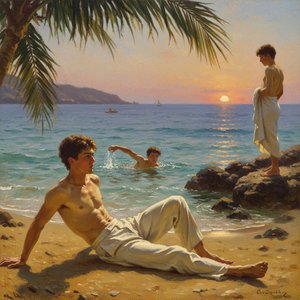 Henry Scott Tuke: Sunlit Masculinity & the Pastoral Ideal in Victorian PaintingExplore the captivating world of Henry Scott Tuke's paintings – a master of British Impressionism renowned for his intimate depictions of y…
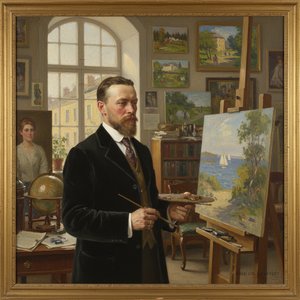 Albert Edelfelt: A Pioneer of Finnish Realism & International Impressionist CirclesExplore the life & work of Albert Edelfelt, a pioneering Finnish Realist painter who bridged Impressionism & national identity. Discover hi…
 25 Masterpieces by Paul Gauguin: The Bold Colors of a Post-Impressionist LegendExplore 25 iconic Paul Gauguin masterpieces and his Post-Impressionist legacy. Discover the full collection online at OriginalUniqueArt.com.