The Newlyn School & Tuke’s Early Influences
Victorian painting refers to the distinctive styles of painting in the United Kingdom during the reign of Queen Victoria (1837–1901). Victoria's early reign was characterised by rapid industrial development and social and political change, which made...
Henry Scott Tuke, a name synonymous with sun-drenched skin, youthful exuberance, and the idyllic beauty of the Cornish coast, occupies a unique position in late Victorian art. While often categorized as an Impressionist, his artistic journey was far more nuanced, deeply rooted in the burgeoning Newlyn School and shaped by a complex interplay of aesthetic ideals and personal inclinations. The Newlyn School, established in the 1880s in the remote fishing village of Newlyn, Cornwall, represented a deliberate move away from the academic constraints of London’s art establishment. Artists sought authenticity, depicting the lives of local fishermen and laborers with a realism previously unseen in British painting. Tuke arrived in Newlyn after training at the Slade School of Art under Alphonse Legros and Sir Edward Poynter, initially drawn to the school's commitment to *plein air* painting – capturing light and atmosphere directly from nature. However, unlike his peers who focused on social realism, Tuke’s gaze quickly settled upon a different subject: the captivating beauty of young men.
His early works reflect this shift, though still bearing traces of Newlyn's influence in their naturalistic settings. The rugged coastline and working-class figures provided a backdrop for his burgeoning fascination with the male form. This wasn’t merely an aesthetic preference; it was intertwined with the broader cultural currents of the time – a growing interest in classical ideals of beauty, the romanticization of youth, and a subtle undercurrent of homoeroticism that would become increasingly central to his oeuvre. Tuke's exposure to French Impressionism during his Parisian sojourn (1881-1883), particularly the work of John Singer Sargent, further refined his technique, encouraging looser brushwork and a heightened sensitivity to light and color.
A Celebration of Youth: The Male Nude in Tuke's Oeuvre
 Wikipedia: Henry Scott Tuke
Henry Scott Tuke (12 June 1858 – 13 March 1929) was an English artist. His most notable work was in the Impressionist style and he is best known for his paintings of nude boys and young men. Trained at the Slade School of Art under Alphonse Legros a...
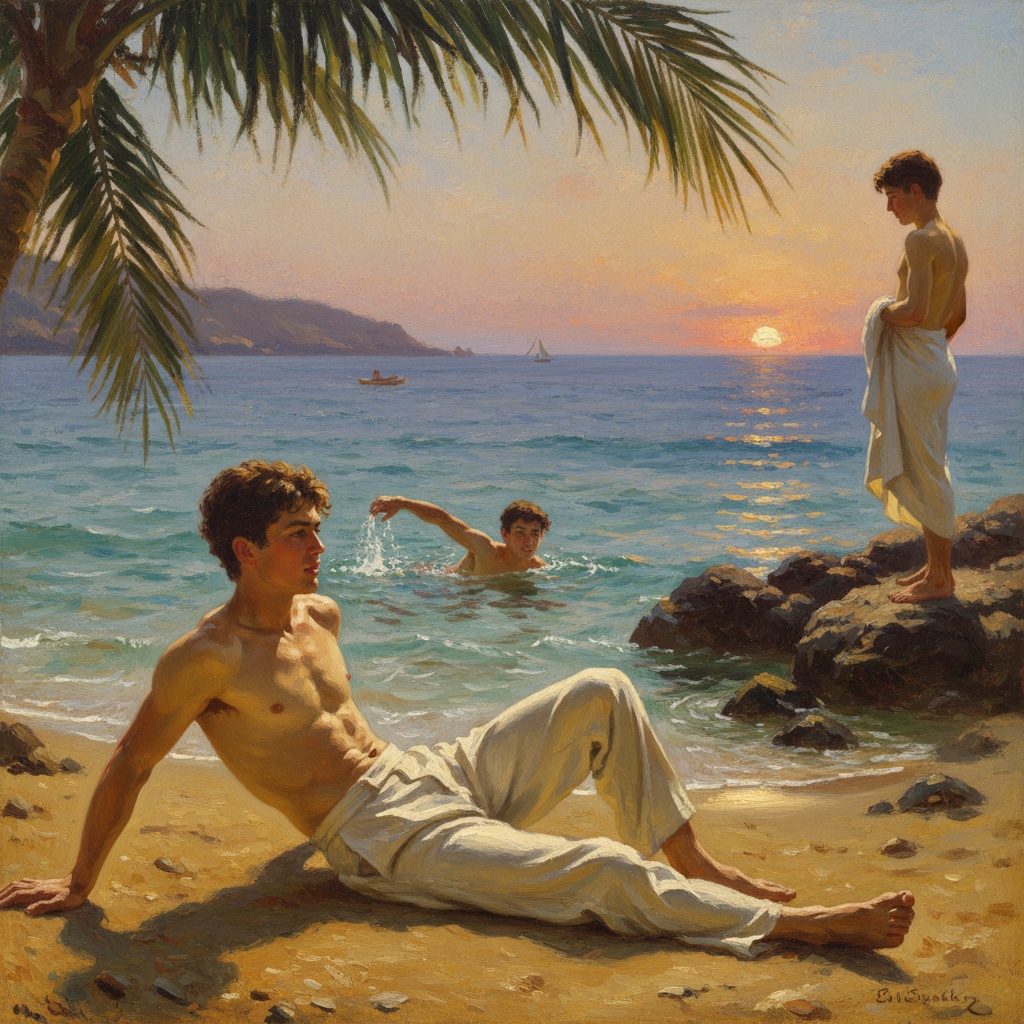
The defining characteristic of Henry Scott Tuke’s art is undoubtedly his portrayal of young men – often nude or semi-nude – bathed in the golden light of the Cornish sun. These paintings are not simply studies of anatomy; they are celebrations of youth, vitality, and a sensual freedom rarely depicted with such openness during the Victorian era. Summertime, completed in 1884, marks a pivotal moment in his career, showcasing two local boys playfully punting on the water – a scene imbued with both innocence and a subtle erotic charge. This painting established a recurring motif: young men engaged in leisurely activities, their bodies rendered with remarkable sensitivity and detail.
Tuke’s approach to the male nude differed significantly from classical precedents. He eschewed idealized musculature in favor of more naturalistic forms – boys with sun-kissed skin, slightly awkward poses, and a palpable sense of lived experience. This realism wasn't accidental; it reflected his genuine affection for his models, many of whom were local fishermen’s sons or working-class youths. He sought to capture not just their physical beauty but also their spirit – the energy, vulnerability, and carefree joy of adolescence. The paintings often evoke a sense of intimacy, as if the viewer is observing a private moment rather than witnessing a posed composition.
Maritime Scenes & the Embodiment of British Summer
Beyond the male nude, Tuke’s art is inextricably linked to the sea and the Cornish coastline. Maritime scenes are not merely backdrops but integral components of his compositions, symbolizing freedom, adventure, and the untamed beauty of nature. He developed a deep connection with the ocean during his childhood in Falmouth, spending countless hours swimming and sailing – experiences that profoundly shaped his artistic vision. Julie of Nantes, his beloved fishing boat converted into a floating studio, became an iconic symbol of his creative process.
Tuke’s paintings capture the essence of British summer – the shimmering light on the water, the salty air, and the warmth of the sun. He masterfully employed Impressionistic techniques to convey these atmospheric effects, using broken brushstrokes and vibrant color palettes to create a sense of movement and luminosity. The sea serves as both a physical setting and a metaphorical space for exploration and self-discovery – a realm where societal constraints are loosened and youthful spirits can roam free. His depictions of sailing ships, often rendered with meticulous detail, also reflect his appreciation for maritime history and the enduring power of nature.
Beyond Realism: Impressionistic Techniques and Aesthetic Sensibilities
 Lord Ronald Sutherland Gower
Admire Henry Scott Tuke’s 1897 portrait of Lord Ronald Gower – a stunning example of late 19th-century realism. Explore detail, color & Victorian society's elegance.
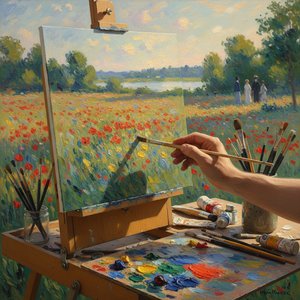
While firmly rooted in realism, Tuke’s art transcends mere representation through his masterful application of Impressionistic techniques. He embraced *plein air* painting, capturing fleeting moments of light and atmosphere directly from nature. His brushwork is loose and expressive, prioritizing color and texture over precise detail. This approach allows him to convey a sense of movement and spontaneity, imbuing his paintings with a vibrant energy.
However, Tuke’s Impressionism was not simply a stylistic choice; it was intertwined with his aesthetic sensibilities. He sought to create works that were beautiful and harmonious, prioritizing visual pleasure over didactic messaging – a hallmark of the Aesthetic movement. His palette is often rich and luminous, employing subtle gradations of color to capture the nuances of light and shadow. This emphasis on beauty and sensuality aligns him with artists like Oscar Wilde, who championed “art for art’s sake” and challenged Victorian notions of morality and propriety. Paintings such as Lord Ronald Sutherland Gower, from 1897, exemplify this aesthetic sensibility – a stunning portrait that celebrates the elegance and refinement of Victorian society while subtly hinting at underlying sensuality.
Tuke and the Victorian Discourse on Sexuality and Class
Henry Scott Tuke’s art existed within a complex social context marked by strict Victorian morality and evolving attitudes towards sexuality. His depictions of young men, particularly in nude or semi-nude poses, were undoubtedly provocative for his time. While not explicitly scandalous, they challenged conventional notions of masculinity and beauty. His choice of working-class models also raised questions about class dynamics and the representation of labor.
Tuke navigated this delicate terrain with remarkable subtlety. He avoided overt displays of sexuality, instead focusing on the aesthetic qualities of his subjects – their physical beauty, youthful energy, and carefree spirit. His paintings can be interpreted as a celebration of homoerotic desire, but they are also imbued with a sense of innocence and vulnerability. The idyllic settings and leisurely activities further soften any potential controversy, presenting his subjects as embodiments of natural beauty rather than objects of sexual exploitation. William J. Martin, painted in 1890, exemplifies this balance – a striking military subject that embodies duty and youth while subtly hinting at the artist’s fascination with the male form.
Legacy and Influence: Tuke’s Enduring Appeal
Henry Scott Tuke’s legacy extends far beyond his technical mastery and aesthetic sensibilities. He remains one of the most beloved British Impressionists, celebrated for his intimate depictions of youth, sunlit landscapes, and the enduring beauty of the Cornish coast. His paintings continue to captivate audiences with their sensuality, vulnerability, and evocative atmosphere.
Tuke’s influence can be seen in the work of subsequent generations of artists who explored themes of masculinity, sexuality, and the natural world. His commitment to *plein air* painting and his masterful use of color continue to inspire contemporary artists today. OriginalUniqueArt.com offers a stunning collection of Tuke’s masterpieces, allowing art enthusiasts to experience the beauty and intimacy of his work firsthand – from iconic portraits like Lord Ronald Sutherland Gower to captivating scenes of youthful exuberance on the Cornish shores. Explore our selection of high-quality reproductions and discover the enduring appeal of this remarkable artist.