Gian Lorenzo Bernini (1598-1680): Master Baroque sculptor & architect. Explore his dramatic, emotive works like the Ecstasy of Saint Teresa and Baldacchino. A pioneer influencing art for centuries.
Discover Antonio Raggi (1624-1686), a pivotal Roman Baroque sculptor mentored by Bernini. Known for his masterful reliefs & stucco, including 'Death of St. Cecilia'. Explore his legacy!
Cosimo Fancelli (1620-1688) was a prominent Baroque sculptor in Rome, known for his stucco work & collaborations with Bernini and Cortona. Explore his religious sculptures & contributions to iconic sites like Piazza Navona & St. Peter's Basilica.
A Bridge Between Eras: The Eternal Majesty of Ponte Sant'Angelo
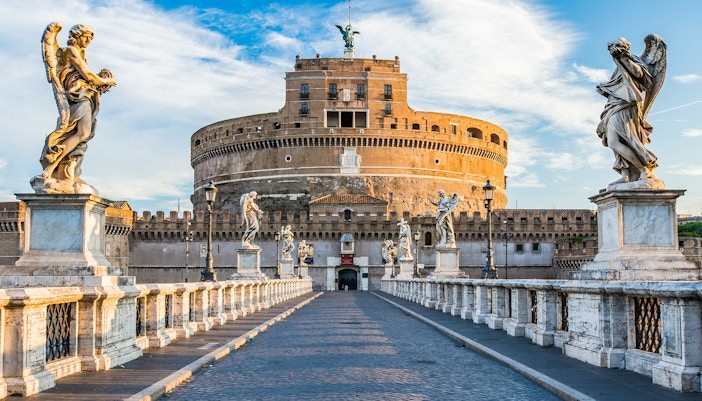
To cross the Ponte Sant’Angelo is to traverse a living timeline of Roman civilization, where the heavy stone of imperial ambition meets the ethereal grace of Baroque devotion. This monumental structure, which spans the Tiber River with a rhythmic elegance, serves much more than a mere passage between the city's heart and the formidable Castel Sant’Angelo; it is a profound architectural dialogue between the pagan past and the Christian present. Originally commissioned by Emperor Hadrian in 134 AD as the
Pons Aelius
, the bridge was conceived to honor his devotion to Apollo, providing a grand processional route to his imperial mausoleum. The very foundation of the bridge, crafted from sturdy travertine quarried from Tivoli, speaks to the enduring Roman mastery of engineering—a feat of precision that has allowed its five magnificent arches to withstand the relentless flow of the Tiber for nearly two millennia.
As the centuries unfolded, the bridge underwent a spiritual metamorphosis, transitioning from a symbol of imperial power to a sacred path for the faithful. During the Middle Ages and the Renaissance, it became an essential artery for pilgrims journeying toward St. Peter's Basilica, a route paved with both political upheaval and religious fervor. This era of transformation laid the groundwork for what would become one of the most visually arresting landscapes in the world. The bridge’s history is not merely written in stone but in the layers of human experience—from the solemnity of papal coronations to the darker echoes of public executions that once marked its banks.
The Baroque Soul and Sculptural Splendor
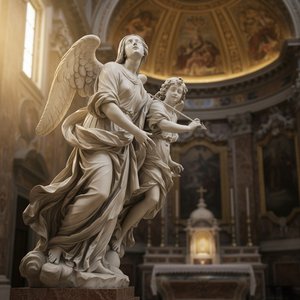
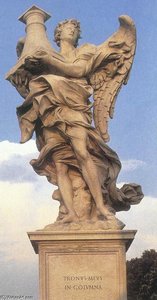
The true artistic soul of the bridge was revealed in 1669, through the visionary patronage of Pope Clement IX and the incomparable genius of Gian Lorenzo Bernini. It was during this Baroque revolution that the bridge was adorned with ten angelic statues, each meticulously designed to depict a specific instrument of the Passion of Christ. These sculptures are not mere ornaments; they are masterpieces of psychological depth and movement. As one walks beneath their watchful eyes, the stone seems to breathe with human emotion. The
Angel with the Superscription
captures a sense of sorrowful acceptance, while the
Angel with the Crown of Thorns
evokes a poignant, visceral grief. This sculptural program transforms the bridge into an open-air gallery, where the dramatic interplay of light and shadow—a hallmark of Bernini’s style—creates a theatrical experience that continues to captivate collectors and historians alike.
For the contemporary admirer, interior designer, or art enthusiast, Ponte Sant'Angelo offers an unparalleled aesthetic inspiration. The way the sunlight dances across the travertine arches and reflects off the Tiber creates a scene of timeless beauty that has inspired countless masters. One can find echoes of this majesty in:
The maritime light of
Claude-Joseph Vernet
, which captures the atmospheric essence of Roman landscapes.
The serene, atmospheric landscapes of
Jean-Baptiste-Camille Corot
, reflecting a quiet contemplation of urban life.
The sweeping Baroque vistas of
Giuseppe Zocchi
, which balance architectural grandeur with contemporary activity.
To stand upon this bridge is to witness the seamless integration of architecture, sculpture, and nature. It remains a singular destination where the grandeur of ancient Rome and the emotive power of the Baroque converge, offering a panoramic perspective on the resilience and beauty of Italy's cultural heritage.
By the OriginalUniqueArt.com Editorial Team
Art Quiz
There is only one correct answer for each question.
Question 1:
What is Ponte Sant'Angelo primarily known for?
Question 2:
Who commissioned the ten angel statues adorning Ponte Sant'Angelo?
Question 3:
What architectural style characterizes Ponte Sant'Angelo?
Question 4:
The bridge connects which two historic districts of Rome?
Explore the life & masterpieces of Pietro da Cortona, a defining figure of the Italian Baroque. Discover his stunning frescoes at Palazzo Barberini and lasting influence on Roman art history. Learn more with OriginalUniqueArt.
Explore the life & revolutionary art of Gian Lorenzo Bernini, the master sculptor of the Baroque era. Discover his iconic works like David and Ecstasy of Saint Teresa – a journey into Roman artistic genius.
Step into the divine beauty of the Sistine Chapel. Explore 25 iconic Renaissance masterpieces by Michelangelo and more. From breathtaking frescoes to timeless legends, find inspiration for museum-quality art reproductions. Discover all masterpieces on OriginalUniqueArt.com.