Bernini's Early Life & Apprenticeship: Forging a Roman Genius
Gian Lorenzo Bernini, born in Naples in 1598, was not merely an artist; he was a phenomenon. From his earliest years, the boy displayed a preternatural talent that captivated all who witnessed it. His father, Pietro Bernini, a respected Mannerist sculptor himself, recognized and nurtured this gift with unwavering dedication. The family’s relocation to Rome in 1606 proved pivotal, thrusting young Lorenzo into the heart of the artistic world – a city brimming with papal patronage and ambitious projects. It was here, under his father's guidance and fueled by an insatiable curiosity, that Bernini began his rigorous training, absorbing the techniques and aesthetics of the era while simultaneously forging a distinctly personal style. Pope Paul V, upon witnessing Lorenzo’s early sketches, famously declared him “a prodigy,” setting in motion a trajectory that would redefine sculpture for generations to come. This wasn't simply about technical skill; it was an innate ability to breathe life into stone, to capture emotion and movement with unparalleled realism. The collaborative works of father and son during these formative years – pieces like the Faun Teased by Putti – reveal a fascinating interplay between established Mannerist conventions and the burgeoning dynamism that would become Bernini’s hallmark.
The Birth of Baroque Sculpture: Innovation in Form and Movement
Baroque sculpture is the sculpture associated with the Baroque style of the period between the early 17th and mid 18th centuries. In Baroque sculpture, groups of figures assumed new importance, and there was a dynamic movement and energy of human for...
The early 17th century witnessed a shift in artistic sensibilities, moving away from the restrained elegance of the Renaissance towards a more dramatic, emotionally charged aesthetic – the Baroque. While many contributed to this evolution, it was Bernini who truly embodied its spirit. He didn’t simply sculpt figures; he created theatrical experiences. His genius lay in his ability to synthesize sculpture, painting, and architecture into unified compositions that engaged all the senses. This wasn't merely about ornamentation; it was a deliberate attempt to overwhelm the viewer, to evoke awe and inspire religious fervor. Bernini rejected the static poses of earlier sculptors, opting instead for dynamic movement and swirling drapery. Figures were no longer isolated entities but integral parts of larger narratives, often caught in moments of intense action or profound emotion. He pioneered techniques that blurred the boundaries between different art forms, incorporating hidden lighting effects and water features to enhance the dramatic impact of his works. This pursuit of total artistic integration would become a defining characteristic of Roman Baroque sculpture.
David and Apollo and Daphne: Masterpieces of Dramatic Narrative
Bernini’s early successes – particularly David (1623-24) and Apollo and Daphne (1622-25) – cemented his reputation as a sculptor of extraordinary talent. Unlike Michelangelo's contemplative David, Bernini’s version captures the moment *before* the battle with Goliath, a tense instant of focused determination. The sculpture is imbued with an incredible sense of energy; David strains against the weight of his sling, his muscles taut, his gaze fixed on his unseen opponent. This dynamic pose and intense emotionality were revolutionary for their time. Apollo and Daphne further showcases Bernini’s mastery of narrative. He doesn't depict a static scene but rather the very transformation of Daphne into a laurel tree as she flees Apollo’s pursuit. The sculpture is breathtaking in its detail – the delicate leaves sprouting from Daphne’s fingertips, the anguish on her face, the god’s desperate reach. Bernini’s ability to render flesh and foliage with such realism was astonishing, creating a work that feels both incredibly lifelike and profoundly symbolic. These sculptures weren't simply beautiful objects; they were powerful statements about faith, desire, and the transformative power of art.
Architecture as Spectacle: Bernini’s Urban Visions for Rome
Bernini wasn’t solely a sculptor; he was also an accomplished architect and city planner. He understood that sculpture existed not in isolation but within a broader architectural context. His designs for St. Peter's Square, particularly the colonnades (1656-67), are testament to this vision. The sweeping curves of the colonnades embrace visitors, creating a sense of grandeur and welcoming them into the heart of Christendom. He conceived of the square not merely as a functional space but as a theatrical stage for religious processions and papal ceremonies. Similarly, his work on the Sant’Andrea al Quirinale church (1658-61) demonstrates his ability to integrate sculpture, painting, and architecture seamlessly. The elliptical dome, adorned with radiant light and intricate frescoes, creates an atmosphere of spiritual transcendence. Bernini's architectural projects were not simply about building structures; they were about creating immersive experiences that glorified the Church and inspired devotion. He transformed Rome into a living work of art, shaping its urban landscape to reflect his artistic vision.
Ecstasy of Saint Teresa & Beyond: Exploring Religious Passion Through Art
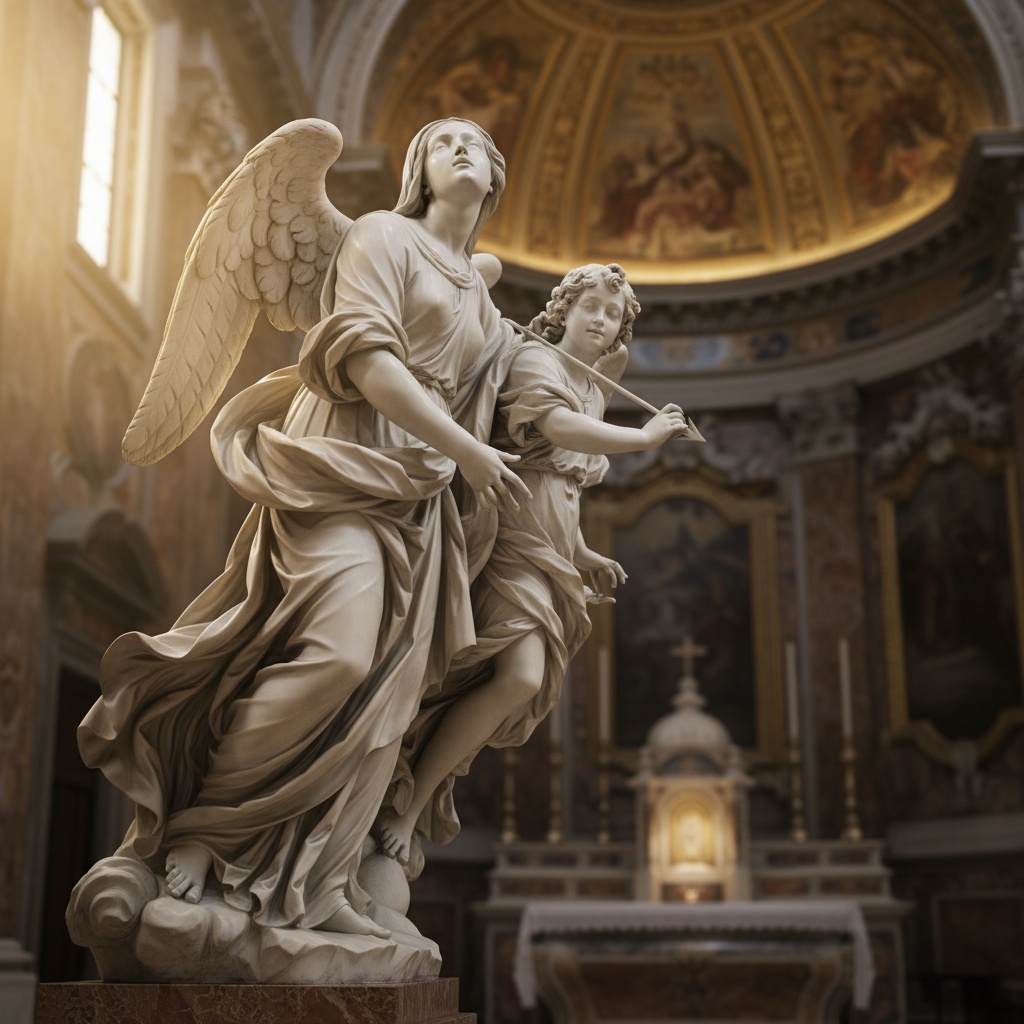
Perhaps Bernini’s most iconic work is The Ecstasy of Saint Teresa (1647-52), housed in the Cornaro Chapel of Santa Maria della Vittoria. This sculpture transcends mere representation; it's a visceral depiction of religious ecstasy. Saint Teresa, suspended on clouds, is pierced by an angel’s arrow, her face contorted in a mixture of pain and pleasure. The surrounding drapery swirls around her, creating a sense of movement and drama. Bernini masterfully employed hidden lighting to enhance the theatrical effect, bathing the sculpture in a golden glow. The work sparked controversy for its overt sensuality, but it also captivated viewers with its raw emotional power. Beyond Ecstasy of Saint Teresa, Bernini continued to explore themes of religious passion and martyrdom in works like The Martyrdom of St Lawrence (1652-53). These sculptures weren’t simply about depicting suffering; they were about conveying the transformative power of faith and the ultimate sacrifice. He sought to create a direct connection between the viewer and the divine, evoking empathy and inspiring religious contemplation.
Bernini's Legacy: A Lasting Influence on Sculpture and the Arts
Gian Lorenzo Bernini’s influence on sculpture and the arts is immeasurable. He didn’t just create beautiful objects; he redefined what sculpture *could* be. His mastery of technique, his dramatic compositions, and his ability to synthesize different art forms set a new standard for artistic excellence. He inspired generations of sculptors, architects, and painters across Europe and beyond. The Baroque style, which Bernini so powerfully embodied, continued to flourish long after his death in 1680. His emphasis on movement, emotion, and theatricality can be seen in the works of artists like Ercole Ferrata and Alessandro Algardi, who both built upon his innovations while developing their own distinct styles. Today, Bernini’s sculptures continue to captivate audiences with their beauty, power, and emotional depth. His legacy endures not only in the masterpieces he created but also in the enduring impact he had on the course of art history. For those seeking to understand the pinnacle of Baroque artistry, a journey through Bernini's works is an essential experience. Explore his creations further with OriginalUniqueArt.com and discover the timeless beauty of Roman genius.