

Table of Contents
Quick Facts
- Movements:
- baroque
- early renaissance
- Works on APS: 3
- Featured artists:
- Agostino Carracci
- Gentile Bellini
- theodoros poulakis
- Alternate names:
- Museo Civico Correr
- Museo Correr
- Civic Museum Correr
- Correr Museum
- Correr
- Location: Venice, Italy
Art Quiz
There is only one correct answer for each question.
Question 1:
What is the Museo Civico Correr primarily known for showcasing?
Question 2:
The Museo Civico Correr’s building is located in:
Question 3:
Who is Antonio Canova celebrated for sculpting?
Question 4:
The Museo Civico Correr houses collections documenting various aspects of Venice’s history, including:
Question 5:
What architectural style characterizes the Museo Civico Correr?
Exhibited Artists

Agostino Carracci
Agostino Carracci (1557-1602) was an Italian Baroque painter & printmaker, co-founder of the Accademia degli Incamminati. Known for frescoes, portraits & challenging Mannerism with a focus on naturalism. Brother of Annibale Carracci.


Gentile Bellini
Gentile Bellini (1429-1507): Venetian Renaissance painter famed for detailed portraits, pioneering oil techniques & Eastern influences. Explore masterpieces like 'Procession in Piazza San Marco'.

theodoros poulakis
Theodoros Poulakis (1622-1692) was a Cretan painter known for his dramatic biblical scenes & portraits. Explore works like 'Nativity' & 'Archangel Michael'. Discover Greek Baroque art.
Related Articles
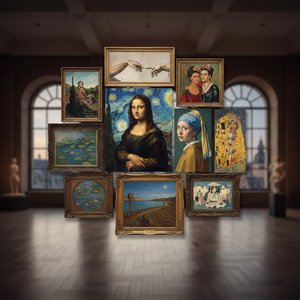
Oil on Canvas Masters: 10 Paintings That Redefined Art History |
Journey through art history with our guide to 10 legendary oil on canvas masterpieces! Explore iconic works by Van Gogh, Monet & Rembrandt. Find museum-quality reproductions and elevate your home decor at . Discover all masterpieces online.

Illuminating the Enlightenment: Artistic Expression in 18th-Century Europe
Explore the artistic brilliance of the Enlightenment era! Discover Rococo's elegance & Neoclassicism’s virtue with expert insights into 18th-century masterpieces. Learn about David, Kauffmann & more.
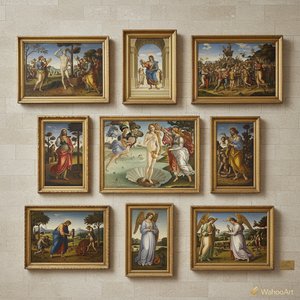
Early Renaissance Masters: 10 Paintings That Changed Art History |
Journey through the Early Renaissance! Explore 10 iconic paintings by Botticelli, Leonardo da Vinci & Michelangelo. Discover their stories, techniques & lasting impact. Find museum-quality art reproductions and elevate your home decor with .
List of Artworks




Subscribe to Our Newsletter
Stay updated with the latest art news, exclusive offers, and decoration ideas.
Get 3 Free Art Suggestions
Tell us about your project and our art experts will provide you with 3 personalized art suggestions.
Not Sure Where to Start?
Let Us Curate 3 Options Just for You - Free!