A Bastion of Realism: Discovering the Musée Courbet
Nestled in the historic heart of Oran, France, the Musée Courbet stands as a profound testament to Gustave Courbet’s revolutionary vision—a painter who dared to depict the world not as it should be, but as it truly was. More than just a repository for his art, this museum offers an immersive journey into the life and philosophy of a man who fundamentally altered the course of 19th-century painting. Established in 1971, the museum’s origins are deeply personal, driven by Robert Fernier’s unwavering dedication to preserving Courbet’s legacy within his very birthplace. This profound respect for artistic heritage creates an atmosphere where the boundary between the artist's life and his creations begins to dissolve.
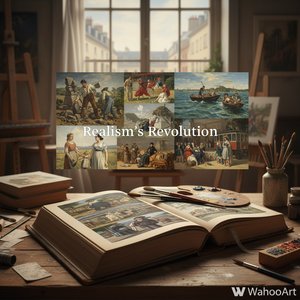
The museum's collection is a breathtaking exploration of the Realist movement, comprising over 400 artworks that predominantly showcase Courbet’s masterful command of landscapes and portraits. Visitors are invited to witness the raw, unvarnished beauty of nature and humanity through pieces such as Going Fishing, which captures a serene coastal scene with remarkable atmospheric depth, and The Beach at Trouville, where the artist's stylistic approach challenges academic conventions by prioritizing truthful representation over idealized beauty. The collection also offers intimate glimpses into domestic life, seen in works like Woman with Parrot, a captivating masterpiece that depicts intimacy and nature's delicate balance. For collectors and lovers of fine art, these works serve as a poignant reminder of Courbet’s ability to find the extraordinary within the ordinary.
The architectural context of the Musée Courbet is as significant as the canvases it houses. The museum occupies the Hôtel Hébert, Courbet’s birthplace—a historic building that has been meticulously restored to reflect its original grandeur. As visitors wander through these halls, they experience a harmonious blend of architectural styles, thanks to expansions acquired in 1994 and 2003. This setting provides a physical manifestation of the artist's roots, allowing the stone and timber of his childhood home to breathe life into his later, more radical works. The museum also holds a somber and significant place in history, as its collection includes important artworks salvaged from the Monuments, Archives, Objects of Artistic, Historic, Scientific or Religious Value (MNR) during World War II, standing as a symbol of cultural resilience.
What truly distinguishes the Musée Courbet is its ability to elucidate the philosophical underpinnings of Realism. It is not merely a gallery of beautiful images but a site of intellectual inquiry. By rejecting idealized forms in favor of honest representation, Courbet’s work established a foundation for all expressive art that followed. Beyond the visual splendor, the museum offers invaluable insight into his creative process through preserved letters and documents. These archives reveal the thoughts, influences, and the rebellious spirit of an artist who championed working-class subjects and everyday life. For the discerning visitor, the museum provides a captivating glimpse into the mind of a revolutionary, ensuring that Courbet’s legacy continues to inspire and challenge audiences for generations to come.