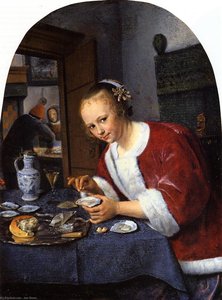
A Sanctuary of Golden Age Brilliance
Nestled within the historic Binnenhof district of The Hague, where the echoes of Dutch governance have resonated since medieval times, the Mauritshuis Royal Picture Gallery stands as a breathtaking testament to the zenith of the Dutch Golden Age. This is not merely a museum; it is an intimate encounter with the soul of seventeenth-century Europe. Originally constructed between 1636 and 1641 as the opulent residence for Count John Maurice Nassau, the building itself is a masterpiece of Dutch Classicism. Designed by the legendary architects Jacob van Campen and Pieter Post, its symmetrical façade and grand proportions reflect an era of immense wealth and burgeoning cultural influence. To walk through its doors is to step into a world where architectural elegance meets the profound psychological depth of the masters.
The collection housed within these walls represents one of the most significant concentrations of seventeenth-century painting in existence, offering a luminous stage for the technical virtuosity of the era's greatest talents. The museum’s heartbeat is perhaps most famously felt through the enchanting brilliance of Johannes Vermeer . His iconic Girl with a Pearl Earring captures a fleeting, eternal moment, where the subtle interplay of light on skin and the delicate luster of a single jewel create an intimacy that continues to captivate the global imagination. Alongside Vermeer, the museum presents the dramatic intensity of Rembrandt van Rijn , whose canvases pulsate with a masterful command of chiaroscuro . In works such as The Storm on the Sea of Galilee , one feels the raw vulnerability of humanity set against the overwhelming power of nature, a testament to the profound emotional range found within this curated sanctuary.
Beyond the main galleries, the museum offers a journey through layers of history and personal connoisseurship that invites deeper contemplation. The Prince William V Gallery provides a more secluded experience, showcasing a collection amassed by a prince who sought to mirror the prestige of Europe’s great monarchs. This space allows visitors to explore the refined tastes of an era defined by both private passion and public grandeur. Even the museum's physical history—marked by the resilience of its reconstruction following the devastating fire of 1704—serves as a metaphor for the enduring nature of the art it protects.
For the art lover, the collector, or the interior designer seeking inspiration, the Mauritshuis offers more than just visual pleasure; it provides a masterclass in composition, light, and emotion. The museum’s unwavering commitment to scholarly research and meticulous conservation ensures that every brushstroke of Hals, Potter, and Rembrandt remains as vivid today as it was centuries ago. Whether wandering through its sun-drenched halls or marveling at the intricate details of its Dutch Classicist architecture, one leaves the Mauritshuis transformed, having witnessed the very pinnacle of Western artistic achievement.