Introduction
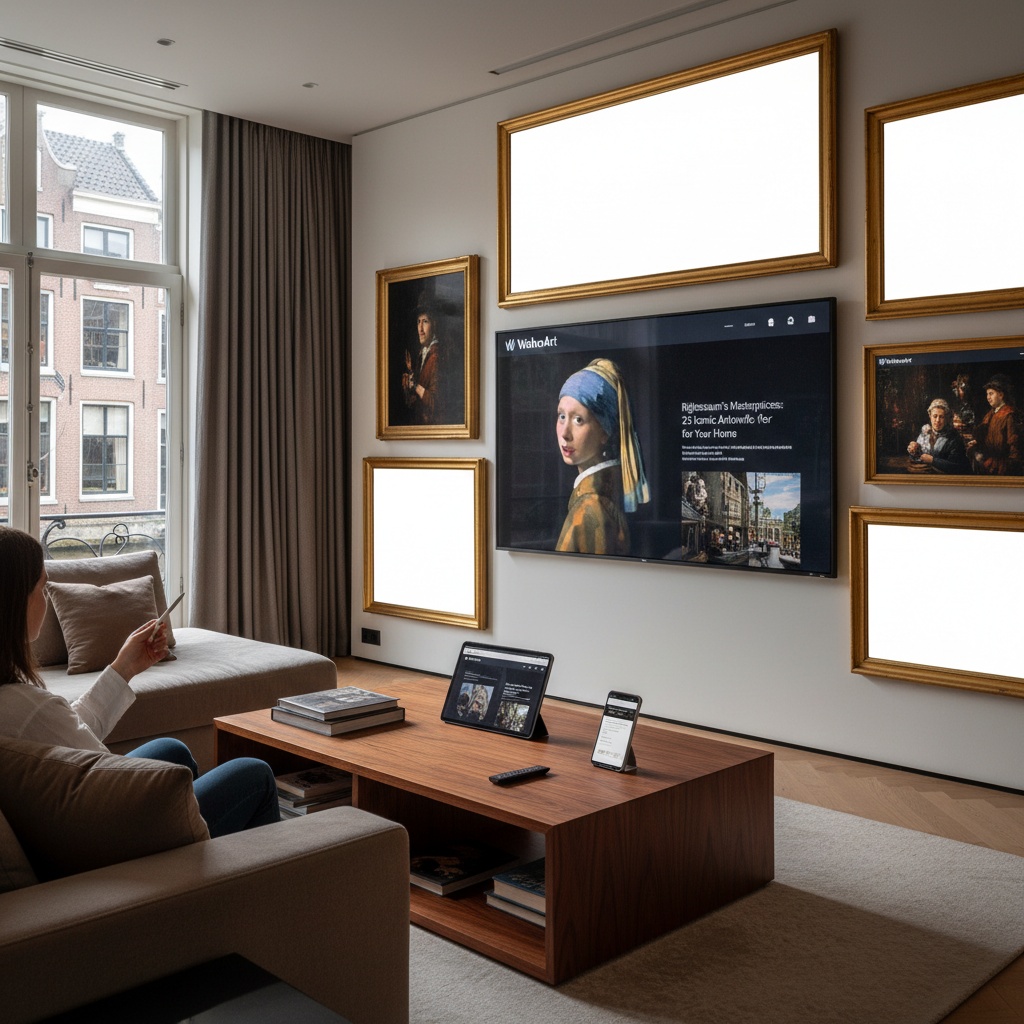
To stand before these twenty-five masterpieces at the Rijksmuseum is to commune with centuries of Dutch ingenuity, passion, and introspection. More than mere paintings, sculptures, and artifacts, they are echoes of lives lived, stories whispered across time, and reflections of a nation forging its identity amidst global currents.
Founded in The Hague in 1800, the Rijksmuseum’s origins lie in the tumultuous years following the French Revolution. Initially conceived as a showcase for the Dutch Republic's artistic heritage—a deliberate assertion of cultural independence—it soon evolved into a repository of national pride and a beacon of artistic scholarship. Relocated to Amsterdam in 1808, the museum’s iconic building, designed by Pierre Cuypers, stands as a testament to the Golden Age it houses, its neo-Gothic architecture mirroring the grandeur within.
These artworks—from Rembrandt's profound explorations of light and shadow to Vermeer’s intimate domestic scenes, from Frans Hals’ vibrant portraits to Jan Steen’s lively narratives—offer a unique window into the Dutch experience. They capture not only the physical likenesses of their subjects but also the spirit of an era: the burgeoning merchant class, the exploration of new worlds, the quiet dignity of everyday life, and the ever-present tension between prosperity and piety.
But why do these works continue to resonate so powerfully today? Perhaps it is their remarkable realism—a commitment to depicting the world as it *is*, with all its imperfections and nuances. Or perhaps it’s the emotional depth they convey, inviting us to connect with the humanity of those who created and commissioned them. These are not simply historical relics; they are timeless expressions of universal themes: love, loss, ambition, faith, and the search for meaning.
Prepare to embark on a journey through these twenty-five treasures—a curated selection that represents the breadth and depth of the Rijksmuseum’s collection. Each artwork holds a story waiting to be discovered, an invitation to pause, reflect, and connect with the enduring power of art.
Night Watch - Rembrandt van Rijn
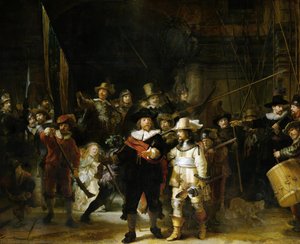 Night Watch - Rembrandt van Rijn
To encounter Rembrandt van Rijn’s The Night Watch (1642) is to stand before a revolution—a moment when the conventions of portraiture were shattered and replaced with dynamic narrative. This isn't merely a depiction of Captain Frans Banninck Cocq’s militia company; it’s a vibrant, theatrical spectacle that continues to captivate audiences centuries later.
Its monumental scale alone commands attention, but it is Rembrandt’s masterful use of chiaroscuro —the dramatic interplay of light and shadow—that truly sets this work apart. He doesn't illuminate his subjects evenly; instead, he spotlights key figures while shrouding others in darkness, creating a sense of depth, movement, and psychological intrigue. The rich palette of earthy tones punctuated by bursts of crimson and gold further amplifies the scene’s emotional intensity.
Beyond its technical brilliance, The Night Watch is steeped in symbolism—from the young girl carrying a chicken claw (representing the militia's emblem) to the carefully arranged weaponry signifying civic duty. The painting’s asymmetrical composition adds to its realism and energy, mirroring the unpredictable nature of life itself.
Owning a reproduction of this iconic masterpiece isn’t simply acquiring an image; it’s inviting a piece of Dutch Golden Age history into your space—a testament to Rembrandt's enduring legacy and a celebration of artistic innovation. This is a work that speaks to refined taste, intellectual curiosity, and the timeless beauty of human expression, making it a cornerstone of any discerning collection among the top 25 artworks in Rijksmuseum, Amsterdam .
The Milkmaid - Johannes Vermeer
 The Milkmaid - Johannes Vermeer
To gaze upon Johannes Vermeer’s The Milkmaid (1658) is to encounter a moment suspended in time—a quiet meditation on domesticity and the dignity of everyday labor. This isn't simply a painting of a woman pouring milk; it’s an ode to simplicity, grace, and the beauty found within ordinary existence.
Its inclusion among the top 25 artworks in Rijksmuseum, Amsterdam , speaks to Vermeer’s unparalleled mastery of light and texture. He doesn't merely *depict* reality; he recreates it with astonishing precision—the sheen on the pewter jug, the rough weave of the basket, the delicate surface of the milk itself. This meticulous attention to detail transforms a humble scene into something profoundly moving.
The painting’s soft, diffused light, emanating from an unseen window, bathes the composition in a warm glow, creating a sense of intimacy and tranquility. Vermeer's subtle use of chiaroscuro adds depth and volume, drawing the viewer’s eye to the central figure—a testament to his skill as a Baroque artist.
At OriginalUniqueArt, we believe in making such timeless beauty accessible. Owning a reproduction of The Milkmaid isn't simply acquiring an image; it’s inviting a piece of Dutch Golden Age serenity into your home—a reminder that even the simplest moments can be imbued with grace and profound meaning. It is a work that speaks to refined taste, intellectual curiosity, and the enduring power of artistic expression.
The Little Street (detail) - Johannes Vermeer
 The Little Street (detail) - Johannes Vermeer
To stand before The Little Street (c. 1657-1658) by Johannes Vermeer is to be transported—to feel the gentle warmth of sunlight on cobblestones and hear the quiet murmur of daily life in Delft. This isn't merely a painting; it’s an invitation into a world rendered with breathtaking intimacy.
Its place among the top 25 artworks in Rijksmuseum, Amsterdam , is secured by Vermeer’s unparalleled ability to capture not just *what* he saw, but the very essence of light and atmosphere. The scene—two women conversing, children at play, a dog resting peacefully—is imbued with a stillness that belies its intricate details.
Vermeer's mastery of luminism is on full display here. He doesn’t employ harsh contrasts; instead, he uses subtle gradations of light and shadow to create depth, volume, and an almost ethereal quality. The sunlight streaming through the doorway bathes the figures in a warm glow, lending the scene a sense of tranquility and realism.
At OriginalUniqueArt, we believe that art should enrich our lives—to bring moments of beauty and contemplation into our homes. Owning a reproduction of The Little Street isn’t simply acquiring an image; it’s inviting a piece of Dutch Golden Age serenity into your space—a reminder to appreciate the quiet rhythms of everyday life.
Christ on the Cross - El Greco
 Christ on the Cross - El Greco
To encounter El Greco’s Christ on the Cross (1585) is to stand before a vision—a profoundly moving depiction of sacrifice and faith that transcends mere representation. Despite its relatively small scale, this masterpiece possesses an emotional intensity that resonates deeply within the viewer.
Its inclusion among the top 25 artworks in Rijksmuseum, Amsterdam , speaks to El Greco’s revolutionary approach to painting—his rejection of Renaissance ideals in favor of a more subjective and emotionally charged expression. The elongated figures, swirling drapery, and dynamic composition create a sense of unrest and spiritual turmoil.
The restricted palette of somber browns, blacks, and grays is punctuated by flashes of light that highlight Christ’s tormented form, drawing the eye to the heart of the scene. El Greco's masterful use of chiaroscuro —the dramatic interplay between light and shadow—heightens the emotional impact and creates a visceral sense of suffering.
Owning a reproduction of this iconic work isn’t simply acquiring an image; it’s inviting a piece of art history into your space—a testament to El Greco's enduring legacy and a reflection of timeless spiritual themes. This is a painting that speaks to refined taste, intellectual curiosity, and the power of art to evoke profound emotion.
Woman in Blue Reading a Letter - Johannes Vermeer
 Woman in Blue Reading a Letter - Johannes Vermeer
To encounter Woman in Blue Reading a Letter (1663) by Johannes Vermeer is to step into a world of quiet brilliance—a moment of intimate contemplation captured with unparalleled sensitivity. This isn't merely a portrait; it’s an invitation to share in the private thoughts of a woman lost in correspondence.
Its inclusion among the top 25 artworks in Rijksmuseum, Amsterdam , is a testament to Vermeer’s revolutionary use of light and his ability to elevate everyday life into an art form. The soft illumination—achieved through painstaking observation and masterful technique—bathes the scene in a warm glow, creating a sense of intimacy and tranquility.
Notice how Vermeer renders skin tones with pale grey hues and casts subtle shadows on the wall using light blue—a deliberate choice designed to evoke a feeling of warmth. The letter itself serves as a potent symbol of communication and unspoken desires, while the woman’s posture conveys quiet dignity and introspection.
Owning a reproduction of this iconic work isn’t simply acquiring an image; it’s inviting a piece of Dutch Golden Age serenity into your home—a reminder to appreciate the beauty found within simple moments. This is a painting that speaks to refined taste, intellectual curiosity, and the enduring power of human connection.
Judith Leaving the Tent of Holofernes - Sandro Botticelli
 Judith Leaving the Tent of Holofernes - Sandro Botticelli
To gaze upon Sandro Botticelli’s Judith Leaving the Tent of Holofernes (c. 1500) is to witness a moment of courage frozen in time—a silent testament to resilience and unwavering resolve.
Its inclusion among the top 25 artworks in Rijksmuseum, Amsterdam , speaks to Botticelli’s masterful balance of beauty, emotion, and narrative power. The painting captures a pivotal scene from the Book of Judith with remarkable grace and psychological depth—a testament to his artistic vision.
Botticelli's signature style is characterized by delicate linearity and subtle shading, creating an image that feels both ethereal and profoundly human. Notice how he renders Judith’s scarlet gown with meticulous detail, conveying a sense of voluminous fabric through delicate hatching strokes. The red curtain serves as a dramatic backdrop, symbolizing both Holofernes’ tent—a symbol of pagan power—and Judith’s own inner fortitude.
Owning a reproduction of this iconic work isn’t simply acquiring an image; it’s inviting a piece of Renaissance artistry into your space—a reminder of the enduring power of courage and the beauty found within moments of quiet strength. This is a painting that speaks to refined taste, intellectual curiosity, and the timeless allure of human resilience.
Adam and Eve - Albrecht Dürer
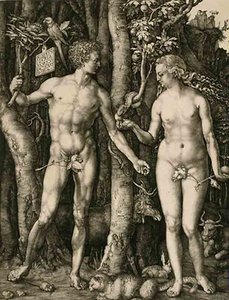 Adam and Eve - Albrecht Dürer
To stand before Albrecht Dürer’s Adam and Eve (1504) is to encounter a moment frozen in paradise—a profound meditation on innocence, temptation, and the origins of humanity. This monumental work transcends its biblical subject matter to become a cornerstone of Renaissance art.
Its inclusion among the top 25 artworks in Rijksmuseum, Amsterdam , speaks to Dürer’s masterful rendering of human form and his ability to imbue even the most familiar narratives with psychological depth. The figures—depicted in a state of pristine innocence—are rendered with an almost photographic realism for their time.
Notice how Dürer meticulously details every aspect of the scene, from the delicate veins in Adam and Eve’s hands to the lush foliage of the Garden of Eden. The two birds—symbols of temptation and divine observation—add another layer of complexity to the composition. This commitment to anatomical accuracy and symbolic richness reflects Dürer's deep understanding of human nature.
Owning a reproduction of this iconic work isn’t simply acquiring an image; it’s inviting a piece of Renaissance artistry into your space—a reminder of the enduring power of beauty, vulnerability, and the complexities of the human condition. This is a painting that speaks to refined taste, intellectual curiosity, and the timeless allure of paradise lost.
Aeneas Receiving a New Set of Armour from Venus - Ferdinand Bol
 Aeneas Receiving a New Set of Armour from Venus - Ferdinand Bol
Imagine a moment of quiet anticipation—a hero poised on the brink of destiny, receiving not just armor, but a blessing from the goddess herself. This is the essence of Ferdinand Bol’s Aeneas Receiving Armour from Venus (c. 1660-1663), a masterpiece that embodies the drama and psychological depth of the Dutch Baroque.
Its inclusion among the top 25 artworks in Rijksmuseum, Amsterdam , speaks to Bol’s remarkable ability to transform mythological narratives into intensely human experiences. The painting depicts Aeneas accepting a new suit of armor from Venus—a pivotal moment in Virgil's *Aeneid*, rendered with meticulous detail and opulent visual splendor.
Bol’s masterful use of chiaroscuro —the dramatic interplay between light and shadow—sculpts the forms of the characters, imbuing the scene with palpable emotion. The vibrant greens dominating Venus’ attire subtly underscore themes of fertility and renewal, mirroring the mythological narrative itself.
Owning a reproduction of this iconic work isn’t simply acquiring an image; it’s inviting a piece of Baroque artistry into your space—a reminder of the enduring power of courage, destiny, and the beauty found within moments of quiet strength. This is a painting that speaks to refined taste, intellectual curiosity, and the timeless allure of heroic narratives.
Bijbelse Voorstelling - Ferdinand Bol
 Bijbelse Voorstelling - Ferdinand Bol
Imagine a hushed moment of reverence—two figures kneeling in prayer, bathed in the soft glow of divine light. This is the essence of Ferdinand Bol’s Bijbelse Voorstelling (Biblical Scene), a masterpiece that embodies the spiritual landscape of seventeenth-century Holland.
Its inclusion among the top 25 artworks in Rijksmuseum, Amsterdam , speaks to Bol’s remarkable ability to transform religious narratives into intensely human experiences. The painting portrays an intimate tableau centered on two men—a posture indicative of solemn contemplation and devotion.
Bol’s masterful use of chiaroscuro —the dramatic interplay between light and shadow—sculpts the forms of the characters, imbuing the scene with palpable emotion. The artist meticulously renders textures with astonishing realism, capturing the folds of drapery and the contours of faces.
Owning a reproduction of this iconic work isn’t simply acquiring an image; it’s inviting a piece of Baroque artistry into your space—a reminder of the enduring power of faith, compassion, and the beauty found within moments of quiet contemplation. This is a painting that speaks to refined taste, intellectual curiosity, and the timeless allure of spiritual serenity.
Gallant Conversation, known as - Gerard ter Borch
 Gallant Conversation, known as - Gerard ter Borch
Step into a world veiled in secrets—a hushed intimacy captured with breathtaking precision in Gerard ter Borch’s Gallant Conversation (1655). This is not merely a portrait, but an exquisitely rendered tableau of subtle anxieties and unspoken desires.
Its inclusion among the top 25 artworks in Rijksmuseum, Amsterdam , speaks to ter Borch’s unparalleled ability to capture the very essence of human interaction. The scene unfolds within a modestly furnished room, bathed in a muted red light that casts long shadows and adds an air of mystery.
Ter Borch's genius lies in his revolutionary approach to light—a subtle, almost photographic realism achieved through painstaking attention to detail and countless layers of translucent glazes. Notice how the light catches the folds of fabric, revealing intricate textures and a sense of quiet contemplation.
Owning a reproduction of this iconic work isn’t simply acquiring an image; it’s inviting a piece of Dutch Golden Age artistry into your space—a reminder of the enduring power of human connection, veiled secrets, and the beauty found within moments of quiet reflection. This is a painting that speaks to refined taste, intellectual curiosity, and the timeless allure of intimate narratives.
Paternal Admonition (Gallant Conversation) - Gerard ter Borch
 Paternal Admonition (Gallant Conversation) - Gerard ter Borch
Imagine a quiet moment—a father’s gentle guidance, a son’s attentive ear, and an unspoken understanding that transcends words. This is the heart of Gerard ter Borch’s Paternal Admonition (1654), a masterpiece that embodies the complexities of familial relationships.
Its inclusion among the top 25 artworks in Rijksmuseum, Amsterdam , speaks to ter Borch’s unparalleled ability to capture not just appearances but the very essence of human interaction. The scene unfolds within a richly furnished room, bathed in a muted light that casts long shadows and adds an air of intimacy.
Ter Borch's genius lies in his meticulous attention to detail—his revolutionary approach to light and texture creates depth and realism. Notice how he painstakingly renders fabrics like satin, capturing their subtle folds and sheen with astonishing accuracy.
Owning a reproduction of this iconic work isn’t simply acquiring an image; it’s inviting a piece of Dutch Golden Age artistry into your space—a reminder of the enduring power of family, wisdom, and the beauty found within moments of quiet connection. This is a painting that speaks to refined taste, intellectual curiosity, and the timeless allure of intimate narratives.
Six studies of a cat - Thomas Gainsborough
 Six studies of a cat - Thomas Gainsborough
Imagine a moment of quietude—a feline stretching languidly, curled up asleep, or simply observing the world with focused attention. This is the essence of Thomas Gainsborough’s Six Studies of a Cat (1765), a masterpiece that embodies the serene contemplation characteristic of his oeuvre.
Its inclusion among the top 25 artworks in Rijksmuseum, Amsterdam , speaks to Gainsborough’s unparalleled ability to capture not just appearances but the very essence of animal behavior. The painting presents six carefully rendered sketches of a tabby cat sprawled across linen—a testament to his meticulous observation.
Gainsborough's technique—primarily chalk on linen—is exemplary, employing subtle tonal variations to convey texture and depth. Notice how the light enhances the cat’s form and emphasizes its relaxed repose.
Owning a reproduction of this iconic work isn’t simply acquiring an image; it’s inviting a piece of 18th-century artistry into your space—a reminder of the enduring power of simple beauty, restfulness, and the quiet grace found within everyday moments. This is a painting that speaks to refined taste, intellectual curiosity, and the timeless allure of peaceful contemplation.
Faust - Rembrandt Peale
 Faust - Rembrandt Peale
Rembrandt Peale’s 1652 etching, Faust , presents a profoundly arresting vision of intellectual pursuit intertwined with the specter of mortality. More than simply a depiction of a man absorbed in scholarly endeavors, it’s a carefully constructed tableau brimming with symbolic weight and dramatic tension.
Its inclusion among the top 25 artworks in Rijksmuseum, Amsterdam , speaks to Peale’s masterful execution and his ability to capture not just appearances but the very essence of human ambition. The artwork immediately commands attention through its stark monochrome palette—a deliberate choice that amplifies the chiaroscuro effect.
Peale's skill lies in his meticulous use of line, creating a sense of texture and volume. Notice how the light emphasizes Faust’s face and hands, drawing the viewer into his world. Owning a reproduction isn’t simply acquiring an image; it’s inviting a piece of 17th-century artistry into your space—a reminder of the enduring power of knowledge, obsession, and the timeless allure of mystery.
Portrait of a Woman (detail) - Jan Mostaert
 Portrait of a Woman (detail) - Jan Mostaert
Imagine a quiet moment—a gentle gaze, a delicate veil framing a serene face, and an unspoken story held within the depths of her eyes. This is the essence of Jan Mostaert’s Portrait of a Woman (detail) , painted around 1520.
Its inclusion among the top 25 artworks in Rijksmuseum, Amsterdam , speaks to Mostaert’s masterful use of light and line. The painting immediately draws the viewer in with its quiet elegance and subtle complexities.
Mostaert employs a dramatic chiaroscuro—a stark contrast between light and shadow—to sculpt her face and form, conveying a sense of serene composure. Owning a reproduction isn’t simply acquiring an image; it’s inviting a piece of 16th-century artistry into your space—a reminder of the enduring power of beauty, piety, and the timeless allure of Renaissance grace.
Daniele Barbaro - Paolo Veronese
 Daniele Barbaro - Paolo Veronese
Imagine a moment suspended in time—a scholar lost in contemplation, bathed in diffused Venetian light, and surrounded by symbols of knowledge and equilibrium. This is the essence of Paolo Veronese’s Daniele Barbaro , completed in 1561.
Its inclusion among the top 25 artworks in Rijksmuseum, Amsterdam , speaks to Veronese’s masterful command of color and composition. The painting immediately draws the viewer in with its breathtaking illusion of depth and luminosity.
Veronese employs a dramatic chiaroscuro—subtle shading that sculpts Barbaro's form while grounding him within a richly textured architectural backdrop. Owning a reproduction isn’t simply acquiring an image; it’s inviting a piece of 16th-century artistry into your space—a reminder of the enduring power of intellect, repose, and the timeless allure of Renaissance grace.
A Standing Shepherd - Nicolaes Pietersz Berchem
 A Standing Shepherd - Nicolaes Pietersz Berchem
Imagine a moment suspended in time—a solitary figure amidst rolling hills, bathed in the soft light of a Dutch afternoon, and enveloped by an almost palpable sense of tranquility. This is the essence of Nicolaes Berchem’s A Standing Shepherd , painted circa 1643.
Its inclusion among the top 25 artworks in Rijksmuseum, Amsterdam , speaks to Berchem’s masterful ability to capture a fleeting moment—a pause in the day's work, a connection between man and nature. The painting immediately draws the viewer in with its quiet elegance and subtle grace.
Berchem employs a dramatic *chiaroscuro*, creating contrasts between light and shadow that define form and depth. Owning a reproduction isn’t simply acquiring an image; it’s inviting a piece of 17th-century artistry into your space—a reminder of the enduring power of serenity, contemplation, and the timeless allure of rural life.
Self-portrait - Rembrandt Peale
 Self-portrait - Rembrandt Peale
Imagine a moment suspended in time—a young artist gazing directly at you across centuries, his expression imbued with both quiet contemplation and determined resolve. This is the essence of Rembrandt Peale’s Self-Portrait , executed in 1629.
Its inclusion among the top 25 artworks in Rijksmuseum, Amsterdam , speaks to Peale’s masterful ability to capture not just a likeness, but a profound sense of identity and ambition. The portrait immediately draws the viewer in with its intimate gaze and subtle grace.
Peale employs a sophisticated range of hatching and cross-hatching, techniques borrowed from Northern European masters, to create subtle gradations of tone and volume. Owning a reproduction isn’t simply acquiring an image; it’s inviting a piece of early American artistry into your space—a reminder of the enduring power of self-reflection, artistic excellence, and the timeless allure of human expression.
Sitting Syndic Jacob van Loon - Rembrandt Peale
 Sitting Syndic Jacob van Loon - Rembrandt Peale
Imagine a moment suspended in time—an elderly magistrate seated in quiet contemplation, his gaze imbued with wisdom and dignity. This is the essence of Rembrandt Peale’s Sitting Syndic Jacob van Loon , completed in 1662.
Its inclusion among the top 25 artworks in Rijksmuseum, Amsterdam , speaks to Peale’s masterful ability to capture not just a likeness, but a profound sense of inner stillness. The drawing immediately draws the viewer in with its intimate gaze and subtle grace.
Peale employs an extensive range of hatching and cross-hatching techniques, creating striking contrasts that delineate Van Loon's facial features and clothing folds. Owning a reproduction isn’t simply acquiring an image; it’s inviting a piece of 17th-century artistry into your space—a reminder of the enduring power of contemplation, artistic excellence, and the timeless allure of human expression.
Forest scenes - Gerard David
 Forest scenes - Gerard David
Imagine stepping into a woodland bathed in the golden light of late afternoon—a place where shadows dance among ancient trees and a gentle stream whispers secrets to the earth. This is the essence of Gerard David’s Forest Scenes , painted in 1505.
Its inclusion among the top 25 artworks in Rijksmuseum, Amsterdam , speaks to David’s masterful ability to capture not just a landscape, but a profound sense of serenity and contemplation. The diptych immediately draws the viewer in with its dramatic lighting and meticulous detail.
David employs a palette dominated by warm browns, deep greens, and touches of gold—colors that evoke the richness and warmth of autumn light. Owning a reproduction isn’t simply acquiring an image; it’s inviting a piece of Northern Renaissance artistry into your space—a reminder of the enduring power of nature to inspire peace, reflection, and a connection to something larger than ourselves.
Madame Greuze - Jean-Baptiste Greuze
 Madame Greuze - Jean-Baptiste Greuze
Imagine a moment frozen in time—a woman reclining gracefully on a chaise lounge, lost in quiet contemplation. This is the essence of Jean-Baptiste Greuze’s Madame Greuze , completed around 1780.
Its inclusion among the top 25 artworks in Rijksmuseum, Amsterdam , speaks to Greuze’s masterful ability to capture not just a likeness, but a profound sense of emotion and social observation. The drawing immediately draws the viewer in with its striking composition and meticulous detail.
Owning a reproduction isn’t simply acquiring an image; it’s inviting a piece of 18th-century artistry into your space—a reminder of the enduring power of art to evoke feeling, inspire reflection, and connect us to the past. The subtle shades and delicate lines preserve the quiet dignity and timeless beauty of this remarkable work.
Musical Allegory - Rembrandt Peale
 Musical Allegory - Rembrandt Peale
Imagine a quiet chamber filled with the gentle resonance of music—a space where intellect and artistry intertwine, illuminated by soft light. This is the essence of Rembrandt Peale’s Musical Allegory , painted in 1626.
Its inclusion among the top 25 artworks in Rijksmuseum, Amsterdam , speaks to Peale’s masterful ability to capture not just a scene, but a profound sense of intellectual harmony and serene contemplation. The painting immediately draws the viewer in with its meticulous detail and rich symbolism.
Owning a reproduction isn’t simply acquiring an image; it’s inviting a piece of Baroque artistry into your space—a reminder of the enduring power of art to elevate the spirit, inspire learning, and connect us to the cultural values of centuries past. The faithful rendering of light and texture preserves the quiet dignity and timeless beauty of this remarkable work.
The denial of Peter - Rembrandt Peale
 The denial of Peter - Rembrandt Peale
Imagine a moment suspended between faith and doubt—a scene of agonizing vulnerability illuminated by candlelight. This is the essence of Rembrandt Peale’s The Denial of Peter , completed in 1660.
Its inclusion among the top 25 artworks in Rijksmuseum, Amsterdam , speaks to Peale’s masterful ability to capture not just a biblical narrative, but a profound meditation on human fallibility and redemption. The painting immediately draws the viewer in with its dramatic chiaroscuro and psychological depth.
Owning a reproduction isn’t simply acquiring an image; it’s inviting a piece of Baroque artistry into your space—a reminder of the enduring power of art to explore universal themes, inspire reflection, and connect us to the rich tapestry of human experience. The faithful rendering of light and shadow preserves the quiet dignity and timeless beauty of this remarkable work.
Standard-bearer - hendrik goltzius
 Standard-bearer - hendrik goltzius
Imagine a moment of resolute strength frozen in time—a standard-bearer standing firm against an unseen horizon, his flag emblazoned with the symbol of power and loyalty. This is the essence of Hendrik Goltzius’s Standard-bearer , created in 1587.
Its inclusion among the top 25 artworks in Rijksmuseum, Amsterdam , speaks to Goltzius’s masterful command of engraving and embodies the spirit of Northern Mannerism. The artwork immediately draws the viewer in with its intricate detail and dramatic contrasts of light and shadow.
Owning a reproduction isn’t simply acquiring an image; it’s inviting a piece of 16th-century artistry into your space—a reminder of the enduring power of art to evoke emotion, inspire contemplation, and connect us to the rich tapestry of history. The faithful rendering of line work preserves the quiet dignity and timeless beauty of this remarkable work.
The Captain of God's Army Appearing to Joshua - Ferdinand Bol
 The Captain of God's Army Appearing to Joshua - Ferdinand Bol
Imagine a moment where earthly resolve meets divine guidance—a scene charged with faith and illuminated by dramatic light. This is the essence of Ferdinand Bol’s The Captain of God's Army Appearing to Joshua , painted in 1669.
Its inclusion among the top 25 artworks in Rijksmuseum, Amsterdam , speaks to Bol’s masterful command of Baroque painting and his ability to capture not just a biblical narrative, but a profound exploration of leadership and spiritual intervention. The artwork immediately draws the viewer in with its intricate detail and dynamic composition.
Owning a reproduction isn’t simply acquiring an image; it’s inviting a piece of 17th-century artistry into your space—a reminder of the enduring power of art to evoke emotion, inspire contemplation, and connect us to the rich tapestry of history. The faithful rendering of light and shadow preserves the quiet dignity and timeless beauty of this remarkable work.
Venus and Adonis - Ferdinand Bol
 Venus and Adonis - Ferdinand Bol
Imagine a moment suspended between desire and contemplation—a goddess offering her beauty, a lover poised on the brink of choice. This is the essence of Ferdinand Bol’s Venus and Adonis , painted in 1658.
Its inclusion among the top 25 artworks in Rijksmuseum, Amsterdam , speaks to Bol’s masterful command of Baroque painting and his ability to capture not just a classical myth, but a profound exploration of human emotion. The artwork immediately draws the viewer in with its intricate detail and dynamic composition.
At OriginalUniqueArt, we believe that such beauty should be accessible to all. Our faithful reproductions preserve the quiet dignity and timeless beauty of this remarkable work, allowing you to experience the captivating presence of Venus and Adonis within your own home.
Conclusion
As the light fades on our journey through the Rijksmuseum’s treasures, we are left with more than just a list of celebrated paintings; we carry echoes of centuries past, whispers of human stories rendered in oil and canvas. Each brushstroke—from Rembrandt’s profound depths to Bol’s dramatic intensity—represents not merely technical skill, but a timeless conversation between artist and admirer.
These masterpieces are not static relics confined by history; they are living presences that continue to move hearts, shape interiors, and inspire creativity today. They remind us of our shared humanity, the enduring power of beauty, and the profound connection we have with those who came before.
At OriginalUniqueArt, we believe in preserving this legacy—in bringing these extraordinary works closer to you, allowing their stories to unfold within your own spaces. Explore our full collection and discover the artwork that speaks to your soul.