A Symphony in Stone: The Enduring Legacy of Vienna’s Karlskirche
The skyline of Vienna is punctuated by monuments to empire, faith, and artistic ambition, but few resonate with such profound emotional weight as the Karlskirche – St. Charles Church. More than simply a religious edifice, it stands as a breathtaking testament to resilience born from tragedy, a swirling vortex of Baroque exuberance tempered by unexpected global influences. Commissioned in 1713 by Holy Roman Emperor Charles VI following the devastation wrought by a virulent plague, the church wasn’t merely intended as an act of piety; it was a vow, a desperate plea to Saint Charles Borromeo, revered for his healing powers and intercession during times of pestilence. The very foundations of Karlskirche are steeped in gratitude and remembrance, a poignant narrative woven into every sculpted detail and soaring arch. Construction commenced in 1716 under the guidance of Johann Bernhard Fischer von Erlach, a visionary architect whose ambition knew no bounds, and was later brought to fruition by his son, Joseph Emanuel Fischer von Erlach, in 1737 – a collaborative masterpiece spanning generations.
Architectural Alchemy: A Fusion of Styles
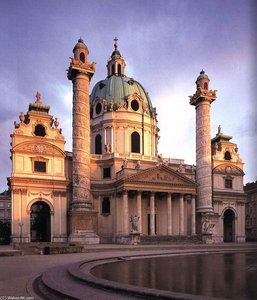
To describe Karlskirche as simply “Baroque” feels almost reductive. While undeniably rooted in the dramatic flair and opulent ornamentation characteristic of the period, the church transcends stylistic categorization through its daring eclecticism. Fischer von Erlach was a scholar of architectural history, and his design reflects a profound understanding – and fearless blending – of diverse traditions. The most striking feature is undoubtedly the pair of monumental columns flanking the façade, directly inspired by Trajan’s Column in Rome. These aren't mere decorative elements; they are narrative sculptures, spiraling upwards to depict scenes from the life of Saint Charles Borromeo, a visual biography etched in stone. Above this classical foundation rises a magnificent dome, reaching 74 meters and dominating the Viennese panorama. But it’s the unexpected that truly captivates: the pagoda-like roofs adorning the bell towers, a whimsical nod to Eastern architectural forms reflecting the cosmopolitan nature of the Habsburg Empire and its burgeoning trade routes. A classical Greco-Roman portico further enriches this harmonious discordance, creating a building that feels simultaneously ancient and utterly original.
A Sanctuary of Light and Color: The Interior Realm
Stepping inside Karlskirche is to enter a realm of ethereal beauty. Sunlight streams through the vast windows, illuminating an interior adorned with breathtaking frescoes – most notably, Johann Michael Rottmayr’s masterful depiction of Saint Charles Borromeo imploring divine intervention to end the plague. This isn't merely decoration; it’s a powerful visual prayer, capturing the desperation and hope of a city ravaged by disease. The interplay of light and shadow dances across the marble surfaces, highlighting the intricate details of the sculpted ornamentation. Beyond its artistic splendor, Karlskirche houses a fascinating treasury, safeguarding a collection of religious artifacts and historical treasures that offer glimpses into Vienna’s spiritual past. For those seeking an even more expansive perspective, ascending to the dome provides unparalleled panoramic views of the city – a breathtaking reward for the climb.
Notable Exhibitions and Artistic Significance: Beyond Worship
Karlskirche’s enduring appeal extends far beyond its architectural grandeur and artistic treasures. It has hosted numerous exhibitions showcasing contemporary art installations alongside historical masterpieces, fostering dialogue between tradition and innovation. The church's role as a cultural hub underscores its importance in Vienna’s artistic heritage—a testament to the city’s commitment to preserving both its past and embracing new creative expressions. Furthermore, Karlskirche serves as an inspiration for interior designers seeking to evoke grandeur and spiritual contemplation through masterful use of materials and lighting. Its soaring dome and monumental columns exemplify Baroque architectural principles, creating spaces that inspire awe and reverence.
A Living Cultural Hub: Ongoing Performances and Artistic Engagement
Today, Karlskirche continues to thrive as a vibrant cultural center—hosting regular classical concerts featuring renowned orchestras and musicians. Performances of Vivaldi’s *The Four Seasons* and Mozart’s *Requiem*, among others, resonate with the church's history and architectural splendor, enriching Vienna’s artistic landscape. The church actively promotes engagement with art and culture, inviting visitors to explore its treasures and experience its unique atmosphere—a beacon of Viennese heritage for generations to come.
Conclusion: A Timeless Masterpiece
Karlskirche stands as a poignant reminder of resilience, beauty, and faith—a testament to the enduring legacy of Baroque artistry and Vienna’s unwavering spirit. Its architectural brilliance, coupled with its rich artistic heritage and ongoing cultural significance, ensures that this magnificent church will continue to inspire admiration for centuries to come.