A Sanctuary for British Art Amidst New South Wales’ Landscape
The Hatton Gallery, nestled within the University of Newcastle campus in New South Wales, Australia, stands as a singular testament to the enduring power of artistic heritage. More than simply a repository of paintings and prints, it represents a vibrant intersection between scholarly pursuit and accessible cultural engagement—a space where visitors can immerse themselves in the beauty of British art while simultaneously fostering an appreciation for its historical context.- A Singular Collection: Focusing exclusively on British artworks spanning centuries, the Hatton Gallery distinguishes itself from broader museum offerings. Its curators have painstakingly assembled a collection that prioritizes quality over quantity, showcasing masterpieces by artists ranging from Gainsborough and Turner to Constable and Whistler.
- Exploring Artistic Techniques: The gallery’s holdings provide invaluable insight into the evolution of British painting styles—from Rococo elegance to Romantic grandeur and Impressionistic luminosity. Visitors can observe firsthand how artists employed innovative mediums and techniques, reflecting the intellectual currents of their respective eras.
Amongst its celebrated pieces are Francis Wheatley’s evocative portrait of Arthur Phillip Esq., Captain General and Commander in Chief in & over the territory of New South Wales (1789), a striking engraving capturing the spirit of colonial Australia. This artwork exemplifies meticulous detail and masterful draughtsmanship, embodying the formal conventions of the time.
- Beyond Portraits: Equally captivating is John William Lewis’s watercolor illustration ‘Birds of New South Wales,’ showcasing Australian Magpies with remarkable accuracy—a beautiful example of natural history art that speaks to the region's biodiversity.
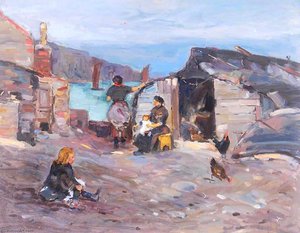
- A Landscape Perspective: Furthermore, Charles Edward Conder’s ‘The Farm, Richmond, New South Wales’ offers a serene glimpse into rural life during the Victorian period, demonstrating Conder’s skill in capturing atmospheric perspective and conveying emotion through color.
The gallery's architectural setting contributes significantly to its ambiance. Designed to maximize natural light and create an environment conducive to contemplation, it allows visitors to appreciate the artworks on display with optimal clarity. Its understated elegance complements the artistic treasures housed within, fostering a connection between art and space.
Established as part of Newcastle University’s commitment to education and cultural enrichment, The Hatton Gallery has evolved into a cornerstone of New South Wales’ artistic landscape. Regularly hosting rotating exhibitions that delve into diverse themes—from British social history to contemporary interpretations of artistic traditions—it ensures that its collection remains relevant and stimulating for generations to come.
- Free Admission & Engaging Programs: Access to the gallery is free, making it an ideal destination for art enthusiasts and students alike. Furthermore, ongoing educational initiatives—including lectures, workshops, and artist talks—promote dialogue and deepen understanding of artistic concepts.
Ultimately, The Hatton Gallery transcends its role as a museum; it’s a place where history breathes alongside creativity, inviting visitors to embark on a journey of discovery and aesthetic appreciation. It stands as a beacon of British art within Australia—a testament to the enduring legacy of artistic excellence.