Menu
FREE ART CONSULTATION

Collegio del Cambio

Quick Facts

  • Works on APS: 27
  • Historical periods: renaissance
  • Location: Perugia, Italy
  • Art types:
    • other
    • wallart
  • More…
  • Mediums:
    • fresco
    • oil on canvas
  • Movements:
    • early renaissance
    • renaissance
  • Featured artists: vannucci pietro (le perugin)
  • Alternate names:
    • Collegio del Cambio
    • Nobile Collegio del Cambio
    • Noble College of Exchange
    • College of Exchange
    • Exchange Guild Hall

Art Quiz

There is only one correct answer for each question.

Question 1:
What is the Collegio del Cambio primarily known for?
Question 2:
Who is Pietro Vannucci, commonly known as?
Question 3:
What prominent artistic influence can be observed in Perugino's frescoes?
Question 4:
The Collegio del Cambio’s architecture is characterized by:
Question 5:
What was the primary purpose of the Sala dell’Udienza?

A Renaissance Heartbeat: Exploring the Collegio del Cambio

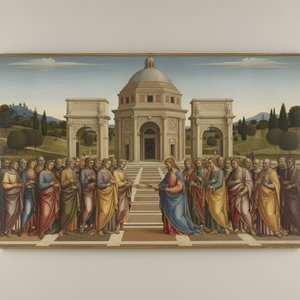
Nestled within the majestic Palazzo dei Priori in Perugia, Italy, lies a treasure trove of Renaissance artistry and historical significance – the Collegio del Cambio. More than simply a museum, it is a portal to 15th-century Umbria, offering an immersive experience into the world of merchants, humanism, and artistic innovation. Built between 1452 and 1457, this building stands as a testament to Perugia’s prosperity during the Renaissance, its very stones echoing with the ambitions and cultural fervor of the era. The Collegio wasn't merely a hall for financial exchange; it was a symbol of civic pride and intellectual pursuit, meticulously designed to impress upon visitors the power and sophistication of the city’s ruling class. ### The Frescoes of Perugino: A Celebration of Humanity The Collegio del Cambio is indelibly linked with the name of Pietro Vannucci, known as Perugino, one of Umbria's most celebrated Renaissance masters. Commissioned to decorate the Sala dell’Udienza – the Hall of Audience – between 1496 and 1500, Perugino created a breathtaking cycle of frescoes that continue to captivate viewers today. Perhaps the most renowned is “Famous Men of Antiquity,” a remarkable series depicting figures from classical history and mythology. These aren't simply portraits; they are embodiments of humanist ideals – celebrating intellectual achievement, civic virtue, and artistic excellence. Perugino’s masterful use of perspective, his delicate rendering of drapery, and the serene beauty of his compositions create an atmosphere of profound contemplation. The frescoes demonstrate a clear influence from Florentine Renaissance masters like Botticelli and Leonardo da Vinci, yet possess a unique Umbrian grace and clarity. Beyond “Famous Men,” Perugino’s work within the Collegio encompasses depictions of prophets and sibyls, further enriching the hall with layers of symbolic meaning and theological depth. ### Architecture as Art: A Symphony in Wood and Stone The beauty of the Collegio del Cambio extends beyond its painted surfaces. The architecture itself is a masterpiece of Renaissance design. Intricate woodwork adorns the hall, culminating in a magnificently carved wooden ceiling that draws the eye upwards, creating a sense of spaciousness and grandeur. Every detail – from the ornate capitals of the columns to the delicate tracery of the windows – speaks to the skill and artistry of the craftsmen involved. The building’s layout reflects its original function as an exchange guild hall, with spaces designed for both formal meetings and private transactions. This blend of practicality and aesthetic refinement is characteristic of Renaissance architecture at its finest. The Collegio stands as one of the best-preserved examples of a medieval exchange guild hall, offering invaluable insights into the economic and social life of 15th-century Perugia. ### Notable Exhibitions & Contemporary Appreciation Recent initiatives have focused on digitalizing the collection, making these masterpieces accessible to a wider audience through online resources and virtual tours. The museum hosts exhibitions that explore Umbrian art history and culture, fostering dialogue between past and present. Furthermore, collaborations with international institutions promote scholarly research and contribute to the preservation of cultural heritage. ### A Living Legacy: Preservation & Accessibility Today, the Collegio del Cambio is actively engaged in sharing its legacy with future generations. Ongoing conservation efforts ensure that these artworks endure for centuries to come, while educational programs inspire curiosity and appreciation among visitors of all ages. Its location within Perugia’s historic center adds to its charm and facilitates connections with Umbrian culture.