Early Life & Formation: The Roots of Perugino's Style
 Wikipedia: Pietro Perugino
Pietro Perugino (US: PERR-ə-JEE-noh, -oo-; Italian: [ˈpjɛːtro peruˈdʒiːno]; born Pietro Vannucci or Pietro Vanucci; c. 1446/1452 – 1523), an Italian Renaissance painter of the Umbrian school, developed some of the qualities that found classic expre...
Pietro Vannucci, known to history as Perugino—a simple designation referencing his adopted city of Perugia—emerged from the heart of Umbria in the mid-15th century. While precise dates remain elusive, scholars place his birth between 1446 and 1452, a period steeped in artistic ferment yet still largely defined by the traditions of Gothic painting. His early training likely occurred within local workshops, absorbing the regional aesthetic before venturing further afield. The socioeconomic status of the Vannucci family remains debated; some accounts suggest humble beginnings, while others propose a more comfortable upbringing. Regardless, Perugino’s innate talent quickly became apparent, propelling him towards Florence—a crucible of artistic innovation and the epicenter of the Early Renaissance.
The workshop of Andrea del Verrocchio proved pivotal. Here, amidst luminaries like Leonardo da Vinci and Domenico Ghirlandaio, Perugino honed his skills, absorbing techniques in painting, fresco, and drawing. The influence of Piero della Francesca is also keenly felt in his early works; the elder master’s mastery of perspective and geometric form profoundly shaped Perugino's approach to spatial representation. However, Perugino wasn’t merely an imitator. He possessed a unique sensibility—a predilection for clarity, harmonious composition, and a gentle lyricism that would become hallmarks of his mature style. Even in these formative years, a distinct voice began to emerge, foreshadowing the serene beauty that would define his oeuvre.
Perugino in Florence & Rome: A Rising Star of the Renaissance
Returning to Perugia after his Florentine apprenticeship, Perugino quickly established himself as a leading artist. His *Adoration of the Magi* (c. 1476) for Santa Maria dei Servi demonstrates this burgeoning confidence—a work that seamlessly blends the lessons learned in Florence with a distinctly Umbrian grace. Yet, it was Rome that truly propelled him to prominence. In 1480, Pope Sixtus IV summoned Perugino to contribute to the monumental fresco cycle decorating the walls of the Sistine Chapel. This commission, alongside artists like Botticelli and Pinturicchio, marked a turning point in his career.
The frescoes themselves—including *Moses and Zipporah*, *the Baptism of Christ*, and *Delivery of the Keys*—reveal Perugino’s growing mastery of narrative composition and figural representation. While collaborative efforts make precise attribution challenging, his hand is evident in the clarity of form, the elegant drapery, and the balanced arrangements that characterize these early Roman works. The Sistine Chapel project wasn't merely a technical exercise; it was an immersion into the heart of papal patronage, exposing Perugino to the demands of a sophisticated clientele and solidifying his reputation as one of Italy’s most sought-after artists.
The Sistine Chapel Commissions: Defining Moments and Artistic Partnerships
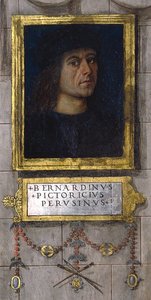 Pinturicchio
Discover Pinturicchio (1454-1513), a Renaissance master renowned for his exquisite frescoes, vibrant colors & detailed compositions. Explore works in the Sistine Chapel & Borgia Apartments! #RenaissanceArt
Perugino's involvement in the Sistine Chapel wasn’t solely an individual triumph; it was a testament to his organizational skills and ability to manage a complex workshop. He frequently collaborated with other painters, notably Pinturicchio, dividing responsibilities and sharing profits. This partnership, while successful, also highlights the competitive nature of Renaissance art—a world where reputation and patronage were fiercely contested. The frescoes themselves represent a fascinating intersection of styles; Perugino’s emphasis on clarity and harmonious composition contrasted with Pinturicchio's more decorative approach.
However, the very walls that secured his fame would later become the backdrop for Michelangelo’s *Last Judgement*, effectively overshadowing the earlier contributions. The destruction of portions of Perugino’s frescoes to accommodate Michelangelo’s masterpiece underscores the shifting artistic landscape and the relentless pursuit of innovation during the High Renaissance. Despite this eventual displacement, the Sistine Chapel commissions remain defining moments in Perugino's career—a showcase of his technical prowess and a crucial step towards establishing his unique aesthetic.
Harmonious Compositions & Serene Madonnas: Hallmarks of Perugino’s Art
 God the Creator and Angels
Discover Pietro Perugino’s ‘God the Creator & Angels,’ a stunning 1508 High Renaissance fresco. Admire its harmonious composition, vibrant colors, and divine beauty. Explore art history!
Perugino’s artistic signature lies in the creation of harmonious compositions imbued with a sense of serene beauty. His figures, often arranged in balanced groupings, possess an idealized grace that reflects classical statuary. He was a master of perspective, creating convincing illusions of depth and space within his paintings. This technical skill wasn't merely for show; it served to enhance the emotional impact of his narratives, drawing viewers into the sacred scenes he depicted.
Perhaps most iconic are his depictions of the Virgin Mary—characterized by a gentle sweetness and maternal tenderness. These *Madonnas* radiate an inner peace that resonated deeply with contemporary audiences. Works like the *Pietà* (1483–1493) demonstrate this sensitivity, though it’s also notable for its uncharacteristically stark emotional restraint compared to his later, more lyrical compositions. His use of light and color further contributes to this ethereal quality—soft gradations and subtle hues creating an atmosphere of tranquility and devotion. The *God the Creator & Angels* (1508) exemplifies this mature style – a fresco brimming with divine beauty and harmonious balance.
Raphael's Mentor: Perugino's Enduring Legacy and Influence
 Raphael
Raphael (1483-1520): A High Renaissance master renowned for his serene Madonnas, architectural genius, and iconic works like 'The School of Athens'. Explore his Urbino beginnings & artistic legacy.
Undoubtedly, Perugino’s most lasting legacy lies in his mentorship of Raffaello Sanzio—the future master of the High Renaissance. Raphael entered Perugino’s workshop around 1483, quickly absorbing his teacher’s techniques and aesthetic principles. The early works of Raphael bear a striking resemblance to those of Perugino, demonstrating the profound influence he exerted on the young artist. However, Raphael wasn't merely an imitator; he built upon Perugino’s foundations, infusing them with a newfound dynamism and emotional depth.
While some accounts suggest a degree of rivalry between the two artists, it’s clear that Perugino recognized Raphael’s exceptional talent. The relationship was complex—a blend of paternal guidance, professional competition, and artistic exchange. Perugino's influence can be seen in Raphael’s serene Madonnas, balanced compositions, and masterful use of perspective. Even as Raphael developed his own distinct style, the echoes of Perugino’s teachings remained evident throughout his career. The *Marriage of the Virgin* painted by both artists provides a compelling visual comparison, highlighting the continuity and evolution of their shared aesthetic.
Rediscovery & Appreciation: Perugino's Place in Art History Today
For centuries, Perugino’s reputation languished in the shadow of Raphael. Vasari’s account, while acknowledging his talent, often framed him as a precursor to—rather than an equal of—his more celebrated pupil. However, the 19th century witnessed a renewed appreciation for Perugino's work, fueled by the Pre-Raphaelite movement and their admiration for his clarity of form and emotional sincerity. The acquisition of *The Nativity* by the Victoria & Albert Museum in 1862 played a crucial role in this rediscovery.
Today, Perugino is recognized as a pivotal figure in the Italian Renaissance—a master who bridged the gap between the Early and High Renaissance styles. His harmonious compositions, serene Madonnas, and enduring influence on Raphael secure his place among the great artists of history. Recent exhibitions, such as the 2023 show at the National Gallery of Umbria, continue to shed light on his artistic achievements and solidify his legacy for generations to come. At OriginalUniqueArt, we are proud to offer high-quality reproductions of Perugino’s masterpieces, allowing you to experience the beauty and serenity of his art firsthand. Explore our collection and discover the timeless appeal of this remarkable Umbrian master.