
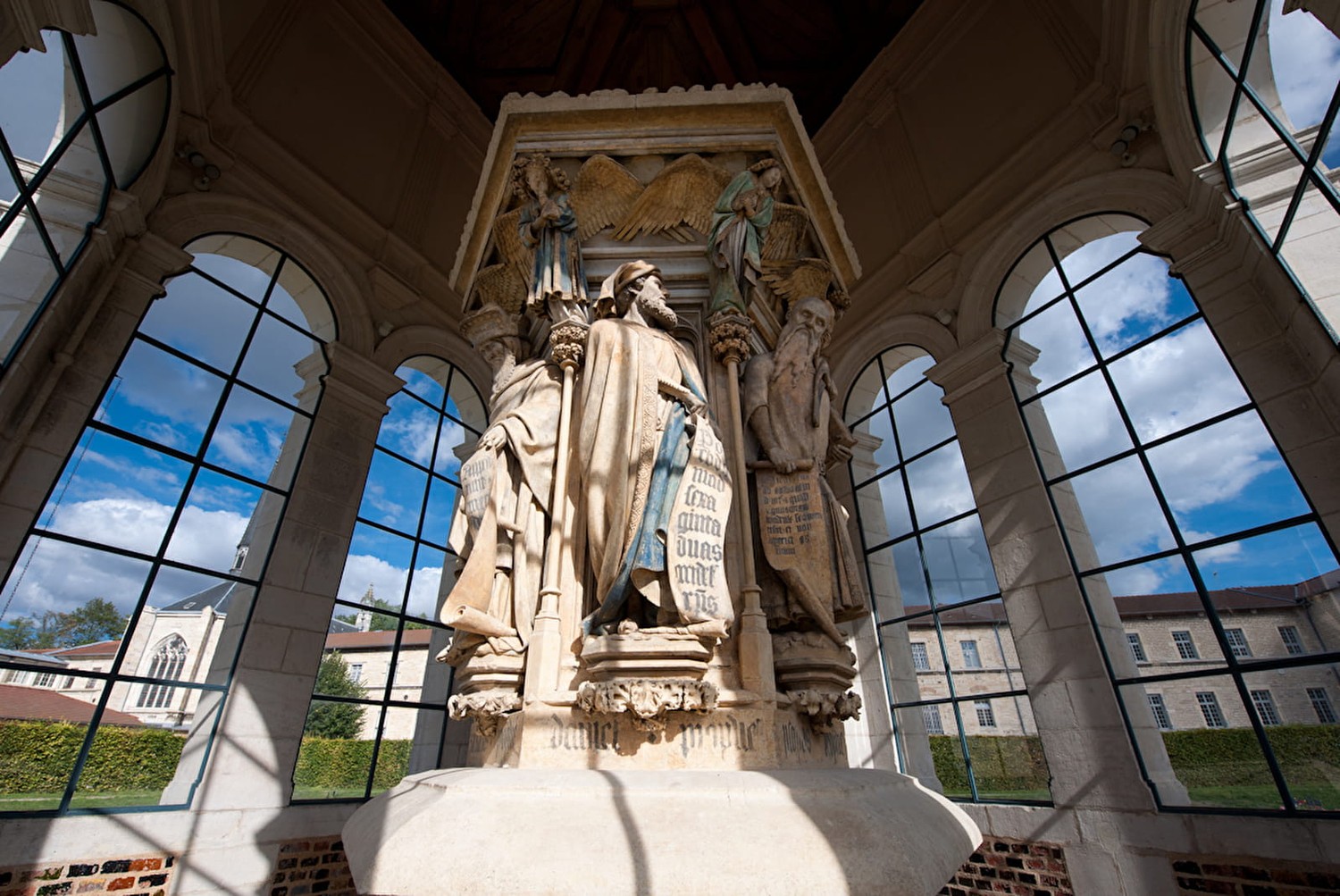
Quick Facts
- Location: Dijon, France
- Alternate names:
- Chartreuse de Champmol
- Chartreuse de la Sainte-Trinité de Champmol
- Charterhouse of Champmol
- Champmol
- Charterhouse of the Holy Trinity of Champmol
- Featured artists: Claus Sluter
- Works on APS: 5
- Movements:
- gothic
- northern renaissance
Art Quiz
There is only one correct answer for each question.
Question 1:
What is the primary significance of Champmol Charterhouse?
Question 2:
Who commissioned the monumental sculpture known as "The Well of Moses"?
Question 3:
What architectural style characterizes Champmol's original monastic structure?
Question 4:
Which artist created the Dijon Altarpiece, offering a rare glimpse into 14th-century painting techniques?
Question 5:
What distinguishes Champmol from other monasteries of its time?
Exhibited Artists

Claus Sluter
Claus Sluter (c. 1350-1406) was a groundbreaking Dutch sculptor, pivotal in the transition from Gothic to Renaissance art. Known for his realistic depictions of emotion & monumental works like the Well of Moses, he pioneered 'Northern Realism' and in

Related Articles
Honoré Daumier: Social Commentary & Artistic Innovation in 19th-Century France
Explore the life & work of Honoré Daumier, a master of 19th-century French realism and satire. Discover his powerful lithographs, paintings, and sculptures critiquing society – and his lasting influence on modern art.
Illuminating Faith & Power: A Journey Through Medieval Art (c. 500 – c. 1500)
Explore the rich history of Medieval Art (c. 500 – c. 1500) with OriginalUniqueArt. Discover Byzantine mosaics, Gothic cathedrals & Renaissance masterpieces. Expert insights & museum-quality reproductions.
Giotto's Masterpieces: 25 Renaissance Artworks for Your Home | OriginalUniqueArt
Explore 25 breathtaking artworks by Giotto di Bondone, a Renaissance master. Discover the stories behind iconic frescoes & paintings like the Scrovegni Chapel cycle. Find museum-quality Giotto reproductions and elevate your home decor with OriginalUniqueArt.com.
List of Artworks




Subscribe to Our Newsletter
Stay updated with the latest art news, exclusive offers, and decoration ideas.
Get 3 Free Art Suggestions
Tell us about your project and our art experts will provide you with 3 personalized art suggestions.
Not Sure Where to Start?
Let Us Curate 3 Options Just for You - Free!