Explore the works of Pieter Brueghel the Younger's workshop! Discover 16th/17th-century Flemish paintings inspired by his father, featuring peasant life, landscapes & detailed copies. A key figure in spreading Bruegel’s legacy.
Peter Doig (b. 1959) is a celebrated Scottish painter known for evocative landscapes & figurative work inspired by memory, photography, and art history. His dreamlike scenes of Canada & Trinidad define his contemporary style.
Discover Ambrosius Francken I (1544-1618), a Flemish Mannerist painter renowned for religious altarpieces & historical allegories. A key member of the prolific Francken family, his works influenced Counter-Reformation art with muscular figures and dramatic narratives.
A Tapestry of Time: Unveiling the Bonnefanten Museum’s Enduring Dialogue
Nestled within the vibrant heart of Maastricht, Netherlands, the Bonnefanten Museum isn't merely a repository for art; it’s an experience—a carefully orchestrated conversation between eras, styles, and perspectives. Founded in 1884 as a provincial historical collection, its evolution into a leading center for both historical and contemporary masterpieces is a testament to the city’s rich cultural heritage and the museum's commitment to fostering dynamic artistic dialogue. The building itself, designed by the renowned Italian architect Aldo Rossi, is an integral part of this narrative—a bold, rocket-shaped cupola piercing the Maastricht skyline, a deliberate echo of the museum’s journey from humble beginnings to its current position as a significant European institution. This architectural statement isn't simply aesthetic; it represents a conscious bridging of past and future, tradition and innovation, inviting visitors to contemplate the very essence of art and architecture.
A Historical Foundation:
The museum’s roots lie in the “bons enfants” – good children – a former convent that sheltered its early collections. This lineage imbues the space with a sense of history and continuity, grounding the contemporary exhibitions within a broader narrative of artistic evolution.
The Rossi Revolution:
Aldo Rossi's design is more than just a building; it’s an active participant in the museum experience. The dramatic cupola serves as a focal point, drawing visitors upwards and creating a sense of openness and connection to the city below. Its geometric form challenges conventional notions of museum architecture, prompting reflection on the relationship between space, form, and artistic expression.
A Kaleidoscope of Artistic Voices: Exploring the Collection
The Bonnefanten Museum’s collection is remarkably diverse, a carefully curated blend of historical masterpieces and groundbreaking contemporary works. Within its walls, one can trace the evolution of artistic styles across centuries, from the intricate detail of medieval sculptures – including the poignant “Virgin and Child with St. Anne” by the Master of Elsloo – to the vibrant colors and dramatic compositions of early Italian and Flemish paintings. The museum’s holdings boast a significant collection of works by masters such as Jan van Steffeswert, Pieter Coecke van Aelst, and Anthony van Dyck, offering intimate glimpses into the lives and beliefs of bygone eras.
However, the Bonnefanten Museum isn't confined to the past. It embraces the dynamism of contemporary art with equal fervor, showcasing works by artists like Sol LeWitt, Robert Ryman, Jan Dibbets, and Marcel Broodthaers. The addition of the Eyck collection in 2011 dramatically expanded this landscape, introducing Italian Arte Povera – a movement that challenged conventional notions of artistic materials – and conceptual art, pushing the boundaries of artistic expression. The museum’s commitment to showcasing both historical and contemporary works ensures a constantly evolving experience for visitors, fostering a deeper understanding of the interconnectedness of artistic traditions.
Bridging Eras: The Museum's Unique Approach
What truly distinguishes the Bonnefanten Museum is its deliberate strategy of fostering dialogue between past and present. It’s not simply about displaying art from different periods side-by-side; it’s about creating an environment where these works can inform and challenge one another. This approach encourages visitors to consider the evolution of artistic ideas, the enduring themes that connect generations of artists, and the ways in which contemporary practices build upon—or react against—historical precedents. The museum's curators actively curate exhibitions designed to highlight these connections, creating a rich tapestry of artistic influences and interpretations.
Notable Exhibitions:
Exile on Main Street:
(2009) – A retrospective celebrating American Minimalism, showcasing the precision and stark beauty of artists like Sol LeWitt and Robert Ryman.
Truly Wicked: The Seven Deadly Sins Visualized
(2024-2025) - An exhibition exploring the visual representation of sin through a diverse range of artistic styles and mediums.
Beyond the Walls: A Community Hub
The Bonnefanten Museum is more than just a museum; it’s an integral part of the Maastricht community. Regular temporary exhibitions, educational programs, and public events draw visitors from across the region and beyond. The museum's commitment to accessibility—including its “Bonnefanten Free Fridays” initiative—ensures that art remains within reach for all. Furthermore, the museum actively collaborates with local institutions and organizations, fostering a vibrant cultural ecosystem. Its location in the heart of Maastricht’s Céramique district provides easy access to restaurants, shops, and other attractions, making it a destination worthy of exploration.
For more information and upcoming events, please visit:
www.bonnefanten.nl
By the OriginalUniqueArt.com Editorial Team
Art Quiz
There is only one correct answer for each question.
Question 1:
What is the primary architectural feature of the Bonnefanten Museum that immediately draws attention?
Question 2:
According to the description, which of the following best describes the Bonnefanten Museum's approach to art?
Question 3:
The Bonnefanten Museum was originally conceived as:
Question 4:
Which architect designed the current building of the Bonnefanten Museum?
Question 5:
The name 'Bonnefanten' is derived from which French word?
Explore the Dutch Golden Age of painting (1600-1700) with OriginalUniqueArt. Discover Rembrandt, Vermeer & other masters. Learn about techniques, history & find museum-quality reproductions.
Explore the Dutch Golden Age of painting! Discover key artists like Vermeer & ter Borch, their innovative techniques, and the rich cultural context behind these Baroque masterpieces. Learn about collecting & appreciating this iconic art period.
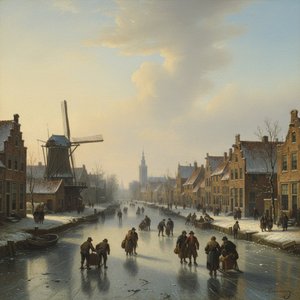
Explore the captivating winter landscapes of Charles Leickert, a master of Dutch Golden Age light & atmosphere. Discover his techniques, symbolism, and lasting legacy – a comprehensive study for art enthusiasts and collectors.