
Ask for the famous artists of the Musée Des Beaux and you will hear of Émile Bernard, Maurice Denis, Paul Sérusier and Charles-André van Loo.
Below, the 10 best-known of the 74 artists with works of the Musée Des Beaux in our catalogue (91 works), each with what the museum holds of them.
The masters of the originals
The 10 masters whose originals hang in the Musée Des Beaux
For each master: where and when they were born, their movement, how many originals the museum keeps in our catalogue, a note from their life, and the originals to see.
-

Post-Impressionism
1. Émile Bernard 1868–1941
1868–1941 Born in Lille, France Post-Impressionism 2 originals at the Musée Des Beaux
April 28, 1868, in Lille, France. Émile Henri Bernard’s early life was shaped by his sister's illness, leading to him being raised primarily by his grandmother, who ran a laundry in Lille. He began formal art studies at the École des Arts Décoratifs and later joined the Atelier Cormon in 1884. Bernard is considered a pioneer of Cloisonnism, a style characterized by bold, flat shapes separated by dark contours – reminiscent of stained glass.
Originals at the Musée Des Beaux
-

Post-Impressionism
2. Maurice Denis 1870–1943
1870–1943 Born in Granville, France Post-Impressionism 2 originals at the Musée Des Beaux
Maurice Denis, born in the coastal town of Granville, France, in 1870, occupies a fascinating position in art history —a pivotal figure straddling the waning days of Impressionism and the burgeoning currents of modern art.
Originals at the Musée Des Beaux
-

Post-Impressionism
3. Paul Sérusier 1864–1927
1864–1927 Born in Paris, France Post-Impressionism 6 originals at the Musée Des Beaux
The summer of 1888 changed the trajectory of Paul Sérusier's career when he traveled to Pont-Aven. By moving into this group, Sérusier moved toward a style that prioritized the artist's internal perception over the mere imitation of nature. In October 1888, under the close supervision of Gauguin, Paul Sérusier produced The Talisman.
Originals at the Musée Des Beaux
-
Rococo
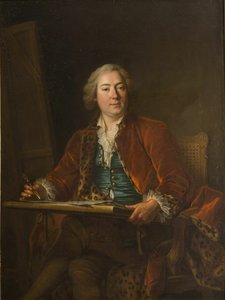
4. Charles-André van Loo 1705–1765
1705–1765 Born in Nice, France Rococo 2 originals at the Musée Des Beaux
Attended the Académie royale, winning first prize for drawing in 1723 and historical painting in 1727. Appointment to the Court: Became First Painter to King Louis XV in 1762, a prestigious position.
Originals at the Musée Des Beaux
-

5. Sigismondo Coccapani 1583–1643
1583–1643 Born in Florence, Italy 2 originals at the Musée Des Beaux
A child is born into a city where the boundaries between the mathematical and the visual are beginning to blur. Between 1610 and 1613, Coccapani assists his master on the works at Santa Maria Maggiore.
Originals at the Musée Des Beaux
-

6. Henriette Herminie Gudin 1825–1892
1825–1892 Born in Paris, France 2 originals at the Musée Des Beaux
Born in Paris, France, on May 17, 1825, Henriette Herminie Gudin entered a world defined by the salt and spray of maritime art. Growing up within the orbit of her father's profession, she was immersed in the technicalities of the sea from an early age. The influence of her father, a maritime artist, was a guiding force in her development. In 1850, she married Étienne François Fauchier.
Originals at the Musée Des Beaux
-

7. Louis-Marie Désiré-Lucas 1869–1949
1869–1949 2 originals at the Musée Des Beaux
While many of his contemporaries were preoccupied with the terrestrial details of French landscapes, he focused on the atmospheric drama of the heavens. Born in Fort-de-France, Martinique, his later life and work became inextricably linked to the rugged geography of the French coast.
Originals at the Musée Des Beaux
-

8. Pierre Belay 1890–1947
1890–1947 3 originals at the Musée Des Beaux
Born in 1890, Pierre Belay’s early years remain largely obscured by the shadows of history, yet his trajectory shifts decisively upon his demobilization from military service. Between 1923 and 1926, Belay finds a steady rhythm as an illustrator for Harlequin magazine.
Originals at the Musée Des Beaux
-

9. Charles Francisque Raub 1854–1926
1854–1926 3 originals at the Musée Des Beaux
Born in 1854, Charles Francisque Raub was a man of the sea and the soil, a son of Finistère who carried the spirit of northern Brittany into the heart of the French capital. By 1880, he was already making his mark upon the Salon des artistes français. One of his most noted efforts from this period was his 1880 oil painting, Ishmael.
Originals at the Musée Des Beaux
-

10. Léopold Le Guen 1828–1895
1828–1895 3 originals at the Musée Des Beaux
Léopold Le Guen was a French painter who lived from 1828 to 1895.
Originals at the Musée Des Beaux


The house in figures
The masters of the Musée Des Beaux, in figures
The masters with the most originals at the Musée Des Beaux
Masters with two originals or more, by century of birth
Masters with two originals or more, by country of birth
Masters with two originals or more, by movement
Women masters
The women whose originals hang in the Musée Des Beaux
4 women masters, 5 originals, in our catalogue of the Musée Des Beaux.
-
Henriette Herminie Gudin
1825–1892 · born in Paris, France · 2 originals at the Musée Des Beaux
- Seascape by Moonlight (1850)
- Boats Stranded at Dawn (1850)
-

Suzanne Valadon
1865–1938 · born in Bessines-sur-Gartempe, France · 1 originals at the Musée Des Beaux
-

Angelica Kauffmann
1741–1807 · born in Chur, Switzerland · 1 originals at the Musée Des Beaux
- Christian Allegory (1798)
-

Eugénie Servières
1783–1855 · born in Paris, France · 1 originals at the Musée Des Beaux
Asked of us
Questions on the masters of the Musée Des Beaux
Open a question to read the answer.
Who is the best-known artist of the Musée Des Beaux?
Émile Bernard, with 2 works at the Musée Des Beaux in our catalogue (Deux femmes sur la passerelle d'Asnières and Autoportrait); then Maurice Denis and Paul Sérusier.
How many Émile Bernard paintings are in the Musée Des Beaux?
2 works by Émile Bernard at the Musée Des Beaux are in our catalogue: Deux femmes sur la passerelle d'Asnières and Autoportrait among them.
How many Maurice Denis paintings are in the Musée Des Beaux?
2 works by Maurice Denis at the Musée Des Beaux are in our catalogue: Le Christ apparaissant aux apôtres and Soir de septembre (la plage de Trestrignel) among them.
How many Paul Sérusier paintings are in the Musée Des Beaux?
6 works by Paul Sérusier at the Musée Des Beaux are in our catalogue: La Sainte Face, Les porteuses de linge Le passage du ruisseau (autre titre), Les blés verts au Pouldu and Les batteurs de blé noir among them.
Who are the top 10 artists in the Musée Des Beaux?
The ten best-known artists with works in the Musée Des Beaux are Émile Bernard (2), Maurice Denis (2), Paul Sérusier (6), Charles-André van Loo (2), Sigismondo Coccapani (2), Henriette Herminie Gudin (2), Louis-Marie Désiré-Lucas (2), Pierre Belay (3), Charles Francisque Raub (3) and Léopold Le Guen (3).
Who has the most paintings in the collection of the Musée Des Beaux?
Paul Sérusier (1864–1927), with 6 works in our catalogue of the Musée Des Beaux, ahead of Pierre Belay (3), Charles Francisque Raub (3) and Léopold Le Guen (3).
Is Leonardo da Vinci in the Musée Des Beaux?
No: the Musée Des Beaux holds no work by Leonardo da Vinci in our catalogue.
Are there Pablo Picasso works in the Musée Des Beaux?
No: the Musée Des Beaux holds no work by Pablo Picasso in our catalogue.
Which women artists are in the Musée Des Beaux?
Our catalogue lists 4 women artists with works at the Musée Des Beaux: Henriette Herminie Gudin (2), Suzanne Valadon (1), Angelica Kauffmann (1) and Eugénie Servières (1).
Are the artists in the Musée Des Beaux mostly French, Italian or Dutch?
By country of birth, the artists with two works or more at the Musée Des Beaux are mostly from France (5) and Italy (1).
Who is the earliest artist in the Musée Des Beaux?
Most of the artists with two works or more at the Musée Des Beaux were born in the 19th century (8 artists); the earliest in this ranking is Sigismondo Coccapani (1583–1643), the latest Pierre Belay (1890–1947).
How many painters are represented in the Musée Des Beaux?
Our catalogue lists 74 artists with at least one work at the Musée Des Beaux, 10 of them with two or more, born between 1583 and 1890 in 2 countries.
The house
The Musée Des Beaux, Brest, in a few lines
A Window into Brittany’s Soul: the Musée des Beaux-Arts de Brest
The museum's strength resides in its remarkably diverse holdings, spanning from the grandeur of Old Masters – primarily French and Italian works – to the bold experimentation of modern art. Many pieces directly reference the city’s vital role as a port and trading hub, offering visitors an unparalleled glimpse into the lives, livelihoods, and artistic sensibilities shaped by the rhythms of the ocean. The presence of Paul Sérusier’s Impressionistic watercolors further underscores the museum’s commitment to showcasing a broad spectrum of artistic styles.
A Building Forged in Remembrance
The Musée des Beaux-Arts' architectural story is as compelling as its collection. Originally established before the war, the building suffered catastrophic damage during the conflict, leaving it a shell of its former self. The subsequent reconstruction was a deliberate act of remembrance and renewal, skillfully integrating modern design principles with the historical fabric of Brest. The museum’s façade reflects this careful balance – a harmonious blend of contemporary lines and subtle nods to the city's past. Notably, the building’s placement within the Palais Longchamp, itself a magnificent example of 19th-century architecture commissioned by Henri-Jacques Espérandieu, adds another layer of historical significance. The colonnade connecting the museum to the monumental central fountain is particularly striking, showcasing the architectural prowess of the era and creating a visually arresting entrance.
The famous originals of the Musée Des BeauxThe Musée Des Beaux: the full page, 91 originalsThe museums of Brest
How the masters of the originals are ranked
The masters with two originals or more of the Musée Des Beaux in our catalogue are ranked by fame: the Wikipedia language editions that describe them, the visits to their OriginalUniqueArt.com page and our studio's ranking. Originals are counted in our catalogue — one entry per work, without details, studies or copies — not in the museum's inventory. Every date, birthplace and movement is the catalogue's; the notes are drawn from the master's biography.
Go on