
Ask for the famous artists of the Kunstmuseum Basel and you will hear of Vincent van Gogh, Claude Monet, Paul Cézanne and Edvard Munch.
Our catalogue lists 237 works of the Kunstmuseum Basel by 115 artists; the 25 best known are ranked below, each with the works the museum holds.
The masters of the originals
The 10 masters whose originals hang in the Kunstmuseum Basel
For each master: where and when they were born, their movement, how many originals the museum keeps in our catalogue, a note from their life, and the originals to see.
-
Post-Impressionism
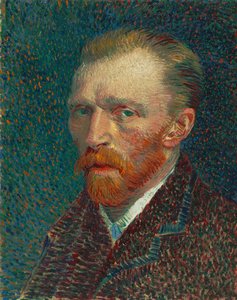
1. Vincent van Gogh 1853–1890
1853–1890 Born in Zundert, Netherlands Post-Impressionism 6 originals at the Kunstmuseum Basel
Vincent Willem Van Gogh was born on March 30, 1853, in Zundert, Netherlands. His brother Theo was born on 1 May 1857, and their connection would remain a constant through the many letters they exchanged over the years. The quiet village of Zundert in the Brabant region was where Vincent Willem Van Gogh was born. In 1873, he moved to the London branch of Goupil & Cie, where he remained until May 1875.
Originals at the Kunstmuseum Basel
-
Impressionism
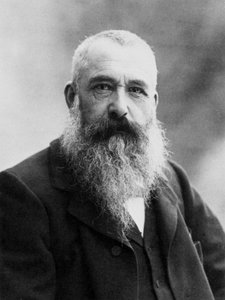
2. Claude Monet 1840–1926
1840–1926 Born in Paris, France Impressionism 4 originals at the Kunstmuseum Basel
Born in Paris, France, on 14 November 1840, Claude Monet entered a world of diverging expectations. Tragedy arrived in January 1857, when Monet was sixteen years old. In 1883, Monet moved to a house and property in Giverny, a village northwest of Paris. In 1892, he married Alice Hoschedé, a union that provided a sense of stability as he continued his obsessive study of light and atmosphere.
Originals at the Kunstmuseum Basel
-
Post-Impressionism
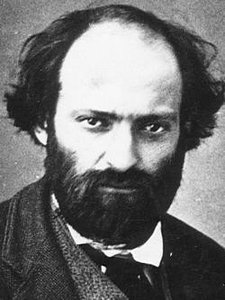
3. Paul Cézanne 1839–1906
1839–1906 Born in Aix-en-Provence, France Post-Impressionism 4 originals at the Kunstmuseum Basel
Born on January 19, 1839, at 28 rue de l'Opéra in Aix-en-Provence, Paul Cézanne entered a world of established order. In 1860, he made the decisive choice to abandon his law studies, turning his focus entirely toward the pursuit of painting. By 1859, his technical proficiency was evident when he earned second prize in the school's figure studies course.
Originals at the Kunstmuseum Basel
-

Expressionism
4. Edvard Munch 1863–1944
1863–1944 Born in Ådalsbruk, Norway Expressionism 5 originals at the Kunstmuseum Basel
Edvard Munch was a Norwegian painter whose life was deeply tied to the landscapes and the heavy atmosphere of his homeland. Edvard Munch was born in 1863 amidst the stark landscapes of Norway. In 1868, his mother died from tuberculosis, a loss that left a heavy mark on the young boy.
Originals at the Kunstmuseum Basel
-
Post-Impressionism
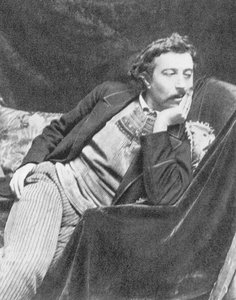
5. Paul Gauguin 1848–1903
1848–1903 Born in Paris, France Post-Impressionism 5 originals at the Kunstmuseum Basel
Born in Paris in 1848, Eugène Henri Paul Gauguin entered a world of shifting social and political currents. The boy spent his childhood in Peru until the age of six, a period that left an indelible mark on his memory. Before finding his footing in the art world, Gauguin’s life took a more rugged, maritime turn. Between 1879 and 1886, he was accepted into the Paris Salon, appearing in the prestigious exhibition annually.
Originals at the Kunstmuseum Basel
-

Hague School
6. Piet Mondrian 1872–1944
1872–1944 Born in Amersfoort, Netherlands Hague School 3 originals at the Kunstmuseum Basel
The man who would reshape the visual language of the twentieth century began his life as Pieter Cornelis Mondriaan, Jr. He was born on March 7, 1872, in Amersfoort, Netherlands. By 1892, he is already qualified as a drawing teacher. By 1909, his presence in the Dutch art scene is established through a major exhibition at the Stedelijk Museum in Amsterdam. By 1917, the deconstruction of form has moved beyond the mere fragmentation of objects.
Originals at the Kunstmuseum Basel
-

Realism
7. Gustave Courbet 1819–1877
1819–1877 Born in Ornans, France Realism 3 originals at the Kunstmuseum Basel
Jean Désiré Gustave Courbet was born on June 10, 1819, in Ornans, France. Growing up in the department of Doubs, his early years were shaped by the landscape of his home. In 1839, he moved to Paris. Later, Bruyas commissioned The Meeting, also known as Bonjour Monsieur Courbet, which reflected this established connection between patron and painter. In 1855, rather than retreating, Courbet took a more direct approach to his audience.
Originals at the Kunstmuseum Basel
-
Impressionism
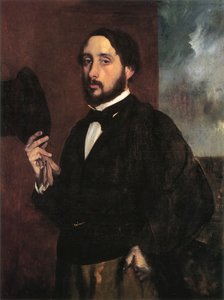
8. Edgar Degas 1834–1917
1834–1917 Born in Paris, France Impressionism 3 originals at the Kunstmuseum Basel
French Realist known for capturing the movement of ballet dancers and racehorses through precise draftsmanship and artificial light. A child is born into a moderately wealthy family to Hilaire-Germain-Edgar De Gas.
Originals at the Kunstmuseum Basel
-
Impressionism
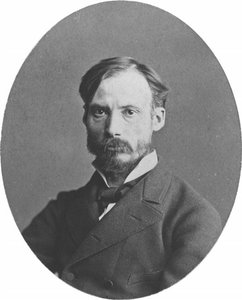
9. Pierre-Auguste Renoir 1841–1919
1841–1919 Born in Limoges, France Impressionism 2 originals at the Kunstmuseum Basel
Born on February 25, 1841, in Limoges, France, Pierre-Auguste Renoir entered a world of practical craftsmanship. In 1845, the family moved to Paris, seeking the opportunities offered by the capital. When the family moved to Paris in 1845, the necessity of supporting his kin dictated the direction of his youth. By the third exhibition in 1877, his commitment to this new way of seeing was evident as he presented twenty-one paintings to the public.
Originals at the Kunstmuseum Basel
-

Expressionism
10. Paul Klee 1879–1940
1879–1940 Born in Münchenbuchsee, Switzerland Expressionism 8 originals at the Kunstmuseum Basel
Born on December 18, 1879, in Münchenbuchsee, near Bern, Switzerland, Paul Klee grew up in a home defined by the discipline of music. Between 1898 and 1901, he trained under Heinrich Knirr and Franz von Stuck. In the early years, Klee traveled to Italy from October 1901 to May 1902 with Hermann Haller.
Originals at the Kunstmuseum Basel


The masters, continued
No. 11 to No. 25: more masters of the Kunstmuseum Basel
-

11. Jean-Auguste-Dominique Ingres
Neoclassicism
1780–1867 · born in Montauban, France · 2 originals at the Kunstmuseum Basel
French Neoclassical painter of precise contours and idealized nudes, known for the flowing, sculptural lines of his famous odalisques.
-

12. Hans Holbein the Younger
Northern Renaissance
1497–1543 · born in Augsburg, Germany · 15 originals at the Kunstmuseum Basel
Northern Renaissance portraitist known for hyper-realistic detail and symbolic objects, serving the Tudor court of Henry VIII in England.
-

13. Théodore Géricault
Romanticism
1791–1824 · born in Rouen, France · 2 originals at the Kunstmuseum Basel
French Romantic pioneer of dramatic chiaroscuro and visceral scenes of human suffering, from shipwrecked rafts to portraits of the insane.
- The Martyrdom of Saint Peter (1814)
-

14. Jean-Baptiste-Camille Corot
Romanticism
1796–1875 · born in Paris, France · 3 originals at the Kunstmuseum Basel
French Realist of atmospheric landscapes and soft vegetation, using thin washes and loosely dabbed strokes to capture the play of light.
- Italian woman at the fountain (1867)
- The ruins of Arras (1852)
- Odalisque (1871)
-

15. Franz Marc
Expressionism
1880–1916 · born in Kreuzstraße, Germany · 2 originals at the Kunstmuseum Basel
German Expressionist known for symbolic animals and a spiritual use of color, using blue for masculinity and yellow for feminine joy.
-

16. Camille Pissarro
Impressionism
1830–1903 · born in Charlotte Amalie, United States Virgin Islands · 9 originals at the Kunstmuseum Basel
Danish-French Impressionist who captured rural life and city streets through textured plein air landscapes and pointillist experiments.
- Gleaners (1887)
- The Quarry, Pontoise (1875)
- Bouquet of Flowers (1900)
-

17. Lucas Cranach the Elder
Northern Renaissance
1472–1553 · born in Kronach, Germany · 6 originals at the Kunstmuseum Basel
German Renaissance painter of elegant, elongated figures and authoritative portraits of reformers, known for his precise woodcuts and engravings.
- Madonna and Child (1529)
- The judgements of Paris (1528)
- Round Portrait of Katharina von Bora (1525)
-

18. Fernand Léger
Cubism
1881–1955 · born in Argentan, France · 3 originals at the Kunstmuseum Basel
French Cubist known for Tubism and rhythmic, mechanical forms inspired by the machine age and the vibrant neon lights of New York City.
- Staircase 19 (1914)
- The tree houses (1914)
- The Woman in Blue (1912)
-

19. Henri Rousseau
Naive Art
1844–1910 · born in Laval, France · 2 originals at the Kunstmuseum Basel
French Post-Impressionist of dreamlike jungle scenes and vibrant, imaginative compositions, inspired by botanical gardens and exotic animals.
- The Muse Inspiring the Poet (1909)
- Negro Attacked by a Jaguar (1910)
-

Spanish Cubist known for mathematical precision and structured still lifes using geometric planes and collage techniques.
- Still Life on Plaque (1917)
- Guitar and Fruit Bowl on a Table (1918)
-

21. Odilon Redon
Symbolism
1840–1916 · born in Bordeaux, France · 2 originals at the Kunstmuseum Basel
French Symbolist known for dreamlike noirs in charcoal and lithography, later evolving into luminous, colorful pastels inspired by Japanese art.
- The Martyrdom of Saint Sebastian (1910)
- Siren (1900)
-
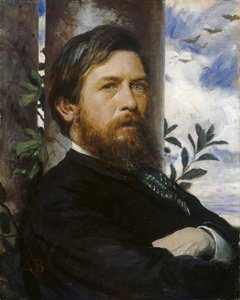
22. Arnold Böcklin
Symbolism
1827–1901 · born in Basel, Switzerland · 5 originals at the Kunstmuseum Basel
Swiss Symbolist of haunting mythological realms and the silent, spectral Isle of the Dead, rendered with expressive impasto and deep shadows.
-

23. Henry Fuseli
Romanticism
1741–1825 · born in Zurich, Switzerland · 2 originals at the Kunstmuseum Basel
Swiss Romanticist of the subconscious, known for haunting, dreamlike scenes and dramatic tension in works like The Nightmare.
-

24. Theo van Doesburg
De Stijl
1883–1931 · born in Utrecht, Netherlands · 4 originals at the Kunstmuseum Basel
Dutch pioneer of De Stijl using primary colors and geometric abstraction to create dynamic compositions through straight lines and right angles.
-
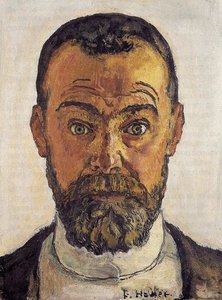
25. Ferdinand Hodler
Symbolism
1853–1918 · born in Bern, Switzerland · 5 originals at the Kunstmuseum Basel
Swiss Symbolist known for rhythmic parallelism and monumental Alpine landscapes rendered in a structured, geometric harmony.
Famous artists in the Kunstmuseum Basel, No. 26 to 42
 Hans Baldung Grien1485–1545 · 6 originals at the Kunstmuseum Basel
 Paula Modersohn-Becker1876–1907 · 3 originals at the Kunstmuseum Basel
 Jan van Goyen1596–1656 · 4 originals at the Kunstmuseum Basel
 Adriaen Brouwer1605–1638 · 4 originals at the Kunstmuseum Basel
 Konrad Witz1400–1445 · 9 originals at the Kunstmuseum Basel
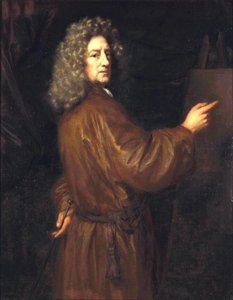 Nicolaes Maes1634–1693 · 2 originals at the Kunstmuseum Basel
 Félix Vallotton1865–1925 · 4 originals at the Kunstmuseum Basel
 Lovis Corinth1858–1925 · 3 originals at the Kunstmuseum Basel
 Aelbert Cuyp1620–1691 · 2 originals at the Kunstmuseum Basel
 Jan van der Heyden1637–1712 · 2 originals at the Kunstmuseum Basel
 Pieter Coecke van Aelst1502–1550 · 2 originals at the Kunstmuseum Basel
 Nicolaes Pieterszoon Berchem1620–1683 · 2 originals at the Kunstmuseum Basel
 Ambrosius Holbein1494–1519 · 4 originals at the Kunstmuseum Basel
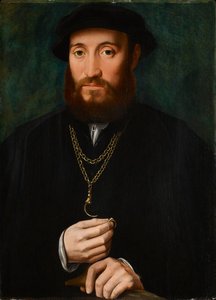 Ambrosius Benson1495–1550 · 2 originals at the Kunstmuseum Basel
 Georg Schrimpf1889–1938 · 2 originals at the Kunstmuseum Basel
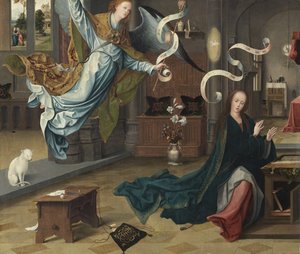 Jan de Beer1475–1528 · 4 originals at the Kunstmuseum Basel
 Tobias Stimmer1539–1584 · 2 originals at the Kunstmuseum Basel
The house in figures
The masters of the Kunstmuseum Basel, in figures
The masters with the most originals at the Kunstmuseum Basel
Masters with two originals or more, by century of birth
Masters with two originals or more, by country of birth
Masters with two originals or more, by movement
Women masters
The women whose originals hang in the Kunstmuseum Basel
3 women masters, 5 originals, in our catalogue of the Kunstmuseum Basel.
-
Paula Modersohn-Becker
1876–1907 · born in Dresden, Germany · 3 originals at the Kunstmuseum Basel
-

Rachel Ruysch
1664–1750 · born in The Hague, Netherlands · 1 originals at the Kunstmuseum Basel
- Spray of flowers (1741)
-

Gertrud Bock-Schnirlin
1878–1942 · born in Hamburg, Germany · 1 originals at the Kunstmuseum Basel
Asked of us
Questions on the masters of the Kunstmuseum Basel
Open a question to read the answer.
Who is the best-known artist of the Kunstmuseum Basel?
Vincent van Gogh, with 6 works at the Kunstmuseum Basel in our catalogue (Daubigny's Garden, Portrait of a Woman (Madame Tanguy) and View of Paris from Montmartre); then Claude Monet and Paul Cézanne.
Which Vincent van Gogh works are in the Kunstmuseum Basel?
Our catalogue lists 6 works by Vincent van Gogh at the Kunstmuseum Basel, among them Daubigny's Garden (1890), Portrait of a Woman (Madame Tanguy) (1887), View of Paris from Montmartre (1886) and Self-Portrait with a Japanese Print (1887).
What did Claude Monet paint that hangs in the Kunstmuseum Basel?
Our catalogue lists 4 works by Claude Monet at the Kunstmuseum Basel, among them The Rock Needle and the Porte d'Aval (1884), The Boulevard de Pontoise at Argenteuil, Snow Effect, Calm Weather, Fecamp (1881) and Chrysanthemums (1897).
How many Paul Cézanne paintings are in the Kunstmuseum Basel?
Our catalogue lists 4 works by Paul Cézanne at the Kunstmuseum Basel, among them Glass and Apples (1879), The House of Doctor Gachet in Auvers-sur-Oise (1872), Five Bathers (1885) and Mont Sainte-Victoire Seen from Les Lauves (1904).
Who are the top 10 artists in the Kunstmuseum Basel?
By fame: Vincent van Gogh (6), Claude Monet (4), Paul Cézanne (4), Edvard Munch (5), Paul Gauguin (5), Piet Mondrian (3), Gustave Courbet (3), Edgar Degas (3), Pierre-Auguste Renoir (2) and Paul Klee (8).
Which artist has the most works in the Kunstmuseum Basel?
Hans Holbein the Younger (1497–1543), with 15 works in our catalogue of the Kunstmuseum Basel, ahead of Camille Pissarro (9), Konrad Witz (9) and Paul Klee (8).
Are there Leonardo da Vinci works in the Kunstmuseum Basel?
No: the Kunstmuseum Basel holds no work by Leonardo da Vinci in our catalogue.
Is Pablo Picasso in the Kunstmuseum Basel?
No: the Kunstmuseum Basel holds no work by Pablo Picasso in our catalogue.
Are there any women painters in the Kunstmuseum Basel?
3 women artists have works of the Kunstmuseum Basel in our catalogue, among them Paula Modersohn-Becker (3), Rachel Ruysch (1) and Gertrud Bock-Schnirlin (1).
Which countries are the painters of the Kunstmuseum Basel from?
Counting the artists with two works or more, the Kunstmuseum Basel holds painters born mostly in France (12), Netherlands (8), Germany (8), Switzerland (6) and Belgium (3).
Which centuries do the painters of the Kunstmuseum Basel belong to?
Most of the artists with two works or more at the Kunstmuseum Basel were born in the 19th century (23 artists); the earliest in this ranking is Lucas Cranach the Elder (1472–1553), the latest Juan Gris (1887–1927).
How many painters are represented in the Kunstmuseum Basel?
115 artists have at least one work of the Kunstmuseum Basel in our catalogue; 42 have two or more. They were born between 1400 and 1889, in 8 countries.
The house
The Kunstmuseum Basel, Basel, in a few lines
The Origins and History of Kunstmuseum Basel
The history of the Kunstmuseum Basel is rooted in the acquisition of the Amerbach Cabinet. This collection, which formed the foundation of the institution, was purchased by the city of Basel and the University of Basel in 1671. The decision to make these works accessible to the public established the museum as the first public art collection of its kind. The institution was established in 1661. Its long lineage reflects the historical development of Basel as a center for scholarship and trade. Today, the museum is recognized as a Swiss heritage site of national significance. The collection has grown through centuries of careful stewardship, evolving from a private cabinet into a major public repository for art spanning from the fifteenth century to the present day.
The Architecture of the Three Venues
The museum's physical presence is defined by three distinct venues: the Hauptbau, the Neubau, and the Gegenwart. the Hauptbau, designed by Rudolf Christ and Paul Bonatz, was inaugurated in 1936. This building functions as the historic Altbau, characterized by its soaring ceilings and grand halls. The architecture here provides a formal setting for the older parts of the collection. In contrast, the modern Gegenwart wing offers a contemporary stage for works from the 20th and 21st centuries. This venue allows for a different spatial relationship between the viewer and the art. The architectural dialogue between these spaces reflects the evolution of the institution's holdings.
The famous originals of the Kunstmuseum BaselThe Kunstmuseum Basel: the full page, 238 originalsThe museums of Basel
How the masters of the originals are ranked
The masters with two originals or more of the Kunstmuseum Basel in our catalogue are ranked by fame: the Wikipedia language editions that describe them, the visits to their OriginalUniqueArt.com page and our studio's ranking. Originals are counted in our catalogue — one entry per work, without details, studies or copies — not in the museum's inventory. Every date, birthplace and movement is the catalogue's; the notes are drawn from the master's biography.
Go on