
The most famous artists with works in the Israel Museum are Pablo Picasso, Vincent van Gogh, Claude Monet and Paul Cézanne.
Our catalogue lists 311 works of the Israel Museum by 220 artists; the 25 best known are ranked below, each with the works the museum holds.
The masters of the originals
The 10 masters whose originals hang in the Israel Museum
For each master: where and when they were born, their movement, how many originals the museum keeps in our catalogue, a note from their life, and the originals to see.
-

Cubism
1. Pablo Picasso 1881–1973
1881–1973 Born in Málaga, Spain Cubism 2 originals at the Israel Museum
In the city of Málaga, Spain, a boy named Pablo Picasso entered the world on October 25, 1881. The boy’s path led away from the warmth of Málaga as his family moved to A Coruña in 1891. Between 1901 and 1904, he entered what is known as the Blue Period. By 1904, the shadows began to retreat, replaced by a shift in both temperament and palette.
Originals at the Israel Museum
-
Post-Impressionism
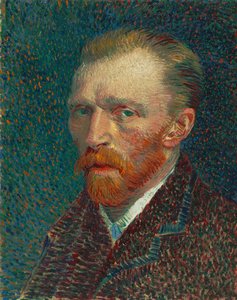
2. Vincent van Gogh 1853–1890
1853–1890 Born in Zundert, Netherlands Post-Impressionism 3 originals at the Israel Museum
Vincent Willem Van Gogh was born on March 30, 1853, in Zundert, Netherlands. His brother Theo was born on 1 May 1857, and their connection would remain a constant through the many letters they exchanged over the years. The quiet village of Zundert in the Brabant region was where Vincent Willem Van Gogh was born. In 1873, he moved to the London branch of Goupil & Cie, where he remained until May 1875.
Originals at the Israel Museum
-
Impressionism
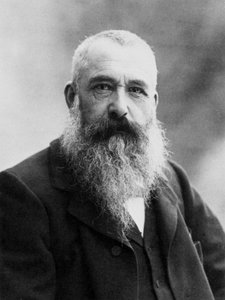
3. Claude Monet 1840–1926
1840–1926 Born in Paris, France Impressionism 2 originals at the Israel Museum
Born in Paris, France, on 14 November 1840, Claude Monet entered a world of diverging expectations. Tragedy arrived in January 1857, when Monet was sixteen years old. In 1883, Monet moved to a house and property in Giverny, a village northwest of Paris. In 1892, he married Alice Hoschedé, a union that provided a sense of stability as he continued his obsessive study of light and atmosphere.
Originals at the Israel Museum
-
Post-Impressionism
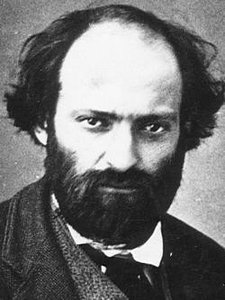
4. Paul Cézanne 1839–1906
1839–1906 Born in Aix-en-Provence, France Post-Impressionism 4 originals at the Israel Museum
Born on January 19, 1839, at 28 rue de l'Opéra in Aix-en-Provence, Paul Cézanne entered a world of established order. In 1860, he made the decisive choice to abandon his law studies, turning his focus entirely toward the pursuit of painting. By 1859, his technical proficiency was evident when he earned second prize in the school's figure studies course.
Originals at the Israel Museum
-
Fauvism
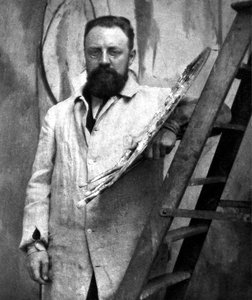
5. Henri Matisse 1869–1954
1869–1954 Born in Le Cateau-Cambrésis, France Fauvism 2 originals at the Israel Museum
After finishing secondary school, Matisse moved to Paris to study law. In 1889, an attack of appendicitis forced a long recovery, and it was during this confinement that the act of painting first took hold. By around 1905, this approach had coalesced into the Fauvist movement.
Originals at the Israel Museum
-

Baroque
6. Peter Paul Rubens 1577–1640
1577–1640 Born in Siegen, Germany Baroque 2 originals at the Israel Museum
Born on 28 June 1577 in Siegen, Germany, his early years were shaped by the religious instability of the era. By the time he began working with Otto van Veen between 1594 and 1598, Rubens had already acquired the technical vocabulary necessary to move beyond simple representation into the realm of sophisticated narrative art. In 1600, Rubens left the Low Countries for Italy, a move that fundamentally altered his visual language.
Originals at the Israel Museum
-
Post-Impressionism
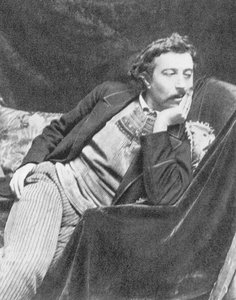
7. Paul Gauguin 1848–1903
1848–1903 Born in Paris, France Post-Impressionism 5 originals at the Israel Museum
Born in Paris in 1848, Eugène Henri Paul Gauguin entered a world of shifting social and political currents. The boy spent his childhood in Peru until the age of six, a period that left an indelible mark on his memory. Before finding his footing in the art world, Gauguin’s life took a more rugged, maritime turn. Between 1879 and 1886, he was accepted into the Paris Salon, appearing in the prestigious exhibition annually.
Originals at the Israel Museum
-
Surrealism
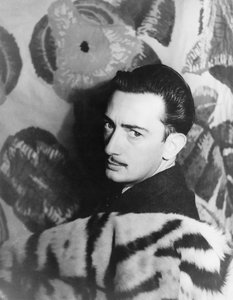
8. Salvador Dalí 1904–1989
1904–1989 Born in Figueres, Spain Surrealism 2 originals at the Israel Museum
Salvador Dalí entered the world at 8:45 am on May 11, 1904. Salvador Dalí died on January 23, 1989, at the age of 84. Dalí moved away from the passive nature of automatism, seeking a more active way to engage with the subconscious. The Metamorphosis of Narcissus (1937) The Enigma of Desire, My Mother, 1929 Face of Mae West Which May Be Used as an Apartment, circa 1935
Originals at the Israel Museum
-

Hague School
9. Piet Mondrian 1872–1944
1872–1944 Born in Amersfoort, Netherlands Hague School 5 originals at the Israel Museum
The man who would reshape the visual language of the twentieth century began his life as Pieter Cornelis Mondriaan, Jr. He was born on March 7, 1872, in Amersfoort, Netherlands. By 1892, he is already qualified as a drawing teacher. By 1909, his presence in the Dutch art scene is established through a major exhibition at the Stedelijk Museum in Amsterdam. By 1917, the deconstruction of form has moved beyond the mere fragmentation of objects.
Originals at the Israel Museum
-
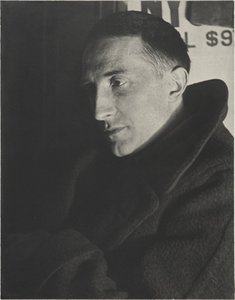
10. Marcel Duchamp 1887–1968
1887–1968 Born in Blainville-Crevon, France 2 originals at the Israel Museum
Born on July 28, 1887, in Blainville, Normandy, France, Marcel Duchamp entered a world where the impulse to create was deeply embedded in his very blood. The year 1911 brought a significant shift as he became associated with a Cubist group. Though he had arrived as a visitor seeking new ways to express the intellect, he eventually became a naturalized American citizen in 1955.
Originals at the Israel Museum


The masters, continued
No. 11 to No. 25: more masters of the Israel Museum
-
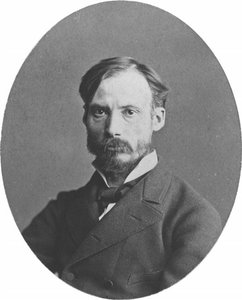
11. Pierre-Auguste Renoir
Impressionism
1841–1919 · born in Limoges, France · 4 originals at the Israel Museum
French Impressionist known for luminous, broken brushstrokes that capture the warmth of social gatherings and the soft glow of outdoor light.
- Woman in a Flowered Hat (1889)
- Portrait of Mme. Paulin (1887)
- Outskirts of Maintenon (1888)
-

12. Paul Klee
Expressionism
1879–1940 · born in Münchenbuchsee, Switzerland · 4 originals at the Israel Museum
Swiss-German Bauhaus artist of rhythmic abstraction, delicate watercolors, and musical forms, known for his scientific approach to color theory.
- New Angel (1920)
- Colors from a Distance (1932)
- Group of Masks (1939)
-

13. Amedeo Modigliani
Expressionism
1884–1920 · born in Livorno, Italy · 2 originals at the Israel Museum
Italian Expressionist known for soulful portraits with elongated faces and almond-shaped eyes, capturing the essence of the human spirit.
- Jeanne Hébuterne, Seated (1918)
- Portrait of Celso Lagar (1915)
-
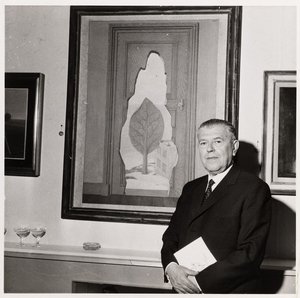
14. René Magritte
Surrealism
1898–1967 · born in Lessines, Belgium · 2 originals at the Israel Museum
Belgian Surrealist known for placing ordinary objects in unexpected contexts, creating dreamlike tension through unsettling juxtapositions.
- The Castle of the Pyrenees (1959)
-

15. Jean-Baptiste-Camille Corot
Romanticism
1796–1875 · born in Paris, France · 4 originals at the Israel Museum
French Realist of atmospheric landscapes and soft vegetation, using thin washes and loosely dabbed strokes to capture the play of light.
-

16. Camille Pissarro
Impressionism
1830–1903 · born in Charlotte Amalie, United States Virgin Islands · 7 originals at the Israel Museum
Danish-French Impressionist who captured rural life and city streets through textured plein air landscapes and pointillist experiments.
- Landscape near Pontoise (1881)
- Bountiful Harvest (1893)
- Morning, Sun Effect, Eragny (1899)
-

French Post-Impressionist of dreamlike jungle scenes and vibrant, imaginative compositions, inspired by botanical gardens and exotic animals.
- View of Saint Cloud (1909)
-

18. Alfred Sisley
Impressionism
1839–1899 · born in former 4th arrondissement of Paris, France · 2 originals at the Israel Museum
British-French Impressionist dedicated to en plein air landscapes, capturing the tranquil light of the Seine and the waters of Moret-sur-Loing.
-

French pioneer of Art Brut known for raw, textured impasto and graphic Hourloupe style patterns.
-

20. Eugène Louis Boudin
Impressionism
1824–1898 · born in Honfleur, France · 3 originals at the Israel Museum
French marine painter of atmospheric seascapes and shifting light, known for en plein air studies of the Normandy coast and sky.
- Le Havre (1871)
- Washerwomen by the River (1880)
- Berck, Beach Scene (1882)
-

21. Man Ray
Surrealism
1890–1976 · born in Philadelphia, United States of America · 3 originals at the Israel Museum
American Dada and Surrealist pioneer known for ethereal rayographs and solarized photography.
- New York Skylight (1959)
- The Dream of a Night Key (1959)
- Untitled
-

French-German Dadaist and Surrealist known for biomorphic forms and chance collages that capture the fluid essence of organic life.
- The Sun Recircled (1966)
-
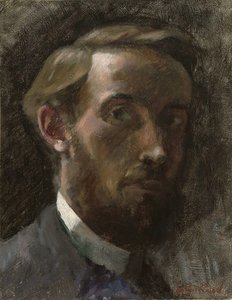
23. Édouard Vuillard
Post-Impressionism
1868–1940 · born in Cuiseaux, France · 2 originals at the Israel Museum
French Nabis painter of intimate, patterned interiors and flattened planes of color, often using distemper to capture domestic life.
- Woman at the Window (1897)
- Misia in a Chaise Longue (1900)
-

Dutch CoBrA founder known for spontaneous, vibrant abstract paintings and expressive sculptures.
- Three Figures (1952)
- Man and Woman (Homme et femme) (1967)
-

25. Victor Brauner
Surrealism
1903–1966 · born in Piatra Neamț, Romania · 2 originals at the Israel Museum
Romanian-French Surrealist of dreamlike chimeras and symbolic imagery, known for rich encaustic textures and prophetic, mythological themes.
- Mountain (1945)
- The Alchemist (L'Alchimista) (1956)
Famous artists in the Israel Museum, No. 26 to 47
 Roberto Matta1911–2002 · 2 originals at the Israel Museum
 Max Liebermann1847–1935 · 2 originals at the Israel Museum
 Pieter Lastman1583–1633 · 2 originals at the Israel Museum
 Jozef Israëls1824–1911 · 3 originals at the Israel Museum
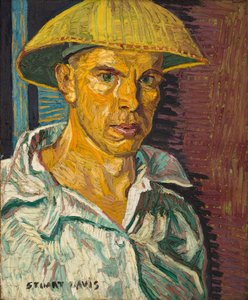 Stuart Davis1892–1964 · 2 originals at the Israel Museum
 Maurycy Gottlieb1856–1879 · 4 originals at the Israel Museum
 Willi Baumeister1889–1955 · 2 originals at the Israel Museum
 Marcel Janco1895–1984 · 3 originals at the Israel Museum
 Moritz Daniel Oppenheim1800–1882 · 6 originals at the Israel Museum
 Isidor Kaufmann1853–1921 · 3 originals at the Israel Museum
 Mordecai Ardon1896–1992 · 6 originals at the Israel Museum
 Vito D' Ancona1825–1884 · 3 originals at the Israel Museum
 Reuven Rubin1893–1974 · 3 originals at the Israel Museum
 Charlotte de Rothschild1825–1899 · 2 originals at the Israel Museum
 Lea Nikel1918–2005 · 2 originals at the Israel Museum
 Arie Aroch1908–1974 · 5 originals at the Israel Museum
 Michael Gross1920–2004 · 4 originals at the Israel Museum
 Avigdor Stematsky1908–1989 · 2 originals at the Israel Museum
 Joseph Budko1888–1940 · 2 originals at the Israel Museum
 Moshe Kupferman1926–2003 · 2 originals at the Israel Museum
 Tamar Getterborn 1953 · 2 originals at the Israel Museum
 Tsibi Gevaborn 1951 · 3 originals at the Israel Museum
The house in figures
The masters of the Israel Museum, in figures
The masters with the most originals at the Israel Museum
Masters with two originals or more, by century of birth
Masters with two originals or more, by country of birth
Masters with two originals or more, by movement
Women masters
The women whose originals hang in the Israel Museum
20 women masters, 23 originals, in our catalogue of the Israel Museum.
-
Charlotte de Rothschild
1825–1899 · born in Paris, France · 2 originals at the Israel Museum
- Portrait of Rosina Bauer (1831)
- Portrait of Mr. Bauer (1831)
-
-
Tamar Getter
born 1953 · born in Tel Aviv, Israel · 2 originals at the Israel Museum
- Oskar Schlemmer as "The Turk" (1992)
- Tel Hai Courtyard (1978)
-

Leonora Carrington
1917–2011 · born in Clayton-le-Woods, United Kingdom · 1 originals at the Israel Museum
-

Sonia Delaunay
1885–1979 · born in Odesa, Ukraine · 1 originals at the Israel Museum
- Finlandaise, (Finnish Woman) (1907)
-

Dora Maar
1907–1997 · born in 6th arrondissement of Paris, France · 1 originals at the Israel Museum
- Portrait of Picasso (1938)
-

Valentine Hugo
1887–1968 · born in Boulogne-sur-Mer, France · 1 originals at the Israel Museum
- Portrait of Paul Deharme (1934)
-

Kay Sage
1898–1963 · born in Watervliet, United States · 1 originals at the Israel Museum
- The Upper Side of the Sky (1944)
Asked of us
Questions on the masters of the Israel Museum
Open a question to read the answer.
Who is the most famous artist in the Israel Museum?
Pablo Picasso (1881–1973): our catalogue holds 2 works by Pablo Picasso at the Israel Museum, among them Atelier Window and Glass, Bottle of Bass, Newspaper. Vincent van Gogh and Claude Monet follow.
How many Pablo Picasso paintings are in the Israel Museum?
Our catalogue lists 2 works by Pablo Picasso at the Israel Museum, among them Atelier Window (1943) and Glass, Bottle of Bass, Newspaper (1914).
What did Vincent van Gogh paint that hangs in the Israel Museum?
Our catalogue lists 3 works by Vincent van Gogh at the Israel Museum, among them Green Ears of Wheat (1888), Harvest in Provence (1888) and Entrance of Voyer d'Argenson Park at Asnières.
What did Claude Monet paint that hangs in the Israel Museum?
Our catalogue lists 2 works by Claude Monet at the Israel Museum, among them The Manneport (1882) and The Young Ladies of Giverny, Sun Effect (1894).
Which famous artists are displayed in the Israel Museum?
By fame: Pablo Picasso (2), Vincent van Gogh (3), Claude Monet (2), Paul Cézanne (4), Henri Matisse (2), Peter Paul Rubens (2), Paul Gauguin (5), Salvador Dalí (2), Piet Mondrian (5) and Marcel Duchamp (2).
Who has the most paintings in the collection of the Israel Museum?
Our catalogue holds 7 works by Camille Pissarro at the Israel Museum; next come Moritz Daniel Oppenheim (6), Mordecai Ardon (6) and Paul Gauguin (5).
Does the Israel Museum have any Leonardo da Vinci paintings?
Our catalogue lists no work by Leonardo da Vinci at the Israel Museum.
Is Michelangelo in the Israel Museum?
Our catalogue lists no work by Michelangelo at the Israel Museum.
Which women artists are in the Israel Museum?
Our catalogue lists 20 women artists with works at the Israel Museum: Charlotte de Rothschild (2), Lea Nikel (2), Tamar Getter (2), Leonora Carrington (1), Sonia Delaunay (1) and Dora Maar (1).
Where do the artists of the Israel Museum come from?
By country of birth, the artists with two works or more at the Israel Museum are mostly from France (14), Netherlands (5), Germany (4), Romania (4) and Ukraine (4).
Which centuries do the painters of the Israel Museum belong to?
The 19th century leads with 31 artists born then. In this ranking, Peter Paul Rubens (1577–1640) is the earliest born and Karel Appel (1921–2006) the latest.
How many artists does the collection of the Israel Museum cover?
220 artists have at least one work of the Israel Museum in our catalogue; 47 have two or more. They were born between 1577 and 1953, in 8 countries.
The house
The Israel Museum, Jerusalem, in a few lines
The Legacy of the Israel Museum
Established in 1965, the Israel Museum functions as a primary cultural institution in Jerusalem. Conceived by Mayor Teddy Kollek, the museum was designed to unite the diverse cultural history of the region. It is situated on a hill within the Givat Ram neighborhood. The institution operates as an encyclopedic center, housing approximately 500,000 items that span from prehistory to the present day. The collection integrates archaeology and fine arts, providing a record of human activity in the Holy Land. The museum's holdings include significant works of art and historical artifacts. Among the pieces held in the collection are: the Castle of the Pyrenees, 1959 - René Magritte Hat Rack, 1917 - Marcel Duchamp In Advance of the Broken Arm, 1915 - Marcel Duchamp the Sun Recircled, about 1966 - Charpentier Jean Baptiste Le Vieux The museum's scope covers eleven separate departments, including Israeli Art, European Art, and Modern Art. This breadth allows for a continuous study of material culture through various eras.
Architectural Design and Campus Layout
The museum occupies a prominent position on a hill overlooking the ancient heart of Jerusalem. Its location is central to the city's institutional landscape, situated adjacent to the Knesset and the Israeli Supreme Court. The campus is expansive, incorporating the National Campus for the Archaeology of Israel within its grounds. The architecture reflects a harmonious blend of modern aesthetics and functional grace. Following a significant renovation completed in 2010, the gallery space was doubled. This expansion allows for a seamless flow between the indoor exhibits and the serene outdoor areas. The design utilizes the natural light and open spaces of the hilltop setting to foster a sense of connection between the viewer and the art.
The famous originals of the Israel MuseumThe Israel Museum: the full page, 320 originalsThe museums of Jerusalem
How the masters of the originals are ranked
The masters with two originals or more of the Israel Museum in our catalogue are ranked by fame: the Wikipedia language editions that describe them, the visits to their OriginalUniqueArt.com page and our studio's ranking. Originals are counted in our catalogue — one entry per work, without details, studies or copies — not in the museum's inventory. Every date, birthplace and movement is the catalogue's; the notes are drawn from the master's biography.
Go on