
Ask for the famous artists of the Fogg Museum and you will hear of Rembrandt, Vincent van Gogh, Claude Monet and Paul Cézanne.
Below, the 20 best-known of the 64 artists with works of the Fogg Museum in our catalogue (114 works), each with what the museum holds of them.
The masters of the originals
The 10 masters whose originals hang in the Fogg Museum
For each master: where and when they were born, their movement, how many originals the museum keeps in our catalogue, a note from their life, and the originals to see.
-
Baroque
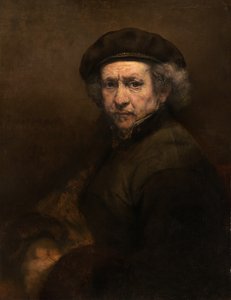
1. Rembrandt 1606–1669
1606–1669 Born in Leiden, Netherlands Baroque 5 originals at the Fogg Museum
Born on 15 July 1606 in Leiden, in the Dutch Republic, Rembrandt van Rijn entered a world of modest means. By the time he died on 4 October 1669, he had left behind a vast legacy that includes about 300 paintings, 300 etchings, and several hundred drawings. By 1625, the young artist had moved beyond his apprenticeship and opened a studio in Leiden. A significant shift occurred in 1631 when he moved to Amsterdam.
Originals at the Fogg Museum
-
Post-Impressionism
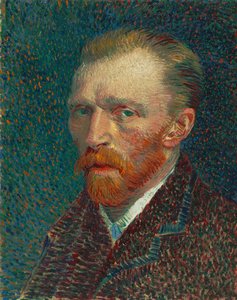
2. Vincent van Gogh 1853–1890
1853–1890 Born in Zundert, Netherlands Post-Impressionism 2 originals at the Fogg Museum
Vincent Willem Van Gogh was born on March 30, 1853, in Zundert, Netherlands. His brother Theo was born on 1 May 1857, and their connection would remain a constant through the many letters they exchanged over the years. The quiet village of Zundert in the Brabant region was where Vincent Willem Van Gogh was born. In 1873, he moved to the London branch of Goupil & Cie, where he remained until May 1875.
Originals at the Fogg Museum
-
Impressionism
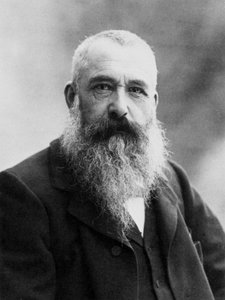
3. Claude Monet 1840–1926
1840–1926 Born in Paris, France Impressionism 6 originals at the Fogg Museum
Born in Paris, France, on 14 November 1840, Claude Monet entered a world of diverging expectations. Tragedy arrived in January 1857, when Monet was sixteen years old. In 1883, Monet moved to a house and property in Giverny, a village northwest of Paris. In 1892, he married Alice Hoschedé, a union that provided a sense of stability as he continued his obsessive study of light and atmosphere.
Originals at the Fogg Museum
-
Post-Impressionism
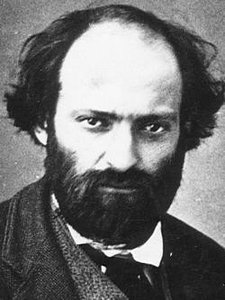
4. Paul Cézanne 1839–1906
1839–1906 Born in Aix-en-Provence, France Post-Impressionism 3 originals at the Fogg Museum
Born on January 19, 1839, at 28 rue de l'Opéra in Aix-en-Provence, Paul Cézanne entered a world of established order. In 1860, he made the decisive choice to abandon his law studies, turning his focus entirely toward the pursuit of painting. By 1859, his technical proficiency was evident when he earned second prize in the school's figure studies course.
Originals at the Fogg Museum
-
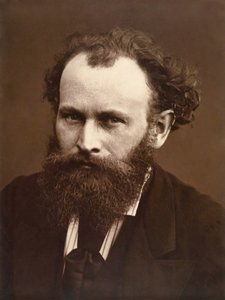
Impressionism
5. Édouard Manet 1832–1883
1832–1883 Born in former 10th arrondissement of Paris, France Impressionism 2 originals at the Fogg Museum
Édouard Manet was born in Paris on January 23, 1832. From 1850 to 1856, he trained in the studio of Thomas Couture. In 1863, the Salon des Refusés provided a stage for works that the official juries had rejected.
Originals at the Fogg Museum
-

Baroque
6. Nicolas Poussin 1594–1665
1594–1665 Born in Le Havre, France Baroque 2 originals at the Fogg Museum
Born in June 1594, his early development was not a product of sudden inspiration but of structured, methodical training. By 1612, Nicolas Poussin had moved to Paris, where he remained until 1623. Poussin arrived in Rome in 1624, having traveled via Venice.
Originals at the Fogg Museum
-
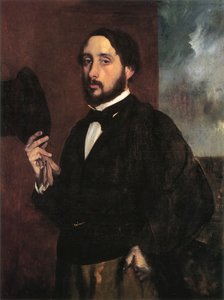
Impressionism
7. Edgar Degas 1834–1917
1834–1917 Born in Paris, France Impressionism 4 originals at the Fogg Museum
French Realist known for capturing the movement of ballet dancers and racehorses through precise draftsmanship and artificial light. A child is born into a moderately wealthy family to Hilaire-Germain-Edgar De Gas.
Originals at the Fogg Museum
-
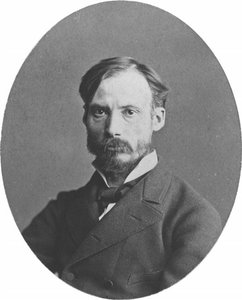
Impressionism
8. Pierre-Auguste Renoir 1841–1919
1841–1919 Born in Limoges, France Impressionism 4 originals at the Fogg Museum
Born on February 25, 1841, in Limoges, France, Pierre-Auguste Renoir entered a world of practical craftsmanship. In 1845, the family moved to Paris, seeking the opportunities offered by the capital. When the family moved to Paris in 1845, the necessity of supporting his kin dictated the direction of his youth. By the third exhibition in 1877, his commitment to this new way of seeing was evident as he presented twenty-one paintings to the public.
Originals at the Fogg Museum
-

Neoclassicism
9. Jacques-Louis David 1748–1825
1748–1825 Born in Paris, France Neoclassicism 4 originals at the Fogg Museum
Born into the merchant-and-artisan middle class of Paris, Jacques-Louis David’s early years were marked by a sudden, sharp disruption. The trajectory of David’s development shifted decisively in 1775 when he traveled to Italy alongside his teacher, Joseph Vien. During these years, David was introduced to Raphael Mengs, a figure who advocated for a rigorous, disciplined study of classical sources.
Originals at the Fogg Museum
-

Neoclassicism
10. Jean-Auguste-Dominique Ingres 1780–1867
1780–1867 Born in Montauban, France Neoclassicism 8 originals at the Fogg Museum
Even while immersed in the Italian tradition, he maintains a connection to the French art scene, regularly sending paintings back to the Paris Salon to ensure his presence in the capital remains constant.
Originals at the Fogg Museum


The masters, continued
No. 11 to No. 20: more masters of the Fogg Museum
-

11. Georges Seurat
Neo-Impressionism
1859–1891 · born in former 5th arrondissement of Paris, France · 2 originals at the Fogg Museum
French Neo-Impressionist who used pointillism and tiny dots of pure color to reconstruct light and form in scenes of Parisian leisure.
-

12. Théodore Géricault
Romanticism
1791–1824 · born in Rouen, France · 2 originals at the Fogg Museum
French Romantic pioneer of dramatic chiaroscuro and visceral scenes of human suffering, from shipwrecked rafts to portraits of the insane.
- Cattle Market (1817)
- The White Horse Tavern (1821)
-

13. Jean-Baptiste-Camille Corot
Romanticism
1796–1875 · born in Paris, France · 2 originals at the Fogg Museum
French Realist of atmospheric landscapes and soft vegetation, using thin washes and loosely dabbed strokes to capture the play of light.
-

14. Henri de Toulouse-Lautrec
Post-Impressionism
1864–1901 · born in Albi, France · 2 originals at the Fogg Museum
French Post-Impressionist of the Montmartre nightlife, using bold lithographic posters and the crachis technique to capture the Belle Époque.
- The Black Countess (1881)
- Hangover (1889)
-

15. Dante Gabriel Rossetti
Pre-Raphaelite
1828–1882 · born in London, United Kingdom · 2 originals at the Fogg Museum
Pre-Raphaelite leader of sensual, symbolic works featuring lush vegetation and female forms, often accompanied by his own evocative sonnets.
- A Sea Spell (1877)
- Finestra
-

16. Jean-Honoré Fragonard
Rococo
1732–1806 · born in Grasse, France · 4 originals at the Fogg Museum
French Rococo painter of playful, sensual scenes rendered with luminous, rapid brushwork and a sense of exuberant, fleeting movement.
- The First Steps (1785)
- Young Woman with Brown Hair (1769)
- The Beloved Child (1785)
-

French Symbolist of dreamlike mythological scenes rendered with rich textures and gold leaf, capturing the spiritual essence of ancient stories.
- The Apparition (1876)
- Jacob and the Angel (1876)
- Young moses
-

18. Albert Bierstadt
Hudson River School
1830–1902 · born in Solingen, Germany · 3 originals at the Fogg Museum
German-born Hudson River School painter of luminous American West landscapes, known for vast Yosemite valleys and the Rocky Mountains.
- Rock Mountains Lander's Peak'''' (1863)
- The Trout Brook (1859)
- In the Rockies (1863)
-

19. Edward Burne-Jones
Pre-Raphaelite
1833–1898 · born in Birmingham, United Kingdom · 6 originals at the Fogg Museum
Pre-Raphaelite painter of melancholic, elongated figures and medieval myths, known for intricate stained glass and ink wash techniques.
-

20. Henri Fantin-Latour
Realism
1836–1904 · born in Grenoble, France · 3 originals at the Fogg Museum
French Realist known for meticulous floral studies and intimate group portraits of intellectuals, rendered with photographic precision.
- Vase of Flowers (1883)
- Roses in a Vase (1885)
- Self-Portrait
The house in figures
The masters of the Fogg Museum, in figures
The masters with the most originals at the Fogg Museum
Masters with two originals or more, by century of birth
Masters with two originals or more, by country of birth
Masters with two originals or more, by movement
Women masters
The women whose originals hang in the Fogg Museum
1 women masters, 1 originals, in our catalogue of the Fogg Museum.
-

Berthe Morisot
1841–1895 · born in Bourges, France · 1 originals at the Fogg Museum
Asked of us
Questions on the masters of the Fogg Museum
Open a question to read the answer.
Which artist in the Fogg Museum is the most famous?
Rembrandt (1606–1669): our catalogue holds 5 works by Rembrandt at the Fogg Museum, among them Bearded old man, Rembrandt's father and Head of Christ. Vincent van Gogh and Claude Monet follow.
How many Rembrandt paintings are in the Fogg Museum?
Our catalogue lists 5 works by Rembrandt at the Fogg Museum, among them Bearded old man (1632), Rembrandt's father (1629), Head of Christ (1656) and Portrait of an Old Man in a Cape (1650).
How many Vincent van Gogh paintings are in the Fogg Museum?
Our catalogue lists 2 works by Vincent van Gogh at the Fogg Museum, among them Three Pairs of Shoes and Self gauguin.
Which Claude Monet works are in the Fogg Museum?
Our catalogue lists 6 works by Claude Monet at the Fogg Museum, among them Argenteuil (1875), Charing Cross Bridge: Fog on the Thames (1903), Saint-Lazare Station, Exterior (1876) and Portrait of Eugenie Graff (Madame Paul) (1882).
Which famous artists are displayed in the Fogg Museum?
By fame: Rembrandt (5), Vincent van Gogh (2), Claude Monet (6), Paul Cézanne (3), Édouard Manet (2), Nicolas Poussin (2), Edgar Degas (4), Pierre-Auguste Renoir (4), Jacques-Louis David (4) and Jean-Auguste-Dominique Ingres (8).
Who has the most paintings in the collection of the Fogg Museum?
Jean-Auguste-Dominique Ingres (1780–1867), with 8 works in our catalogue of the Fogg Museum, ahead of Claude Monet (6), Edward Burne-Jones (6) and Rembrandt (5).
Are there Leonardo da Vinci works in the Fogg Museum?
No: the Fogg Museum holds no work by Leonardo da Vinci in our catalogue.
Are there Pablo Picasso works in the Fogg Museum?
No: the Fogg Museum holds no work by Pablo Picasso in our catalogue.
Are there any women painters in the Fogg Museum?
1 women artists have works of the Fogg Museum in our catalogue, among them Berthe Morisot (1).
Where do the artists of the Fogg Museum come from?
Counting the artists with two works or more, the Fogg Museum holds painters born mostly in France (15), Netherlands (2), United Kingdom (2) and Germany (1).
Which centuries do the painters of the Fogg Museum belong to?
Most of the artists with two works or more at the Fogg Museum were born in the 19th century (13 artists); the earliest in this ranking is Nicolas Poussin (1594–1665), the latest Henri de Toulouse-Lautrec (1864–1901).
How many painters are represented in the Fogg Museum?
64 artists have at least one work of the Fogg Museum in our catalogue; 20 have two or more. They were born between 1594 and 1864, in 4 countries.
The house
The Fogg Museum, Cambridge, in a few lines
A Beacon of Artistic Legacy: the Enduring Allure of the Fogg Museum
To step through its doors is to enter a space where centuries of human creativity converge, offering visitors a rare opportunity to contemplate masterpieces that continue to stir the soul and provoke deep contemplation. Originally housed in a stately Italian Renaissance structure designed by the legendary Richard Morris Hunt, the museum’s very foundations reflect Harvard's early ambitions to create a dignified space for scholarly pursuit. However, the museum has never been content to remain static. A transformative renovation, completed in 2014, breathed new life into the institution, expanding its gallery footprint by an impressive forty percent. This modern evolution seamlessly integrated the historic essence of the museum with the groundbreaking architectural vision of Renzo Piano.
A Treasury of Brilliance: Collection Highlights and Artistic Vision
Within these walls, one can witness the evocative, textured landscapes of Paul Cézanne and the rhythmic, kinetic energy of Edgar Degas’ ballet dancers, captured in moments of fleeting grace. The museum also holds groundbreaking Impressionist canvases by Édouard Manet and the vibrant, emotive color palettes of Henri Matisse. The raw, emotionally charged depictions of rural life by Vincent van Gogh. A diverse array of works ranging from medieval illuminated manuscripts to provocative contemporary installations. What truly distinguishes the Fogg Museum is its commitment to pushing the boundaries of traditional art historical discourse.
The famous originals of the Fogg MuseumThe Fogg Museum: the full page, 118 originalsThe museums of Cambridge
How the masters of the originals are ranked
The masters with two originals or more of the Fogg Museum in our catalogue are ranked by fame: the Wikipedia language editions that describe them, the visits to their OriginalUniqueArt.com page and our studio's ranking. Originals are counted in our catalogue — one entry per work, without details, studies or copies — not in the museum's inventory. Every date, birthplace and movement is the catalogue's; the notes are drawn from the master's biography.
Go on