
Camille Pissarro is the best-known artist with works in the Collection Bemberg; next come Lucas Cranach the Elder, Alfred Sisley and François Boucher.
Below, the 9 best-known of the 36 artists with works of the Collection Bemberg in our catalogue (55 works), each with what the museum holds of them.
The masters of the originals
The 9 masters whose originals hang in the Collection Bemberg
For each master: where and when they were born, their movement, how many originals the museum keeps in our catalogue, a note from their life, and the originals to see.
-

Impressionism
1. Camille Pissarro 1830–1903
1830–1903 Born in Charlotte Amalie, United States Virgin Islands Impressionism 2 originals at the Collection Bemberg
By 1861, he is a registered copyist in the Musée du Louvre, working among the shadows of the masters he seeks to emulate. The Impressionist movement is often viewed as a collection of fractured, competing egos, but Pissarro provides the glue.
Originals at the Collection Bemberg
-

Northern Renaissance
2. Lucas Cranach the Elder 1472–1553
1472–1553 Born in Kronach, Germany Northern Renaissance 3 originals at the Collection Bemberg
German Renaissance painter of elegant, elongated figures and authoritative portraits of reformers, known for his precise woodcuts and engravings. Whether he was painting a high-ranking official or a mythological figure like Venus, Cranach maintained a consistent focus on psychological depth.
Originals at the Collection Bemberg
-

Impressionism
3. Alfred Sisley 1839–1899
1839–1899 Born in former 4th arrondissement of Paris, France Impressionism 2 originals at the Collection Bemberg
Alfred Sisley was born in Paris on October 30, 1839. The path laid out for him was not originally one of brushes and canvas. Moret-sur-Loing became a central part of Sisley's life, a place where he spent many years finding his footing. The river was a constant presence in his work, offering a quiet subject that allowed him to study the way light moved across the surface of the water.
Originals at the Collection Bemberg
-

Rococo
4. François Boucher 1703–1770
1703–1770 Born in Paris, France Rococo 2 originals at the Collection Bemberg
In the bustling streets of Paris, France, the story of François Boucher began on September 29, 1703. At the age of seventeen, François Boucher was apprenticed to François Lemoyne, a man of significant standing.
Originals at the Collection Bemberg
-

Neo-Impressionism
5. Paul Signac 1863–1935
1863–1935 Born in Paris, France Neo-Impressionism 2 originals at the Collection Bemberg
Born in Paris on 11 November 1863, Paul Signac entered a world that was beginning to shift under the weight of new visual ideas. The seeds of Signac's transformation were sown during a visit to an exhibition in 1880, where the works of Claude Monet left a lasting impression upon him. The two men found a shared language in the light of the French landscape, and by 1887, they began to frequent Asnières-sur-Seine together.
Originals at the Collection Bemberg
-
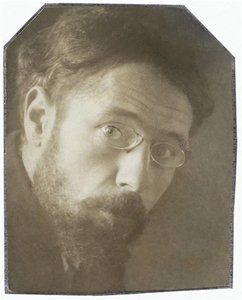
Post-Impressionism
6. Pierre Bonnard 1867–1947
1867–1947 Born in Fontenay-aux-Roses, France Post-Impressionism 10 originals at the Collection Bemberg
Pierre Bonnard entered the world on 3 October 1867 in Fontenay-aux-Roses, Hauts-de-Seine, France. While his lineage was rooted in the administrative stability of the state, Pierre’s domestic sphere was shaped by his mother, Élisabeth Mertzdorff, who hailed from Alsace. Bonnard’s early years were marked by a quiet departure from the legal path his father had envisioned.
Originals at the Collection Bemberg
-

Impressionism
7. Eugène Louis Boudin 1824–1898
1824–1898 Born in Honfleur, France Impressionism 2 originals at the Collection Bemberg
Born on 12 July 1824 in the port town of Honfleur, Normandy, France, Eugène Louis Boudin was a child of the sea. By the age of ten, the boy was already working aboard a steamboat that traveled the waters between Le Havre and Honfleur. In 1835, the family moved to Le Havre, where his father opened a shop that sold stationery and picture frames.
Originals at the Collection Bemberg
-

Dutch Golden Age
8. Jan van Goyen 1596–1656
1596–1656 Born in Leiden, Netherlands Dutch Golden Age 3 originals at the Collection Bemberg
Born on January 13, 1596, in Leiden, Netherlands, Jan Josephszoon van Goyen emerged as a pivotal figure in Dutch Golden Age painting. At the time of his death on April 27, 1656, in The Hague, he was reportedly 18,000 guilders in debt. Van Goyen’s work is considered a cornerstone of Dutch Golden Age painting and a significant contribution to the development of landscape art.
Originals at the Collection Bemberg
-

Baroque
9. Nicolas Tournier 1590–1639
1590–1639 Born in Montbéliard, France Baroque 2 originals at the Collection Bemberg
Born in Montbéliard, France, around 1590, Tournier emerged during a transformative era when the artistic pulse of Europe was shifting toward the intense emotionalism of the Baroque. Tournier’s subject matter was deeply rooted in the religious fervor of his time. What distinguishes Tournier from his contemporaries was his ability to blend this intense religious gravity with a sophisticated sense of composition derived from the Roman School.
Originals at the Collection Bemberg


The house in figures
The masters of the Collection Bemberg, in figures
The masters with the most originals at the Collection Bemberg
Masters with two originals or more, by century of birth
Masters with two originals or more, by country of birth
Masters with two originals or more, by movement
Women masters
The women whose originals hang in the Collection Bemberg
2 women masters, 2 originals, in our catalogue of the Collection Bemberg.
-

Élisabeth Louise Vigée Le Brun
1755–1842 · born in Paris, France · 1 originals at the Collection Bemberg
-

Adélaïde Labille-Guiard
1749–1803 · born in Paris, France · 1 originals at the Collection Bemberg
- The Princess of Montléar (1790)
Asked of us
Questions on the masters of the Collection Bemberg
Open a question to read the answer.
Who is the most famous artist in the Collection Bemberg?
Camille Pissarro (1830–1903): our catalogue holds 2 works by Camille Pissarro at the Collection Bemberg, among them Portrait of Félix Pissarro in a skirt and Chestnut Orchard in Winter. Lucas Cranach the Elder and Alfred Sisley follow.
How many Camille Pissarro paintings are in the Collection Bemberg?
2 works by Camille Pissarro at the Collection Bemberg are in our catalogue: Portrait of Félix Pissarro in a skirt (1883) and Chestnut Orchard in Winter (1872) among them.
What did Lucas Cranach the Elder paint that hangs in the Collection Bemberg?
3 works by Lucas Cranach the Elder at the Collection Bemberg are in our catalogue: Lovers (1530), Venus and Cupid (1531) and Sibylle von Kleve (1531) among them.
Which Alfred Sisley works are in the Collection Bemberg?
2 works by Alfred Sisley at the Collection Bemberg are in our catalogue: Morning Sun, Saint Mammes (1884) and Banks of the Loing towards Moret (1883) among them.
Which painter is most represented in the Collection Bemberg?
Our catalogue holds 10 works by Pierre Bonnard at the Collection Bemberg; next come Lucas Cranach the Elder (3), Jan van Goyen (3) and Camille Pissarro (2).
Is Leonardo da Vinci in the Collection Bemberg?
No: the Collection Bemberg holds no work by Leonardo da Vinci in our catalogue.
Is Pablo Picasso in the Collection Bemberg?
No: the Collection Bemberg holds no work by Pablo Picasso in our catalogue.
Are there any women painters in the Collection Bemberg?
Our catalogue lists 2 women artists with works at the Collection Bemberg: Élisabeth Louise Vigée Le Brun (1) and Adélaïde Labille-Guiard (1).
Are the artists in the Collection Bemberg mostly French, Italian or Dutch?
By country of birth, the artists with two works or more at the Collection Bemberg are mostly from France (6), United States Virgin Islands (1), Germany (1) and Netherlands (1).
Which centuries do the painters of the Collection Bemberg belong to?
Most of the artists with two works or more at the Collection Bemberg were born in the 19th century (5 artists); the earliest in this ranking is Lucas Cranach the Elder (1472–1553), the latest Pierre Bonnard (1867–1947).
How many artists does the collection of the Collection Bemberg cover?
36 artists have at least one work of the Collection Bemberg in our catalogue; 9 have two or more. They were born between 1472 and 1867, in 4 countries.
How is this ranking of artists made?
By recognition — Wikipedia articles in the most languages, page visits and our manual ranking — over the artists with two works or more of the Collection Bemberg in our catalogue. One entry per work; details, studies and copies are left out.
The house
The Collection Bemberg, Toulouse, in a few lines
The History of Collection Bemberg
The Collection Bemberg originated from the private acquisitions of Georges Bemberg. His personal efforts in gathering art resulted in a collection that spans from the 15th to the 20th century. He spent much of his life in France, where he eventually established the foundation that preserves his legacy. Rather than leaving his holdings to a state institution, Bemberg chose to bequeath the collection to a foundation bearing his name. This foundation operates as an independent legal entity. It is managed by a board of directors, which was chaired by Bemberg himself. This structure ensures the autonomy of the institution and the continued preservation of the works he assembled. The collection is situated in Toulouse, France. The foundation's existence allows for the public accessibility of these paintings, sculptures, and objects, maintaining the continuity of Bemberg's specific vision for the collection.
The Architecture of Hôtel d'Assézat
The collection is housed within the Hôtel d'Assézat, a Renaissance hôtel particulier located at 7 Place d'Assézat, 31000 Toulouse, France. This 16th-century structure provides the physical framework for the collection, with three-quarters of the works on view within its walls. The building's architectural character is defined by its historical significance and its specific layout, which includes a loggia. Beyond its role as a repository for art, the building serves a dual purpose. It also houses the Académies et Sociétés savantes. The integration of these scholarly institutions within the Renaissance residence maintains the building's long-standing connection to the intellectual and civic life of Toulouse.
The famous originals of the Collection BembergThe Collection Bemberg: the full page, 57 originalsThe museums of Toulouse
How the masters of the originals are ranked
The masters with two originals or more of the Collection Bemberg in our catalogue are ranked by fame: the Wikipedia language editions that describe them, the visits to their OriginalUniqueArt.com page and our studio's ranking. Originals are counted in our catalogue — one entry per work, without details, studies or copies — not in the museum's inventory. Every date, birthplace and movement is the catalogue's; the notes are drawn from the master's biography.
Go on