
The most famous artists with works in Anglesey Abbey are John Constable, Claude Lorrain, William Etty and Richard Wilson.
Below, the 24 best-known of the 96 artists with works of Anglesey Abbey in our catalogue (182 works), each with what the museum holds of them.
The masters of the originals
The 10 masters whose originals hang in Anglesey Abbey
For each master: where and when they were born, their movement, how many originals the museum keeps in our catalogue, a note from their life, and the originals to see.
-

Romanticism
1. John Constable 1776–1837
1776–1837 Born in East Bergholt, United Kingdom Romanticism 4 originals at Anglesey Abbey
John Constable was born in 1776 in the village of East Bergholt, Suffolk. About 1792, he began working in the family business, learning the practicalities of the corn trade before his path shifted toward the canvas. The years following his marriage to Maria Bicknell in 1816 were marked by a shifting sense of place. While his work remained tied to the river and the fields of his youth, his life moved toward the city.
Originals at Anglesey Abbey
-

Baroque
2. Claude Lorrain 1600–1682
1600–1682 Born in Chamagne, France Baroque 3 originals at Anglesey Abbey
Born around 1600 in Chamagne, a small village in the Duchy of Lorraine (modern-day France), Claude Lorrain – originally Claude Gellée – remains one of the most celebrated landscape painters of the Baroque period. By the 1630s, Claude Lorrain had firmly established himself as the leading landscapist in Italy.
Originals at Anglesey Abbey
-

Romanticism
3. William Etty 1787–1849
1787–1849 Born in York, United Kingdom Romanticism 16 originals at Anglesey Abbey
Born on March 10, 1787, in York, United Kingdom, he was the seventh child of Matthew and Esther Etty. At age 11, on 8 October 1798, he was apprenticed as a printer in Hull. In 1828, he was elected a Royal Academician, a move that solidified his status within the established art world.
Originals at Anglesey Abbey
-

Romanticism
4. Richard Wilson 1713–1782
1713–1782 Born in Penegoes, United Kingdom Romanticism 3 originals at Anglesey Abbey
Richard Wilson was born on July 24, 1713, in Islington, United Kingdom. Details regarding his early life remain scarce, but it is believed he received foundational artistic training. Wilson’s initial skills were likely developed through self-study and observation, as well as potentially from other artists of the time.
Originals at Anglesey Abbey
-
Impressionism
5. Edward Seago 1910–1974
1910–1974 Impressionism 3 originals at Anglesey Abbey
British Impressionist of luminous Norfolk marshes and stormy seascapes, rendered with loose brushwork and careful color modulation. While many artists found their work interrupted by conflict, Seago’s unique talents were pressed into the service of his country.
Originals at Anglesey Abbey
-

6. Joseph Murray Ince 1806–1859
1806–1859 Born in London, United Kingdom 5 originals at Anglesey Abbey
Born in April 1806 in Marylebone, London, his early years were shaped by the pastoral beauty of Presteigne in Radnorshire, where he spent much of his childhood. His formal training began under the guidance of the esteemed painter David Cox, studying with him from 1823 to 1826. In 1826, Ince moved to London, a pivotal moment that allowed his talent to reach the wider art world.
Originals at Anglesey Abbey
-

Neoclassicism
7. Dominic Serres 1722–1793
1722–1793 Born in Auch, France Neoclassicism 2 originals at Anglesey Abbey
French-born British marine painter and Royal Academy founder known for dramatic naval battles and detailed ship scenes from the Seven Years' War. Serres’s formative years were marked by exposure to European artistic traditions, particularly those prevalent in Spain.
Originals at Anglesey Abbey
-

Neoclassicism
8. Philip Reinagle 1748–1833
1748–1833 Born in Edinburgh, United Kingdom Neoclassicism 3 originals at Anglesey Abbey
Reinagle’s dedication to his craft earned him recognition from the Royal Academy, where he was elected an Associate in 1787 – a prestigious honor signifying substantial accomplishment and artistic merit.
Originals at Anglesey Abbey
-

9. Aert Schouman 1710–1792
1710–1792 Born in Dordrecht, Netherlands 2 originals at Anglesey Abbey
Schouman’s influence was not confined to his own brushstrokes; he was a central architect of the institutional art world in the Netherlands. From 1742 until his death in 1792, he served as the headman of the Dordrecht Guild of St. Luke, a position that placed him at the heart of local artistic governance.
Originals at Anglesey Abbey
-

10. Franz de Paula Ferg 1689–1740
1689–1740 Born in Vienna, Austria 4 originals at Anglesey Abbey
Born in Vienna, Austria, he was the son of the history painter Adam Pankraz Ferg, who provided his initial artistic foundation. By the time he settled in London around 1724, he had become a versatile creator, capable of producing oil paintings, etchings, and engravings that captured both the grandeur of nature and the intimacy of human interaction.
Originals at Anglesey Abbey


The masters, continued
No. 11 to No. 24: more masters of Anglesey Abbey
-
11. John Thomas Serres
Neoclassicism
1759–1825 · born in London, United Kingdom · 3 originals at Anglesey Abbey
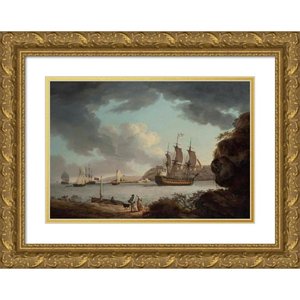
John Thomas Serres (1759-1825) was a prominent English maritime painter known for his detailed depictions of naval battles, serene river landscapes, and coastal scenes. He served as Marine Painter to King George III and exhibited extensively at the R
-

12. James Wilson Carmichael
Romanticism
1799–1868 · born in Newcastle upon Tyne, United Kingdom · 2 originals at Anglesey Abbey
-

13. John Frederick Herring, Sr.
Academic Art
1795–1865 · born in London, United Kingdom · 2 originals at Anglesey Abbey
-

14. William Alexander
1767–1816 · born in Maidstone, United Kingdom · 2 originals at Anglesey Abbey
-

15. James Baker Pyne
Romanticism
1800–1870 · born in Bristol, United Kingdom · 4 originals at Anglesey Abbey
-

16. Edmund Bristow
Romanticism
1787–1876 · born in Eton, United Kingdom · 18 originals at Anglesey Abbey
-

17. George Cole
Romanticism
1810–1883 · born in Portsmouth, United Kingdom · 2 originals at Anglesey Abbey
-

18. Richard Barrett Davis
Neoclassicism
1782–1854 · born in Watford, United Kingdom · 5 originals at Anglesey Abbey
-

19. Charles Collins
1680–1744 · born in Dublin, Ireland · 9 originals at Anglesey Abbey
-

20. Edward Charles Williams
1807–1881 · born in London, United Kingdom · 3 originals at Anglesey Abbey
-

21. Thomas Churchyard
1798–1865 · born in Kingdom of Great Britain · 2 originals at Anglesey Abbey
-

22. Samuel John Egbert Jones
1797–1861 · born in Kingdom of Great Britain · 8 originals at Anglesey Abbey
-

23. Charles Towne
1739–1816 · 2 originals at Anglesey Abbey
-

24. Charles S. Brownlow
1885–1948 · 3 originals at Anglesey Abbey
- Icknield Way Camp (1937)
- Old July Course, Newmarket (1937)
- Old Railway Cutting (1937)
The house in figures
The masters of Anglesey Abbey, in figures
The masters with the most originals at Anglesey Abbey
Masters with two originals or more, by century of birth
Masters with two originals or more, by country of birth
Masters with two originals or more, by movement
Women masters
The women whose originals hang in Anglesey Abbey
3 women masters, 3 originals, in our catalogue of Anglesey Abbey.
-

Amelia Long
1762–1837 · born in Belton House, United Kingdom · 1 originals at Anglesey Abbey
-

Anne Nasmyth
1798–1874 · born in Edinburgh, United Kingdom · 1 originals at Anglesey Abbey
-

Victoria Susanna Colkett
1840–1926 · born in United Kingdom of Great Britain and Ireland · 1 originals at Anglesey Abbey
- King's College Chapel (1863)
Asked of us
Questions on the masters of Anglesey Abbey
Open a question to read the answer.
Who is the most famous artist in Anglesey Abbey?
John Constable (1776–1837): our catalogue holds 4 works by John Constable at Anglesey Abbey, among them Lamarsh House, Lamarsh, Essex, Embarkation of George IV from Whitehall: the Opening of Waterloo Bridge and Landscape: Boys Fishing. Claude Lorrain and William Etty follow.
What did John Constable paint that hangs in Anglesey Abbey?
4 works by John Constable at Anglesey Abbey are in our catalogue: Lamarsh House, Lamarsh, Essex (1790), Embarkation of George IV from Whitehall: the Opening of Waterloo Bridge (1817) and Landscape: Boys Fishing (1813) among them.
How many Claude Lorrain paintings are in Anglesey Abbey?
3 works by Claude Lorrain at Anglesey Abbey are in our catalogue: A Classical Landscape with Cattle Crossing a Stream (1670), The Arrival of Aeneas at Pallanteum (1675) and The father of Psyche sacrificing at the Temple of Apollo among them.
What did William Etty paint that hangs in Anglesey Abbey?
16 works by William Etty at Anglesey Abbey are in our catalogue: A Bacchante and a Young Faun dancing in a Bacchic Setting (1837), The Good Samaritan, A Female Nude Striding in a Landscape and The Toilet of Venus among them.
Who are the top 10 artists in Anglesey Abbey?
By fame: John Constable (4), Claude Lorrain (3), William Etty (16), Richard Wilson (3), Edward Seago (3), Joseph Murray Ince (5), Dominic Serres (2), Philip Reinagle (3), Aert Schouman (2) and Franz de Paula Ferg (4).
Which painter is most represented in Anglesey Abbey?
Edmund Bristow (1787–1876), with 18 works in our catalogue of Anglesey Abbey, ahead of William Etty (16), Charles Collins (9) and Samuel John Egbert Jones (8).
Are there Leonardo da Vinci works in Anglesey Abbey?
No: Anglesey Abbey holds no work by Leonardo da Vinci in our catalogue.
Are there Pablo Picasso works in Anglesey Abbey?
No: Anglesey Abbey holds no work by Pablo Picasso in our catalogue.
Which women artists are in Anglesey Abbey?
Our catalogue lists 3 women artists with works at Anglesey Abbey: Amelia Long (1), Anne Nasmyth (1) and Victoria Susanna Colkett (1).
Are the artists in Anglesey Abbey mostly French, Italian or Dutch?
Counting the artists with two works or more, Anglesey Abbey holds painters born mostly in United Kingdom (14), France (2), Kingdom of Great Britain (2), Netherlands (1) and Austria (1).
Who is the earliest artist in Anglesey Abbey?
The 18th century leads with 16 artists born then. In this ranking, Claude Lorrain (1600–1682) is the earliest born and Edward Seago (1910–1974) the latest.
How many artists does the collection of Anglesey Abbey cover?
Our catalogue lists 96 artists with at least one work at Anglesey Abbey, 24 of them with two or more, born between 1600 and 1910 in 6 countries.
The house
Anglesey Abbey, , in a few lines
The Origins and History of Anglesey Abbey
The history of Anglesey Abbey begins with its foundation as the Hospital of St Mary. Established during the reign of Henry I, the site functioned as a priory of Augustinian Canons regular. This monastic existence continued until 1536, when the priory was closed during the dissolution of the monasteries. Following this period of transition, the property was granted to a lawyer named John Hynde approximately three years later. The estate has undergone many transformations since those early centuries. The current National Trust property in the village of Lode, Cambridgeshire, England, encompasses a country house, a working mill, and 98 acres of landscaped grounds. The site has evolved from its religious origins into a private residence, shaped by the hands of many who occupied the land. Lord Fairhaven held the property until his death in 1966, at which time Anglesey Abbey was left to the National Trust.
The Architecture and Building of the House
The house is a Jacobean-style residence with a layered history that begins long before its current form. It is a Grade I-listed building constructed upon the remains of a monastic priory, once the home of Augustinian Canons regular. This foundation provides a sense of continuity between the medieval past and the later domestic evolution of the site. The structure reflects the transition from a religious institution to a grand country home, with the physical presence of the priory still informing the character of the estate. This wing contains the Abbey Room, the Ship Room, the Business Room, and the Library. Private quarters are distributed through various themed spaces, such as the Newmarket Bedroom, the Cambridge Room, the Queens Bedroom, and the Windsor Room, alongside the Quy Room. These rooms, along with the associated bathrooms, maintain the atmosphere of a lived-in English home. A two-storey picture gallery, designed by Sir Albert Richardson and completed in 1956, provides a dedicated space for the display of fine works.
The famous originals of Anglesey AbbeyAnglesey Abbey: the full page, 186 originals
How the masters of the originals are ranked
The masters with two originals or more of Anglesey Abbey in our catalogue are ranked by fame: the Wikipedia language editions that describe them, the visits to their OriginalUniqueArt.com page and our studio's ranking. Originals are counted in our catalogue — one entry per work, without details, studies or copies — not in the museum's inventory. Every date, birthplace and movement is the catalogue's; the notes are drawn from the master's biography.
Go on