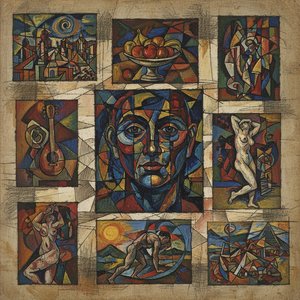
The Life and Art of Valentine Prax
Born in Annaba, Algeria, Valentine Prax was a French expressionist and cubist painter. After studying art at the École des Beaux-Arts in Algiers, she moved to Paris in 1919. In the avant-garde Montparnasse neighborhood, she met the sculptor Ossip Zadkine, whom she married in 1920. Her early career saw significant recognition, including a solo exhibition in Paris in 1924 and an exhibition at Galerie Berthe Weill in January 1924.
During the German occupation of Paris, Prax remained in France to protect her property and her husband's bronze sculptures, which she hid in the basements of neighbors. She chose to destroy some of her husband's paintings to prevent them from being scattered by the Nazi regime. During the war years, her style shifted toward cubism and mythology, often drawing on her Algerian memories.
Exhibitions and Legacy
Following the war, Prax experienced continued professional growth with numerous exhibitions, including:
Prax died in Paris and bequeathed her estate to support a museum dedicated to her husband's work. The Musée Zadkine was opened in their former Parisian studio, and a second museum was established in Les Arques to display works by both Prax and Zadkine.
Questions & Answers
How did Valentine Prax's art evolve over time?
Valentine Prax's career unfolds period by period on the artist's Chronicle page: a horizontal timeline of the artworks, grouped into career-period chapters.
Can I browse Valentine Prax's works by mood?
Valentine Prax's works can be browsed by mood on the artist's Mood Room page, which arranges the artworks by their recorded moods.
Is there a timeline of Valentine Prax's works?
The artist's Artwork Timeline page presents Valentine Prax's works ordered by date, year by year.
Where is Valentine Prax from?
Valentine Prax was born in Algeria.