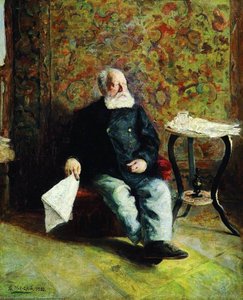
Portrait of Vladimir Makovsky

The 100 Most Famous Vladimir Makovsky Paintings, a Gallery Selection

Updated November 2026 · ranked by our popularity score (searches, visits and orders for each work) · 141 works by Vladimir Makovsky in our catalogue

In short

Of all the originals Vladimir Makovsky left, the most famous is I will not! (1892). Close behind it come Verdict (1882) and Goodbye, Papa (1894). Our catalog holds 141 works by Vladimir Makovsky; the gallery has kept the 100 the world admires most, each shown with its date, its museum and its story.

1846 – 1920, Moscow Realism Most works: Yekaterinburg Museum of Fine Arts

Vladimir Makovsky's top 10 paintings: the gallery's choice

1
I will not! (1892) by Vladimir Makovsky

I will not!

1892 · Oil

The scene unfolds within the oil painting titled "I will not!", a work that captures a fleeting moment of human interaction. This piece is the creation of Vladimir Makovsky, an artist who brought the realities of his era to the canvas. He lived from 1846 until 1920, leaving behind a body of work that reflects the shifting social landscapes of his time. Born in Moscow, Russia, Makovsky grew up immersed…

2
Verdict (1882) by Vladimir Makovsky

Verdict

1882 · Oil On Canvas

The oil painting depicts a group of figures gathered in a room characterized by heavy wooden furniture and architectural lines. A large, dark wooden table occupies the foreground, its surface reflecting a diffused light that illuminates the scene from an unseen source. At the center of the arrangement, a woman holds an infant. She wears garments of blue and white, which contrast against the darker, muted tones of the surrounding…

3
Goodbye, Papa (1894) by Vladimir Makovsky

Goodbye, Papa

1894 · Oil On Canvas

In this 1894 oil on canvas, a young woman and an older man are positioned in a close, physical connection. The woman wears a white dress and a veil that covers her head and shoulders. She holds the hand of the man, who is dressed in a dark suit. Their bodies are oriented toward one another, creating a central focus of contact amidst a quiet setting. To the left, a…

4
Mother and daughter (1886) by Vladimir Makovsky

Mother and daughter

1886 · Oil

In this 1886 oil painting, two figures occupy the immediate foreground of a wide landscape. A woman and a young girl stand facing one another, positioned in a way that suggests a private conversation. The woman is dressed in a dark skirt paired with a lighter-colored blouse, while the girl wears a dress made of the same dark fabric as the woman's skirt. Their clothing is characteristic of traditional peasant…

5
From the rain (1887) by Vladimir Makovsky

From the rain

1887 · Oil On Canvas

The scene before us is titled From the rain, a work that emerges from the brush of the Russian painter Vladimir Makovsky. Created in 1887, this oil on canvas captures a specific, fleeting moment of life. The artist, born in Moscow, Russia, brings a sense of lived reality to this composition, grounding the viewer in a particular era of his homeland.

6
Before explaining the (Date) (1900) by Vladimir Makovsky

Before explaining the (Date)

1900 · Oil On Canvas

The air feels heavy with the scent of damp earth and decaying leaves. Sunlight filters through a dense canopy of intertwining branches, casting long, soft shadows across a forest floor carpeted in moss and fallen foliage. In this quiet, wooded clearing, two figures are caught in a private exchange. A man in a military uniform stands poised, his presence commanding yet still, facing a woman whose long dress flows around…

7
Study to ''January 9, 1905 on Vasilyevsky island'' (1907) by Vladimir Makovsky

Study to ''January 9, 1905 on Vasilyevsky island''

1907 · Oil

The canvas presents a study titled Study to ''January 9, 1905 on Vasilyevsky island'', a work that captures a specific, heavy moment in time. Created about 1907, the painting emerges from the hand of Vladimir Makovsky. He approaches the scene with the practiced eye of a man who understands the weight of a single, frozen instant. The brushwork holds a quiet tension, as if the air itself is waiting for…

8
Two mothers. Native mother and stepmother. (1906) by Vladimir Makovsky

Two mothers. Native mother and stepmother.

1906 · Oil On Canvas

In this oil painting from 1905-1906, a quiet domestic breakfast is suddenly fractured by an unexpected arrival. The scene unfolds around a dining table draped in a white tablecloth, set with the familiar items of a morning meal. The stillness of the room is broken by the presence of a woman who has just entered, her appearance marking her as a stranger to this well-to-do household. She wears a dark…

9
Grandma's Instruction (1869) by Vladimir Makovsky

Grandma's Instruction

1869 · Oil On Canvas · Yekaterinburg Museum of Fine Arts, Yekaterinburg

In this quiet genre painting, titled Grandma's Instruction, we encounter a private moment of domesticity captured by the Russian artist Vladimir Makovsky. Created in 1869, the work reflects the early period of a career that would eventually define much of the realist movement in Russia. Makovsky was a man of many roles—a painter, a teacher, and an art collector—whose life was deeply embedded in the artistic traditions of Moscow.

10
Lover of of antiquity (1869) by Vladimir Makovsky

Lover of of antiquity

1869 · Watercolor

The artwork titled Lover of of antiquity was created by the Russian painter Vladimir Makovsky. This piece dates to about 1869, a year marking the conclusion of the artist's formal studies at the Moscow School of Painting, Sculpture, and Architecture. The work emerged during a period when Makovsky was establishing his presence within the Russian art scene, specifically through his involvement with the Association of Travelling Art Exhibitions.

The Vladimir Makovsky selection continues, 11 to 100

11Literary reading (1866) by Vladimir MakovskyLiterary reading1866 12Buddies (1878) by Vladimir MakovskyBuddies1878 13Study of the Head of an Old Man (1883) by Vladimir MakovskyStudy of the Head of an Old Man1883 · Cleveland Museum of Art 14Maid with children (1883) by Vladimir MakovskyMaid with children1883 · Yekaterinburg Museum of Fine Arts 15Ukrainian girl (1882) by Vladimir MakovskyUkrainian girl1882 16The Peddler (1880) by Vladimir MakovskyThe Peddler1880 · Metropolitan Museum of Art 17The secret (1884) by Vladimir MakovskyThe secret1884 18Two pilgrims (1885) by Vladimir MakovskyTwo pilgrims1885 19A letter (1883) by Vladimir MakovskyA letter1883 20The Prisoner (1882) by Vladimir MakovskyThe Prisoner1882 21A portrait of E. I. Makovsky (1880) by Vladimir MakovskyA portrait of E. I. Makovsky1880 22In the hall (1884) by Vladimir MakovskyIn the hall1884 23Date (1883) by Vladimir MakovskyDate1883 24Portrait of I. E. Tsvetkov (1890) by Vladimir MakovskyPortrait of I. E. Tsvetkov1890 25A portrait of E. S. Sorokin (1891) by Vladimir MakovskyA portrait of E. S. Sorokin1891 26Dilettante (1896) by Vladimir MakovskyDilettante1896 · Zimmerli Art Museum at Rutgers University 27Painter's family (1893) by Vladimir MakovskyPainter's family1893 · National Art Museum of Azerbaijan 28Jesus Christ (1894) by Vladimir MakovskyJesus Christ1894 29An optimist and a pessimist (1893) by Vladimir MakovskyAn optimist and a pessimist1893 30Arrival of a School Mistress in the Countryside (1897) by Vladimir MakovskyArrival of a School Mistress in the Countryside1897 31In the birch forest. (1905) by Vladimir MakovskyIn the birch forest.1905 · National Museum in Warsaw 32Ukrainian peasant girl (1902) by Vladimir MakovskyUkrainian peasant girl1902 33A conversation. (1910) by Vladimir MakovskyA conversation.1910 · National Museum in Warsaw 34Portrait of a boy (1908) by Vladimir MakovskyPortrait of a boy1908 35Violinist (1908) by Vladimir MakovskyViolinist1908 36At the sexton (1915) by Vladimir MakovskyAt the sexton1915 · Yekaterinburg Museum of Fine Arts 37At the kitchen (1913) by Vladimir MakovskyAt the kitchen1913 38At the Boulevard (1887) by Vladimir MakovskyAt the Boulevard1887 39Guitar player (1879) by Vladimir MakovskyGuitar player1879 40Declaration of Love (1891) by Vladimir MakovskyDeclaration of Love1891 41A boy selling brew (1861) by Vladimir MakovskyA boy selling brew1861 42A deacon (1871) by Vladimir MakovskyA deacon1871 43Knuckles (1870) by Vladimir MakovskyKnuckles1870 44A gypsy lady (1875) by Vladimir MakovskyA gypsy lady1875 45Waiting (1875) by Vladimir MakovskyWaiting1875 46Dinner (Farmer's Market in Moscow) (1875) by Vladimir MakovskyDinner (Farmer's Market in Moscow)1875 47A Private Conversation (1878) by Vladimir MakovskyA Private Conversation1878 48Making Jam (1876) by Vladimir MakovskyMaking Jam1876 49Making Jam (1876) by Vladimir MakovskyMaking Jam1876 50Visiting a poor people (1874) by Vladimir MakovskyVisiting a poor people1874 51The Meal (1875) by Vladimir MakovskyThe Meal1875 52Fans of nightingales (1873) by Vladimir MakovskyFans of nightingales1873 53Congratulations (1878) by Vladimir MakovskyCongratulations1878 54A girl with geese (1875) by Vladimir MakovskyA girl with geese1875 · Nizhniy Tagil State Museum of Fine Arts 55Brew seller (1879) by Vladimir MakovskyBrew seller1879 56Fishing (1884) by Vladimir MakovskyFishing1884 57Moscow types (1879) by Vladimir MakovskyMoscow types1879 58Peasant boys (1880) by Vladimir MakovskyPeasant boys1880 59Reprimand (1883) by Vladimir MakovskyReprimand1883 60Two ukrainians (1882) by Vladimir MakovskyTwo ukrainians1882 61Organ grinder (1879) by Vladimir MakovskyOrgan grinder1879 62Fair (1882) by Vladimir MakovskyFair1882 63At the village school (1883) by Vladimir MakovskyAt the village school1883 64Old man with a pipe (1881) by Vladimir MakovskyOld man with a pipe1881 65Politicians (1884) by Vladimir MakovskyPoliticians1884 66The Collapse of a Bank (study) (1880) by Vladimir MakovskyThe Collapse of a Bank (study)1880 67At Noon (1879) by Vladimir MakovskyAt Noon1879 68The Condemned (1879) by Vladimir MakovskyThe Condemned1879 69The Collapse of a Bank (1881) by Vladimir MakovskyThe Collapse of a Bank1881 70In Search of Medicine (1884) by Vladimir MakovskyIn Search of Medicine1884 71In a Country School (1883) by Vladimir MakovskyIn a Country School1883 72The Village Children (1880) by Vladimir MakovskyThe Village Children1880 73Midday Sun (1881) by Vladimir MakovskyMidday Sun1881 74Sergey Korovin (1892) by Vladimir MakovskySergey Korovin1892 · National Museum in Warsaw 75Old couple (1889) by Vladimir MakovskyOld couple1889 · Nikanor Onatsky Regional Art Museum in Sumy 76Crimean seashore (1889) by Vladimir MakovskyCrimean seashore1889 77Wandering fiddler (1886) by Vladimir MakovskyWandering fiddler1886 78Over the chips (1892) by Vladimir MakovskyOver the chips1892 79The first coat (1892) by Vladimir MakovskyThe first coat1892 80His First Suit (1892) by Vladimir MakovskyHis First Suit1892 81Prayer service at the farm in Ukraine (1886) by Vladimir MakovskyPrayer service at the farm in Ukraine1886 82Miracle at Cana (1887) by Vladimir MakovskyMiracle at Cana1887 83Easter Te Deum (1888) by Vladimir MakovskyEaster Te Deum1888 84Easter Mass (1888) by Vladimir MakovskyEaster Mass1888 85The Doss House (1889) by Vladimir MakovskyThe Doss House1889 86Hunters at Rest (1887) by Vladimir MakovskyHunters at Rest1887 87Fisherwomen (1886) by Vladimir MakovskyFisherwomen1886 88Don't Go! (1892) by Vladimir MakovskyDon't Go!1892 89Morning tea (1891) by Vladimir MakovskyMorning tea1891 90Portrait of Alexei Ivanovitch Strelkovsky (1889) by Vladimir MakovskyPortrait of Alexei Ivanovitch Strelkovsky1889 91Peasant children (1890) by Vladimir MakovskyPeasant children1890 92Grandmother and granddaughter (1895) by Vladimir MakovskyGrandmother and granddaughter1895 93Summer (1896) by Vladimir MakovskySummer1896 94Summer (1896) by Vladimir MakovskySummer1896 95Summer (1896) by Vladimir MakovskySummer1896 96Summer (1896) by Vladimir MakovskySummer1896 97At Volga (1897) by Vladimir MakovskyAt Volga1897 98Two sisters (1893) by Vladimir MakovskyTwo sisters1893 99At the porter's room (1893) by Vladimir MakovskyAt the porter's room1893 100To crown (Farewell) (1894) by Vladimir MakovskyTo crown (Farewell)1894

Vladimir Makovsky's famous paintings, period by period

The subjects that held Vladimir Makovsky's eye

The four subjects that come back most often in these originals, each with its finest example.

The museums that keep Vladimir Makovsky's originals

The 8 museums that hold the most of the paintings on this page.

Museum City Works by Vladimir Makovsky Paintings from this list
Yekaterinburg Museum of Fine Arts, YekaterinburgYekaterinburg Museum of Fine Arts Yekaterinburg 3 Grandma's Instruction, Maid with children, At the sexton
National Museum in Warsaw, WarsawNational Museum in Warsaw Warsaw 3 In the birch forest., A conversation., Sergey Korovin
Cleveland Museum of Art, ClevelandCleveland Museum of Art Cleveland 1 Study of the Head of an Old Man
Metropolitan Museum of Art, New YorkMetropolitan Museum of Art New York 1 The Peddler
Zimmerli Art Museum at Rutgers University, New BrunswickZimmerli Art Museum at Rutgers University New Brunswick 1 Dilettante
National Art Museum of Azerbaijan, BakuNational Art Museum of Azerbaijan Baku 1 Painter's family
Nizhniy Tagil State Museum of Fine Arts, Nizhny TagilNizhniy Tagil State Museum of Fine Arts Nizhny Tagil 1 A girl with geese
Nikanor Onatsky Regional Art Museum in Sumy, SumyNikanor Onatsky Regional Art Museum in Sumy Sumy 1 Old couple

Vladimir Makovsky decade by decade: the original that defines each

Works per decade

Pick a decade to see the original that defines it.

Collectors' questions about Vladimir Makovsky's paintings

Which work is Vladimir Makovsky most famous for?Reveal the answer

I will not! (1892). Verdict (1882) and Goodbye, Papa (1894) come next.

What age was Vladimir Makovsky when I will not! was made?Reveal the answer

46 years old: I will not! dates from 1892, and Vladimir Makovsky was born in 1846.

What are the ten most famous Vladimir Makovsky paintings?Reveal the answer

I will not!, Verdict, Goodbye, Papa, Mother and daughter, From the rain, Before explaining the (Date), Study to ''January 9, 1905 on Vasilyevsky island'', Two mothers. Native mother and stepmother., Grandma's Instruction and Lover of of antiquity. The ranking above gives each one's year and museum.

How many paintings did Vladimir Makovsky leave?Reveal the answer

Our catalog holds 141 works by Vladimir Makovsky, dated from 1861 to 1915.

In which museums do Vladimir Makovsky's masterpieces hang?Reveal the answer

Mostly in Yekaterinburg Museum of Fine Arts (Yekaterinburg), National Museum in Warsaw (Warsaw) and Cleveland Museum of Art (Cleveland). The museum table above lists them all.

In which years did Vladimir Makovsky paint the most famous works?Reveal the answer

In 1880s: 40 of the 100 works on this page were made then, Verdict among them.

What are the first and the last famous originals of Vladimir Makovsky?Reveal the answer

On this page, the earliest is A boy selling brew (1861) and the latest At the sexton (1915).

Which subjects did Vladimir Makovsky choose most often?Reveal the answer

Man (16), Woman (13) and Children (11), across the 100 works on this page.

Which technique did Vladimir Makovsky use most?Reveal the answer

Oil On Canvas, for 31 of the 100 works on this page.

To which art movement does Vladimir Makovsky belong?Reveal the answer

Realism, judging by the originals on this page.

Which Vladimir Makovsky works hang at the Yekaterinburg Museum of Fine Arts?Reveal the answer

Grandma's Instruction, Maid with children and At the sexton: the Yekaterinburg Museum of Fine Arts, Yekaterinburg holds 3 of the works on this page.

Vladimir Makovsky: life and work

A Legacy of Truth: The Life and Vision of Vladimir Yegorovich Makovsky

Vladimir Yegorovich Makovsky (1846-1920) stands as a pivotal figure in the history of Russian realist painting, serving as a profound voice for the Peredvizhniki movement. Born into a family where art was not merely a profession but a way of life, his early years in Moscow were steeped in creative tradition. As the son of Yegor Ivanovich Makovsky, a renowned collector and founder of the Moscow Art School, Vladimir was raised within an environment that prioritized artistic excellence and social responsibility. Alongside his brothers, Nikolai and Konstantin, he became part of a formidable artistic dynasty that would fundamentally reshape the landscape of Russian fine art by moving away from academic idealism toward a more honest, unvarnished depiction of reality.

His formal journey began at the prestigious Moscow School of Painting, Sculpture, and Architecture, where his technical mastery was forged. Upon graduating in 1869, Makovsky did not seek the hollow comforts of the imperial academies; instead, he joined the Association of Travelling Art Exhibitions. This decision was transformative, as it placed him at the heart of a movement dedicated to bringing art to the people and using the canvas as a mirror for society's struggles. His work became characterized by an uncanny ability to blend rustic humor with deep, often poignant, social observation. Through his eyes, the viewer is transported into the intimate corners of 19th-century Russia, witnessing both the quiet dignity of the peasantry and the subtle ironies of urban life.

The Art of Observation: Themes and Technique

Makovsky’s oeuvre is a masterclass in genre painting, where every brushstroke serves to illuminate the human condition. He possessed a unique talent for capturing fleeting moments—a shared glance, a momentary respite from labor, or the quiet tension of a social encounter. In works such as “The Grape Juice Seller” and “Fruit-Preserving,” he utilizes a delicate balance of light and texture to evoke the atmosphere of rural life, infusing his scenes with a gentle irony that prevents them from becoming mere sentimentality. His technique allowed him to navigate between the broad, expressive strokes required for atmospheric landscapes and the meticulous detail necessary for psychological portraiture.

Beyond the charm of his more lighthearted scenes, Makovsky was a courageous chronicler of social inequity. He used his art as a powerful conduit for commentary, confronting the viewer with the uncomfortable realities of his era. His paintings often explored themes of:

  • Social Injustice: Confronting the hardships faced by the lower classes and the widening gap between social strata.
  • Human Connection: Capturing the raw intimacy of emotion in works like “Declaration of Love.”
  • The Passage of Time: Documenting the changing seasonal rhythms of Russian life, as seen in the evocative “At the Boulevard.”
  • Psychological Depth: Using self-portraiture and character studies to explore the inner lives of his subjects.

Historical Significance and Enduring Influence

The historical weight of Vladimir Makovsky’s contribution cannot be overstated. As a leading member of the Wanderers, he helped dismantle the monopoly of academic art, paving the way for a more democratic and socially engaged form of expression. His ability to weave together the mundane and the monumental allowed him to create a visual language that resonated with both the intelligentsia and the common people. Even in his most personal works, such as his Self-portrait, there is a sense of the larger world pressing against the individual, a reflection of the turbulent historical shifts occurring in Russia during his lifetime.

Today, Makovsky’s legacy lives on through the enduring power of his imagery. He remains a master of the "truthful" gaze, reminding us that art is at its most potent when it refuses to look away from the complexities of life. His works continue to be studied and admired not just for their technical brilliance, but for their profound empathy and their ability to capture the very soul of a vanished era.