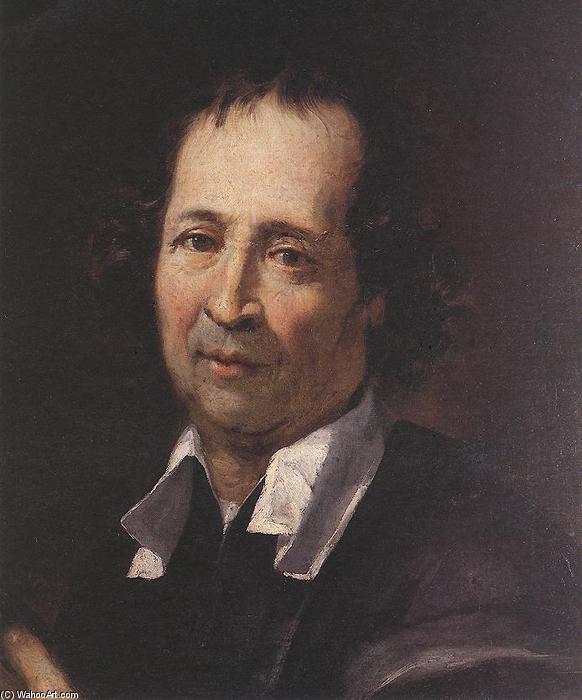
Portrait of Pierre Puget

The 70 Most Famous Pierre Puget Paintings, a Gallery Selection

Updated November 2026 · ranked by our popularity score (searches, visits and orders for each work) · 77 works by Pierre Puget in our catalogue

In short

Of all the originals Pierre Puget left, the most famous is The Meeting of Alexander the Great and Diogenes (1671), in the collection of the The Louvre, Paris. Close behind it come Milo of Croton (1671) and The Meeting of Alexander the Great and Diogenes (1671). Our catalog holds 77 works by Pierre Puget; the gallery has kept the 70 the world admires most, each shown with its date, its museum and its story.

1620 – 1694, Marseille Baroque Most works: The Louvre

Pierre Puget's top 10 paintings: the gallery's choice

1
The Meeting of Alexander the Great and Diogenes (1671) by Pierre Puget

The Meeting of Alexander the Great and Diogenes

1671 · Marble · The Louvre, Paris

In the hallowed halls of art history, few encounters possess the dramatic tension found in Pierre Puget’s 1671 masterpiece, The Meeting of Alexander the Great and Diogenes. This monumental sculpture is far more than a mere historical reconstruction; it is a breathtaking theatrical performance frozen in marble. At its heart lies a profound confrontation between two opposing worlds: the boundless, imperial ambition of Alexander the Great and the radical, ascetic…

2
Milo of Croton (1671) by Pierre Puget

Milo of Croton

1671 · Marble · The Louvre, Paris

In the hallowed halls of the Louvre Museum, one figure commands the space with a visceral, breathtaking intensity that transcends the cold stillness of marble. Pierre Puget’s Milo of Croton is not merely a sculpture; it is a profound psychological drama frozen in time. Completed between 1671 and 1682, this monumental work serves as a cornerstone of the Baroque era, capturing a moment where physical prowess meets unbearable suffering. The…

3
The Meeting of Alexander the Great and Diogenes (1671) by Pierre Puget

The Meeting of Alexander the Great and Diogenes

1671 · Sculpture · The Louvre, Paris

In the hallowed halls of the Musée du Louvre, there exists a moment frozen in time, a theatrical confrontation that transcends the boundaries of mere sculpture to become a profound meditation on human existence. Pierre Puget’s 1671 masterpiece, The Meeting of Alexander the Great and Diogenes, is not simply a depiction of two historical figures; it is a breathtaking performance captured in alabaster. The work brings us face-to-face with the…

4
Self-portrait (1668) by Pierre Puget

Self-portrait

1668 · Oil On Canvas · Granet Museum, Aix-en-Provence

The oil on canvas titled Self-portrait is a work by the artist Pierre Puget. Created in 1668, this portrait captures the artist in a moment of quiet observation. The medium of oil allows for a specific depth, anchoring the figure within the frame of the 47 x 38 cm surface.

5
View on the Sea (1670) by Pierre Puget

View on the Sea

1670 · Acrylic On Canvas · The Louvre, Paris

Pierre Puget's "View on the Sea," created around 1670, isn’t merely a depiction of three ships navigating a hazy horizon; it’s a meticulously crafted tableau brimming with Baroque drama and an intimate understanding of human scale. Born in Marseille during a period of intense maritime activity, Puget’s life was inextricably linked to the sea – initially as a craftsman shaping the hulls of galleys, later as a celebrated sculptor, architect,…

6
Bust of Young August by Pierre Puget

Bust of Young August

Marble · Museo di Sant'Agostino, Genova

The Bust of Young August emerges from the stone as a vivid presence, a portrait bust that captures the essence of a leader in his prime. Created by the sculptor Pierre Puget, this work presents the young emperor Augustus, who ruled from 63 BC to 14 AD. The figure gazes out with a sense of quiet authority, frozen in a moment of youthful nobility that defies the passing of centuries.

7
Hercules Standing (1660) by Pierre Puget

Hercules Standing

1660 · Terracotta · Staatliche Museen zu Berlin, Berlin

In Hercules Standing, Pierre Puget presents the legendary hero of Greek mythology through a lens of physical power and controlled movement. Created about 1660, the sculpture focuses on the attributes for which the figure is most recognized: immense strength and prowess. Rather than a static representation, the subject is captured in a dynamic contrapposto pose, where the weight shifts onto one leg while the other remains relaxed, creating a sense…

8
David Gazing at Goliath's Head (1671) by Pierre Puget

David Gazing at Goliath's Head

1671 · Oil · Musée de la civilisation, Quebec City

In this Baroque oil painting from 1671, a youthful, muscular man sits on the left side of the composition. He is draped in heavy blue fabric that falls in deep folds across his lap, where a layer of fur provides a textural contrast to his skin. His body is positioned in a way that emphasizes anatomical detail, particularly in the torso and limbs. To his right, resting upon a rough…

9
Great Vessel of War (1670) by Pierre Puget

Great Vessel of War

1670 · Ink On Paper · Musée Bonnat, Bayonne

The Great Vessel of War emerges from the shadows of history, a detailed illustration that captures a massive 17th-century warship amidst the churning sea. Created by Pierre Puget in 1670, this work presents a moment of maritime power and intricate naval architecture. The ship dominates the view, its complex rigging and heavy wooden hull rendered with a precision that brings the vessel to life. It exists as a silent witness…

10
Two Vessels under Sail (1674) by Pierre Puget

Two Vessels under Sail

1674 · Ink On Paper · Musée Bonnat, Bayonne

A monochrome study of maritime movement, this work captures two sailing vessels navigating a choppy sea. The composition is oriented horizontally, emphasizing the length of the hulls as they cut through the water. A primary ship dominates the central foreground, its rigging and sails rendered with meticulous detail, while a second vessel trails behind to the left. In the lower right corner, a smaller boat with figures provides a sense…

The Pierre Puget selection continues, 11 to 70

11Perseus and Andromeda (1678) by Pierre PugetPerseus and Andromeda1678 · The Louvre 12Christ Dying on the Cross by Pierre PugetChrist Dying on the CrossThe Louvre 13La Ravissement d by Pierre PugetLa Ravissement dDetroit Institute of Arts 14Door of the Hôtel de Ville at Toulon (1656) by Pierre PugetDoor of the Hôtel de Ville at Toulon1656 · Musée Navale 15Ship at Marseille (1651) by Pierre PugetShip at Marseille1651 · Musée Des Beaux 16Portrait of the Artist's Mother (1651) by Pierre PugetPortrait of the Artist's Mother1651 · Private collection 17The Visitation (1659) by Pierre PugetThe Visitation1659 · Granet Museum 18The Holy Family at the Palm-tree (1662) by Pierre PugetThe Holy Family at the Palm-tree1662 · Private collection 19Navigation before a Promontory (1680) by Pierre PugetNavigation before a Promontory1680 · Musée des Beaux-Arts 20Perseus and Andromeda (1678) by Pierre PugetPerseus and Andromeda1678 · The Louvre 21The Stoning of St Peter (1654) by Pierre PugetThe Stoning of St Peter1654 · Musée Des Beaux 22The Education of Achilles by Chiron (1690) by Pierre PugetThe Education of Achilles by Chiron1690 · Musée Des Beaux 23St Sebastian by Pierre PugetSt Sebastian 24Homer by Pierre PugetHomer 25Blessed Alessandro Sauli by Pierre PugetBlessed Alessandro Sauli 26Self portrait Marble by Pierre PugetSelf portrait Marble 27Philosopher by Pierre PugetPhilosopherBavarian State Painting Collections 28Immaculate Conception by Pierre PugetImmaculate Conception 29Milon de Crotone detail by Pierre PugetMilon de Crotone detail 30The Rape of Helen of Troy by Pierre PugetThe Rape of Helen of Troy 31Atlas from the door of the Hôtel de Ville at Toulon by Pierre PugetAtlas from the door of the Hôtel de Ville at Toulon 32View of the harbor of Toulon by Pierre PugetView of the harbor of Toulon 33Virgin of the Immaculate Conception by Pierre PugetVirgin of the Immaculate Conception 34Milo of Croton (detail) by Pierre PugetMilo of Croton (detail) 35Assumption of the Virgin by Pierre PugetAssumption of the Virgin 36Design for the decoration of a Warship by Pierre PugetDesign for the decoration of a Warship 37Louis XIV by Pierre PugetLouis XIV 38Hercules at Rest (detail) by Pierre PugetHercules at Rest (detail) 39Le baptême de Clovis by Pierre PugetLe baptême de Clovis 40LE BAPTEME DE CONSTANTIN by Pierre PugetLE BAPTEME DE CONSTANTIN 41LE SOMMEIL DE L'ENFANT JESUS by Pierre PugetLE SOMMEIL DE L'ENFANT JESUS 42LA VIERGE APPRENANT A LIRE A L'ENFANT JESUS by Pierre PugetLA VIERGE APPRENANT A LIRE A L'ENFANT JESUS 43Milo of Croton by Pierre PugetMilo of Croton 44View of a port with a facade and a trophy of arms by Pierre PugetView of a port with a facade and a trophy of arms 45Galley and two ships sailing on by Pierre PugetGalley and two ships sailing on 46Cannon fire at the port of Antibes by Pierre PugetCannon fire at the port of Antibes 47A Frigate at Sea by Pierre PugetA Frigate at SeaHet Scheepvaartmuseum 48Design for a Tabernacle by Pierre PugetDesign for a Tabernacle 49Hercules at Rest (1661) by Pierre PugetHercules at Rest1661 · The Louvre 50Mediterranean Port with Men o' War by Pierre PugetMediterranean Port with Men o' WarGovernment Art Collection 51Arm by Pierre PugetArm 52Virgin and Child by Pierre PugetVirgin and Child 53Vessel Firing a Salvo by Pierre PugetVessel Firing a Salvo 54Sea view by Pierre PugetSea view 55Alessandro Sauli by Pierre PugetAlessandro Sauli 56A big storm on the sea by Pierre PugetA big storm on the sea 57The Sacrifice of Noah by Pierre PugetThe Sacrifice of Noah 58St Peter Holding the Key of the Paradise by Pierre PugetSt Peter Holding the Key of the Paradise 59The faun terracotta by Pierre PugetThe faun terracotta 60Hercules at Rest by Pierre PugetHercules at Rest 61Three vessels with the brands of their dignity by Pierre PugetThree vessels with the brands of their dignity 62The Faun (detail) by Pierre PugetThe Faun (detail)Musée Des Beaux 63Door of the Hôtel de Ville at Toulon by Pierre PugetDoor of the Hôtel de Ville at Toulon 64Salvator Mundi by Pierre PugetSalvator Mundi 65The Visitation (detail) by Pierre PugetThe Visitation (detail) 66The Faun by Pierre PugetThe FaunMusée Des Beaux 67Self-portrait in Old Age by Pierre PugetSelf-portrait in Old Age 68Study of a Horse by Pierre PugetStudy of a HorseMusée Des Beaux 69Virgin Giving the Scapular to St Simon Stock by Pierre PugetVirgin Giving the Scapular to St Simon StockMusée Des Beaux 70Bust of Marcus Aurelius by Pierre PugetBust of Marcus AureliusMuseo di Sant'Agostino

Pierre Puget's famous paintings, period by period

The subjects that held Pierre Puget's eye

The four subjects that come back most often in these originals, each with its finest example.

The museums that keep Pierre Puget's originals

The 8 museums that hold the most of the paintings on this page.

Museum City Works by Pierre Puget Paintings from this list
The Louvre, ParisThe Louvre Paris 8 The Meeting of Alexander the Great and Diogenes, Milo of Croton, The Meeting of Alexander the Great and Diogenes
Musée Des Beaux, МарсельMusée Des Beaux Марсель 7 Ship at Marseille, The Stoning of St Peter, The Education of Achilles by Chiron
Granet Museum, Aix-en-ProvenceGranet Museum Aix-en-Provence 2 Self-portrait, The Visitation
Museo di Sant'Agostino, GenovaMuseo di Sant'Agostino Genova 2 Bust of Young August, Bust of Marcus Aurelius
Musée Bonnat, BayonneMusée Bonnat Bayonne 2 Great Vessel of War, Two Vessels under Sail
Staatliche Museen zu Berlin, BerlinStaatliche Museen zu Berlin Berlin 1 Hercules Standing
Musée de la civilisation, Quebec CityMusée de la civilisation Quebec City 1 David Gazing at Goliath's Head
Detroit Institute of Arts, DetroitDetroit Institute of Arts Detroit 1 La Ravissement d

Pierre Puget decade by decade: the original that defines each

Works per decade

Pick a decade to see the original that defines it.

Collectors' questions about Pierre Puget's paintings

Which work is Pierre Puget most famous for?Reveal the answer

The Meeting of Alexander the Great and Diogenes (1671), The Louvre, Paris. Milo of Croton (1671) and The Meeting of Alexander the Great and Diogenes (1671) come next.

What age was Pierre Puget when The Meeting of Alexander the Great and Diogenes was made?Reveal the answer

51 years old: The Meeting of Alexander the Great and Diogenes dates from 1671, and Pierre Puget was born in 1620.

What are the ten most famous Pierre Puget paintings?Reveal the answer

The Meeting of Alexander the Great and Diogenes, Milo of Croton, The Meeting of Alexander the Great and Diogenes, Self-portrait, View on the Sea, Bust of Young August, Hercules Standing, David Gazing at Goliath's Head, Great Vessel of War and Two Vessels under Sail. The ranking above gives each one's year and museum.

How many paintings did Pierre Puget leave?Reveal the answer

Our catalog holds 77 works by Pierre Puget, dated from 1651 to 1690.

In which museums do Pierre Puget's masterpieces hang?Reveal the answer

Mostly in The Louvre (Paris), Musée Des Beaux (Марсель) and Granet Museum (Aix-en-Provence). The museum table above lists them all.

In which years did Pierre Puget paint the most famous works?Reveal the answer

In 1670s: 9 of the 70 works on this page were made then, The Meeting of Alexander the Great and Diogenes among them.

What are the first and the last famous originals of Pierre Puget?Reveal the answer

On this page, the earliest is Ship at Marseille (1651) and the latest The Education of Achilles by Chiron (1690).

Which subjects did Pierre Puget choose most often?Reveal the answer

Sculpture (7), Mythology (5) and Sea (5), across the 70 works on this page.

Which technique did Pierre Puget use most?Reveal the answer

Marble, for 6 of the 70 works on this page.

To which art movement does Pierre Puget belong?Reveal the answer

Baroque, judging by the originals on this page.

Which Pierre Puget works hang at the The Louvre?Reveal the answer

The Meeting of Alexander the Great and Diogenes, Milo of Croton and The Meeting of Alexander the Great and Diogenes: the The Louvre, Paris holds 8 of the works on this page.

Pierre Puget: life and work

Pierre Puget: A Life in Art and Engineering

  • Born: Marseille, France (1620)
  • Died: 1694

Early Life and Italian Influences

  • Apprenticeship: Puget began his career at fourteen, carving ornaments for galleys built in Marseille. This early exposure to craftsmanship laid the foundation for his later artistic pursuits.
  • Journey to Italy (1640): Seeking opportunities, he traveled to Italy, initially to Livorno and then Florence. He honed his skills as a woodcarver and painter.
  • Rome and Pietro da Cortona: A pivotal moment arrived when he was taken under the wing of Pietro da Cortona in Rome. Puget assisted in painting elaborate ceilings at the Palazzo Barberini and Palazzo Pitti, absorbing the dynamism and grandeur of Roman Baroque art.
  • Return to Marseille (1643): After three years in Italy, he returned to Marseille, bringing with him a refined artistic sensibility shaped by Italian masters.

Major Works and Artistic Development

  • Early Commissions: Upon his return, Puget received commissions for paintings and altarpieces, demonstrating an evolving style influenced by Annibale Carracci and Rubens.
  • Sculptural Breakthroughs: He increasingly focused on sculpture, creating works like the medallions for the stern of French warships, showcasing a growing mastery of form and detail.
  • Vaux-le-Vicomte (1660s): Nicolas Fouquet commissioned Puget to sculpt Hercules for his château at Vaux-le-Vicomte, marking a significant moment in his career and demonstrating the patronage of powerful figures.
  • Genoa Period: Following Fouquet's downfall, Puget moved to Genoa, where he created notable works such as the “Hercule Gaulois” (Louvre) and sculptures for churches like Santa Maria di Carignano.
  • Versailles Commissions: Colbert brought Puget back to France, leading to commissions for Versailles, including the celebrated groups of “Milo of Croton” and “Perseus and Andromeda.” These works are characterized by their dramatic intensity and expressive realism.

Style and Influences

  • Baroque Drama: Puget’s style is firmly rooted in the Baroque tradition, emphasizing movement, emotion, and theatricality.
  • Classical Inspiration: While embracing Baroque dynamism, his work also reveals an appreciation for classical forms and ideals.
  • Michelangelo and Bernini: His sculptures show influences from Michelangelo's powerful figures and Bernini’s dynamic compositions.
  • Unique Expression: Despite these influences, Puget developed a distinctive style marked by its raw energy and expressive intensity, setting him apart from more conventional Baroque artists.

Legacy and Historical Significance

  • Bridging Art and Engineering: Puget’s ability to seamlessly blend artistic talent with engineering skills was unique. His work on naval architecture and fortifications demonstrates a practical ingenuity alongside his artistic achievements.
  • A Tormented Genius: Théophile Gautier famously described him as the "melancholy emperor of convicts," reflecting the intensity and perhaps struggles inherent in his creative process.
  • Lasting Impact: Puget’s sculptures, particularly “Milo of Croton” and “Perseus and Andromeda,” remain iconic examples of French Baroque sculpture, admired for their expressive power and technical virtuosity.
  • Recognition Today: His work is celebrated in museums worldwide, including the Louvre and Musée des Beaux-Arts de Marseille, solidifying his place as a significant figure in art history.