Portrait of Gustav Klimt

The 100 Most Famous Gustav Klimt Paintings, Each One of a Kind

Updated November 2026 · ranked by our popularity score (searches, visits and orders for each work) · 744 works by Gustav Klimt in our catalogue

In short

The Kiss (1908) is the Gustav Klimt painting that draws the most eyes; the original belongs to the Austrian Gallery Belvedere, Vienna. After it, the eye goes to Portrait of Adele Bloch-Bauer I (1907) and Judith (1901). Among the 744 works of Gustav Klimt in our catalog, these 100 are the most famous, each a unique original presented with its year, its museum and the reason it endures.

1862 – 1918, Baumgarten Art nouveau Most works: Austrian Gallery Belvedere

Top 10 paintings by Gustav Klimt, through the gallery's eye

1
The Kiss (1908) by Gustav Klimt

The Kiss

1908 · Oil On Canvas · Austrian Gallery Belvedere, Vienna

Step closer and observe how the light seems to emanate from within the canvas itself. In this work, created during the golden phase of the artist's career between 1906 and 1909, a couple is held in a profound, intimate embrace. They are enveloped by a heavy, shimmering cloak that obscures much of their physical form, leaving only the tenderness of their connection visible. The composition draws the eye inward, using…

3
Judith (1901) by Gustav Klimt

Judith

1901 · Oil On Canvas · Austrian Gallery Belvedere, Vienna

Gustav Klimt's "Judith" is an iconic masterpiece that epitomizes the opulence and sensuality of the Art Nouveau movement. Created in 1901, this captivating portrait showcases Klimt's signature style, blending intricate patterns with a rich color palette to create a mesmerizing visual experience.

4
Portrait of Baroness Elisabeth Bachofen-Echt (1916) by Gustav Klimt

Portrait of Baroness Elisabeth Bachofen-Echt

1916 · Acrylic On Canvas

A Portrait of Refined Serenity: Klimt’s Baroness Elisabeth Bachofen-Echt Gustav Klimt's 1916 *Portrait of Baroness Elisabeth Bachofen-Echt* is a captivating example of his mature style, seamlessly blending elements of Art Nouveau with the burgeoning Symbolist movement. The painting doesn’t merely depict a woman; it evokes an atmosphere of quiet dignity and introspective beauty. The Baroness, a prominent figure in Viennese society, is presented not as a symbol of wealth or…

5
Danae, oil on canvas, private colle (1908) by Gustav Klimt

Danae, oil on canvas, private colle

1908 · Oil On Canvas · Leopold Museum, Vienna

Gustav Klimt’s Danaë is a mesmerizing oil on canvas painting that encapsulates the essence of Art Nouveau—a movement characterized by opulent ornamentation and flowing organic forms. Created in 1907, this artwork measures 77 x 83 cm and resides within a private collection, offering viewers an intimate glimpse into Klimt's artistic vision.

6
Beethoven Frieze; The Arts, Choir of Angels, Embracing Couple by Gustav Klimt

Beethoven Frieze; The Arts, Choir of Angels, Embracing Couple

Oil On Canvas

Gustav Klimt's "Beethoven Frieze; The Arts, Choir of Angels, Embracing Couple" is a captivating triptych that embodies the essence of his golden phase. This exquisite artwork seamlessly blends intricate patterns, rich textures, and a harmonious color palette to create a visually stunning piece that transcends time.

7
The Three Ages of Woman (1905) by Gustav Klimt

The Three Ages of Woman

1905 · Acrylic On Canvas · Galleria Nazionale d'Arte Moderna, Rome

Captivating Subject and Emotional Depth Immerse yourself in the tender intimacy of this evocative masterpiece, where a mother and her child share a profound moment of connection. The composition centers on their intertwined bodies and serene expressions, capturing the universal themes of maternal love, trust, and vulnerability. The gentle embrace and closed eyes evoke a sense of peace and security, inviting viewers to reflect on the sacred bond that defines…

8
Death and Life (1908) by Gustav Klimt

Death and Life

1908 · Oil On Canvas · Leopold Museum, Vienna

"Death and Life" by Gustav Klimt is a mesmerizing exploration of mortality and vitality, rendered in his signature Symbolist style. Created in 1908, this masterpiece captures the essence of human existence through a striking contrast between the cold embrace of death and the warm, nurturing bonds of life.

9
Lady with Fan (1918) by Gustav Klimt

Lady with Fan

1918 · Oil On Canvas

A Glimpse into Klimt’s Final Flourish: ‘Lady with Fan’ Gustav Klimt's *Lady with Fan*, completed between 1917 and 1918, stands as a poignant culmination of his artistic journey – one of the last masterpieces created before his untimely death. This captivating portrait isn’t merely a depiction of a woman; it is an immersive experience into Klimt’s signature blend of Art Nouveau decadence, Japonism's delicate aesthetic, and profound symbolism. The painting…

10
Portrait of Adele Bloch-Bauer II (1912) by Gustav Klimt

Portrait of Adele Bloch-Bauer II

1912 · Acrylic On Canvas

Gustav Klimt's "Portrait of Adele Bloch-Bauer II" (1912) is a captivating masterpiece that showcases the artist's signature blend of Art Nouveau elegance and Symbolist depth. This striking portrait captures the essence of its subject, Adele Bloch-Bauer, with an intensity that draws viewers into her world.

Gustav Klimt's famous paintings, numbers 11 to 100

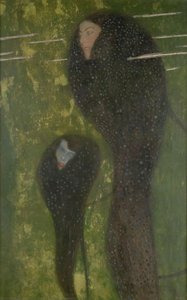
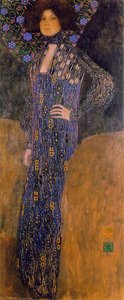
11Portrait of a Lady (1897) by Gustav KlimtPortrait of a Lady1897 · Galleria d'arte moderna Ricci Oddi 12The Virgin (1913) by Gustav KlimtThe Virgin1913 · National Gallery 13The Tree of Life (1909) by Gustav KlimtThe Tree of Life1909 · Museum of Applied Arts 14Water Serpents II (Bewegtes Wasser sfondo) by Gustav KlimtWater Serpents II (Bewegtes Wasser sfondo) 15Hope II (1908) by Gustav KlimtHope II1908 · MOMA - Museum of Modern Art 16Bildnis Fritza Riedler, 1906 - Österreichische Galerie, Vienna by Gustav KlimtBildnis Fritza Riedler, 1906 - Österreichische Galerie, Vienna 17Farm Garden with Crucifix (1911) by Gustav KlimtFarm Garden with Crucifix1911 18Music I (1895) by Gustav KlimtMusic I1895 · Bayerische Staatsgemaldesammlungen 19Allegory of 'Sculpture' (1889) by Gustav KlimtAllegory of 'Sculpture'1889 · Austrian Gallery Belvedere 20Birch Forest, 1903 - Vienna, Osterreichische Museum für Angewandte Kunst (1903) by Gustav KlimtBirch Forest, 1903 - Vienna, Osterreichische Museum für Angewandte Kunst1903 · Austrian Gallery Belvedere 21Poppy Field (1907) by Gustav KlimtPoppy Field1907 · Austrian Gallery Belvedere 22the apple tree (1912) by Gustav Klimtthe apple tree1912 · Austrian Gallery Belvedere 23Avenue of Schloss Kammer Park (1912) by Gustav KlimtAvenue of Schloss Kammer Park1912 · Austrian Gallery Belvedere 24Danae (1908) by Gustav KlimtDanae1908 · Galerie Würthle 25Virgin, The (1913) by Gustav KlimtVirgin, The1913 26Jurisprudence (final state) (1907) by Gustav KlimtJurisprudence (final state)1907 27Roses under the Trees (1905) by Gustav KlimtRoses under the Trees1905 28Naked Girl Standing, with Right Hand to Breast (1906) by Gustav KlimtNaked Girl Standing, with Right Hand to Breast1906 · Leopold Museum 29Judith (1901) by Gustav KlimtJudith1901 30Expectation - Tree of life (Arbol de la Vida) - Fulfilment by Gustav KlimtExpectation - Tree of life (Arbol de la Vida) - Fulfilment 31Life is a Struggle (The Golden Knight) by Gustav KlimtLife is a Struggle (The Golden Knight) 32Philosophy (final state) (1907) by Gustav KlimtPhilosophy (final state)1907 33The Beethoven Frieze: The Hostile Powers. Far Wall (1902) by Gustav KlimtThe Beethoven Frieze: The Hostile Powers. Far Wall1902 34Mother with Children (1910) by Gustav KlimtMother with Children1910 35The Birch Wood (Birkenwald) by Gustav KlimtThe Birch Wood (Birkenwald) 36Three Ages of Woman (1905) by Gustav KlimtThree Ages of Woman1905 3738.La vírgen, 1913 by Gustav Klimt38.La vírgen, 1913 38Compositional Sketch for (1898) by Gustav KlimtCompositional Sketch for1898 · The Israel Museum 39University of Vienna Ceiling Paintings (Medicine), final state (1907) by Gustav KlimtUniversity of Vienna Ceiling Paintings (Medicine), final state1907 40Head of a Man in Profile (Illustration for (1898) by Gustav KlimtHead of a Man in Profile (Illustration for1898 · Albertina 41Music (1895) by Gustav KlimtMusic1895 42Dancer, The (1916) by Gustav KlimtDancer, The1916 43The Maiden by Gustav KlimtThe Maiden 44Schreitende by Gustav KlimtSchreitendeLentos Kunstmuseum Linz 45Ancient Greece02(Girl from Tanagra) by Gustav KlimtAncient Greece02(Girl from Tanagra) 46Lady by the Fireplace (1898) by Gustav KlimtLady by the Fireplace1898 47Mother with Two Children (Family) (1910) by Gustav KlimtMother with Two Children (Family)1910 48Water Serpents by Gustav KlimtWater Serpents 49Sonja Knips (1898) by Gustav KlimtSonja Knips1898 50Beech Forest I, oil on canvas, Moderne Galerie, (1902) by Gustav KlimtBeech Forest I, oil on canvas, Moderne Galerie,1902 51University of Vienna Ceiling Paintings (Medicine), detail showing Hygieia (1907) by Gustav KlimtUniversity of Vienna Ceiling Paintings (Medicine), detail showing Hygieia1907 52Medizin by Gustav KlimtMedizin 53Nuda Veritas (1899) by Gustav KlimtNuda Veritas1899 54Friends I (The Sisters) (1907) by Gustav KlimtFriends I (The Sisters)1907 55Flower Garden (1907) by Gustav KlimtFlower Garden1907 56Love, 1895 - Museum der Stadt Wien, Vienna by Gustav KlimtLove, 1895 - Museum der Stadt Wien, Vienna 57Fairy Tale (1884) by Gustav KlimtFairy Tale1884 · Wien Museum 58Island in the Attersee (1901) by Gustav KlimtIsland in the Attersee1901 59Silver Fish (Nymphs) (1899) by Gustav KlimtSilver Fish (Nymphs)1899 · Albertina 60Portrait of a Lady with Cape and Hat (1898) by Gustav KlimtPortrait of a Lady with Cape and Hat1898 · Albertina 61The Sunflower (1907) by Gustav KlimtThe Sunflower1907 62Church In Cassone by Gustav KlimtChurch In Cassone 63Fishblood (1898) by Gustav KlimtFishblood1898 64Hope II by Gustav KlimtHope II 65Study for (1903) by Gustav KlimtStudy for1903 · National Gallery of Canada 66Fir Forest I (1901) by Gustav KlimtFir Forest I1901 67Philosophie by Gustav KlimtPhilosophie 68The friends after Gustav Klimt, plate 9, The work of Gustav Klimt (1918) by Gustav KlimtThe friends after Gustav Klimt, plate 9, The work of Gustav Klimt1918 · MAK – Museum of Applied Arts 6940.Muerte y vida, 1916 by Gustav Klimt40.Muerte y vida, 1916 70Portrait of Emilie Floge (1902) by Gustav KlimtPortrait of Emilie Floge1902 · Kunsthistorisches Museum 71The Large Poplar Tree II (Coming Storm) by Gustav KlimtThe Large Poplar Tree II (Coming Storm)Leopold Museum 72Portrait of Hermine Gallia (1903) by Gustav KlimtPortrait of Hermine Gallia1903 73Music by Gustav KlimtMusicBavarian State Painting Collections 74Ex-libris (bookplate) - Vereinigung Bildender Künstler Österreichs Secession (1903) by Gustav KlimtEx-libris (bookplate) - Vereinigung Bildender Künstler Österreichs Secession1903 · Museum of Applied Arts 75Forest of Beech Trees (1902) by Gustav KlimtForest of Beech Trees1902 76Love (1895) by Gustav KlimtLove1895 · Kunstmuseum 77Judith01 (1901) by Gustav KlimtJudith011901 78Two Naked Women Embracing (Ver Sacrum) (1903) by Gustav KlimtTwo Naked Women Embracing (Ver Sacrum)1903 · Leopold Museum 79The bride by Gustav KlimtThe bride 80Tree of Life (Stoclet Frieze) by Gustav KlimtTree of Life (Stoclet Frieze) 8127.Tree of Life, model for the Stoclet Frieze, circa 1905-1909 by Gustav Klimt27.Tree of Life, model for the Stoclet Frieze, circa 1905-1909 82Beech Forest, 1902 - Dresden, Morderne Galerie by Gustav KlimtBeech Forest, 1902 - Dresden, Morderne Galerie 83The Virgins (Die Jungfrau) by Gustav KlimtThe Virgins (Die Jungfrau) 84Pine Forest II (1901) by Gustav KlimtPine Forest II1901 85Girlfriends by Gustav KlimtGirlfriends 86Pallas Athene (1898) by Gustav KlimtPallas Athene1898 87The Kiss - Gustav Klimt (2026) by Gustav KlimtThe Kiss - Gustav Klimt2026 88Standing pair of Lovers, Seen from the Side (1908) by Gustav KlimtStanding pair of Lovers, Seen from the Side1908 · Albertina 89Farm Garden with Sunflowers (1907) by Gustav KlimtFarm Garden with Sunflowers1907 90Water Snakes after Gustav Klimt, plate 39, The work of Gustav Klimt (1918) by Gustav KlimtWater Snakes after Gustav Klimt, plate 39, The work of Gustav Klimt1918 · MAK – Museum of Applied Arts 91Portrait of Gertha Felssovanyi (1902) by Gustav KlimtPortrait of Gertha Felssovanyi1902 92Poster for the 1st Secession exhibition by Gustav KlimtPoster for the 1st Secession exhibition 93The Three Ages of Woman (1905) by Gustav KlimtThe Three Ages of Woman1905 · Galleria Nazionale d'Arte Moderna e Contemporanea 94Lady with Hat and Featherboa (1909) by Gustav KlimtLady with Hat and Featherboa1909 95Portrait of Marie Breunig (1894) by Gustav KlimtPortrait of Marie Breunig1894 96Standing Pregnant Woman in Profile, with Repetition of Figure (Studie for (1902) by Gustav KlimtStanding Pregnant Woman in Profile, with Repetition of Figure (Studie for1902 · Albertina 97The Beethoven Frieze, 1902 - Secession Building, Vienna by Gustav KlimtThe Beethoven Frieze, 1902 - Secession Building, Vienna 98Farmhouse in Upper Austria (1912) by Gustav KlimtFarmhouse in Upper Austria1912 99Tree of Life by Gustav KlimtTree of Life 100pallas athene by Gustav Klimtpallas athene

Gustav Klimt's famous paintings, period by period

The subjects that held Gustav Klimt's eye

The four subjects that come back most often in these originals, each with its finest example.

The museums that keep Gustav Klimt's originals

The 8 museums that hold the most of the paintings on this page.

Museum City Works by Gustav Klimt Paintings from this list
Austrian Gallery Belvedere, ViennaAustrian Gallery Belvedere Vienna 8 The Kiss, Judith, Allegory of 'Sculpture'
Albertina, ViennaAlbertina Vienna 58 Head of a Man in Profile (Illustration for, Silver Fish (Nymphs), Portrait of a Lady with Cape and Hat
Leopold Museum, ViennaLeopold Museum Vienna 18 Danae, oil on canvas, private colle, Death and Life, Naked Girl Standing, with Right Hand to Breast
MAK – Museum of Applied Arts, ViennaMAK – Museum of Applied Arts Vienna 14 The friends after Gustav Klimt, plate 9, The work of Gustav Klimt, Water Snakes after Gustav Klimt, plate 39, The work of Gustav Klimt
Wien Museum, ViennaWien Museum Vienna 12 Fairy Tale
Lentos Kunstmuseum Linz, LinzLentos Kunstmuseum Linz Linz 11 Schreitende
Kunsthistorisches Museum, ViennaKunsthistorisches Museum Vienna 5 Portrait of Emilie Floge
Museum for German and Austrian Art and Private Collection, New York CityMuseum for German and Austrian Art and Private Collection New York City 3 Portrait of Adele Bloch-Bauer I

Gustav Klimt across the decades: one unique original for each

Works per decade

Pick a decade to see the original that defines it.

Gustav Klimt's paintings: questions for the gallery

What is the single most famous work of Gustav Klimt?Reveal the answer

The Kiss (1908), Austrian Gallery Belvedere, Vienna. Portrait of Adele Bloch-Bauer I (1907) and Judith (1901) come next.

At what age did Gustav Klimt create The Kiss?Reveal the answer

46 years old: The Kiss dates from 1908, and Gustav Klimt was born in 1862.

Which ten paintings by Gustav Klimt are the most famous?Reveal the answer

The Kiss, Portrait of Adele Bloch-Bauer I, Judith, Portrait of Baroness Elisabeth Bachofen-Echt, Danae, oil on canvas, private colle, Beethoven Frieze; The Arts, Choir of Angels, Embracing Couple, The Three Ages of Woman, Death and Life, Lady with Fan and Portrait of Adele Bloch-Bauer II. The ranking above gives each one's year and museum.

How many works by Gustav Klimt are known?Reveal the answer

Our catalog holds 744 works by Gustav Klimt, dated from 1884 to 1918.

Where can the most famous Gustav Klimt originals be seen?Reveal the answer

Mostly in Austrian Gallery Belvedere (Vienna), Albertina (Vienna) and Leopold Museum (Vienna). The museum table above lists them all.

During which period did Gustav Klimt create the best-known paintings?Reveal the answer

In 1900s: 40 of the 100 works on this page were made then, The Kiss among them.

Which famous Gustav Klimt painting is the earliest, and which the latest?Reveal the answer

On this page, the earliest is Fairy Tale (1884) and the latest Lady with Fan (1918).

What subjects did Gustav Klimt favour?Reveal the answer

Vienna secession (32), Female figure (25) and Gold leaf (23), across the 100 works on this page.

What materials did Gustav Klimt paint with most?Reveal the answer

Oil On Canvas, for 56 of the 100 works on this page.

Which movement does the work of Gustav Klimt belong to?Reveal the answer

Art nouveau, judging by the originals on this page.

What Gustav Klimt originals can I see at the Austrian Gallery Belvedere?Reveal the answer

The Kiss, Judith and Allegory of 'Sculpture': the Austrian Gallery Belvedere, Vienna holds 7 of the works on this page.

Gustav Klimt: a portrait of the artist

Early Life, Family and Training

In the small town of Baumgarten, near Vienna, Gustav Klimt was born into a world where the shimmer of metal was a constant presence. His father, Ernst Klimt, spent his days as a gold engraver, a craft that required a steady hand and an eye for the finest details. This early intimacy with precious metals and the precision of engraving would eventually find its way into the very soul of his later compositions. Yet, life was not always a matter of luster and ease. The family faced frequent financial hardships, which forced them to move often through the streets of Vienna. These transitions and the struggle to find stability shaped a young man who understood both the weight of poverty and the allure of ornament.

By the age of fourteen, his talent had become too evident to ignore. In 1876, he entered the Vienna Kunstgewerbeschule, seeking to turn his innate ability into a formal discipline. He did not begin his path by painting the human form in all its complexity, but rather by mastering the structured world of architectural painting. Under the guidance of Ferdinand Laufberger, he learned to decorate the grand spaces of buildings, focusing on the decorative needs of the era. This rigorous training provided the technical foundation upon which he would later build his more personal and experimental visions.

The Rise of the Vienna Secession

By the late 1890s, a restless energy began to stir beneath the surface of Klimt’s formal training. The heavy, historical academicism that had long governed the Viennese art establishment felt increasingly stifling to him. He sought a space where innovation could exist outside these rigid dictates of tradition, a place where the artist might finally breathe. This desire for creative freedom led him to become a founding member of the Vienna Secession, a movement born from a need to embrace new currents like Art Nouveau, Symbolism, and Japonism. In 1897, he was chosen as the first president of this defiant group, helping to steer a new direction for the city's artistic soul.

This rebellion was not merely a matter of style, but a rejection of the old ways of seeing. Klimt turned away from the predictable, grand narratives of the past, favoring instead organic lines and a profound symbolic depth. He sought to dissolve the boundaries between fine painting and ornamental design, drawing heavily from the flattened perspectives and patterned aesthetics found in Japanese art. This shift allowed him to explore the complexities of human intimacy and mortality with a frankness that often unsettled the conservative public. His work began to move toward a more personal, decorative language that prioritized the psychological weight of the subject over mere physical likeness.

Patrons, Workshop and Commissions

As his reputation grew, Klimt found himself working within a collaborative spirit, forming a partnership with his brother Ernst and Franz von Matsch. This trio of artists operated with a shared purpose, securing significant commissions to decorate the grand spaces of Vienna. They spent much of their early professional years focused on large-scale decorative murals and ceilings, tasks that required a disciplined hand and an eye for ornamentation. Their work in these public spaces brought them into the direct orbit of the imperial court. It was for his contributions to the murals of the Burgtheater that Emperor Franz Joseph I bestowed upon him the Gold Cross of Merit, a high honor that signaled his acceptance into the upper echelons of Austrian society.

However, the very public nature of these grand projects eventually brought friction. The tension between his evolving, more provocative vision and the expectations of the state became a heavy burden. Following the controversy surrounding his ceiling paintings for the University of Vienna, Klimt made a decisive change in his professional life. He chose to withdraw from further public commissions, turning his back on the rigid dictates of state-sponsored art. Instead, he sought the support of private patronage. This shift allowed him to move away from the constraints of academic tradition and focus on a more personal, intimate style that would define his most celebrated years.

  • The Burgtheater murals
  • University of Vienna ceiling paintings

The Golden Era and Technique

Around 1900, a transformation took hold of his brush, ushering in a period that would define his legacy. He moved away from the heavy, academic shadows of his youth to embrace a luminous, decorative language. This was a time when his canvases began to radiate their own light, as if the paint itself held a celestial glow. He achieved this through the meticulous application of gold leaf, a technique that lent his figures a shimmering, otherworldly presence. This obsession with light and surface was not born of a vacuum; he drew deep inspiration from the ancient mosaics of Ravenna and the intricate, sacred patterns found in medieval manuscripts. He sought to capture a sense of the eternal through these precious, reflective materials.

His vision was further shaped by the quiet elegance of Japanese art. He adopted the flattened perspectives and the rhythmic, patterned aesthetics of ukiyo-e prints, weaving these elements into his compositions. This fusion allowed him to blur the lines between the physical world and a more symbolic, ornamental realm. The figures in his paintings often seemed to emerge from a sea of geometric shapes and organic swirls, caught in a dance of texture and color. He did not merely depict a subject; he enveloped it in a complex, mosaic-like environment that challenged the viewer's sense of depth and space.

Key Works and Iconic Masterpieces

The artist’s brush found its most profound expression when he allowed gold to become a living part of his subjects. In the years between 1907 and 1908, he produced The Kiss, a work where a couple is enveloped in a shimmering, patterned aura. The figures seem to emerge from a floral meadow, their forms entwined in an intimate embrace that defies the simple boundaries of the canvas. This period of intense ornamentation was not merely a decorative choice but a way to capture the psychological weight of human connection. He achieved a similar, though more somber, effect in The Three Ages of Woman, painted in 1905. Here, he used contrasting auras—one of blue, fluid patterns for the younger figures and another of warm, earthy tones for the elderly woman—to trace the inevitable cycle of life and the physical reality of aging.

His ability to blend the human form with complex, mosaic-like textures reached a peak in his portraiture. The Portrait of Adele Bloch-Bauer I remains a central part of his legacy, capturing a sense of presence through intricate, shimmering surfaces. He often looked toward the flattened perspectives of Japanese art to inform these compositions, creating a sense of depth through pattern rather than traditional shadow. This fascination with organic, swirling lines is perhaps most evident in The Tree of Life, which he completed in 1909. The work uses spirals and gold to suggest a sense of continuous growth and movement, a theme that echoed his interest in the mysteries of the soul.

Later Years and Final Transitions

As the years progressed, the heavy, shimmering ornamentation that had once defined his presence began to recede. A new, more restrained aesthetic emerged, trading the dense gold leaf of his earlier triumphs for a style marked by angularity and expressive simplification. This shift suggested a man looking toward a more direct, perhaps more stark, way of seeing the world. His brushstrokes grew more rapid and free, moving away from the meticulous precision of his youth toward a more fluid, almost urgent, application of color.

This period of stylistic evolution coincided with a time of profound personal and global hardship. The world was gripped by the Spanish Flu pandemic, a shadow that cast a heavy toll upon many lives, including his own. Even as he grappled with the physical exhaustion of the era, his creative spirit continued to seek new forms. In 1918, he completed The Jurisprudence, a work that reflected a complex, almost anxious exploration of judgment and fate. It was a painting that moved away from the decorative toward something more somber and psychologically weighted.

The end came swiftly in the early months of 1918. After suffering a stroke and facing the onset of pneumonia, he passed away on February 6, 1918. He left behind a studio filled with works in transition, including portraits that captured a sense of quiet introspection and a fascination with the delicate details of feminine mystique. His final years were a period of constant movement, a restless search for a new visual language that even death could not fully silence.

Legacy and Influence

The ripples of his creative rebellion reached far beyond the borders of Austria, helping to define the Art Nouveau style across Europe. By breaking away from the heavy, historical academicism of the past, he opened a door for a new visual language that embraced organic lines and symbolic depth. This shift fundamentally altered the trajectory of Austrian modernism, moving the focus from rigid tradition toward a more personal and psychological exploration of the human experience. His influence was felt most keenly by those who followed in his footsteps, such as his younger peer Egon Schiele, who drew from the expressive possibilities Klimt had carved out.

Even long after his passing, the value of his vision remained immense. His paintings have brought some of the highest prices recorded at auction, reflecting a lasting fascination with his unique ability to marry decorative pattern with profound emotion. The way he used gold and texture to map the unseen landscapes of the soul ensured that his name would remain central to the history of modern art. His presence is still felt in the way artists approach the tension between the physical and the spiritual.

Where to See the Works Today

To witness the physical presence of his vision, one must travel to the heart of Vienna, where the Austrian Gallery Belvedere preserves much of his luminous output. Within those walls, the gold leaf seems to retain a warmth that defies the passage of time. Nearby, the Leopold Museum also holds significant pieces, offering a different perspective on his evolution. These collections allow a viewer to trace the shift from his early academic training to the decorative intensity that defined his most celebrated years.

The reach of his influence extends far beyond the borders of Austria. In Rome, the Galleria Nazionale d'Arte Moderna houses works that speak to his profound psychological depth. Meanwhile, the National Gallery in Prague provides a space to encounter his later, more restrained aesthetic. These various repositories ensure that his exploration of the human form and the complexities of life remains accessible to those who seek it.