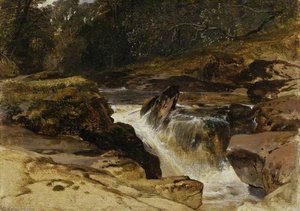
Portrait of Edwin Landseer

The 100 Most Famous Edwin Landseer Paintings, a Gallery Selection

Updated October 2026 · ranked by our popularity score (searches, visits and orders for each work) · 228 works by Edwin Landseer in our catalogue

In short

Of all the originals Edwin Landseer left, the most famous is Man Proposes, God Disposes (1864), in the collection of the Royal Holloway, Egham. Close behind it come The Monarch of the Glen (1851) and Alexander and Diogenes (1848). Our catalog holds 228 works by Edwin Landseer; the gallery has kept the 100 the world admires most, each shown with its date, its museum and its story.

1802 – 1873, London Romanticism Most works: Royal Collection

Edwin Landseer's top 10 paintings: the gallery's choice

1
Man Proposes, God Disposes (1864) by Edwin Landseer

Man Proposes, God Disposes

1864 · Oil · Royal Holloway, Egham

The biting chill of the Arctic air seems to hang heavy over the scene, where the stark white of the snow meets the jagged, dark edges of the ice. In this frozen expanse, two polar bears dominate the landscape, their massive forms creating a sense of raw, primal energy. One bear stands tall upon the rocks, its powerful silhouette etched against the distant, hazy mountains. It hunches over its prize,…

2
The Monarch of the Glen (1851) by Edwin Landseer

The Monarch of the Glen

1851 · Oil On Canvas · Scottish National Gallery, Edinburgh

Sir Edwin Landseer's “The Monarch of the Glen,” painted in 1851, isn’t merely a depiction of a stag; it’s a profound distillation of Victorian England’s fascination with nature, nobility, and the romantic ideal of the Highlands. This iconic image, instantly recognizable across generations, captures a moment of exhilarating power within a misty, atmospheric landscape – a scene that speaks to both awe and a touch of melancholic solitude. More than…

3
Alexander and Diogenes (1848) by Edwin Landseer

Alexander and Diogenes

1848 · Oil On Canvas

The oil on canvas work titled Alexander and Diogenes was executed by the artist Sir Edwin Henry Landseer. This specific painting was first shown at the Royal Academy in London in 1848. It was exhibited during that same year, 1848, to an audience in London. The work is currently held within the Tate collection in London, United Kingdom.

4
Mare and Foal (1865) by Edwin Landseer

Mare and Foal

1865 · Oil On Canvas · Walker Art Gallery, Liverpool

A Moment Frozen in Time: Landseer’s “Mare and Foal” Sir Edwin Henry Landseer's "Mare and Foal," painted in 1865, isn’t merely a depiction of two horses; it’s a profound meditation on maternal love, the cycle of life, and the enduring bond between generations. Born into a family steeped in artistic tradition – his father, John Landseer, was a celebrated engraver – Edwin Henry Landseer inherited not only technical skill but…

5
A Boy and Two Greyhounds Resting (1823) by Edwin Landseer

A Boy and Two Greyhounds Resting

1823 · Oil On Canvas · National Trust, Derby

Sir Edwin Henry Landseer’s “A Boy and Two Greyhounds Resting,” painted in 1823, is more than just a charming pastoral scene; it's a profound meditation on the relationship between humanity and nature, rendered with an unparalleled sensitivity to animal form and Victorian sensibilities. This iconic work, now housed within the National Trust at Holburne Museum in Bath, England, captures a fleeting moment of quiet companionship – a boy, seemingly no…

6
CHIENS SE BATTANT , REPRENANT SOUFFLE by Edwin Landseer

CHIENS SE BATTANT , REPRENANT SOUFFLE

Oil On Canvas · The Louvre, Paris

Sir Edwin Henry Landseer's “Chiens se Battant, Reprenant Souffle” (Fighting Dogs, Panting for Breath) isn’t merely a depiction of two dogs locked in combat; it’s a visceral exploration of primal instinct, rendered with the dramatic intensity characteristic of Baroque realism. Painted around 1820, this work captures a fleeting, explosive moment – a struggle both brutal and undeniably captivating. The composition immediately draws the viewer into the heart of the action,…

8
The Illicit Highland Whisky Still (1829) by Edwin Landseer

The Illicit Highland Whisky Still

1829 · Oil On Canvas · English Heritage, London

Sir Edwin Henry Landseer’s “The Illicit Highland Whisky Still,” painted in 1829, is far more than a picturesque scene of a rural gathering; it's a meticulously crafted snapshot of Victorian society grappling with moral complexities and the allure of illicit enterprise. This oil on panel, measuring an impressive 80 x 102 cm, transports us to a remote corner of Scotland, where tradition clashes with burgeoning modernity and the simple pleasures…

9
Saved by Edwin Landseer

Saved

Oil On Canvas

In the painting Saved, the English painter and sculptor Sir Edwin Landseer depicts a Newfoundland dog with black and white markings. The animal is positioned within the surf, engaged in the act of rescuing a young child. The dog's physical presence is centered in the composition, pulling the child from the water toward the shore. This scene captures the specific instinct of the Newfoundland breed to provide comfort and rescue…

10
Isaac van Amburgh and his Animals (detail) (1839) by Edwin Landseer

Isaac van Amburgh and his Animals (detail)

1839 · Oil On Canvas · Royal Collection, London

To gaze upon this detail from Sir Edwin Henry Landseer’s work, Isaac van Amburgh and his Animals, is to step directly into the richly textured heart of Victorian sentiment. It is a scene that transcends mere portraiture; it is an eloquent meditation on the bonds between humanity and the animal kingdom. The composition immediately draws the eye to the central interaction: the gentle man amidst the wild majesty of the…

The Edwin Landseer selection continues, 11 to 100

11The Faithful Hound (1830) by Edwin LandseerThe Faithful Hound1830 12Queen Victoria in Windsor Home Park (1865) by Edwin LandseerQueen Victoria in Windsor Home Park1865 · Wolverhampton Art Gallery 13Hawking in the Olden Time (1832) by Edwin LandseerHawking in the Olden Time1832 · English Heritage 14Sir Walter Scott (1771–1832) (1824) by Edwin LandseerSir Walter Scott (1771–1832)1824 · Walker Art Gallery 15Lord Henniker's Bay Mare, Brunette (1823) by Edwin LandseerLord Henniker's Bay Mare, Brunette1823 · The Vestey Gallery of British Sporting Art 16Doubtful Crumbs (1859) by Edwin LandseerDoubtful Crumbs1859 · Wallace Collection 17The Pot of Gartness, Drymen, Stirlingshire (1830) by Edwin LandseerThe Pot of Gartness, Drymen, Stirlingshire1830 · Fitzwilliam College 18The Old Shepherd's Chief Mourner (1837) by Edwin LandseerThe Old Shepherd's Chief Mourner1837 19Head of a Goat (1833) by Edwin LandseerHead of a Goat1833 · National Trust 20Head of a Hind (1840) by Edwin LandseerHead of a Hind1840 · Walker Art Gallery 21Queen Victoria on a highland Pony (1838) by Edwin LandseerQueen Victoria on a highland Pony1838 · The Ashmolean Museum of Art And Archaeology 22Two Studies of a Stag's Head (recto) by Edwin LandseerTwo Studies of a Stag's Head (recto)The Ashmolean Museum of Art And Archaeology 23Hawking (1832) by Edwin LandseerHawking1832 24Wounded Stag and Dog (1825) by Edwin LandseerWounded Stag and Dog1825 · Art Institute of Chicago 25Study of a Lion (1862) by Edwin LandseerStudy of a Lion1862 26Lady Godiva's Prayer (1865) by Edwin LandseerLady Godiva's Prayer1865 · Herbert Art Gallery - Museum 27Retrievers with a Hare (1870) by Edwin LandseerRetrievers with a Hare1870 28Deer in a Landscape (Studies of Deer) by Edwin LandseerDeer in a Landscape (Studies of Deer)Nottingham Castle Museum And Art Gallery 29Jocko with a Hedgehog (1828) by Edwin LandseerJocko with a Hedgehog1828 30King Charles Spaniels ('The Cavalier's Pets') (1845) by Edwin LandseerKing Charles Spaniels ('The Cavalier's Pets')1845 31The Honourable E. S. Russell and His Brother (1834) by Edwin LandseerThe Honourable E. S. Russell and His Brother1834 · English Heritage 32Scene in the Highlands, with portraits of the Duchess of Bedford, the Duke of Gordon and Lord Alexander Russell (1826) by Edwin LandseerScene in the Highlands, with portraits of the Duchess of Bedford, the Duke of Gordon and Lord Alexander Russell1826 · Scottish National Gallery 33Donald McIntyre (1830) by Edwin LandseerDonald McIntyre1830 · Yale Center for British Art 34Copy after Rubens's "Wolf and Fox Hunt" (1824) by Edwin LandseerCopy after Rubens's "Wolf and Fox Hunt"1824 · Metropolitan Museum of Art 35Scottish Landscape Bringing in a Stag (figure and animals by Sir E. Landseer) (1830) by Edwin LandseerScottish Landscape Bringing in a Stag (figure and animals by Sir E. Landseer)1830 36Queen Victoria (1819-1901) (1839) by Edwin LandseerQueen Victoria (1819-1901)1839 · Royal Collection 37The Falcon (1834) by Edwin LandseerThe Falcon1834 · Harvard Art Museums 38The Duchess of Abercorn and Child (1834) by Edwin LandseerThe Duchess of Abercorn and Child1834 39A Highland Breakfast (1834) by Edwin LandseerA Highland Breakfast1834 40Deer and Deer Hounds in a Mountain Torrent (1832) by Edwin LandseerDeer and Deer Hounds in a Mountain Torrent1832 · Tate Britain 41Members of the Sheridan Family (1847) by Edwin LandseerMembers of the Sheridan Family1847 · National Gallery of Ireland 42Victoria, Princess Royal, with a Pony (1842) by Edwin LandseerVictoria, Princess Royal, with a Pony1842 · Royal Collection 43Princess Alice and Eos (1844) by Edwin LandseerPrincess Alice and Eos1844 · Royal Collection 44Windsor Castle in modern times; Queen Victoria, Prince Albert and Victoria, Princess Royal (1842) by Edwin LandseerWindsor Castle in modern times; Queen Victoria, Prince Albert and Victoria, Princess Royal1842 · Royal Collection 45Queen Victoria (1819-1901) in Fancy Dress (1845) by Edwin LandseerQueen Victoria (1819-1901) in Fancy Dress1845 · Royal Collection 46The Hunter and the Bloodhound (1840) by Edwin LandseerThe Hunter and the Bloodhound1840 · Royal Collection 47Queen Victoria with the Princess Royal and the Prince of Wales (1842) by Edwin LandseerQueen Victoria with the Princess Royal and the Prince of Wales1842 · Royal Collection 48Portrait of Mr. Van Amburgh, As He Appeared with His Animals at the London Theatre (1846) by Edwin LandseerPortrait of Mr. Van Amburgh, As He Appeared with His Animals at the London Theatre1846 · Yale Center for British Art 49John George Landseer (1848) by Edwin LandseerJohn George Landseer1848 · National Portrait Gallery 50War (1845) by Edwin LandseerWar1845 · Walker Art Gallery 51The Free Kirk (1849) by Edwin LandseerThe Free Kirk1849 · Royal Collection 52The Highland Lassie (1850) by Edwin LandseerThe Highland Lassie1850 · Royal Collection 53The Highlander (1850) by Edwin LandseerThe Highlander1850 · Royal Collection 54Queen Victoria landing at Loch Muick (1850) by Edwin LandseerQueen Victoria landing at Loch Muick1850 · Royal Collection 55Däckel (1849) by Edwin LandseerDäckel1849 · Royal Collection 56Study of a Dog Lying Down (1860) by Edwin LandseerStudy of a Dog Lying Down1860 · Yale Center for British Art 57The Dog and the Shadow (1822) by Edwin LandseerThe Dog and the Shadow1822 58Chevy (1868) by Edwin LandseerChevy1868 · Detroit Institute of Arts 59The Baptismal Font (1870) by Edwin LandseerThe Baptismal Font1870 · Royal Collection 60Rent-day in the Wilderness (1868) by Edwin LandseerRent-day in the Wilderness1868 61Queen Victoria's Spaniel, 'Tilco' (d.1850) (1838) by Edwin LandseerQueen Victoria's Spaniel, 'Tilco' (d.1850)1838 · National Trust 62John Gibson (1790–1866), RA (1850) by Edwin LandseerJohn Gibson (1790–1866), RA1850 63'The Twa Dogs' (from the poem by Robert Burns) (1822) by Edwin Landseer'The Twa Dogs' (from the poem by Robert Burns)1822 64The Stone Breaker and His Daughter (1830) by Edwin LandseerThe Stone Breaker and His Daughter1830 65Suspense (1834) by Edwin LandseerSuspense1834 66High Life (1831) by Edwin LandseerHigh Life1831 67The First Leap, Lord Alexander Russell on His Pony 'Emerald' (1829) by Edwin LandseerThe First Leap, Lord Alexander Russell on His Pony 'Emerald'1829 · Guildhall Art Gallery 68Study of a Ruff (1845) by Edwin LandseerStudy of a Ruff1845 · The Ashmolean Museum of Art And Archaeology 69Low Life (1831) by Edwin LandseerLow Life1831 70The Eagle's Nest (1833) by Edwin LandseerThe Eagle's Nest1833 71A Dog with a Slipper (1848) by Edwin LandseerA Dog with a Slipper1848 72A Deer Fallen from a Precipice by Edwin LandseerA Deer Fallen from a Precipice 73A Highland Shepherd's Home (1836) by Edwin LandseerA Highland Shepherd's Home1836 · Government Art Collection 74Favourites, the Property of H.R.H. Prince George of Cambridge (1835) by Edwin LandseerFavourites, the Property of H.R.H. Prince George of Cambridge1835 · Yale Center for British Art 75John Gibson (1790–1866) (1850) by Edwin LandseerJohn Gibson (1790–1866)1850 · Walker Art Gallery 76The Harper (1821) by Edwin LandseerThe Harper1821 77Count d'Orsay's Charger (1822) by Edwin LandseerCount d'Orsay's Charger1822 78Ratcatchers (1821) by Edwin LandseerRatcatchers1821 79The Champion Venus (1819) by Edwin LandseerThe Champion Venus1819 80A Highland Landscape (1830) by Edwin LandseerA Highland Landscape1830 · Yale Center for British Art 81Head of a Roebuck and Two Ptarmigan (1830) by Edwin LandseerHead of a Roebuck and Two Ptarmigan1830 · Art Institute of Chicago 82A Moonlight Landscape (1827) by Edwin LandseerA Moonlight Landscape1827 83The Faithful Hound (1830) by Edwin LandseerThe Faithful Hound1830 84Low Life (1829) by Edwin LandseerLow Life1829 85John Crerar and His Pony (1824) by Edwin LandseerJohn Crerar and His Pony1824 86'Lion', a Newfoundland Dog (1824) by Edwin Landseer'Lion', a Newfoundland Dog1824 87A Lake Scene (1830) by Edwin LandseerA Lake Scene1830 88The Champion Venus , a Landseer Newfoundland with a rabbit (1830) by Edwin LandseerThe Champion Venus , a Landseer Newfoundland with a rabbit1830 89A Fireside Party (1829) by Edwin LandseerA Fireside Party1829 90Sir Walter Scott, 1st Bt (1824) by Edwin LandseerSir Walter Scott, 1st Bt1824 · National Portrait Gallery 91Sancho Panza and Dapple (from Cervantes' 'Don Quixote') (1824) by Edwin LandseerSancho Panza and Dapple (from Cervantes' 'Don Quixote')1824 92Study of a Dead Heron (1832) by Edwin LandseerStudy of a Dead Heron1832 · Museum of Fine Arts 93Hector, Nero, and Dash with the parrot, Lory (1838) by Edwin LandseerHector, Nero, and Dash with the parrot, Lory1838 · Royal Collection 94Princess Victoire of Saxe-Coburg-Gotha (1822-57) (1839) by Edwin LandseerPrincess Victoire of Saxe-Coburg-Gotha (1822-57)1839 · Royal Collection 95Islay, Tilco, a Macaw and two Lovebirds (1839) by Edwin LandseerIslay, Tilco, a Macaw and two Lovebirds1839 · Royal Collection 96The Lory (1837) by Edwin LandseerThe Lory1837 · Royal Collection 97Dash (1836) by Edwin LandseerDash1836 · Royal Collection 98Ptarmigan (1833) by Edwin LandseerPtarmigan1833 99The Falcon (1837) by Edwin LandseerThe Falcon1837 100Portrait of Rachel Russell (1835) by Edwin LandseerPortrait of Rachel Russell1835

Edwin Landseer's famous paintings, period by period

The subjects that held Edwin Landseer's eye

The four subjects that come back most often in these originals, each with its finest example.

The museums that keep Edwin Landseer's originals

The 8 museums that hold the most of the paintings on this page.

Museum City Works by Edwin Landseer Paintings from this list
Royal Collection, LondonRoyal Collection London 40 Isaac van Amburgh and his Animals (detail), Queen Victoria (1819-1901), Victoria, Princess Royal, with a Pony
Yale Center for British Art, New HavenYale Center for British Art New Haven 7 Donald McIntyre, Portrait of Mr. Van Amburgh, As He Appeared with His Animals at the London Theatre, Study of a Dog Lying Down
Walker Art Gallery, LiverpoolWalker Art Gallery Liverpool 5 Mare and Foal, Sir Walter Scott (1771–1832), Head of a Hind
The Ashmolean Museum of Art And Archaeology, OxfordThe Ashmolean Museum of Art And Archaeology Oxford 4 Queen Victoria on a highland Pony, Two Studies of a Stag's Head (recto), Study of a Ruff
English Heritage, LondonEnglish Heritage London 3 The Illicit Highland Whisky Still, Hawking in the Olden Time, The Honourable E. S. Russell and His Brother
National Portrait Gallery, LondonNational Portrait Gallery London 5 John George Landseer, Sir Walter Scott, 1st Bt
Scottish National Gallery, EdinburghScottish National Gallery Edinburgh 3 The Monarch of the Glen, Scene in the Highlands, with portraits of the Duchess of Bedford, the Duke of Gordon and Lord Alexander Russell
National Trust, CambridgeNational Trust Cambridge 3 Head of a Goat, Queen Victoria's Spaniel, 'Tilco' (d.1850)

Edwin Landseer decade by decade: the original that defines each

Works per decade

Pick a decade to see the original that defines it.

Collectors' questions about Edwin Landseer's paintings

Which work is Edwin Landseer most famous for?Reveal the answer

Man Proposes, God Disposes (1864), Royal Holloway, Egham. The Monarch of the Glen (1851) and Alexander and Diogenes (1848) come next.

What age was Edwin Landseer when Man Proposes, God Disposes was made?Reveal the answer

62 years old: Man Proposes, God Disposes dates from 1864, and Edwin Landseer was born in 1802.

What are the ten most famous Edwin Landseer paintings?Reveal the answer

Man Proposes, God Disposes, The Monarch of the Glen, Alexander and Diogenes, Mare and Foal, A Boy and Two Greyhounds Resting, CHIENS SE BATTANT , REPRENANT SOUFFLE, Alpine Mastiffs Reanimating a Distressed Traveler, The Illicit Highland Whisky Still, Saved and Isaac van Amburgh and his Animals (detail). The ranking above gives each one's year and museum.

How many paintings did Edwin Landseer leave?Reveal the answer

Our catalog holds 228 works by Edwin Landseer, dated from 1819 to 1870.

In which museums do Edwin Landseer's masterpieces hang?Reveal the answer

Mostly in Royal Collection (London), Yale Center for British Art (New Haven) and Walker Art Gallery (Liverpool). The museum table above lists them all.

In which years did Edwin Landseer paint the most famous works?Reveal the answer

In 1830s: 38 of the 100 works on this page were made then, Isaac van Amburgh and his Animals (detail) among them.

What are the first and the last famous originals of Edwin Landseer?Reveal the answer

On this page, the earliest is The Champion Venus (1819) and the latest Retrievers with a Hare (1870).

Which subjects did Edwin Landseer choose most often?Reveal the answer

Victorian era (21), Landscape (15) and Dogs (14), across the 100 works on this page.

Which technique did Edwin Landseer use most?Reveal the answer

Oil On Canvas, for 41 of the 100 works on this page.

To which art movement does Edwin Landseer belong?Reveal the answer

Romanticism, judging by the originals on this page.

Which Edwin Landseer works hang at the Royal Collection?Reveal the answer

Isaac van Amburgh and his Animals (detail), Queen Victoria (1819-1901) and Victoria, Princess Royal, with a Pony: the Royal Collection, London holds 19 of the works on this page.

Edwin Landseer: life and work

A Life Etched in Animal Form: The World of Sir Edwin Landseer

Sir Edwin Henry Landseer, born in London on March 7, 1802, was more than merely a painter of animals; he became a visual chronicler of the Victorian soul as reflected through them. His father, John Landseer, an accomplished engraver, instilled in young Edwin an early appreciation for art and technique, but it was the boy’s innate talent – a prodigious gift for capturing the essence of living creatures – that truly set him on his path. From a tender age, he demonstrated remarkable skill, exhibiting at the Royal Academy at just thirteen, a feat unheard of for most aspiring artists. This early success wasn't simply luck; it was the culmination of dedicated study, initially under his father and later with history painter Benjamin Robert Haydon, who uniquely encouraged anatomical dissection to fully understand animal musculature – a practice that would profoundly influence Landseer’s realism. He absorbed knowledge like a sponge, mastering not only form but also the subtle nuances of expression that breathed life into his canvases. This dedication to understanding the very structure of his subjects set him apart, allowing for an unparalleled level of authenticity in his depictions.

From Highland Stags to Royal Commissions: A Flourishing Career

Landseer’s artistic career blossomed with an exceptional focus on animals – horses, dogs, and stags becoming his signature subjects. However, to categorize him solely as an “animal painter” would be a disservice. His work transcended mere representation; it imbued these creatures with human-like qualities, often laden with symbolic meaning that resonated deeply with Victorian sensibilities. A pivotal moment came with his travels to Scotland in 1824, where he encountered the majestic landscapes and wildlife that would forever shape his artistic vision. This experience birthed iconic works like Monarch of the Glen, completed in 1851, a breathtaking depiction of a stag embodying nobility, power, and the untamed beauty of the Highlands. His ability to capture not just physical likeness but also character and emotion quickly garnered him widespread acclaim. This talent led to commissions from Queen Victoria herself, solidifying his position as a leading artist of the era. He painted portraits of the royal family alongside their beloved pets, further cementing his status within aristocratic circles. Perhaps his most enduring legacy are the lions that guard Nelson’s Column in Trafalgar Square – powerful testaments to his sculptural skill and national recognition; they were unveiled in 1867 after years of dedicated work. These monumental sculptures weren't simply decorative; they represented British strength and imperial power, further elevating Landseer to a position of national importance.

A Master of Technique and Emotional Resonance

Landseer’s technical mastery was undeniable. He wasn’t simply replicating what he saw, but interpreting it through a lens of profound understanding. His paintings are characterized by meticulous detail, dramatic lighting, and a masterful use of color to evoke mood and atmosphere. He skillfully blended realism with romanticism, creating scenes that were both visually stunning and emotionally engaging. Off to the Rescue, painted in 1827, exemplifies this skill; the Newfoundland dog depicted isn’t just a canine rescuer but a symbol of loyalty, courage, and selfless devotion – qualities highly valued by Victorian society. Even his more satirical works, such as Laying Down the Law (1840), featuring a group of dogs engaged in human-like legal proceedings, reveal a keen observational wit and a subtle commentary on societal norms. He wasn’t afraid to inject humor into his art, demonstrating a versatility that extended beyond grand landscapes and noble animal portraits. This ability to convey complex narratives through animal subjects was a hallmark of his style, appealing to a broad audience while simultaneously offering layers of intellectual engagement.

Shadows and Legacy: A Complex Artistic Journey

Despite his immense success, Landseer's life was not without its struggles. In his later years, he battled recurring bouts of depression and ill health, exacerbated by alcohol and drug use. A nervous breakdown in 1840 marked a turning point, casting a shadow over his final decades. Despite these personal demons, he continued to produce remarkable work, but a sense of melancholy often permeated his paintings. His declining mental state eventually led to him being declared insane in 1872, a tragic end for such a brilliant mind. Yet, his legacy remains firmly etched in the annals of British art history. The “Landseer” variety of Newfoundland dog – characterized by its distinctive black and white markings – stands as a living tribute to his influence. His paintings continue to captivate audiences with their beauty, emotional depth, and masterful technique. He wasn’t just an artist who painted animals; he was an interpreter of the natural world, a storyteller who used brushstrokes to reveal the hidden emotions and symbolic meanings within it, leaving behind a body of work that continues to inspire and resonate today.

Further Exploration