Portrait of Théophile Steinlen

The 58 Most Famous Théophile Steinlen Paintings, Each One of a Kind

Updated November 2026 · ranked by our popularity score (searches, visits and orders for each work) · 58 works by Théophile Steinlen in our catalogue

In short

Tournee Du Chat Noir is the Théophile Steinlen painting that draws the most eyes. After it, the eye goes to Chat sur un fauteuil and Le baiser. Among the 58 works of Théophile Steinlen in our catalog, these 58 are the most famous, each a unique original presented with its year, its museum and the reason it endures.

1859 – 1923, Lausanne Art nouveau Most works: Musée Alphonse-georges Poulain

Top 10 paintings by Théophile Steinlen, through the gallery's eye

1
Tournee Du Chat Noir by Théophile Steinlen

Tournee Du Chat Noir

A Glimpse into Montmartre's Soul: "Tournee Du Chat Noir" by Steinlen Theophile Alexandre Steinlen’s “Tournee Du Chat Noir” is more than just a striking image; it's a vibrant window into the bohemian heart of late 19th-century Paris. This captivating work, rendered in a distinctive Art Nouveau style, depicts a watchful black cat perched atop a bold red background. The cat’s wide, alert eyes draw the viewer immediately into its gaze,…

2
Chat sur un fauteuil by Théophile Steinlen

Chat sur un fauteuil

Oil On Canvas

A single cat rests upon an armchair, its body a soft curve of repose. The scene is small, intimate, and hushed. It captures a fleeting second of domestic stillness, where the weight of the animal meets the structure of the chair. The light is diffused, filtering into the room without the violence of harsh shadows. It settles upon the fur and the fabric, creating a sense of warmth and solitude.…

3
Le baiser by Théophile Steinlen

Le baiser

Oil On Canvas

A tender embrace defines this composition, centering two figures caught in a private moment of closeness. The scene is vertically oriented, drawing the eye upward along the contours of the embracing couple. Set against a blurred, indistinct background of foliage and soft light, the figures emerge from a darker, enclosed space. This shallow perspective creates a sense of seclusion, isolating the pair from the surrounding environment.

4
Zwei Katzen by Théophile Steinlen

Zwei Katzen

Print

Two cats share a private moment, suspended in a warm, brown void that feels both intimate and infinite. One cat sits low to the ground, its body settled in a posture of stillness, while the other stands above, creating a subtle vertical tension between them. They are locked in a gaze, a silent exchange of glances that suggests a conversation known only to them. The simplicity of the scene pulls…

5
July 14 (1889) by Théophile Steinlen

July 14

1889 · Oil · Petit Palais, Paris

July 14 is a large-scale oil painting from 1889 that captures a vibrant and bustling night scene, depicting a crowded, celebratory gathering such as a street festival or parade. The composition is dense and panoramic, utilizing a wide horizontal format to portray a massive, moving crowd. The scene is characterized by a dark, moody color palette of deep blues, blacks, and browns, which is punctuated by bright highlights of white,…

6
La Feuille, no. 14 (1898) by Théophile Steinlen

La Feuille, no. 14

1898 · Woodcut

This black and white woodcut print from 1898 presents a crowded, somber composition centered on a funeral procession. The image functions as a journalistic illustration, characterized by a flattened perspective and bold, graphic lines. At the heart of the scene, a group of figures gathers around a body being carried through a dense crowd. The typography at the top of the frame reads "Rochefort est mort!", indicating the subject matter…

8
The Poor People (1903) by Théophile Steinlen

The Poor People

1903 · Oil On Canvas · Musée Victor Hugo, Paris

The room is thick with a heavy, hushed stillness. A man and a woman lean inward, their bodies forming a protective arc over a bed where two small children sleep. The air feels weighted by the dimness of the chamber, yet a soft, directional light spills across the scene, catching the stark white of the linens and the gentle curves of the children's faces. This light acts as a silent…

9
The Laundresses (1899) by Théophile Steinlen

The Laundresses

1899 · Oil On Canvas · National Gallery of Art, Washington

Night descends upon a European city, casting long shadows across cobblestone streets. Under the artificial glow of gas lamps, a group of women moves through the darkness, their bodies bent under the weight of heavy loads. The scene captures a moment of quiet resignation, where the grit of the urban environment meets the repetitive nature of manual toil. There is a palpable sense of hardship in their postures, a physical…

Théophile Steinlen's famous paintings, numbers 11 to 58

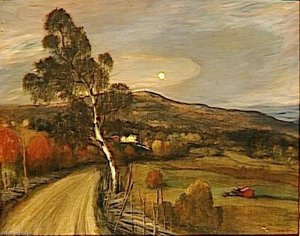
11Tour of Rodolphe Salis' Chat Noir (1896) by Théophile SteinlenTour of Rodolphe Salis' Chat Noir1896 · Zimmerli Art Museum at Rutgers University 12La Feuille, no. 6 (1898) by Théophile SteinlenLa Feuille, no. 61898 13La Feuille, no. 7 (1898) by Théophile SteinlenLa Feuille, no. 71898 14Dans la rue, (Gigolots et Gigolettes) (1895) by Théophile SteinlenDans la rue, (Gigolots et Gigolettes)1895 15Paris la Niut (1903) by Théophile SteinlenParis la Niut1903 16The elements by Théophile SteinlenThe elementsMusee des Arts Decoratifs 17The application of the decoration by Théophile SteinlenThe application of the decorationMusee des Arts Decoratifs 18Night party by Théophile SteinlenNight partyMusee des Arts Decoratifs 19Woman in white blouse by Théophile SteinlenWoman in white blouseMusée Toulouse-Lautrec 20Allégorie du Grand Morin by Théophile SteinlenAllégorie du Grand Morin 21L'enfant à la poupée by Théophile SteinlenL'enfant à la poupée 22Femme portant un enfant dans ses bras by Théophile SteinlenFemme portant un enfant dans ses bras 23Poilu by Théophile SteinlenPoilu 24Soldat convalescent assis by Théophile SteinlenSoldat convalescent assis 25Maisons dans un village by Théophile SteinlenMaisons dans un village 26Colette sur un fond de jardin by Théophile SteinlenColette sur un fond de jardin 27Les trieuses de charbon by Théophile SteinlenLes trieuses de charbon 28Grand nu féminin sur un lit by Théophile SteinlenGrand nu féminin sur un lit 29Profil de jeune fille by Théophile SteinlenProfil de jeune fille 30Les Permissionnaires by Théophile SteinlenLes PermissionnairesMusée Alphonse-georges Poulain 31Petite étude de nu assis sur fond sombre by Théophile SteinlenPetite étude de nu assis sur fond sombre 32PORTRAIT DE JEUNE FILLE DE FACE by Théophile SteinlenPORTRAIT DE JEUNE FILLE DE FACE 33Jehan Rictus by Théophile SteinlenJehan Rictus 34Le coup de vent by Théophile SteinlenLe coup de vent 35La pierreuse by Théophile SteinlenLa pierreuse 36Vision de Paris by Théophile SteinlenVision de Paris 37Petit nu sur un lit by Théophile SteinlenPetit nu sur un lit 38Portrait d'un peintre by Théophile SteinlenPortrait d'un peintre 39Femme assise dans canapé by Théophile SteinlenFemme assise dans canapé 40Ouvriers du bâtiment by Théophile SteinlenOuvriers du bâtiment 41World War I by Théophile SteinlenWorld War I 42Lion en cage by Théophile SteinlenLion en cageMusée Alphonse-georges Poulain 43Journée Serbe by Théophile SteinlenJournée Serbe 44Dans la rue by Théophile SteinlenDans la rue 45Cocorico by Théophile SteinlenCocorico 46Musée D'orsay by Théophile SteinlenMusée D'orsayMusée d'Orsay 47Boulevard De La Chapelle by Théophile SteinlenBoulevard De La Chapelle 48Zeitgenössisches Gemälde by Théophile SteinlenZeitgenössisches Gemälde 49Il n’y est pas! Sûr c’est un lapin by Théophile SteinlenIl n’y est pas! Sûr c’est un lapin 50Vue sur les toits by Théophile SteinlenVue sur les toits 51Paysage d'usines by Théophile SteinlenPaysage d'usines 52Prochainement by Théophile SteinlenProchainement 53Deux lionnes marchant de profil gauche by Théophile SteinlenDeux lionnes marchant de profil gaucheMusée Alphonse-georges Poulain 54Vue de Belmont près de Lausanne, paysage automnal by Théophile SteinlenVue de Belmont près de Lausanne, paysage automnal 55Vue de Belmont près de Lausanne, paysage matinal by Théophile SteinlenVue de Belmont près de Lausanne, paysage matinal 56Deux chats mangeant du mou by Théophile SteinlenDeux chats mangeant du mouMusée Alphonse-georges Poulain 57Paysage urbain by Théophile SteinlenPaysage urbain 58Paysage de Norvège by Théophile SteinlenPaysage de Norvège

The subjects that held Théophile Steinlen's eye

The four subjects that come back most often in these originals, each with its finest example.

The museums that keep Théophile Steinlen's originals

The 8 museums that hold the most of the paintings on this page.

Museum City Works by Théophile Steinlen Paintings from this list
Musée Alphonse-georges Poulain, VernonMusée Alphonse-georges Poulain Vernon 4 Les Permissionnaires, Lion en cage, Deux lionnes marchant de profil gauche
Musee des Arts Decoratifs, ParisMusee des Arts Decoratifs Paris 3 The elements, The application of the decoration, Night party
Petit Palais, ParisPetit Palais Paris 1 July 14
Musée Victor Hugo, ParisMusée Victor Hugo Paris 1 The Poor People
National Gallery of Art, WashingtonNational Gallery of Art Washington 1 The Laundresses
Zimmerli Art Museum at Rutgers University, New BrunswickZimmerli Art Museum at Rutgers University New Brunswick 1 Tour of Rodolphe Salis' Chat Noir
Musée Toulouse-Lautrec, AlbiMusée Toulouse-Lautrec Albi 1 Woman in white blouse
Musée d'Orsay, ParisMusée d'Orsay Paris 1 Musée D'orsay

Théophile Steinlen across the decades: one unique original for each

Works per decade

Pick a decade to see the original that defines it.

Théophile Steinlen's paintings: questions for the gallery

What is the single most famous work of Théophile Steinlen?Reveal the answer

Tournee Du Chat Noir. Chat sur un fauteuil and Le baiser come next.

Which ten paintings by Théophile Steinlen are the most famous?Reveal the answer

Tournee Du Chat Noir, Chat sur un fauteuil, Le baiser, Zwei Katzen, July 14, La Feuille, no. 14, Letter from a Striker (Lettre d'un Gréviste), The Poor People, The Laundresses and Portrait Drawing Of Suzanne Valadon. The ranking above gives each one's year and museum.

How many works by Théophile Steinlen are known?Reveal the answer

Our catalog holds 58 works by Théophile Steinlen, dated from 1889 to 1903.

Where can the most famous Théophile Steinlen originals be seen?Reveal the answer

Mostly in Musée Alphonse-georges Poulain (Vernon), Musee des Arts Decoratifs (Paris) and Petit Palais (Paris). The museum table above lists them all.

During which period did Théophile Steinlen create the best-known paintings?Reveal the answer

In 1890s: 7 of the 58 works on this page were made then, La Feuille, no. 14 among them.

Which famous Théophile Steinlen painting is the earliest, and which the latest?Reveal the answer

On this page, the earliest is July 14 (1889) and the latest The Poor People (1903).

What subjects did Théophile Steinlen favour?Reveal the answer

Melancholy (3), Cat (2) and Poster (2), across the 58 works on this page.

What materials did Théophile Steinlen paint with most?Reveal the answer

Oil On Canvas, for 4 of the 58 works on this page.

Which movement does the work of Théophile Steinlen belong to?Reveal the answer

Art nouveau, judging by the originals on this page.

What Théophile Steinlen originals can I see at the Musée Alphonse-georges Poulain?Reveal the answer

Les Permissionnaires, Lion en cage and Deux lionnes marchant de profil gauche: the Musée Alphonse-georges Poulain, Vernon holds 4 of the works on this page.

Théophile Steinlen: a portrait of the artist

The Soul of Montmartre: The Life and Legacy of Théophile Steinlen

Théophile Alexandre Steinlen was far more than a mere illustrator; he was the visual poet of the Belle Époque, a man whose brush and lithographic stone captured the very heartbeat of Paris. Born in 1859 in Lausanne, Switzerland, his journey from the quiet landscapes of his Swiss youth to the smoky, vibrant cabarets of Montmartre is a quintessential tale of artistic destiny. His early years were marked by a disciplined approach to design, honed during his time working in textile mills in Mulhouse. This period of practical apprenticeship instilled in him a meticulous precision and an eye for pattern that would later become a hallmark of his iconic poster work. However, the call of the avant-garde was irresistible, leading him to the bohemian epicenter of France, where he would eventually weave himself into the very fabric of Parisian culture.

Upon arriving in Paris, Steinlen found himself immersed in a whirlwind of creative energy. Influenced by the legendary artistic circles surrounding Le Chat Noir, he moved among the luminaries of the era, forging deep connections with figures such as Adolphe Willette and François Bocion. It was within this atmosphere of radical experimentation that his style began to coalesce. He possessed a unique ability to blend the delicate, flowing lines of the Art Nouveau movement with a gritty, empathetic realism. While many of his contemporaries focused solely on the ethereal or the aristocratic, Steinlen turned his gaze toward the streets, finding profound beauty in the overlooked: the street performers, the working class, and the nocturnal wanderers of the city.

Mastery of Line and the Art of the Poster

Steinlen’s technical prowess was most vibrantly displayed through his mastery of printmaking and lithography. He understood, perhaps better than any artist of his generation, the power of the poster as a medium of mass communication and public emotion. His work for Aristide Bruant’s legendary cabaret productions transformed advertising into high art, using bold silhouettes and striking color palettes to command the attention of every passerby on the Parisian boulevards. These works were not merely advertisements; they were windows into a lifestyle of rebellion, romance, and rhythmic vitality.

Beyond the commercial allure of his posters, Steinlen’s oeuvre is characterized by a remarkable versatility in subject matter:

  • The Elegance of Nature: His early landscapes and floral studies reflected an Impressionistic sensitivity to light and the fleeting beauty of the natural world.
  • The Feline Muse: He became world-renowned for his charming and often whimsical illustrations of cats, using the animal's fluid grace to mirror the aesthetic curves of Art Nouveau.
  • Social Empathy: His sketches of the Parisian populace served as a poignant social commentary, capturing the dignity and the struggle of the urban poor with an unflinching yet tender hand.

A Lasting Impression on Art History

The historical significance of Théophile Steinlen lies in his ability to bridge the gap between fine art and popular culture. He elevated the ephemeral nature of street posters to the status of museum-worthy masterpieces, ensuring that the spirit of the Belle Époque would endure long after the era itself had faded. His work remains a vital touchstone for understanding the transition from the romanticism of the 19th century to the modern graphic sensibilities of the 20th century.

Even today, Steinlen’s influence can be felt in the way we perceive the intersection of design and emotion. He taught us that art does not only belong in gilded galleries but lives in the streets, in the shadows of a cabaret, and in the quiet gaze of a stray cat. Through his prolific output, he left behind a visual legacy that continues to enchant, reminding us of a time when Paris was the undisputed center of the artistic universe, and where every line drawn could tell a story of human connection and urban magic.