Portrait of Pierre Auguste Cot

The 11 Most Famous Pierre Auguste Cot Paintings, Each One of a Kind

Updated November 2026 · ranked by our popularity score (searches, visits and orders for each work) · 11 works by Pierre Auguste Cot in our catalogue

In short

Springtime (1873) is the Pierre Auguste Cot painting that draws the most eyes; the original belongs to the Metropolitan Museum of Art, New York. After it, the eye goes to Springtime and Dionysia (1870). Among the 11 works of Pierre Auguste Cot in our catalog, these 11 are the most famous, each a unique original presented with its year, its museum and the reason it endures.

1837 – 1883, Bédarieux Most works: Metropolitan Museum of Art

Top 10 paintings by Pierre Auguste Cot, through the gallery's eye

1
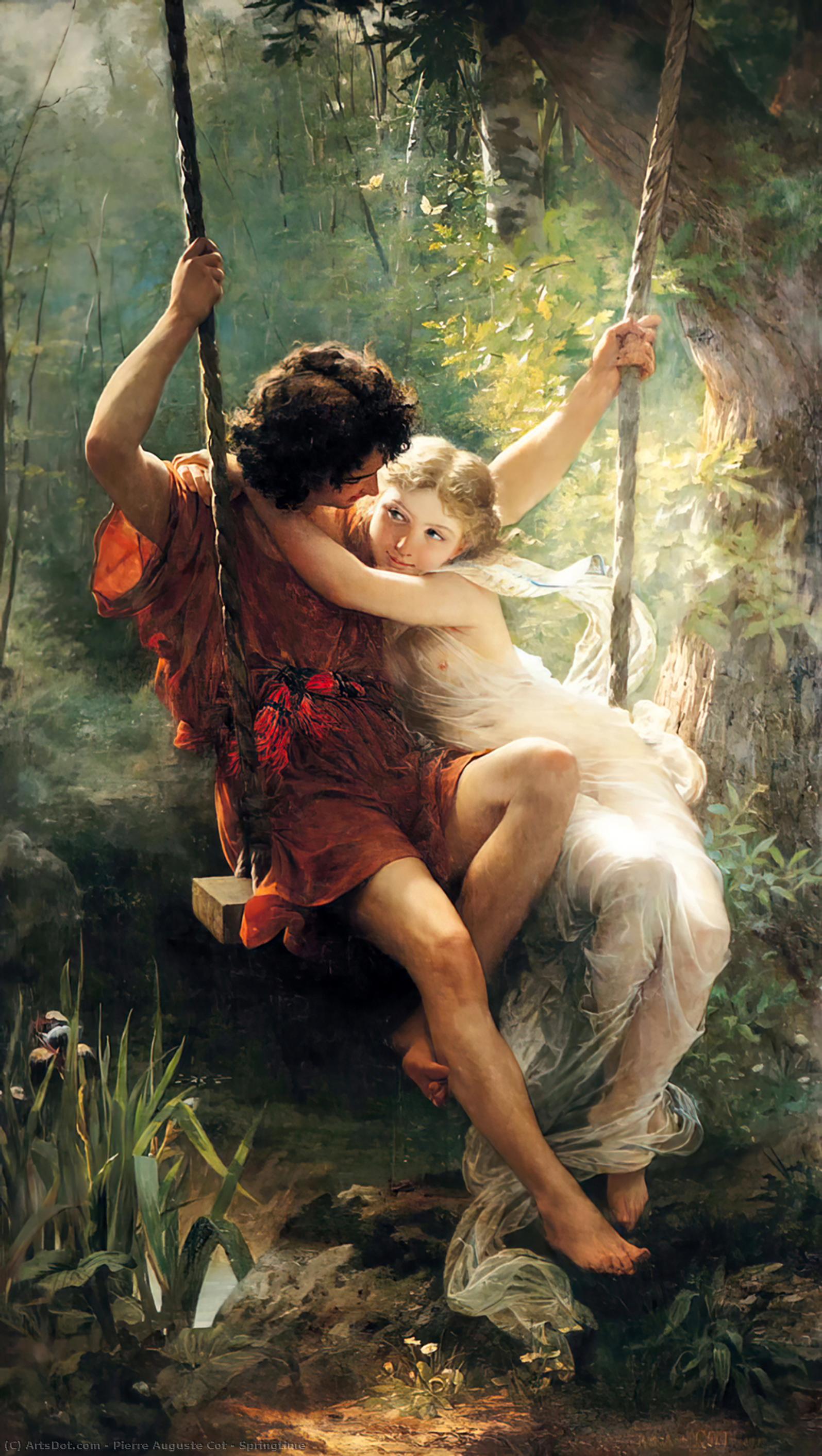
Springtime (1873) by Pierre Auguste Cot

Springtime (1873)

Oil On Canvas · Metropolitan Museum of Art, New York

The Artist: Pierre Auguste Cot Pierre Auguste Cot (1837-1883) was a French artist known for his romantic and sentimental paintings. Born in Bédarieux, France, Cot studied at the École des Beaux-Arts in Paris under the guidance of renowned artists such as William Bouguereau and Alexandre Cabanel. The Painting: Springtime (1873) Springtime, painted by Cot in 1873, is a masterpiece of romanticism that depicts a young couple locked in an embrace…

2
Springtime by Pierre Auguste Cot

Springtime

Oil On Canvas

Springtime is an oil on canvas created by Pierre Auguste Cot in 1873. The work captures a man and a woman suspended in a moment of quiet intimacy. They sit upon a swing, held by ropes amidst the dense greenery of an enchanted forest. Sunlight filters through the canopy, touching the leaves and the birds that inhabit the trees. It is a scene of rebirth and the soft weight of…

3
Dionysia (1870) by Pierre Auguste Cot

Dionysia

1870 · Oil · Chimei Museum, Tainan

A young woman emerges from the shadows of a dense, verdant forest, her presence acting as a soft spotlight amidst the deep browns and muted greens of the woodland. She moves with a quiet grace, her arms extended toward a lush bouquet of blossoms that seems to overflow from her grasp. The light catches the porcelain smoothness of her skin and the delicate, airy folds of her silk shawl, pulling…

4
Mireille (1882) by Pierre Auguste Cot

Mireille

1882 · Oil On Canvas · Musée Fabre, Montpellier

We are looking at Mireille, a work painted by Pierre Auguste Cot around 1882. This piece reflects the quiet, disciplined approach of a painter deeply rooted in the French tradition. Cot was a French painter who achieved significant recognition within the Academic Classicism school, a movement defined by its commitment to precise draftsmanship and the idealized beauty of its subjects.

5
Portrait de Madame Gervais (1863) by Pierre Auguste Cot

Portrait de Madame Gervais

1863 · Oil On Canvas · Musée Fabre, Montpellier

Portrait de Madame Gervais by Pierre Auguste Cot, created about 1863, presents a single female figure in a three-quarter length portrait. The subject is seated and positioned slightly off-center within the frame. She maintains a composed posture and a direct gaze toward the viewer. The composition relies on a palette dominated by deep, somber tones that establish a quiet atmosphere.

Pierre Auguste Cot's famous paintings, numbers 11 to 11

The subjects that held Pierre Auguste Cot's eye

The four subjects that come back most often in these originals, each with its finest example.

The museums that keep Pierre Auguste Cot's originals

The 3 museums that hold the most of the paintings on this page.

Museum City Works by Pierre Auguste Cot Paintings from this list
Metropolitan Museum of Art, New YorkMetropolitan Museum of Art New York 2 Springtime (1873), The storm
Musée Fabre, MontpellierMusée Fabre Montpellier 2 Mireille, Portrait de Madame Gervais
Chimei Museum, TainanChimei Museum Tainan 1 Dionysia

Pierre Auguste Cot across the decades: one unique original for each

Works per decade

Pick a decade to see the original that defines it.

Pierre Auguste Cot's paintings: questions for the gallery

What is the single most famous work of Pierre Auguste Cot?Reveal the answer

Springtime (1873), Metropolitan Museum of Art, New York. Springtime and Dionysia (1870) come next.

Which ten paintings by Pierre Auguste Cot are the most famous?Reveal the answer

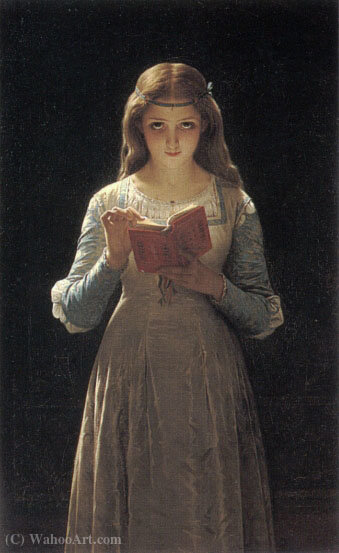
Springtime (1873), Springtime, Dionysia, Mireille, Portrait de Madame Gervais, Little lord fauntelroy, Ophelia, Pisan Girl with Basket of Oranges and Lemons, La bohemienne and The storm (1880). The ranking above gives each one's year and museum.

How many works by Pierre Auguste Cot are known?Reveal the answer

Our catalog holds 11 works by Pierre Auguste Cot, dated from 1863 to 1882.

Where can the most famous Pierre Auguste Cot originals be seen?Reveal the answer

Mostly in Metropolitan Museum of Art (New York), Musée Fabre (Montpellier) and Chimei Museum (Tainan). The museum table above lists them all.

Which famous Pierre Auguste Cot painting is the earliest, and which the latest?Reveal the answer

On this page, the earliest is Portrait de Madame Gervais (1863) and the latest Mireille (1882).

What subjects did Pierre Auguste Cot favour?Reveal the answer

Woman (4), Trees (2) and Forest (2), across the 11 works on this page.

What materials did Pierre Auguste Cot paint with most?Reveal the answer

Oil On Canvas, for 4 of the 11 works on this page.

What Pierre Auguste Cot originals can I see at the Metropolitan Museum of Art?Reveal the answer

Springtime (1873) and The storm: the Metropolitan Museum of Art, New York holds 2 of the works on this page.

Pierre Auguste Cot: a portrait of the artist

Pierre Auguste Cot: A Life in Academic Classicism

Pierre Auguste Cot (1837-1883) was a French painter celebrated for his contributions to the Academic Classicism school. His works are characterized by romantic, idealized depictions of figures and scenes, often drawing inspiration from mythology and literary themes.

Early Life and Education

Born in Bédarieux, Hérault, France, Cot’s artistic journey began with studies at l'École des Beaux-Arts in Toulouse. He later pursued further training in Paris, where he apprenticed under several prominent artists of the time.

Artistic Development and Influences

Cot’s style reflects a strong adherence to academic principles, emphasizing precise draftsmanship, realistic representation, and idealized beauty. Bouguereau, in particular, exerted a considerable influence on Cot's technique and subject matter.

  • Academic Tradition: He embraced the established conventions of the French Academy, focusing on historical, mythological, and allegorical subjects.
  • Romantic Undertones: While rooted in classicism, his paintings often possess a romantic sensibility, evoking emotion and atmosphere.

Major Works and Achievements

Cot achieved recognition for his debut at the Salon of 1863, but his popularity truly blossomed in the 1870s. Several works cemented his reputation as a skilled and sought-after artist.

  • Le printemps (Springtime) (1873): Perhaps his most famous painting, depicting a young couple on a swing, is now held in a private collection but remains an iconic image of romantic idealism.
  • The Storm (1880): Another celebrated work, currently displayed at the Metropolitan Museum of Art in New York City, showcases Cot’s ability to capture dramatic scenes with technical mastery.
  • Portraiture: A significant portion of his oeuvre consists of portraits, demonstrating his skill in capturing likeness and character.

Patronage and Recognition

Cot benefited from the patronage of influential figures like Francisque Duret, an academic sculptor whom he later married through his daughter Gabrielle. Bouguereau also supported Cot’s career, even painting a portrait of Gabrielle.

  • Awards and Honors: He received various prizes and medals throughout his career, culminating in being made a Chevalier of the Legion of Honour in 1874.

Legacy and Historical Significance

Despite his relatively short life – he died in Paris at the age of 46 and is buried at Père Lachaise Cemetery – Pierre Auguste Cot left behind a body of work that continues to captivate audiences today.

  • Commemorative Monument: Following his death, a subscription was undertaken to erect a commemorative monument in his hometown of Bédarieux, completed in 1892.
  • Enduring Appeal: His paintings exemplify the aesthetic ideals of the Academic Classicism movement and offer a glimpse into the artistic tastes of 19th-century France.

Cot’s work serves as a testament to the enduring power of traditional techniques and romantic themes in art history.