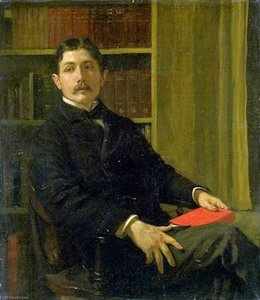
Portrait of Kenyon Cox

The 71 Most Famous Kenyon Cox Paintings, Each One of a Kind

Updated November 2026 · ranked by our popularity score (searches, visits and orders for each work) · 76 works by Kenyon Cox in our catalogue

In short

The Progress of Civilization The Forge, Commerce, and Education (mural study, State Capitol, Des Moines, Iowa) (1906) is the Kenyon Cox painting that draws the most eyes; the original belongs to the Smithsonian American Art Museum, Washington, D.C.. After it, the eye goes to Landscape at Grez (1879) and Henry L. Fry (1883). Among the 76 works of Kenyon Cox in our catalog, these 71 are the most famous, each a unique original presented with its year, its museum and the reason it endures.

1856 – 1919, Warren Contemporary realism Most works: Smithsonian American Art Museum

Top 10 paintings by Kenyon Cox, through the gallery's eye

1
The Progress of Civilization The Forge, Commerce, and Education (mural study, State Capitol, Des Moines, Iowa) (1906) by Kenyon Cox

The Progress of Civilization The Forge, Commerce, and Education (mural study, State Capitol, Des Moines, Iowa)

1906 · Oil On Canvas · Smithsonian American Art Museum, Washington, D.C.

The Progress of Civilization The Forge, Commerce, and Education (mural study, State Capitol, Des Moines, Iowa) is an oil on canvas work by Kenyon Cox. Created about 1905-1906, this piece functions as a preparatory study for a larger mural intended for the State Capitol in Des Moines, Iowa. The artist, Kenyon Cox, sought to capture the movement of human advancement through these specific, segmented scenes.

2
Landscape at Grez (1879) by Kenyon Cox

Landscape at Grez

1879 · Black and White Photography · Cincinnati Art Museum, Cincinnati

In Landscape at Grez, Kenyon Cox organizes a formal indoor setting through a centered composition. The subject, a man seated in a decorative wooden chair, is positioned slightly to the right of the vertical axis. This slight offset breaks the symmetry of the room, providing a sense of depth against the structured background. The perspective is a straight-on eye-level shot, placing the viewer directly in front of the subject within…

3
Henry L. Fry (1883) by Kenyon Cox

Henry L. Fry

1883 · Oil On Canvas · Cincinnati Art Museum, Cincinnati

This oil on canvas portrait by Kenyon Cox depicts Henry L. Fry. Created in 1883, the work presents the subject in a full-length view. The man is positioned slightly off-center against a background of draped fabric. He is shown with a white beard and wears a dark overcoat. The composition is vertical, focusing on the single figure within the frame.

4
The Approach of Love (1890) by Kenyon Cox

The Approach of Love

1890 · Oil · Cincinnati Art Museum, Cincinnati

In "The Approach of Love" by Kenyon Cox, the horizontal plane is anchored by a massive, curved marble bench. This white sarcophagus occupies the center of the scene, acting as a heavy, pale foundation for the figures. On the left, a nude woman with long reddish-brown hair reclines against the stone. A voluminous, golden-yellow fabric spills over the edge of the marble, its bright weight contrasting against the cool, white…

5
Diana (1890) by Kenyon Cox

Diana

1890 · Oil On Canvas · Chazen Museum of Art, Madison

In "Diana" by Kenyon Cox, the Roman goddess Artemis emerges from the shadows of a lush, wooded landscape. Created about 1890, the work places the deity at the center of a quiet, natural world. She is rendered as a full-length nude figure, her form poised against the deep greens and browns of the surrounding foliage. The goddess occupies the heart of the scene, a singular presence amidst the organic textures…

6
The Harp Player (A Solo) (1888) by Kenyon Cox

The Harp Player (A Solo)

1888 · Oil On Canvas · Metropolitan Museum of Art, New York

The Harp Player (A Solo) is an oil painting by the American artist Kenyon Cox. Created about 1888, the work emerged during a period when Cox was establishing his reputation within the academic traditions of the late 19th century. His practice emphasized careful drawing and a commitment to classical ideals, often focusing on genre studies and idealized forms.

7
The Fall (1892) by Kenyon Cox

The Fall

1892 · Oil On Canvas

In this 1892 oil painting, Kenyon Cox captures a moment of profound transition within a lush, wooded landscape. The work, titled The Fall, presents the biblical narrative of Adam and Eve at the precise instant of their temptation. A serpent coils around the trunk of a tree, embodying the presence of evil, while Eve reaches out to offer the fruit to Adam. This central action transforms the garden into a…

8
Head of the Queen of Egypt (1888) by Kenyon Cox

Head of the Queen of Egypt

1888 · Oil · Smithsonian American Art Museum, Washington, D.C.

In this work, titled Head of the Queen of Egypt, the artist Kenyon Cox presents a focused study of a historical figure. The painting depicts the head of Nefertiti, the Egyptian queen who belonged to the Eighteenth Dynasty. It is a quiet, measured representation that captures the likeness of the sculpted bust rather than a living person.

9
Bird Song (1896) by Kenyon Cox

Bird Song

1896 · Oil

In "Bird Song" by Kenyon Cox, a seated female figure occupies the center of the frame. She is positioned vertically, a steady pillar of quietude amidst a soft-focus world. Her white chemise-style top is patterned with small green leaf motifs, a delicate detail against the pale fabric. Below, a heavy, draped skirt of greyish-purple pools around her feet in thick, weighted folds. She holds a long, slender wooden flute in…

10
Christ (1905) by Kenyon Cox

Christ

1905 · Oil On Canvas · Cleveland Museum of Art, Cleveland

In the painting Christ by Kenyon Cox, the composition is centered and symmetrical. The subject is presented in a full-length view, standing as a single male figure against a landscape background. This figure is depicted with long brown hair and a beard. He wears voluminous, flowing red robes that drape heavily around the body. His arms are slightly extended to his sides, with the palms facing upward in a gesture…

Kenyon Cox's famous paintings, numbers 11 to 71

11(Iowa State Capitol Rotunda) (Manufactures, study for panel) (1905) by Kenyon Cox(Iowa State Capitol Rotunda) (Manufactures, study for panel)1905 12(Iowa State Capitol Rotunda) (Manufactures, study for panel) (1905) by Kenyon Cox(Iowa State Capitol Rotunda) (Manufactures, study for panel)1905 · Smithsonian American Art Museum 13Maxfield Parrish (1905) by Kenyon CoxMaxfield Parrish1905 14Tradition (1916) by Kenyon CoxTradition1916 · Cleveland Museum of Art 15The Education of Cupid (1917) by Kenyon CoxThe Education of Cupid1917 16Sketch for the Mural at Oberlin College, The Spirit of Self Sacrificing Love (1914) by Kenyon CoxSketch for the Mural at Oberlin College, The Spirit of Self Sacrificing Love1914 · Smithsonian American Art Museum 17Augustus Saint-Gaudens (1908) by Kenyon CoxAugustus Saint-Gaudens1908 · Metropolitan Museum of Art 18(Study for Labor ) (1870) by Kenyon Cox(Study for Labor )1870 19Study for Mosaic, Wisconsin State Capitol, (1912) by Kenyon CoxStudy for Mosaic, Wisconsin State Capitol,1912 · Oklahoma City Museum of Art 20(Untitled) (Greco Roman Discus Thrower) (1873) by Kenyon Cox(Untitled) (Greco Roman Discus Thrower)1873 21(Untitled) (Study of Standing Male Nude) (1876) by Kenyon Cox(Untitled) (Study of Standing Male Nude)1876 22(Untitled) (Studies of Male Nudes) (1876) by Kenyon Cox(Untitled) (Studies of Male Nudes)1876 23Flying Shadows (1883) by Kenyon CoxFlying Shadows1883 24Landscape (1883) by Kenyon CoxLandscape1883 · Metropolitan Museum of Art 25Flying Shadows (1883) by Kenyon CoxFlying Shadows1883 · National Gallery of Art 26A Lady in Black (1880) by Kenyon CoxA Lady in Black1880 · Smithsonian American Art Museum 27Study for Evening (1883) by Kenyon CoxStudy for Evening1883 · Smithsonian American Art Museum 28After Titian's Madonna of the Rabbit (1882) by Kenyon CoxAfter Titian's Madonna of the Rabbit1882 · Smithsonian American Art Museum 29After Boltraffio, Sacra Conversazione (1882) by Kenyon CoxAfter Boltraffio, Sacra Conversazione1882 · Smithsonian American Art Museum 30May (1890) by Kenyon CoxMay1890 31Indian Summer (1887) by Kenyon CoxIndian Summer1887 · Smithsonian American Art Museum 32Louise Howland King (Mrs. Kenyon Cox) (1892) by Kenyon CoxLouise Howland King (Mrs. Kenyon Cox)1892 · Smithsonian American Art Museum 33Study for Drapery of Pursuit of the Ideal (1891) by Kenyon CoxStudy for Drapery of Pursuit of the Ideal1891 · Smithsonian American Art Museum 34Echo (1892) by Kenyon CoxEcho1892 · Smithsonian American Art Museum 35An Eclogue (1890) by Kenyon CoxAn Eclogue1890 · Smithsonian American Art Museum 36Sketches for a Decoration of a Private Library B (1894) by Kenyon CoxSketches for a Decoration of a Private Library B1894 · Smithsonian American Art Museum 37Sketches for the Decoration of a Private Library A (1894) by Kenyon CoxSketches for the Decoration of a Private Library A1894 · Smithsonian American Art Museum 38Portrait of Mr. Wiley (1894) by Kenyon CoxPortrait of Mr. Wiley1894 39Study for Science Instructing Industry (1898) by Kenyon CoxStudy for Science Instructing Industry1898 · Smithsonian American Art Museum 40(Iowa State Capitol Rotunda) (Hunting, study for panel) (1905) by Kenyon Cox(Iowa State Capitol Rotunda) (Hunting, study for panel)1905 41Hope and memory (1900) by Kenyon CoxHope and memory1900 42Study for Mural at Hotel Manhattan, Peace and Plenty (1901) by Kenyon CoxStudy for Mural at Hotel Manhattan, Peace and Plenty1901 · Smithsonian American Art Museum 43Untitled, Portrait of a Young Girl (1900) by Kenyon CoxUntitled, Portrait of a Young Girl1900 44Study for mural, Union Trust Company Building, The Sources of Wealth (1903) by Kenyon CoxStudy for mural, Union Trust Company Building, The Sources of Wealth1903 · Smithsonian American Art Museum 45(Iowa State Capitol Rotunda) (study for Six Lunettes) (1905) by Kenyon Cox(Iowa State Capitol Rotunda) (study for Six Lunettes)1905 46Study for Christ (1905) by Kenyon CoxStudy for Christ1905 · Smithsonian American Art Museum 47Study for Mural for Appellate Court Building, New York Statute Law , Helmet for Figure of Force (1899) by Kenyon CoxStudy for Mural for Appellate Court Building, New York Statute Law , Helmet for Figure of Force1899 · Smithsonian American Art Museum 48Approach of Love by Kenyon CoxApproach of LoveCincinnati Art Museum 49Augustus Saint Gaudens (1908) by Kenyon CoxAugustus Saint Gaudens1908 50Plenty (1910) by Kenyon CoxPlenty1910 · Smithsonian American Art Museum 51The Silver Hand Glass (1907) by Kenyon CoxThe Silver Hand Glass1907 · Smithsonian American Art Museum 52The Progress of Civilization Science and Art (mural study, State Capitol, Des Moines, Iowa) (1906) by Kenyon CoxThe Progress of Civilization Science and Art (mural study, State Capitol, Des Moines, Iowa)1906 · Smithsonian American Art Museum 53The Progress of Civilization Hunting, Herding, Agriculture (mural study, State Capitol, Des Moines, Iowa) (1906) by Kenyon CoxThe Progress of Civilization Hunting, Herding, Agriculture (mural study, State Capitol, Des Moines, Iowa)1906 · Smithsonian American Art Museum 54Study for Mural at U.S. Custom House, Cleveland, OH, Passing Commerce Pays Tribute to the Port of Cleveland (1909) by Kenyon CoxStudy for Mural at U.S. Custom House, Cleveland, OH, Passing Commerce Pays Tribute to the Port of Cleveland1909 · Smithsonian American Art Museum 55Study for Mosaic, Wisconsin State Capital, Legislation (1913) by Kenyon CoxStudy for Mosaic, Wisconsin State Capital, Legislation1913 · Smithsonian American Art Museum 56Book of Pictures (1917) by Kenyon CoxBook of Pictures1917 · Smithsonian American Art Museum 57Study for Mosaic, Wisconsin State Capital, Justice (1913) by Kenyon CoxStudy for Mosaic, Wisconsin State Capital, Justice1913 · Smithsonian American Art Museum 58Study for mosaic in the Wisconsin State Capital Government and Liberty (1912) by Kenyon CoxStudy for mosaic in the Wisconsin State Capital Government and Liberty1912 · Smithsonian American Art Museum 59Sketch for Mosaic, Wisconsin State Capital, Justice (1912) by Kenyon CoxSketch for Mosaic, Wisconsin State Capital, Justice1912 · Smithsonian American Art Museum 60Nude Study for Mosaic, Wisconsin State Capitol, (1912) by Kenyon CoxNude Study for Mosaic, Wisconsin State Capitol,1912 · Oklahoma City Museum of Art 61Nude Study for Mosaic, Wisconsin State Capitol, (1912) by Kenyon CoxNude Study for Mosaic, Wisconsin State Capitol,1912 · Oklahoma City Museum of Art 62Nude Study for Mosaic, Wisconsin State Capitol, (1912) by Kenyon CoxNude Study for Mosaic, Wisconsin State Capitol,1912 · Oklahoma City Museum of Art 63Nude Study for Mosaic, Wisconsin State Capitol, (1912) by Kenyon CoxNude Study for Mosaic, Wisconsin State Capitol,1912 · Oklahoma City Museum of Art 64Study for Mosaic, Wisconsin State Capitol, (1912) by Kenyon CoxStudy for Mosaic, Wisconsin State Capitol,1912 · Oklahoma City Museum of Art 65Study for Mosaic, Wisconsin State Capitol, (1912) by Kenyon CoxStudy for Mosaic, Wisconsin State Capitol,1912 · Oklahoma City Museum of Art 66Nude Study for Mosaic, Wisconsin State Capitol, (1912) by Kenyon CoxNude Study for Mosaic, Wisconsin State Capitol,1912 · Oklahoma City Museum of Art 67Fields (1885) by Kenyon CoxFields1885 68Study for Mosaic, Wisconsin State Capitol, (1912) by Kenyon CoxStudy for Mosaic, Wisconsin State Capitol,1912 · Oklahoma City Museum of Art 69Nude Study for Mosaic, Wisconsin State Capitol, (1912) by Kenyon CoxNude Study for Mosaic, Wisconsin State Capitol,1912 · Oklahoma City Museum of Art 70Cartoon for mural of Minnesota State Capital, Institute of Justice by Kenyon CoxCartoon for mural of Minnesota State Capital, Institute of JusticeSmithsonian American Art Museum 71Lengthening Shadows (1888) by Kenyon CoxLengthening Shadows1888 · Smithsonian American Art Museum

The subjects that held Kenyon Cox's eye

The four subjects that come back most often in these originals, each with its finest example.

The museums that keep Kenyon Cox's originals

The 7 museums that hold the most of the paintings on this page.

Museum City Works by Kenyon Cox Paintings from this list
Smithsonian American Art Museum, Washington, D.C.Smithsonian American Art Museum Washington, D.C. 32 The Progress of Civilization The Forge, Commerce, and Education (mural study, State Capitol, Des Moines, Iowa), Head of the Queen of Egypt, (Iowa State Capitol Rotunda) (Manufactures, study for panel)
Oklahoma City Museum of Art, Oklahoma CityOklahoma City Museum of Art Oklahoma City 10 Study for Mosaic, Wisconsin State Capitol,, Nude Study for Mosaic, Wisconsin State Capitol,, Nude Study for Mosaic, Wisconsin State Capitol,
Cincinnati Art Museum, CincinnatiCincinnati Art Museum Cincinnati 4 Landscape at Grez, Henry L. Fry, The Approach of Love
Metropolitan Museum of Art, New YorkMetropolitan Museum of Art New York 3 The Harp Player (A Solo), Augustus Saint-Gaudens, Landscape
Cleveland Museum of Art, ClevelandCleveland Museum of Art Cleveland 2 Christ, Tradition
Chazen Museum of Art, MadisonChazen Museum of Art Madison 1 Diana
National Gallery of Art, WashingtonNational Gallery of Art Washington 1 Flying Shadows

Kenyon Cox across the decades: one unique original for each

Works per decade

Pick a decade to see the original that defines it.

Kenyon Cox's paintings: questions for the gallery

What is the single most famous work of Kenyon Cox?Reveal the answer

The Progress of Civilization The Forge, Commerce, and Education (mural study, State Capitol, Des Moines, Iowa) (1906), Smithsonian American Art Museum, Washington, D.C.. Landscape at Grez (1879) and Henry L. Fry (1883) come next.

At what age did Kenyon Cox create The Progress of Civilization The Forge, Commerce, and Education (mural study, State Capitol, Des Moines, Iowa)?Reveal the answer

50 years old: The Progress of Civilization The Forge, Commerce, and Education (mural study, State Capitol, Des Moines, Iowa) dates from 1906, and Kenyon Cox was born in 1856.

Which ten paintings by Kenyon Cox are the most famous?Reveal the answer

The Progress of Civilization The Forge, Commerce, and Education (mural study, State Capitol, Des Moines, Iowa), Landscape at Grez, Henry L. Fry, The Approach of Love, Diana, The Harp Player (A Solo), The Fall, Head of the Queen of Egypt, Bird Song and Christ. The ranking above gives each one's year and museum.

How many works by Kenyon Cox are known?Reveal the answer

Our catalog holds 76 works by Kenyon Cox, dated from 1870 to 1917.

Where can the most famous Kenyon Cox originals be seen?Reveal the answer

Mostly in Smithsonian American Art Museum (Washington, D.C.), Oklahoma City Museum of Art (Oklahoma City) and Cincinnati Art Museum (Cincinnati). The museum table above lists them all.

During which period did Kenyon Cox create the best-known paintings?Reveal the answer

In 1910s: 19 of the 71 works on this page were made then, Tradition among them.

Which famous Kenyon Cox painting is the earliest, and which the latest?Reveal the answer

On this page, the earliest is (Study for Labor ) (1870) and the latest The Education of Cupid (1917).

What subjects did Kenyon Cox favour?Reveal the answer

Woman (9), Pencil sketch (5) and Man (4), across the 71 works on this page.

What materials did Kenyon Cox paint with most?Reveal the answer

Oil On Canvas, for 11 of the 71 works on this page.

Which movement does the work of Kenyon Cox belong to?Reveal the answer

Contemporary realism, judging by the originals on this page.

What Kenyon Cox originals can I see at the Smithsonian American Art Museum?Reveal the answer

The Progress of Civilization The Forge, Commerce, and Education (mural study, State Capitol, Des Moines, Iowa), Head of the Queen of Egypt and (Iowa State Capitol Rotunda) (Manufactures, study for panel): the Smithsonian American Art Museum, Washington, D.C. holds 32 of the works on this page.

Kenyon Cox: a portrait of the artist

Kenyon Cox: Life and Legacy

Early Life and Education

  • Born: October 27, 1856, in Warren, Ohio.
  • Parents: Jacob Dolson Cox and Helen Finney Cox.
  • Kenyon Cox initially studied at the Art Academy of Cincinnati (formerly the McMicken School of Art). However, he quickly recognized the limited artistic opportunities available in the city.
  • Following a visit to the Centennial Exposition in Philadelphia, he decided to pursue further education at the Pennsylvania Academy of Fine Arts, hoping it would lead to studies in Europe.

Parisian Training and Influences

  • In 1877, Cox moved to Paris, joining a wave of American artists seeking artistic inspiration. He believed Paris was experiencing a “second renaissance” in art.
  • Influential Teachers: Carolus-Duran, Jean-Léon Gérôme, and Alexandre Cabanel at the École des Beaux-Arts.
  • He initially studied under Carolus-Duran but became frustrated with what he perceived as a “vulgarity” in Duran’s style.
  • Travels throughout France and Italy exposed him to the works of Renaissance masters, profoundly shaping his artistic vision.

Career in New York and Artistic Style

  • In 1882, Cox returned to New York City, where he established himself as a painter and illustrator.
  • Illustration Work: He became well-known for his magazine illustrations, which reached a wider audience than his paintings.
  • Art Criticism: Cox also wrote unsigned art criticisms for the New York Evening Post, supplementing his income.
  • His artistic style leaned towards realism, with a focus on landscapes, portraits, and genre studies. He was known for idealized nudes and traditional treatments of classical themes.

Teaching and Institutional Involvement

  • Art Students League of New York: Cox became a highly influential instructor at the Art Students League, shaping generations of artists. He designed the League’s logo featuring the motto “Nulla Dies Sine Linea” (No Day Without a Line).
  • Elected an Associate Academician of the National Academy of Design in 1900 and a full Academician in 1903.
  • Founding Member: He was one of the founders and secretary of the National Free Arts League.
  • Leadership Roles: Served as president of the National Society of Mural Painters from 1915 to 1919, and held memberships in various prestigious art organizations.

Major Achievements and Historical Significance

  • Cox’s work represented a commitment to classical ideals at a time when modern art movements were emerging. He advocated for careful drawing, modulated color, and the use of allegory and symbolism.
  • His writings, such as “Two Ways of Painting,” articulated his views on figurative art versus abstract or representational styles.
  • Legacy: Though not a radical innovator, Kenyon Cox played a crucial role in maintaining traditional artistic standards and educating aspiring artists. His influence extended through his teaching and his contributions to the American art establishment.
  • Death: March 17, 1919.