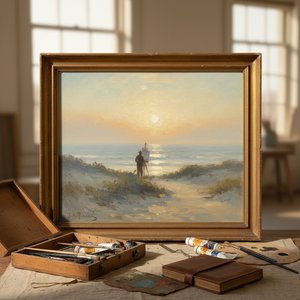
Julius Mordecai Pincas (Jules Pascin): A Biography
Early Life and Origins
- Birth and Family: Julius Mordecai Pincas, known as Jules Pascin, was born on March 31, 1885, in Vidin, Bulgaria. He came from a wealthy Sephardic Jewish family involved in grain trading.
- Early Influences: The family moved to Bucharest in 1892, where young Julius first showed an interest in art, even sketching at a local brothel. His early artistic inclinations were initially met with disapproval from his father.
- Education and Pseudonym: He studied art in Vienna (1902) and Munich (1903), where he connected with artists like Paul Klee and Wassily Kandinsky. To avoid family embarrassment regarding his satirical drawings, he adopted the pseudonym “Pascin” – an anagram of his surname.
Parisian Years and Artistic Development
- Arrival in Paris: In 1905, Pascin moved to Paris, becoming part of the vibrant artistic community. He quickly integrated into circles like “Les Dômiers” at Café le Dome.
- Early Style and Influences: His early Parisian works were influenced by Fauvism and Cézanne, focusing on portraits and nudes. He also studied at the Académie Matisse and drew inspiration from 18th-century masters like Greuze and Watteau.
- Developing a Unique Voice: Pascin’s style evolved to become distinctly his own – characterized by bold colors, expressive brushwork, and often depicting intimate scenes of modern life. He excelled in watercolors, drawings, and paintings.
Themes and Artistic Style
- Recurring Subjects: Women were a central theme in Pascin’s work, portrayed in casual, often nude or partially dressed poses. He captured their vulnerability and sensuality with remarkable sensitivity.
- Bold Colors & Composition: His paintings are known for their vibrant color palettes and carefully balanced compositions. He skillfully used light and shadow to create depth and atmosphere.
- Psychological Depth: Beyond mere representation, Pascin’s work often hinted at underlying psychological complexities and emotional states of his subjects.
Major Works and Achievements
- Nude with a Green Hat (1925): A striking example of his nude studies, showcasing his mastery of color and form. Currently housed at the Cincinnati Art Museum.
- Little Girl on an Armchair (1925): Demonstrates his ability to capture innocence and beauty in a domestic setting.
- Loose Women (1911): A provocative work that reflects the changing social norms of the early 20th century.
- Portrait of Hermine David (1918): A notable portrait held at the Musée National d'Art Moderne, Centre Pompidou in Paris.
Historical Significance and Legacy
- School of Paris: Pascin was a prominent figure within the School of Paris – a collective of expatriate artists who shaped modern art in the early 20th century.
- Influence on Later Artists: His work influenced subsequent generations of artists with its expressive style and focus on human emotion.
- Tragic End: Despite his artistic success, Pascin struggled with depression and alcoholism throughout his life. He tragically took his own life in 1930 at the age of 45.
- Continued Appreciation: Today, Jules Pascin’s paintings are celebrated for their beauty, sensitivity, and historical significance. His works can be found in major museums worldwide and continue to inspire art lovers through reproductions offered by platforms like OriginalUniqueArt.com.
Questions & Answers
How is Jules Pascin's career divided into periods?
The Chronicle of Jules Pascin is a scroll-driven timeline that presents the artist's works in chronological order, grouped into career-period chapters.
Is there a complete list of Jules Pascin's artworks?
Every work by Jules Pascin on this website can be browsed from the artist's All Artworks page.
What are the birthplace and birth year of Jules Pascin?
Jules Pascin was born in Vidin in 1885.