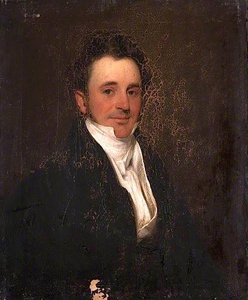
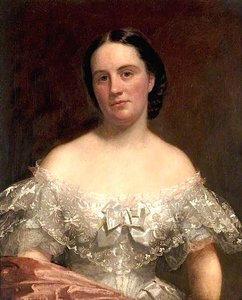
Portrait of John Graham Gilbert

The 100 Most Famous John Graham Gilbert Paintings, a Gallery Selection

Updated November 2026 · ranked by our popularity score (searches, visits and orders for each work) · 140 works by John Graham Gilbert in our catalogue

In short

Of all the originals John Graham Gilbert left, the most famous is James Watt (1736–1819) (1819). Close behind it come Professor George Jardine (1742–1827) (after Henry Raeburn) (1827) and John T. Alston (1780–1857), Provost of Glasgow (1820–1821) (1832). Our catalog holds 140 works by John Graham Gilbert; the gallery has kept the 100 the world admires most, each shown with its date, its museum and its story.

1794 – 1866, Glasgow Neoclassicism Most works: The Dick Institute

John Graham Gilbert's top 10 paintings: the gallery's choice

1
James Watt (1736–1819) (1819) by John Graham Gilbert

James Watt (1736–1819)

1819 · Oil On Canvas

A single light source strikes the brow of James Watt, casting the rest of the world into a heavy, velvet darkness. He sits in a quiet stillness, his gaze fixed forward as if looking through the viewer toward a horizon of steam and iron. The white of his hair catches the light, a stark contrast against the deep shadows that define the contours of his face. There is a gravity…

2
Professor George Jardine (1742–1827) (after Henry Raeburn) (1827) by John Graham Gilbert

Professor George Jardine (1742–1827) (after Henry Raeburn)

1827 · Oil On Canvas

The shadows cling to the edges of the frame, leaving only the face and upper torso of Professor George Jardine to emerge from the darkness. He gazes directly at us, his expression heavy with a quiet, intellectual authority that seems to command the very air around him. There is a stillness here, a moment frozen in 1827, where the weight of a lifetime of thought is etched into the lines…

3
John T. Alston (1780–1857), Provost of Glasgow (1820–1821) (1832) by John Graham Gilbert

John T. Alston (1780–1857), Provost of Glasgow (1820–1821)

1832 · Oil On Canvas

The portrait presents a formal study of John Thomas Alston, a man whose posture and expression command the space of the canvas. He is depicted in a moment of quiet gravity, his presence defined by the heavy, dark tones of his attire and the deliberate arrangement of his hands. The lighting is directional, carving his features out of a deep, shadowed background and emphasizing the textures of his skin and…

4
Mrs Hugh Robertson of Gartloch (1798–1846) (1841) by John Graham Gilbert

Mrs Hugh Robertson of Gartloch (1798–1846)

1841 · Oil On Canvas

The portrait depicts a woman seated in profile against a dark, indistinct background. She is positioned centrally, her form creating a pyramidal structure that directs the eye toward her head. The subject wears a burgundy velvet dress, the texture of which is rendered through meticulous brushwork that suggests the weight and softness of the fabric. A lace detail adorns the neckline, and a red feathered hat rests upon her head.…

5
Professor James Adair Lawrie; (1801-1859) (1855) by John Graham Gilbert

Professor James Adair Lawrie; (1801-1859)

1855 · Oil On Canvas · The Hunterian Museum and Art Gallery, Glasgow

In this 1855 oil portrait, we encounter Professor James Adair Lawrie, a man whose presence commands a quiet, somber authority. He is presented in a three-quarter length view, seated with an upright posture that suggests a lifetime of academic discipline. The composition is intimate, placing the viewer at eye-level with the subject, creating a direct connection that feels almost private. There is a profound sense of weight to the figure,…

6
Mrs Agnes D'Arcy Jarvie (1866) by John Graham Gilbert

Mrs Agnes D'Arcy Jarvie

1866 · Oil On Canvas

This portrait, titled Mrs Agnes D'Arcy Jarvie, was painted by John Graham Gilbert in 1866. The subject is depicted from the chest up in a seated position. She is positioned in the center of the frame, gazing directly at the viewer. The composition focuses on her face and upper body, set against a blurred background that suggests an interior environment.

7
Meditation by John Graham Gilbert

Meditation

Oil

In Meditation, John Graham Gilbert presents a quiet study of introspection. The subject is a woman with long hair, dressed in a gown, captured in a moment of stillness. She is seated, her gaze directed upward as if caught in a private moment of thought or lost within her own internal world. There is a sense of profound contemplation in her expression that draws the viewer into her silent state…

The John Graham Gilbert selection continues, 11 to 100

11Self Portrait (copy of Joshua Reynolds) (1819) by John Graham GilbertSelf Portrait (copy of Joshua Reynolds)1819 12James Irvine (1826) by John Graham GilbertJames Irvine1826 13An Italian Nobleman (1830) by John Graham GilbertAn Italian Nobleman1830 14James Dennistoun, Esq., of Golfhill (1829) by John Graham GilbertJames Dennistoun, Esq., of Golfhill1829 15Joseph Hume, Political Economist (1823) by John Graham GilbertJoseph Hume, Political Economist1823 16James Irvine (d.1831) (1826) by John Graham GilbertJames Irvine (d.1831)1826 17William Murdoch (1754–1839) (1827) by John Graham GilbertWilliam Murdoch (1754–1839)1827 · Birmingham Museum and Art Gallery 18William Dale (1794–1827) (1825) by John Graham GilbertWilliam Dale (1794–1827)1825 19A Tyrolese Hunter (1826) by John Graham GilbertA Tyrolese Hunter1826 20Joseph Hume (1777–1855), Political Economist (1823) by John Graham GilbertJoseph Hume (1777–1855), Political Economist1823 · Scottish National Portrait Gallery 21William Richardson (1743–1814), Professor of Humanity at the University of Glasgow (1773–1815) (1827) by John Graham GilbertWilliam Richardson (1743–1814), Professor of Humanity at the University of Glasgow (1773–1815)1827 22An Italian Nobleman (1830) by John Graham GilbertAn Italian Nobleman1830 · Royal Scottish Academy of Art - Architecture 23Saint Sebastian (1826) by John Graham GilbertSaint Sebastian1826 24James Dennistoun, Esq., of Golfhill (1758–1835) (1829) by John Graham GilbertJames Dennistoun, Esq., of Golfhill (1758–1835)1829 25Sir Walter Scott (1771–1832), Bt, FRSE (1829) by John Graham GilbertSir Walter Scott (1771–1832), Bt, FRSE1829 · The Royal Society of Edinburgh 26Figure of a Lady (after Jacopo Palma il vecchio) (1825) by John Graham GilbertFigure of a Lady (after Jacopo Palma il vecchio)1825 27The Martyrdom of Saint Justina (after Paolo Veronese) (1825) by John Graham GilbertThe Martyrdom of Saint Justina (after Paolo Veronese)1825 28Reverend Stevenson MacGill (1765–1840), Professor of Divinity at the University of Glasgow (1834) by John Graham GilbertReverend Stevenson MacGill (1765–1840), Professor of Divinity at the University of Glasgow1834 29James Hopkirk of Dalbeth (1835) by John Graham GilbertJames Hopkirk of Dalbeth1835 30Thomas Graham (1805–1869), FRS (1837) by John Graham GilbertThomas Graham (1805–1869), FRS1837 31Duncan MacFarlan (1771–1857), Principal of the University of Glasgow (1823–1857) (1839) by John Graham GilbertDuncan MacFarlan (1771–1857), Principal of the University of Glasgow (1823–1857)1839 32John Gibson (1847) by John Graham GilbertJohn Gibson1847 · Scottish National Gallery 33John Burns, Professor of Surgery at the University of Glasgow (1848) by John Graham GilbertJohn Burns, Professor of Surgery at the University of Glasgow1848 34Lord Kelvin William Thomson, at the Age of 22 (1846) by John Graham GilbertLord Kelvin William Thomson, at the Age of 221846 35John Burns (1775–1850), Professor of Surgery at the University of Glasgow (1815–1850) (1848) by John Graham GilbertJohn Burns (1775–1850), Professor of Surgery at the University of Glasgow (1815–1850)1848 36John Gibson (1790–1866), RA (1848) by John Graham GilbertJohn Gibson (1790–1866), RA1848 37Portrait of an Unknown Sitter with a Book (1846) by John Graham GilbertPortrait of an Unknown Sitter with a Book1846 · The Dick Institute 38Georgina Smith (1846) by John Graham GilbertGeorgina Smith1846 · Stirling Smith Art Gallery And Museum 39Georgina Smith (1846) by John Graham GilbertGeorgina Smith1846 · The Stirling Smith Art Gallery - Museum 40Lord Kelvin William Thomson (1824–1907), at the Age of 22 (1846) by John Graham GilbertLord Kelvin William Thomson (1824–1907), at the Age of 221846 41Portrait of a Man (formerly designated as Andreas Vesalius) (after a Venetian artist) (1840) by John Graham GilbertPortrait of a Man (formerly designated as Andreas Vesalius) (after a Venetian artist)1840 42Mrs James Scott of Kelly (1850) by John Graham GilbertMrs James Scott of Kelly1850 43The Holy Family (1850) by John Graham GilbertThe Holy Family1850 · Baddesley Clinton 44Mrs James Scott of Kelly (1850) by John Graham GilbertMrs James Scott of Kelly1850 45Thomas Thomson (1773–1852) (1850) by John Graham GilbertThomas Thomson (1773–1852)1850 46William Fleming (d.1866), Professor of Oriental Languages (1831–1839) and Professor of Moral Philosophy (1839–1866) at the University of Glasgow (1854) by John Graham GilbertWilliam Fleming (d.1866), Professor of Oriental Languages (1831–1839) and Professor of Moral Philosophy (1839–1866) at the University of Glasgow1854 47Sir John Watson Gordon (1788–1864), Artist (1854) by John Graham GilbertSir John Watson Gordon (1788–1864), Artist1854 · Scottish National Portrait Gallery 48The First Born (1853) by John Graham GilbertThe First Born1853 49Mrs John Jarvie (1859) by John Graham GilbertMrs John Jarvie1859 50James Buchanan (1860) by John Graham GilbertJames Buchanan1860 · Nhs Lothian 51Going to Market (1860) by John Graham GilbertGoing to Market1860 52Crossing the Ford (1859) by John Graham GilbertCrossing the Ford1859 53Alexander Hill (1786–1867), Professor of Divinity at the University of Glasgow (1840–1862) (1864) by John Graham GilbertAlexander Hill (1786–1867), Professor of Divinity at the University of Glasgow (1840–1862)1864 54William Weir (1794–1876), President of the Faculty of Physicians and Surgeons of Glasgow (1847–1849) (1865) by John Graham GilbertWilliam Weir (1794–1876), President of the Faculty of Physicians and Surgeons of Glasgow (1847–1849)1865 55The Bandit’s Bride (1866) by John Graham GilbertThe Bandit’s Bride1866 · Royal Scottish Academy of Art - Architecture 56The Beggar Maid by John Graham GilbertThe Beggar Maid 57Ideal Portrait by John Graham GilbertIdeal Portrait 58A Lady (after Henry Raeburn) by John Graham GilbertA Lady (after Henry Raeburn) 59Bailie David Mitchell, OBE by John Graham GilbertBailie David Mitchell, OBE 60Charles Lawson of Borthwick Hall (d.1874), Lord Provost of Edinburgh (1862–1865) by John Graham GilbertCharles Lawson of Borthwick Hall (d.1874), Lord Provost of Edinburgh (1862–1865) 61Archibald William Montgomerie (1812–1861), 13th Earl of Eglinton by John Graham GilbertArchibald William Montgomerie (1812–1861), 13th Earl of Eglinton 62Ann Margaret Forbes Leslie, Wife of Alexander Forbes Irvine, 20th Laird of Drum by John Graham GilbertAnn Margaret Forbes Leslie, Wife of Alexander Forbes Irvine, 20th Laird of Drum 63Professor James Thomson (1786–1849), Professor of Mathematics at the University of Glasgow (1832–1849) by John Graham GilbertProfessor James Thomson (1786–1849), Professor of Mathematics at the University of Glasgow (1832–1849)The Hunterian Museum and Art Gallery 64James Dennistoun, Esq. of Golfhill (1758–1835) by John Graham GilbertJames Dennistoun, Esq. of Golfhill (1758–1835) 65The Young Seamstress by John Graham GilbertThe Young Seamstress 66Dr William Hunter (1718–1783) (after Joshua Reynolds) by John Graham GilbertDr William Hunter (1718–1783) (after Joshua Reynolds) 67Old Woman Reading (after Rembrandt van Rijn) by John Graham GilbertOld Woman Reading (after Rembrandt van Rijn) 68Head of an Old Woman with a Cap, in Profile to the Right by John Graham GilbertHead of an Old Woman with a Cap, in Profile to the Right 69Madonna della scodella (after Correggio) (1825) by John Graham GilbertMadonna della scodella (after Correggio)1825 70Madonna with Saint Jerome (after Correggio) (1825) by John Graham GilbertMadonna with Saint Jerome (after Correggio)1825 71Humphrey E. Maclae of Cathkin by John Graham GilbertHumphrey E. Maclae of Cathkin 72Mungo Campbell by John Graham GilbertMungo Campbell 73Elizabeth Buchanan by John Graham GilbertElizabeth Buchanan 74Mrs Isabella C. Campbell by John Graham GilbertMrs Isabella C. Campbell 75Girls at a Stream by John Graham GilbertGirls at a Stream 76Italian Gentleman by John Graham GilbertItalian Gentleman 77Self Portrait by John Graham GilbertSelf PortraitRoyal Scottish Academy of Art - Architecture 78A Grecian Girl by John Graham GilbertA Grecian Girl 79Study of a Female Figure by John Graham GilbertStudy of a Female Figure 80Mrs James Buchanan by John Graham GilbertMrs James BuchananNhs Lothian 81James Hamilton by John Graham GilbertJames Hamilton 82Reverend John Burns (1744–1839), Minister of the Barony Church, Glasgow (1774–1839) by John Graham GilbertReverend John Burns (1744–1839), Minister of the Barony Church, Glasgow (1774–1839) 83A Lady Sketching by John Graham GilbertA Lady Sketching 84Portrait of Lady by John Graham GilbertPortrait of LadyThe Dick Institute 85Female Portrait by John Graham GilbertFemale Portrait 86Female Portrait by John Graham GilbertFemale Portrait 87Italian Woman by John Graham GilbertItalian Woman 88James Buchanan of Dowanhill (1756–1844) by John Graham GilbertJames Buchanan of Dowanhill (1756–1844) 89Jane Buchanan by John Graham GilbertJane BuchananThe Dick Institute 90William Murdock (1754–1839) by John Graham GilbertWilliam Murdock (1754–1839)The Royal Society of Edinburgh 91Adam Black by John Graham GilbertAdam BlackThe Merchant's Hall 92Italian Girl by John Graham GilbertItalian Girl 93Andrew Stevenson Dalglish (1793–1858) by John Graham GilbertAndrew Stevenson Dalglish (1793–1858) 94Humphrey E. Maclae of Cathkin (1773–1860) by John Graham GilbertHumphrey E. Maclae of Cathkin (1773–1860) 95Contemplation by John Graham GilbertContemplation 96Mungo Campbell by John Graham GilbertMungo Campbell 97Portrait of a Man by John Graham GilbertPortrait of a ManThe Dick Institute 98Elizabeth Buchanan by John Graham GilbertElizabeth BuchananThe Dick Institute 99Figure Study by John Graham GilbertFigure Study 100A Grecian Girl by John Graham GilbertA Grecian Girl

The subjects that held John Graham Gilbert's eye

The four subjects that come back most often in these originals, each with its finest example.

The museums that keep John Graham Gilbert's originals

The 8 museums that hold the most of the paintings on this page.

Museum City Works by John Graham Gilbert Paintings from this list
The Dick Institute, KilmarnockThe Dick Institute Kilmarnock 5 Portrait of an Unknown Sitter with a Book, Portrait of Lady, Jane Buchanan
The Hunterian Museum and Art Gallery, GlasgowThe Hunterian Museum and Art Gallery Glasgow 3 Professor James Adair Lawrie; (1801-1859), Self Portrait, Professor James Thomson (1786–1849), Professor of Mathematics at the University of Glasgow (1832–1849)
Royal Scottish Academy of Art - Architecture, EdinburghRoyal Scottish Academy of Art - Architecture Edinburgh 3 An Italian Nobleman, The Bandit’s Bride, Self Portrait
Scottish National Portrait Gallery, EdinburghScottish National Portrait Gallery Edinburgh 2 Joseph Hume (1777–1855), Political Economist, Sir John Watson Gordon (1788–1864), Artist
The Royal Society of Edinburgh, EdinburghThe Royal Society of Edinburgh Edinburgh 2 Sir Walter Scott (1771–1832), Bt, FRSE, William Murdock (1754–1839)
Nhs Lothian, EdinburghNhs Lothian Edinburgh 2 James Buchanan, Mrs James Buchanan
Birmingham Museum and Art Gallery, BirminghamBirmingham Museum and Art Gallery Birmingham 1 William Murdoch (1754–1839)
Scottish National Gallery, EdinburghScottish National Gallery Edinburgh 1 John Gibson

John Graham Gilbert decade by decade: the original that defines each

Works per decade

Pick a decade to see the original that defines it.

Collectors' questions about John Graham Gilbert's paintings

Which work is John Graham Gilbert most famous for?Reveal the answer

James Watt (1736–1819) (1819). Professor George Jardine (1742–1827) (after Henry Raeburn) (1827) and John T. Alston (1780–1857), Provost of Glasgow (1820–1821) (1832) come next.

What age was John Graham Gilbert when James Watt (1736–1819) was made?Reveal the answer

25 years old: James Watt (1736–1819) dates from 1819, and John Graham Gilbert was born in 1794.

What are the ten most famous John Graham Gilbert paintings?Reveal the answer

James Watt (1736–1819), Professor George Jardine (1742–1827) (after Henry Raeburn), John T. Alston (1780–1857), Provost of Glasgow (1820–1821), Mrs Hugh Robertson of Gartloch (1798–1846), Professor James Adair Lawrie; (1801-1859), Mrs Agnes D'Arcy Jarvie, Meditation, Isabella Ewing, Mrs Smith of Jordanhill, James Watt and Self Portrait. The ranking above gives each one's year and museum.

How many paintings did John Graham Gilbert leave?Reveal the answer

Our catalog holds 140 works by John Graham Gilbert, dated from 1810 to 1866.

In which museums do John Graham Gilbert's masterpieces hang?Reveal the answer

Mostly in The Dick Institute (Kilmarnock), The Hunterian Museum and Art Gallery (Glasgow) and Royal Scottish Academy of Art - Architecture (Edinburgh). The museum table above lists them all.

In which years did John Graham Gilbert paint the most famous works?Reveal the answer

In 1820s: 18 of the 100 works on this page were made then, Professor George Jardine (1742–1827) (after Henry Raeburn) among them.

What are the first and the last famous originals of John Graham Gilbert?Reveal the answer

On this page, the earliest is Isabella Ewing, Mrs Smith of Jordanhill (1810) and the latest Mrs Agnes D'Arcy Jarvie (1866).

Which subjects did John Graham Gilbert choose most often?Reveal the answer

Portrait (13), Victorian era (10) and Formal (6), across the 100 works on this page.

Which technique did John Graham Gilbert use most?Reveal the answer

Oil On Canvas, for 6 of the 100 works on this page.

To which art movement does John Graham Gilbert belong?Reveal the answer

Neoclassicism, judging by the originals on this page.

Which John Graham Gilbert works hang at the The Dick Institute?Reveal the answer

Portrait of an Unknown Sitter with a Book, Portrait of Lady and Jane Buchanan: the The Dick Institute, Kilmarnock holds 5 of the works on this page.

John Graham Gilbert: life and work

John Graham-Gilbert: A Venetian Echo in the Scottish Highlands

John Graham-Gilbert (1794 – 4 June 1866) stands as a compelling figure within Victorian British art, a painter whose career unfolded across continents and whose style reveals a fascinating blend of influences. Born in Glasgow, Scotland, into a family steeped in commerce—his father a prominent West India merchant—Graham-Gilbert initially pursued a path in accountancy before discovering his true vocation: the captivating world of painting. This shift wasn’t merely a change of profession; it represented a deliberate rejection of familial expectations and an embrace of artistic expression, a decision that would ultimately shape both his life and his legacy. His early training was somewhat unconventional, marked by travel to London in 1818 where he gained admittance to the Royal Academy, a crucial step towards establishing himself within the established art world. It was during this period that he began to develop his distinctive style, one characterized by a remarkable sensitivity to light and shadow, particularly evident in his portraits and genre scenes.

The Venetian Influence: Correggio and the Masters

Graham-Gilbert’s artistic journey took a pivotal turn with a sojourn to Italy in the 1820s. This immersion in the heart of the Renaissance proved transformative, profoundly influencing his technique and aesthetic sensibilities. He became particularly enamored with the works of Correggio, whose masterful use of *chiaroscuro* – the dramatic interplay of light and dark – resonated deeply within him. He meticulously studied Correggio’s compositions, not merely copying them but absorbing the principles of atmospheric perspective, delicate modeling, and a profound understanding of human emotion. This fascination with Correggio is readily apparent in many of his later works, particularly his portraits, where he skillfully employs subtle gradations of tone to create an illusion of depth and volume. Beyond Correggio, Graham-Gilbert drew inspiration from other Venetian masters like Palma Vecchio and Gaspard Dughet, incorporating their techniques of luminous color and dynamic brushwork into his own practice. His paintings frequently evoke the atmosphere of Venice – its canals, light, and vibrant social life – suggesting a deep appreciation for the city’s artistic heritage.

Portraits and Genre Scenes: Capturing Victorian Life

Graham-Gilbert primarily focused on two genres: portraiture and genre scenes. His portraits were not simply likenesses; they aimed to capture the personality, character, and social standing of his subjects. He possessed a remarkable ability to portray individuals with sensitivity and insight, revealing their inner lives through subtle gestures, expressions, and carefully observed details. His portraits of Victorian society – industrialists, merchants, academics, and members of the aristocracy – are considered particularly fine examples of the era’s artistic conventions, yet they also possess a distinctively human quality. Alongside his portraiture, Graham-Gilbert produced numerous genre scenes depicting everyday life in Scotland and England. These works offer glimpses into the domestic routines, social interactions, and leisure activities of the Victorian period, often imbued with a gentle humor and a keen awareness of the nuances of human behavior. “The Bandit’s Bride,” one of his most celebrated paintings, exemplifies this skill – a captivating depiction of a mysterious woman within a picturesque landscape, showcasing his mastery of light, color, and composition.

Technique and Style: A Delicate Balance

Graham-Gilbert's artistic style can be characterized by its delicate balance between observation and imagination. He was a meticulous observer of the world around him, carefully studying anatomy, perspective, and the effects of light. However, he also possessed a strong sense of artistic license, employing techniques such as *sfumato* – a subtle blurring of outlines – to create an atmosphere of mystery and ambiguity. His brushwork is generally smooth and refined, yet it retains a certain spontaneity and vitality. He was particularly adept at rendering fabrics and textures, imbuing his paintings with a remarkable sense of realism. The influence of Correggio is most evident in his use of *chiaroscuro*, which he employed to create dramatic contrasts of light and dark, adding depth and emotional intensity to his compositions.

Legacy and Influence

John Graham-Gilbert’s contribution to Victorian art lies not only in the quality of his individual works but also in his role as a skilled interpreter of Venetian artistic traditions. He helped to introduce Correggio's style to British audiences, influencing a generation of artists who sought to emulate his mastery of light and color. His paintings continue to be admired for their beauty, sensitivity, and technical skill. His work is now housed in collections such as the Glasgow Kelvingrove Art Gallery and Museum, testament to his enduring artistic merit. While he may not be as widely celebrated as some of his contemporaries, John Graham-Gilbert remains a significant figure in Scottish art history—a painter who successfully bridged the gap between Northern tradition and Italian Renaissance ideals.