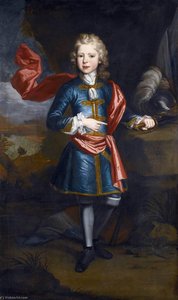
Portrait of Johann Closterman

Johann Closterman Paintings: The 62 Most Famous, Through a Gallery's Eye

Updated November 2026 · ranked by our popularity score (searches, visits and orders for each work) · 68 works by Johann Closterman in our catalogue

In short

To the gallery's eye, Johann Closterman's most famous painting is Robert Constable (1651–1714), 3rd Viscount Dunbar (1690). Portrait of a Figure with Cockatoo (1685) and Henry Purcell (1695) complete the trio every eye recognises. Of the 68 works by Johann Closterman in our catalog, the gallery presents the 62 most famous below, each original with its year, its museum and what makes it unique.

1660 – 1711 Baroque Most works: National Portrait Gallery

The gallery's top 10 Johann Closterman paintings

1
Robert Constable (1651–1714), 3rd Viscount Dunbar (1690) by Johann Closterman

Robert Constable (1651–1714), 3rd Viscount Dunbar

1690 · Oil On Canvas

A man leans against a table, his body anchored in a quiet, interior space. He wears the heavy, polished armor of a nobleman, the metal catching a sharp light from the upper left. This light carves the contours of his face and the rigid lines of his breastplate, casting deep shadows that give his form a heavy, physical presence. A blue scarf drapes around his neck, a single splash of…

2
Portrait of a Figure with Cockatoo (1685) by Johann Closterman

Portrait of a Figure with Cockatoo

1685 · Oil · Museo del Prado, Madrid

A young man occupies the center of this vertical composition, his presence anchored by a heavy, navy blue velvet coat. He stands amidst a rugged landscape where the earth meets a heavy, cloudy sky. His dark, wavy hair falls long against the structured collar of a white ruffled cravat. On his right hand, a white cockatoo rests, its feathers catching the light. The bird is a pale, sharp contrast against…

3
Henry Purcell (1695) by Johann Closterman

Henry Purcell

1695 · Oil On Canvas · National Portrait Gallery, London

In this portrait of Henry Purcell by Johann Closterman, we encounter a man who shaped the very foundations of English music. Painted about 1695, the work captures the likeness of a figure widely celebrated as the father of modern music in England. Purcell was a presence of significant influence during the Restoration period, a time of profound musical transformation. His career was marked by an early and remarkable ascent within…

4
Sir Richard Haddock (1629–1715) (1700) by Johann Closterman

Sir Richard Haddock (1629–1715)

1700 · Oil On Canvas · Ministry of Defence, London

In this portrait from 1700, we encounter the steady gaze of Sir Richard Haddock. The subject meets our eyes with a stern, unwavering expression that suggests a life defined by discipline and command. His features are rendered with a meticulous attention to detail, from the heavy texture of his mustache to the individual strands of his long hair. There is a certain weight to his presence, a gravity that comes…

5
John Churchill, 1st Duke of Marlborough (1687) by Johann Closterman

John Churchill, 1st Duke of Marlborough

1687 · Oil On Canvas · National Portrait Gallery, London

This bust-length portrait depicts John Churchill, 1st Duke of Marlborough. Painted by Johann Closterman in 1687, the work presents the subject in a formal manner. The figure is positioned at a slight angle, with the gaze directed toward the viewer. The subject wears polished steel armor that reflects light, paired with a white cravat at the neck.

6
Major general thomas fairfax ) (1633) by Johann Closterman

Major general thomas fairfax )

1633 · Oil On Canvas

In this formal portrait, Johann Closterman positions Major general thomas fairfax ) in a three-quarter pose. The composition is anchored by the subject's stature, defined by strong vertical lines that command the space. A voluminous wig rests atop his head, adding a heavy, sculptural weight to his silhouette. To the right, a landscape element appears faintly in the background, a ghost of a world beyond the immediate shadow.

7
John Poulett, first Earl Poulett (1690) by Johann Closterman

John Poulett, first Earl Poulett

1690 · Oil On Canvas · Yale Center for British Art, New Haven

This portrait of John Poulett, first Earl Poulett, was executed by the artist Johann Closterman around 1690. The subject is depicted as a young boy, presented in a full-length pose that emphasizes his status and lineage. As a British politician and courtier, the young Poulett is portrayed with the formal attributes associated with his noble standing. He is shown standing slightly off-center, accompanied by a small dog at his feet.

8
Portrait of David Papillon ) (1691) by Johann Closterman

Portrait of David Papillon )

1691 · Oil On Canvas

Johann Closterman executed the Portrait of David Papillon ) in 1691. The subject is a young man identified as David Papillon, presented in a formal depiction that emphasizes his social standing and character. The work emerged during a period when Closterman was establishing his reputation for capturing the nuances of the European elite.

9
Isabella Machell, Viscountess Irwin (1690) by Johann Closterman

Isabella Machell, Viscountess Irwin

1690 · Oil On Canvas · Temple Newsam House, Leeds

In this portrait of Isabella Machell, Viscountess Irwin, Johann Closterman captures a moment of quiet dignity. Painted about 1690, the work presents the subject in a serene, seated pose upon an ornate bench. She is positioned within a garden setting, a choice that lends a sense of grace to the composition. The subject gazes directly at the viewer, her expression softened by a gentle smile that suggests a calm and…

10
John Manners, 1st Duke of Rutland (1638 – 1711) (1703) by Johann Closterman

John Manners, 1st Duke of Rutland (1638 – 1711)

1703 · Oil On Canvas · Hardwick Hall

In this full-length portrait from 1703, we encounter John Manners, 1st Duke of Rutland, captured in a moment of profound stillness and high station. He is positioned slightly to the left, his presence commanding the vertical space of the canvas. The subject is draped in heavy, ceremonial coronation robes, the deep reds of the velvet creating a striking contrast against the white and black of the ermine fur trim. His…

Johann Closterman paintings, ranked 11 to 62

11William Bromley, MP & Speaker (1664 – 1732) (1709) by Johann ClostermanWilliam Bromley, MP & Speaker (1664 – 1732)1709 · Charlecote Park 12Colonel George Lucy (1665/66 - 1721) (1704) by Johann ClostermanColonel George Lucy (1665/66 - 1721)1704 · Charlecote Park 13Portrait of a Gentleman (said to be John Howe, 1630–1705, chaplain to Oliver Cromwell and his son) (1702) by Johann ClostermanPortrait of a Gentleman (said to be John Howe, 1630–1705, chaplain to Oliver Cromwell and his son)1702 · Christ's College 14John Bridgeman Of Prinknash (1638) by Johann ClostermanJohn Bridgeman Of Prinknash1638 15John Bridgeman of Prinknash (1638) by Johann ClostermanJohn Bridgeman of Prinknash1638 16Portrait of Judge George Jeffreys, First Baron of Wem (1648) by Johann ClostermanPortrait of Judge George Jeffreys, First Baron of Wem1648 17John Churchill 1st Duke Of Marlborough And Sarah Duchess Of Marlborough With (1660) by Johann ClostermanJohn Churchill 1st Duke Of Marlborough And Sarah Duchess Of Marlborough With1660 18Elizabeth Mulso, Mrs John Dolben (1685) by Johann ClostermanElizabeth Mulso, Mrs John Dolben1685 19Sir William Brownlow (1665–1702), 4th Bt of Humby, MP (1685) by Johann ClostermanSir William Brownlow (1665–1702), 4th Bt of Humby, MP1685 · National Trust 20Alice Sherard (1659–1721), Lady Brownlow (1685) by Johann ClostermanAlice Sherard (1659–1721), Lady Brownlow1685 · National Trust 21John Dolben, MP (1685) by Johann ClostermanJohn Dolben, MP1685 22Sir John Brownlow (1659–1697), 3rd Bt, 'Young Sir John' (1685) by Johann ClostermanSir John Brownlow (1659–1697), 3rd Bt, 'Young Sir John'1685 · National Trust 23Dorothy Mason (1665–1699 1700), Lady Brownlow (1685) by Johann ClostermanDorothy Mason (1665–1699 1700), Lady Brownlow1685 · National Trust 24Lady Margaret Tufton, Lady Coventry (1680) by Johann ClostermanLady Margaret Tufton, Lady Coventry1680 25Inscribed as 'Elizabeth Kirkley (d.1674), First Wife of Sir William Blackett, 1st Bt (1st Creation)' (but probably Mary Yorke, 2nd wife of Sir Edward Blackett, 2nd Bt) (1680) by Johann ClostermanInscribed as 'Elizabeth Kirkley (d.1674), First Wife of Sir William Blackett, 1st Bt (1st Creation)' (but probably Mary Yorke, 2nd wife of Sir Edward Blackett, 2nd Bt)1680 · Народний закуток Воллінґтон 26Lady Amabel Grey (b.1673), Sister of Henry Grey, Duke of Kent (1694) by Johann ClostermanLady Amabel Grey (b.1673), Sister of Henry Grey, Duke of Kent1694 27Charles Seymour (1662–1748), 6th Duke of Somerset, KG, with a Black Page (1692) by Johann ClostermanCharles Seymour (1662–1748), 6th Duke of Somerset, KG, with a Black Page1692 · Petworth House 28Christopher Wren (1632–1723) (1690) by Johann ClostermanChristopher Wren (1632–1723)1690 · The Royal Society 29Colonel George Lucy (1665 1666–1721) (1690) by Johann ClostermanColonel George Lucy (1665 1666–1721)1690 · National Trust 30Lady Elizabeth Percy, Duchess of Somerset, and Her Son (1690) by Johann ClostermanLady Elizabeth Percy, Duchess of Somerset, and Her Son1690 · Petworth House 31Samuel Pepys (1690) by Johann ClostermanSamuel Pepys1690 · National Portrait Gallery 32The Children of John Taylor of Bifrons Park (1696) by Johann ClostermanThe Children of John Taylor of Bifrons Park1696 · Beningbrough Hall 33Lady Amabel Grey, Daughter of Henry Grey, Duke of Kent (1694) by Johann ClostermanLady Amabel Grey, Daughter of Henry Grey, Duke of Kent1694 34William Cowper (1666–1709) (1690) by Johann ClostermanWilliam Cowper (1666–1709)1690 35Portrait of Guilford Killigrew, When a Boy (1709) by Johann ClostermanPortrait of Guilford Killigrew, When a Boy1709 36Queen Anne (1665–1714) (after Godfrey Kneller) (1703) by Johann ClostermanQueen Anne (1665–1714) (after Godfrey Kneller)1703 · Windsor Guildhall 37James Craggs the Elder (1710) by Johann ClostermanJames Craggs the Elder1710 · National Portrait Gallery 38Arthur Herbert (c.1648–1716), 1st Earl of Torrington (1700) by Johann ClostermanArthur Herbert (c.1648–1716), 1st Earl of Torrington1700 39Eleanor Brownlow (1691–1730), Later Viscountess Tyrconnel, as a Young Girl (1702) by Johann ClostermanEleanor Brownlow (1691–1730), Later Viscountess Tyrconnel, as a Young Girl1702 · National Trust 40Sir Henry Parker (c.1640–1713), 2nd Bt of Honington (1700) by Johann ClostermanSir Henry Parker (c.1640–1713), 2nd Bt of Honington1700 41Eleanor Brownlow, Later Viscountess Tyrconnel, as a Young Girl (1702) by Johann ClostermanEleanor Brownlow, Later Viscountess Tyrconnel, as a Young Girl1702 · Belton House 42Unknown man, formerly known as Sir James Thornhill (1705) by Johann ClostermanUnknown man, formerly known as Sir James Thornhill1705 · National Portrait Gallery 43Maurice Ashley Cooper Anthony Ashley Cooper, 3rd Earl of Shaftesbury (1702) by Johann ClostermanMaurice Ashley Cooper Anthony Ashley Cooper, 3rd Earl of Shaftesbury1702 44Sir John Aubrey (c.1650–1700), 2nd Bt by Johann ClostermanSir John Aubrey (c.1650–1700), 2nd Bt 45Sir Robert Dashwood (1666–1734), Bt by Johann ClostermanSir Robert Dashwood (1666–1734), Bt 46Sir William Temple by Johann ClostermanSir William Temple 47Edward Montagu (1670–1729), 3rd Earl of Sandwich by Johann ClostermanEdward Montagu (1670–1729), 3rd Earl of Sandwich 48Portrait of a Racehorse and Jockey by Johann ClostermanPortrait of a Racehorse and Jockey 49Portrait Of Charles Calvert by Johann ClostermanPortrait Of Charles Calvert 50Portrait of Edward Radclyffe, 2nd Earl of Derwentwater (oil on canvas) by Johann ClostermanPortrait of Edward Radclyffe, 2nd Earl of Derwentwater (oil on canvas) 51Portrait of Thomas and George Dashwood by Johann ClostermanPortrait of Thomas and George Dashwood 52Portrait of a Lady by Johann ClostermanPortrait of a Lady 53Mary Hough, Lady (Basil) Firebrace by Johann ClostermanMary Hough, Lady (Basil) FirebraceMelford Hall 54Daniel parke by Johann ClostermanDaniel parke 55Portrait of Queen Anne by Johann ClostermanPortrait of Queen Anne 56Prince George of Denmark (1653–1708), Consort to Queen Anne (after Godfrey Kneller) by Johann ClostermanPrince George of Denmark (1653–1708), Consort to Queen Anne (after Godfrey Kneller)Windsor Guildhall 57Edward Montagu, 3rd Earl of Sandwich by Johann ClostermanEdward Montagu, 3rd Earl of Sandwich 58Elizabeth Crewe, Countess of Arran by Johann ClostermanElizabeth Crewe, Countess of ArranCalke Abbey 59Portrait of a Gentleman Wearing Red by Johann ClostermanPortrait of a Gentleman Wearing Red 60Probably Sir Edward Blackett (1651 1652–1718), 2nd Bt by Johann ClostermanProbably Sir Edward Blackett (1651 1652–1718), 2nd BtНародний закуток Воллінґтон 61The Triumph of John, 1st Duke of Marlborough by Johann ClostermanThe Triumph of John, 1st Duke of MarlboroughThe Royal Hospital Chelsea 62Portrait of William Paul (1673 1711) of Bray, Berkshire, with his dog and a gun by Johann ClostermanPortrait of William Paul (1673 1711) of Bray, Berkshire, with his dog and a gun

Johann Closterman's famous paintings, period by period

The subjects that held Johann Closterman's eye

The four subjects that come back most often in these originals, each with its finest example.

The museums that keep Johann Closterman's originals

The 8 museums that hold the most of the paintings on this page.

Museum City Works by Johann Closterman Paintings from this list
National Portrait Gallery, LondonNational Portrait Gallery London 5 Henry Purcell, John Churchill, 1st Duke of Marlborough, Samuel Pepys
National Trust, GranthamNational Trust Grantham 5 Sir William Brownlow (1665–1702), 4th Bt of Humby, MP, Alice Sherard (1659–1721), Lady Brownlow, Sir John Brownlow (1659–1697), 3rd Bt, 'Young Sir John'
Charlecote Park, WarwickshireCharlecote Park Warwickshire 2 William Bromley, MP & Speaker (1664 – 1732), Colonel George Lucy (1665/66 - 1721)
Народний закуток Воллінґтон, WallingtonНародний закуток Воллінґтон Wallington 2 Inscribed as 'Elizabeth Kirkley (d.1674), First Wife of Sir William Blackett, 1st Bt (1st Creation)' (but probably Mary Yorke, 2nd wife of Sir Edward Blackett, 2nd Bt), Probably Sir Edward Blackett (1651 1652–1718), 2nd Bt
Petworth House, PetworthPetworth House Petworth 2 Charles Seymour (1662–1748), 6th Duke of Somerset, KG, with a Black Page, Lady Elizabeth Percy, Duchess of Somerset, and Her Son
Windsor Guildhall, WindsorWindsor Guildhall Windsor 2 Queen Anne (1665–1714) (after Godfrey Kneller), Prince George of Denmark (1653–1708), Consort to Queen Anne (after Godfrey Kneller)
Museo del Prado, MadridMuseo del Prado Madrid 1 Portrait of a Figure with Cockatoo
Ministry of Defence, LondonMinistry of Defence London 1 Sir Richard Haddock (1629–1715)

Johann Closterman, one signature painting per decade

Works per decade

Pick a decade to see the original that defines it.

Johann Closterman's paintings: the gallery answers

Which Johann Closterman painting is the most famous of all?Reveal the answer

Robert Constable (1651–1714), 3rd Viscount Dunbar (1690). Portrait of a Figure with Cockatoo (1685) and Henry Purcell (1695) come next.

How old was Johann Closterman on completing Robert Constable (1651–1714), 3rd Viscount Dunbar?Reveal the answer

30 years old: Robert Constable (1651–1714), 3rd Viscount Dunbar dates from 1690, and Johann Closterman was born in 1660.

Which are Johann Closterman's top 10 paintings?Reveal the answer

Robert Constable (1651–1714), 3rd Viscount Dunbar, Portrait of a Figure with Cockatoo, Henry Purcell, Sir Richard Haddock (1629–1715), John Churchill, 1st Duke of Marlborough, Major general thomas fairfax ), John Poulett, first Earl Poulett, Portrait of David Papillon ), Isabella Machell, Viscountess Irwin and John Manners, 1st Duke of Rutland (1638 – 1711). The ranking above gives each one's year and museum.

How many works did Johann Closterman create?Reveal the answer

Our catalog holds 68 works by Johann Closterman, dated from 1680 to 1710.

Where do Johann Closterman's most famous originals hang?Reveal the answer

Mostly in National Portrait Gallery (London), National Trust (Grantham) and Charlecote Park (Warwickshire). The museum table above lists them all.

When did Johann Closterman create the most famous paintings?Reveal the answer

In 1690s: 14 of the 62 works on this page were made then, Robert Constable (1651–1714), 3rd Viscount Dunbar among them.

Which are Johann Closterman's earliest and latest famous works?Reveal the answer

On this page, the earliest is Lady Margaret Tufton, Lady Coventry (1680) and the latest James Craggs the Elder (1710).

Which subjects did Johann Closterman return to most?Reveal the answer

Man (26), Woman (14) and Wig (7), across the 62 works on this page.

Which medium did Johann Closterman work in most?Reveal the answer

Oil On Canvas, for 32 of the 62 works on this page.

Which movement is Johann Closterman associated with?Reveal the answer

Baroque, judging by the originals on this page.

Which Johann Closterman originals does the National Portrait Gallery hold?Reveal the answer

Henry Purcell, John Churchill, 1st Duke of Marlborough and Samuel Pepys: the National Portrait Gallery, London holds 5 of the works on this page.

Johann Closterman: the artist

Johann Closterman: A Portraitist of Distinction

Johann Closterman (also spelled cloosterman, klosterman; 1660 – 24 may 1711) stands as a significant figure in the landscape of Westphalian portrait painting during the late Baroque and early Rococo eras. Born in Osnabrück, Germany—a city steeped in medieval history and nestled within the Holy Roman Empire—Closterman’s artistic journey began under the tutelage of his father, who instilled in him foundational principles of design and visual artistry. This formative influence would prove crucial to shaping Closterman's distinctive style and establishing him as a respected artist of his time.
  • Early Training & Parisian Apprenticeship: Recognizing his talent, Closterman embarked on a pivotal step in his artistic education by relocating to Paris in 1679. There, he found mentorship with François de Troy, a celebrated painter known for his opulent depictions of aristocratic life and elaborate decorative schemes. This association exposed Closterman to the prevailing artistic currents of the Parisian court and honed his skills in capturing nuanced expressions and conveying grandeur through meticulous brushwork.
  • Arrival in England & Collaboration with Riley: Driven by ambition and a desire for greater opportunities, Closterman ventured into England in 1681. He quickly established himself as an assistant to John Riley, a prominent portrait painter who commanded considerable acclaim for his ability to portray subjects with remarkable realism and psychological depth. Notably, Closterman contributed significantly to Riley’s monumental portraits of noble families, specifically focusing on the draperies—a technique that showcased his mastery of color and texture.

Royal Commissions & Artistic Evolution

The death of John Riley in 1691 marked a turning point for Closterman's career, propelling him to complete several unfinished portraits initiated by Riley. This accomplishment solidified his reputation as a skilled craftsman and demonstrated his capacity to honor the legacy of a respected predecessor. However, fortune proved fickle when Charles Seymour, 6th Duke of Somerset—a patron who had initially commissioned Closterman—expressed dissatisfaction with a portrait of Guercino that the painter had undertaken for him. This strained relationship culminated in the duke severing ties with Closterman, effectively halting his involvement with royal commissions. Despite this setback, Lord Halifax intervened, purchasing the Guercino portrait and securing Closterman’s continued artistic endeavors.
  • Spanish Patronage & Artistic Exploration: In 1696, Closterman received an invitation to serve as court painter for King Charles II of Spain—a prestigious honor that afforded him access to the wealthiest and most influential circles in Europe. During his time at Madrid, he produced portraits of the king, his consort Mariana of Austria, and other dignitaries, showcasing his versatility and adapting his style to suit diverse artistic traditions. Furthermore, Closterman undertook extensive travels throughout Italy twice, acquiring valuable artworks that enriched his personal collection and broadened his artistic horizons.

Return to England & Continued Success

Upon returning to England, Closterman experienced a resurgence of demand for his services among the English elite—a testament to his enduring talent and reputation. He married Hannah in 1698, establishing a domestic life that included the joys and sorrows inherent in any family relationship. Sadly, Hannah succumbed to illness in 1702, leaving Closterman bereaved. Accounts suggest he subsequently engaged in an affair with a mistress who embezzled considerable assets from him—an event that reportedly plunged him into mental decline. Jacob Campo Weyerman’s biographical account portrays Closterman as “a painter who had taken a beautiful mistress who, while he was away in the country, robbed him of his valuables and disappeared, actions which drove the painter into madness.” He passed away peacefully in 1711 at Covent Garden Churchyard in London.

Legacy & Artistic Significance

Johann Closterman’s artistic legacy resides primarily in his captivating portraits—particularly those commissioned by prominent figures of British nobility. His meticulous attention to detail, masterful use of color and texture, and ability to convey psychological nuance distinguished him from many of his contemporaries. While biographical accounts offer glimpses into his personal life and struggles, Closterman's enduring contribution to the art history of his era remains undeniable—a testament to his skill as a portraitist and his role in documenting the grandeur and complexities of Georgian society. His work continues to be studied and admired for its stylistic elegance and artistic integrity.