Portrait of Jacob van Campen

Jacob van Campen Paintings: The 18 Most Famous, Through a Gallery's Eye

Updated November 2026 · ranked by our popularity score (searches, visits and orders for each work) · 19 works by Jacob van Campen in our catalogue

In short

To the gallery's eye, Jacob van Campen's most famous painting is Diogenes in the market of Athens (1628), whose original hangs in the Centraal Museum, Utrecht. Lenaart Nicasiusz (1651) and Mercury, Argus and Io (1630) complete the trio every eye recognises. Of the 19 works by Jacob van Campen in our catalog, the gallery presents the 18 most famous below, each original with its year, its museum and what makes it unique.

1596 – 1657, Haarlem Baroque Most works: Rijksmuseum

The gallery's top 10 Jacob van Campen paintings

2
Lenaart Nicasiusz (1651) by Jacob van Campen

Lenaart Nicasiusz

1651 · Oil On Canvas · Museum Flehite, Amersfoort

In Lenaart Nicasiusz by Jacob van Campen, an elderly man is captured in a medium close-up, his form rising from the waist up. He is positioned slightly off-center, a choice that introduces a subtle, dynamic tension to the frame. His weathered skin and coarse beard catch a strong, directional light that carves his features out of the gloom. This illumination falls heavily upon his face and his hand, which grips…

3
Mercury, Argus and Io (1630) by Jacob van Campen

Mercury, Argus and Io

1630 · Oil On Canvas · Mauritshuis, The Hague

In the heart of the Dutch Golden Age, amidst the burgeoning artistic fervor of Haarlem, Jacob van Campen breathed life into a scene of divine tension and mythological drama. His 1630 masterpiece, Mercury, Argus and Io, is far more than a mere depiction of ancient legend; it is an immersive experience that captures the very essence of the Baroque period. The canvas unfolds a narrative steeped in the complexities of…

4
Mauritshuis Naar Ets Van P.Post In Koninklijke Bibliotheek 's-gravenhage by Jacob van Campen

Mauritshuis Naar Ets Van P.Post In Koninklijke Bibliotheek 's-gravenhage

Ink On Paper

We are looking at Mauritshuis Naar Ets Van P.Post In Koninklijke Bibliotheek 's-gravenhage, a work by Jacob van Campen. This piece focuses on the Mauritshuis in The Hague. The artist, Jacob van Campen, was born in Haarlem, Netherlands, in 1596 and lived until 1657. His involvement with this specific subject is deeply rooted in the architectural history of the site.

5
Argus, Mercury and Io (1640) by Jacob van Campen

Argus, Mercury and Io

1640 · Oil On Canvas · Mauritshuis, The Hague

In the heart of the Dutch Golden Age, a period defined by opulent patronage and an unwavering pursuit of beauty, Jacob van Campen breathed life into a scene of divine tension and mythological drama. His 1630 masterpiece, Argus, Mercury and Io, is far more than a mere depiction of ancient legend; it is an immersive experience that captures the very essence of the Baroque period. The canvas unfolds a narrative…

Jacob van Campen paintings, ranked 11 to 18

The subjects that held Jacob van Campen's eye

The four subjects that come back most often in these originals, each with its finest example.

The museums that keep Jacob van Campen's originals

The 5 museums that hold the most of the paintings on this page.

Museum City Works by Jacob van Campen Paintings from this list
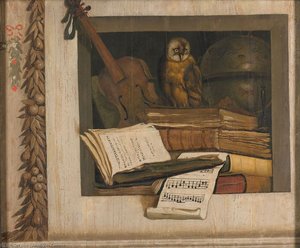
Rijksmuseum, AmsterdamRijksmuseum Amsterdam 9 Hercules Defeating The Centaurs, Still Life with Books, Sheet Music, Violin, Celestial Globe and an Owl, Jacob van Campen, 1645 - 1650, Still Life With A Basket Of Fruit In A Niche
Mauritshuis, The HagueMauritshuis The Hague 3 Mercury, Argus and Io, Argus, Mercury and Io, Double Portrait Of Constantijn Huygens
Centraal Museum, UtrechtCentraal Museum Utrecht 1 Diogenes in the market of Athens
Museum Flehite, AmersfoortMuseum Flehite Amersfoort 1 Lenaart Nicasiusz
St. Joriskerk, AmersfoortSt. Joriskerk Amersfoort 1 The Last Judgment

Jacob van Campen, one signature painting per decade

Works per decade

Pick a decade to see the original that defines it.

Jacob van Campen's paintings: the gallery answers

Which Jacob van Campen painting is the most famous of all?Reveal the answer

Diogenes in the market of Athens (1628), Centraal Museum, Utrecht. Lenaart Nicasiusz (1651) and Mercury, Argus and Io (1630) come next.

How old was Jacob van Campen on completing Diogenes in the market of Athens?Reveal the answer

32 years old: Diogenes in the market of Athens dates from 1628, and Jacob van Campen was born in 1596.

Which are Jacob van Campen's top 10 paintings?Reveal the answer

Diogenes in the market of Athens, Lenaart Nicasiusz, Mercury, Argus and Io, Mauritshuis Naar Ets Van P.Post In Koninklijke Bibliotheek 's-gravenhage, Argus, Mercury and Io, Hercules Defeating The Centaurs, Still Life with Books, Sheet Music, Violin, Celestial Globe and an Owl, Jacob van Campen, 1645 - 1650, Portrait of the painter Pieter Saenredam, Still Life With A Basket Of Fruit In A Niche and Still Life With A Basket Of Fruit In A Niche. The ranking above gives each one's year and museum.

How many works did Jacob van Campen create?Reveal the answer

Our catalog holds 19 works by Jacob van Campen, dated from 1628 to 1651.

Where do Jacob van Campen's most famous originals hang?Reveal the answer

Mostly in Rijksmuseum (Amsterdam), Mauritshuis (The Hague) and Centraal Museum (Utrecht). The museum table above lists them all.

When did Jacob van Campen create the most famous paintings?Reveal the answer

In 1650s: 2 of the 18 works on this page were made then, Lenaart Nicasiusz among them.

Which are Jacob van Campen's earliest and latest famous works?Reveal the answer

On this page, the earliest is Diogenes in the market of Athens (1628) and the latest Lenaart Nicasiusz (1651).

Which subjects did Jacob van Campen return to most?Reveal the answer

Life (6), Fruits (3) and Man (2), across the 18 works on this page.

Which medium did Jacob van Campen work in most?Reveal the answer

Oil On Canvas, for 3 of the 18 works on this page.

Which movement is Jacob van Campen associated with?Reveal the answer

Baroque, judging by the originals on this page.

Which Jacob van Campen originals does the Rijksmuseum hold?Reveal the answer

Hercules Defeating The Centaurs, Still Life with Books, Sheet Music, Violin, Celestial Globe and an Owl, Jacob van Campen, 1645 - 1650 and Still Life With A Basket Of Fruit In A Niche: the Rijksmuseum, Amsterdam holds 9 of the works on this page.

Jacob van Campen: the artist

Jacob van Campen: Life and Legacy

Early Life and Background

Jacob van Campen was born in Haarlem, Netherlands, in 1596. He came from a relatively prosperous background, inheriting the estate of Randenbroek near Amersfoort from his mother. He significantly expanded and embellished this estate, later commissioning Caesar van Everdingen to decorate it. Van Campen never married but had one son, Alexander van Campen.

Artistic Development and Influences

Van Campen was a selective artist, carefully choosing his projects. His artistic development saw him move towards a distinctive style blending architectural precision with Baroque dynamism. He was notably influenced by Paulus Bor, one of the founders of the Bentvueghels – a group of Dutch painters known for their unconventional and often satirical work. This influence is visible in some similarities between Van Campen’s paintings and wall decorations, such as those at Paleis Huis ten Bosch.

Architectural Achievements

Van Campen's primary legacy lies in his architectural contributions. He designed numerous churches, including those at Renswoude and Hooge Zwaluwe, and the Nieuwe Kerk in Haarlem. The Nieuwe Kerk’s design was so significant that Pieter Saenredam created three paintings and eight engravings documenting it. Beyond churches, he also designed gates and towers for prominent Amsterdam landmarks like the Westerkerk and Nieuwe Kerk.

  • Mauritshuis: Perhaps his most famous work, this palace in The Hague now houses a renowned collection of Dutch Golden Age paintings.
  • Amsterdam's Royal Palace: Van Campen played a key role in the design of this iconic building, originally conceived as Amsterdam’s Town Hall.

Painting and Decorative Work

While primarily known as an architect, Van Campen was also a skilled painter. He created notable still life paintings, often featuring intricate arrangements of objects symbolizing mortality and the passage of time. His wall decorations, particularly at Paleis Huis ten Bosch, demonstrate his ability to integrate painting with architectural space.

Historical Significance

Jacob van Campen was a pivotal figure in introducing Classicism to Dutch Baroque design. He bridged the gap between earlier Renaissance influences and the evolving artistic sensibilities of the 17th century. His architectural designs helped shape the urban landscape of the Netherlands, and his work continues to be admired for its elegance, precision, and innovative use of space. He died in 1657 and was buried at Randenbroek, the estate he so carefully cultivated.