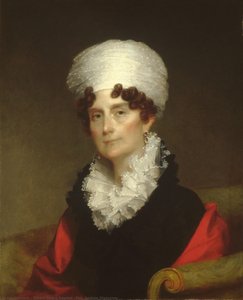
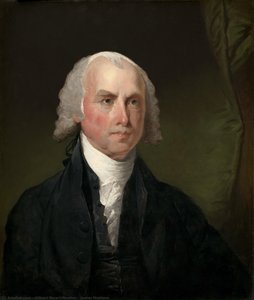
Portrait of Gilbert Stuart Newton

The 47 Most Famous Gilbert Stuart Newton Paintings, a Gallery Selection

Updated November 2026 · ranked by our popularity score (searches, visits and orders for each work) · 86 works by Gilbert Stuart Newton in our catalogue

In short

Of all the originals Gilbert Stuart Newton left, the most famous is James Monroe (1820), in the collection of the Metropolitan Museum of Art, New York. Close behind it come Captain Macheath Upbraided by Polly and Lucy in the 'Beggar's Opera', 1826 (1826) and Shylock and Jessica from the 'Merchant of Venice,' II, ii (1830). Our catalog holds 86 works by Gilbert Stuart Newton; the gallery has kept the 47 the world admires most, each shown with its date, its museum and its story.

1795 – 1835, Halifax Neoclassicism Most works: National Gallery of Art

Gilbert Stuart Newton's top 10 paintings: the gallery's choice

1
James Monroe (1820) by Gilbert Stuart Newton

James Monroe

1820 · Oil On Canvas · Metropolitan Museum of Art, New York

To gaze upon this portrait of James Monroe is to encounter not merely a likeness, but an embodiment of early American political gravitas. Gilbert Stuart Newton captured the fifth President of the United States in a moment that feels both intensely personal and monumentally public. The composition itself speaks volumes about the era's reverence for its leaders; it is a carefully constructed tableau designed to convey authority, intellect, and enduring…

3
Shylock and Jessica from the 'Merchant of Venice,' II, ii (1830) by Gilbert Stuart Newton

Shylock and Jessica from the 'Merchant of Venice,' II, ii

1830 · Oil On Canvas · Yale Center for British Art, New Haven

The scene unfolds in Shylock and Jessica from the 'Merchant of Venice,' II, ii, a work that captures a heavy, private moment between a father and his daughter. Painted by Gilbert Stuart Newton in 1830, the oil on canvas brings to life a specific tension drawn from the dramatic world of William Shakespeare. The figures of Shylock and Jessica emerge from the shadows of a domestic interior, caught in a…

4
Ann Barry (1805) by Gilbert Stuart Newton

Ann Barry

1805 · Oil On Canvas · National Gallery of Art, Washington

This oil on canvas portrait, titled Ann Barry, was executed by the artist Gilbert Stuart Newton. The work dates to about 1805. It depicts a young woman in a half-length composition, positioned as the primary subject within the frame. The sitter is shown seated, directing her gaze toward the viewer from a shallow perspective.

5
Samuel Alleyne Otis (1813) by Gilbert Stuart Newton

Samuel Alleyne Otis

1813 · Oil On Canvas · National Gallery of Art, Washington

The man sits before us, his presence filling the space with a quiet, heavy dignity. He is an elderly figure, his face a map of lived experience, etched with deep lines and wrinkles that catch the light. The darkness behind him pushes his features forward, creating a sense of immediate, physical closeness. Every fold of his coat and every texture of his skin feels tangible, as if the air around…

6
Commodore Isaac Hull (1813) by Gilbert Stuart Newton

Commodore Isaac Hull

1813 · Oil On Canvas

Gilbert Stuart Newton painted Commodore Isaac Hull in 1813. The portrait captures the naval officer in his formal uniform, presenting a dignified likeness of the historical figure. The subject is rendered with a focus on the details of his military attire, including the distinct textures of his coat and the insignia of his rank.

7
Self Portrait (1818) by Gilbert Stuart Newton

Self Portrait

1818 · Oil On Canvas · Museum of Fine Arts, Boston

Gilbert Stuart Newton's Self Portrait, executed about 1818, presents a direct study of the artist himself. The work functions as a formal record of the painter during his early years of professional development, capturing a specific moment of personal and artistic identity.

8
Thomas Palmer (1743-1820) (1819) by Gilbert Stuart Newton

Thomas Palmer (1743-1820)

1819 · Oil On Canvas · Harvard Art Museums, Cambridge

The year is 1819. This oil on canvas captures a moment of quiet authority before the subject's passing. The composition is slightly off-center, creating a natural, unforced balance. There is a sense of gravity in the way the light catches the white of his shirt, a singular bright point in a world of muted tones. The man exists in a space of shadow and memory. A single, steady breath.

9
Samuel Appleton (1766-1853) (1818) by Gilbert Stuart Newton

Samuel Appleton (1766-1853)

1818 · Oil · Harvard Art Museums, Cambridge

In this 1818 oil portrait, we encounter Samuel Appleton, a man whose presence commands a quiet, settled authority. He is presented in a three-quarter length view, seated with a composure that suggests a life of significant social standing and stability. The lighting, arriving softly from the upper left, carves his features out of the shadows, illuminating the crisp white of his cravat and the steady gaze he directs toward the…

The Gilbert Stuart Newton selection continues, 11 to 47

11Samuel Cooper Thacher (1785-1818) (1815) by Gilbert Stuart NewtonSamuel Cooper Thacher (1785-1818)1815 · Harvard Art Museums 12Joseph Stevens Buckminster (1784-1812), after Gilbert Stuart (1816) by Gilbert Stuart NewtonJoseph Stevens Buckminster (1784-1812), after Gilbert Stuart1816 · Harvard Art Museums 13David Sears, Jr. (1815) by Gilbert Stuart NewtonDavid Sears, Jr.1815 · Metropolitan Museum of Art 14Commodore Thomas Macdonough (1818) by Gilbert Stuart NewtonCommodore Thomas Macdonough1818 · National Gallery of Art 15Young Lady in Cauchoise Dress (1829) by Gilbert Stuart NewtonYoung Lady in Cauchoise Dress1829 · Museum of Fine Arts 16The Farewell (1826) by Gilbert Stuart NewtonThe Farewell1826 · Museum of Fine Arts 17Plaque of George Washington (1830) by Gilbert Stuart NewtonPlaque of George Washington1830 · Metropolitan Museum of Art 18A Dutch Girl ('The Window') (1829) by Gilbert Stuart NewtonA Dutch Girl ('The Window')1829 19Sir Walter Scott (1771–1832), 1st Bt (1824) by Gilbert Stuart NewtonSir Walter Scott (1771–1832), 1st Bt1824 · Abbotsford House 20John Adams (1815) by Gilbert Stuart NewtonJohn Adams1815 · Massachusetts Historical Society 21Mrs. Andrew Sigourney (1820) by Gilbert Stuart NewtonMrs. Andrew Sigourney1820 · Metropolitan Museum of Art 22Joseph Coolidge (1820) by Gilbert Stuart NewtonJoseph Coolidge1820 · National Gallery of Art 23George Washington (1805) by Gilbert Stuart NewtonGeorge Washington1805 · National Gallery of Art 24Mary Barry (1805) by Gilbert Stuart NewtonMary Barry1805 · National Gallery of Art 25John Randolph (1805) by Gilbert Stuart NewtonJohn Randolph1805 · National Gallery of Art 26Benjamin Tappan (1814) by Gilbert Stuart NewtonBenjamin Tappan1814 · National Gallery of Art 27Sarah Homes Tappan (Mrs. Benjamin Tappan) (1814) by Gilbert Stuart NewtonSarah Homes Tappan (Mrs. Benjamin Tappan)1814 · National Gallery of Art 28Washington Allston (1819) by Gilbert Stuart NewtonWashington Allston1819 · Metropolitan Museum of Art 29James Monroe (1817) by Gilbert Stuart NewtonJames Monroe1817 · National Gallery of Art 30John Adams (1821) by Gilbert Stuart NewtonJohn Adams1821 · National Gallery of Art 31Charlotte Morton Dexter (Mrs. Andrew Dexter) (1825) by Gilbert Stuart NewtonCharlotte Morton Dexter (Mrs. Andrew Dexter)1825 · National Gallery of Art 32Yorick and the Grisette (1830) by Gilbert Stuart NewtonYorick and the Grisette1830 33James Maury (1746–1840) (1825) by Gilbert Stuart NewtonJames Maury (1746–1840)1825 · Walker Art Gallery 34John Gibson Lockhart (1794–1854), Son in Law and Biographer of Sir Walter Scott (1824) by Gilbert Stuart NewtonJohn Gibson Lockhart (1794–1854), Son in Law and Biographer of Sir Walter Scott1824 · Abbotsford House 35The Gentle Student (1829) by Gilbert Stuart NewtonThe Gentle Student1829 · Wallace Collection 36Sir Walter Scott (1771–1832) (1825) by Gilbert Stuart NewtonSir Walter Scott (1771–1832)1825 37Olivia's Return (1828) by Gilbert Stuart NewtonOlivia's Return1828 38Portia and Bassanio (from William Shakespeare's 'The Merchant of Venice') (1831) by Gilbert Stuart NewtonPortia and Bassanio (from William Shakespeare's 'The Merchant of Venice')1831 39Portrait of Abelard in His Study (1833) by Gilbert Stuart NewtonPortrait of Abelard in His Study1833 40Portrait of James Kenney (1780-1849), Dramatist by Gilbert Stuart NewtonPortrait of James Kenney (1780-1849), DramatistNational Gallery of Ireland 41Henry Rice (1815) by Gilbert Stuart NewtonHenry Rice1815 · Metropolitan Museum of Art 42James Madison (1821) by Gilbert Stuart NewtonJames Madison1821 · National Gallery of Art 43Abigail Smith Adams (Mrs. John Adams) (1815) by Gilbert Stuart NewtonAbigail Smith Adams (Mrs. John Adams)1815 · National Gallery of Art 44Thomas Jefferson (1821) by Gilbert Stuart NewtonThomas Jefferson1821 · National Gallery of Art 45Forsaken by Gilbert Stuart NewtonForsakenMuseum of Fine Arts 46The Disconsolate by Gilbert Stuart NewtonThe Disconsolate 47Sir Walter Scott (1771–1832), Novelist and Poet by Gilbert Stuart NewtonSir Walter Scott (1771–1832), Novelist and PoetScottish National Portrait Gallery

Gilbert Stuart Newton's famous paintings, period by period

The subjects that held Gilbert Stuart Newton's eye

The four subjects that come back most often in these originals, each with its finest example.

The museums that keep Gilbert Stuart Newton's originals

The 8 museums that hold the most of the paintings on this page.

Museum City Works by Gilbert Stuart Newton Paintings from this list
National Gallery of Art, WashingtonNational Gallery of Art Washington 15 Ann Barry, Samuel Alleyne Otis, Commodore Thomas Macdonough
Metropolitan Museum of Art, New YorkMetropolitan Museum of Art New York 6 James Monroe, David Sears, Jr., Plaque of George Washington
Harvard Art Museums, CambridgeHarvard Art Museums Cambridge 5 Thomas Palmer (1743-1820), Samuel Appleton (1766-1853), Stephen Higginson (1770-1834)
Museum of Fine Arts, BostonMuseum of Fine Arts Boston 4 Self Portrait, Young Lady in Cauchoise Dress, The Farewell
Yale Center for British Art, New HavenYale Center for British Art New Haven 2 Captain Macheath Upbraided by Polly and Lucy in the 'Beggar's Opera', 1826, Shylock and Jessica from the 'Merchant of Venice,' II, ii
Abbotsford House, MalvernAbbotsford House Malvern 2 Sir Walter Scott (1771–1832), 1st Bt, John Gibson Lockhart (1794–1854), Son in Law and Biographer of Sir Walter Scott
Massachusetts Historical Society, BostonMassachusetts Historical Society Boston 1 John Adams
Walker Art Gallery, LiverpoolWalker Art Gallery Liverpool 1 James Maury (1746–1840)

Gilbert Stuart Newton decade by decade: the original that defines each

Works per decade

Pick a decade to see the original that defines it.

Collectors' questions about Gilbert Stuart Newton's paintings

Which work is Gilbert Stuart Newton most famous for?Reveal the answer

James Monroe (1820), Metropolitan Museum of Art, New York. Captain Macheath Upbraided by Polly and Lucy in the 'Beggar's Opera', 1826 (1826) and Shylock and Jessica from the 'Merchant of Venice,' II, ii (1830) come next.

What age was Gilbert Stuart Newton when James Monroe was made?Reveal the answer

25 years old: James Monroe dates from 1820, and Gilbert Stuart Newton was born in 1795.

What are the ten most famous Gilbert Stuart Newton paintings?Reveal the answer

James Monroe, Captain Macheath Upbraided by Polly and Lucy in the 'Beggar's Opera', 1826, Shylock and Jessica from the 'Merchant of Venice,' II, ii, Ann Barry, Samuel Alleyne Otis, Commodore Isaac Hull, Self Portrait, Thomas Palmer (1743-1820), Samuel Appleton (1766-1853) and Stephen Higginson (1770-1834). The ranking above gives each one's year and museum.

How many paintings did Gilbert Stuart Newton leave?Reveal the answer

Our catalog holds 86 works by Gilbert Stuart Newton, dated from 1805 to 1833.

In which museums do Gilbert Stuart Newton's masterpieces hang?Reveal the answer

Mostly in National Gallery of Art (Washington), Metropolitan Museum of Art (New York) and Harvard Art Museums (Cambridge). The museum table above lists them all.

In which years did Gilbert Stuart Newton paint the most famous works?Reveal the answer

In 1810s: 17 of the 47 works on this page were made then, Samuel Alleyne Otis among them.

What are the first and the last famous originals of Gilbert Stuart Newton?Reveal the answer

On this page, the earliest is Ann Barry (1805) and the latest Portrait of Abelard in His Study (1833).

Which subjects did Gilbert Stuart Newton choose most often?Reveal the answer

Portrait (14), Man (11) and Historical figure (6), across the 47 works on this page.

Which technique did Gilbert Stuart Newton use most?Reveal the answer

Oil On Canvas, for 16 of the 47 works on this page.

To which art movement does Gilbert Stuart Newton belong?Reveal the answer

Neoclassicism and Romanticism, judging by the originals on this page.

Which Gilbert Stuart Newton works hang at the National Gallery of Art?Reveal the answer

Ann Barry, Samuel Alleyne Otis and Commodore Thomas Macdonough: the National Gallery of Art, Washington holds 15 of the works on this page.

Gilbert Stuart Newton: life and work

Gilbert Stuart Newton: Life & Legacy

Early Life and Family Background

  • Birth and Origins: Gilbert Stuart Newton was born on September 2, 1795, in Halifax, Nova Scotia. He was the youngest of twelve children.
  • Family Connections: His father, Henry Newton, was a customs official, and his mother, Ann, held a significant artistic lineage – she was the daughter of Gilbert Stuart, the renowned American portrait painter.
  • Early Years & Return to America: The family initially resided in Boston but returned to Charlestown near Boston in 1803 following his father’s death.

Artistic Training and Influences

  • Initial Path & Uncle's Guidance: Though initially intended for a commercial career, Newton was apprenticed to his uncle, Gilbert Stuart, marking the beginning of his artistic journey.
  • European Studies: He traveled to Europe with an elder brother and studied painting in Florence. Later visits to Paris (1817) introduced him to artists like Charles Robert Leslie, Washington Allston, and David Wilkie.
  • Royal Academy & Formal Training: Newton continued his education at the Royal Academy in London after a period spent in the Netherlands.

Artistic Style and Major Themes

  • Romantic Sensibilities: Newton’s work is generally categorized within the Romantic movement, characterized by emotional intensity and dramatic narratives.
  • Literary & Poetic Inspirations: He became particularly known for paintings inspired by literature and poetry. Subjects drawn from works like *Don Quixote* and Shakespeare were prominent in his oeuvre.
  • Portraiture & Genre Scenes: While he painted portraits, including those of notable figures such as Washington Irving, Newton also excelled in genre scenes depicting moments from literary narratives.

Key Achievements and Recognition

  • Royal Academy Affiliation: Newton was elected an Honorary Academician of the National Academy of Design (1827), an Associate of the Royal Academy (1829), and a full Academician in 1832.
  • Exhibitions & Patronage: He regularly exhibited at the Royal Academy from 1818 onwards, gaining recognition and attracting patrons like the Marquis of Lansdowne.
  • Public Collections: His works found their way into prominent public collections, including the National Gallery and the South Kensington Museum (now V&A).

Later Life and Legacy

  • Mental Health & Final Years: Shortly after his election to the Royal Academy, Newton began to suffer from mental illness. He was admitted to an asylum at Chelsea where he continued to paint until his death on August 5, 1835.
  • Burial Site: He is buried in St Mary’s Church Wimbledon, London.
  • Historical Significance: Though overshadowed by his uncle Gilbert Stuart, Newton carved a niche for himself as a skilled and imaginative artist of the Romantic period. His literary-inspired paintings offer insights into the cultural tastes and artistic trends of 19th-century Britain.