


1


Updated October 2026 · ranked by our popularity score (searches, visits and orders for each work) · 12 works by Gerda Wegener in our catalogue
In short
Portrait of Ellen von Kohl (1906) is the Gerda Wegener painting that draws the most eyes. After it, the eye goes to Rape of Europa (1920) and Siesta (1922). Among the 12 works of Gerda Wegener in our catalog, these 12 are the most famous, each a unique original presented with its year, its museum and the reason it endures.


The museum that holds the most of the paintings on this page.
| Museum | City | Works by Gerda Wegener | Paintings from this list |
|---|---|---|---|
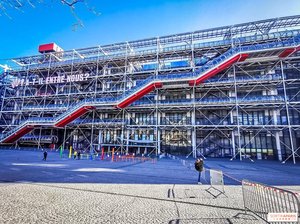 Centre Pompidou |
Paris | 2 | Siesta, Lili |
Pick a decade to see the original that defines it.
Portrait of Ellen von Kohl (1906). Rape of Europa (1920) and Siesta (1922) come next.
21 years old: Portrait of Ellen von Kohl dates from 1906, and Gerda Wegener was born in 1885.
Portrait of Ellen von Kohl, Rape of Europa, Siesta, Lili, On the road to Anacapri, Ulla Poulsen in the Ballet Chopiniana, Lili Hot Summer, Lili Elbe, Venus and Amor and The Femme Fatales. The ranking above gives each one's year and museum.
Our catalog holds 12 works by Gerda Wegener, dated from 1906 to 1933.
Mostly in Centre Pompidou (Paris). The museum table above lists them all.
In 1920s: 8 of the 12 works on this page were made then, Rape of Europa among them.
On this page, the earliest is Portrait of Ellen von Kohl (1906) and the latest The Femme Fatales (1933).
Siesta and Lili: the Centre Pompidou, Paris holds 2 of the works on this page.
Gerda Wegener was born Gerda Marie Fredrikke Gottlieb on 15 March 1885. She grew up in the Danish provinces, raised as the daughter of a Catholic vicar. From a young age, she showed a natural promise for drawing and painting, a talent that she nurtured as she grew. This early inclination toward art eventually led her away from the quiet life of a vicar's daughter and toward formal study.
Her dedication to her craft brought her to Copenhagen, where she enrolled at the Royal Danish Academy of Fine Arts. It was during these formative years of training that she began to develop the technical skill that would define her later career. She moved through her studies with a focus on the formal elements of composition and form, preparing herself for the professional world that awaited her after graduation.
After her early studies, Wegener began to make her presence felt in the Danish art scene. Her work was shown at the Charlottenborg Art Gallery in 1904, marking an early step in her professional life. By the time she graduated from the Academy in 1907 and 1908, she was already navigating the complexities of being a woman in a competitive field. Her path was not without friction, however. In 1906, she produced Portrait of Ellen von Kohl, a piece that sparked a significant schism within the Copenhagen art community. While some saw it as a work of unusual formal skill and splendid technique, others rejected it from exhibitions, leading to debates about its style and its departure from the prevailing preference for gritty, realistic depictions of peasants.
Despite the controversy surrounding her more stylized portraits, Wegener found ways to connect with the public through more accessible mediums. She gained recognition through sketching competitions held by the Politiken newspaper. She won two of these contests, first in 1908 and again in 1909, focusing on themes like "Copenhagen Women" and "The figures of the Street." These successes helped establish her as a skilled illustrator and portrait painter, building a foundation for the career that would eventually lead her away from Denmark.
Her visual language shifted as the decades passed, moving from the flowing, organic lines of Art Nouveau toward the more streamlined and geometric sensibilities of Art Deco. In her early years, her compositions often leaned into a Renaissance inspired style, focusing on the grace and poise of her subjects. She had a particular knack for capturing women who seemed to exist in a state of quiet confidence. These women were rarely static; instead, they were often depicted immersed in the arts, whether they were participating in theatre, engaging with literature, or moving through the disciplined grace of dance.
Technically, her work was defined by a certain clarity. She frequently utilized the Pochoir print technique, a method that relied on using stencils to apply outline and flat colour layers. This approach lent her illustrations a distinct, graphic quality that suited her fashion plates and advertisements perfectly. Her ability to balance these flat planes of color with delicate outlines allowed her to portray the elegance of her subjects without the need for heavy, cluttered textures.
In the early 20th century, Paris offered a different kind of freedom for a woman seeking a professional life in the arts. Gerda Wegener became one of the few women to make a living as a professional artist in the city, navigating a landscape that was often difficult for women to enter. She found herself in high demand, her hand frequently used to create fashion plates, advertisements, and oil paintings. Her work moved through the streets of Paris, appearing in various commercial and artistic forms as she established her presence in the French art scene.
Her time in France was marked by a shift toward more provocative subject matter. She began creating risqué art that was often classified as lesbian erotica, works that were sometimes published in illicit books. These pieces often explored themes of desire and gender, pushing against the social boundaries of the era. Much of this work was deeply personal, drawing inspiration from her partner, the transgender painter Lili Elbe. Through her paintings and illustrations, Gerda explored the complexities of love and identity, often centering the female form in ways that challenged contemporary expectations.
By the end of her most active period, which spanned from about 1910 to 1930, Gerda Wegener had established herself as a significant figure in the art world. Her work continued to challenge the social norms of the era, often exploring themes of gender and love that pushed against the boundaries of what was considered acceptable. This boldness sometimes led to her art being classified as lesbian erotica, and some of her more provocative pieces were published in illicit art books. These works captured a sense of female power and identity that was rare for the time.
As the decades progressed, the Danish illustrator and painter moved away from the height of her professional activity. Her life and her art remained deeply intertwined with the people she loved, often using her subjects to navigate complex questions of sex and identity. She remained a dedicated creator until the end of her life, leaving behind a body of work that documented the shifting perspectives of the early twentieth century.
Gerda Wegener died on 28 July 1940. She left behind a legacy defined by her ability to capture the elegance and the hidden complexities of the women she painted.

