Portrait of Ferdinand Cheval

Ferdinand Cheval Paintings: The 20 Most Famous, Through a Gallery's Eye

Updated November 2026 · ranked by our popularity score (searches, visits and orders for each work) · 20 works by Ferdinand Cheval in our catalogue

In short

To the gallery's eye, Ferdinand Cheval's most famous painting is Villa Alicius (détail du Palais idéal) (1912), whose original hangs in the Postman Cheval's Ideal Palace, Lyon. El-Harrach in Algiers (detail of the Ideal Palace) (1912) and White House (detail of the Ideal Palace) (1912) complete the trio every eye recognises. Of the 20 works by Ferdinand Cheval in our catalog, the gallery presents the 20 most famous below, each original with its year, its museum and what makes it unique.

1836 – 1924, Charmes-sur-l'Herbasse Naive art Most works: Postman Cheval's Ideal Palace

The gallery's top 10 Ferdinand Cheval paintings

1
Villa Alicius (détail du Palais idéal) (1912) by Ferdinand Cheval

Villa Alicius (détail du Palais idéal)

1912 · Stone · Postman Cheval's Ideal Palace, Lyon

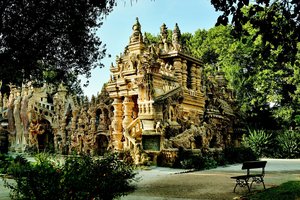
In the quiet landscape of Hauterives, France, there exists a structure that defies the very laws of architectural logic, a place where the boundary between reality and reverie dissolves into limestone and mortar. Villa Alicius, a breathtaking detail from Ferdinand Cheval’s legendary Palais Idéal, serves as a profound testament to the power of human imagination. This is not merely a fragment of architecture; it is a window into the soul…

3
White House (detail of the Ideal Palace) (1912) by Ferdinand Cheval

White House (detail of the Ideal Palace)

1912 · Stone · Postman Cheval's Ideal Palace, Lyon

Ferdinand Cheval (1836-1924), a name that might not resonate with mainstream art history, stands as one of France’s most extraordinary artistic figures—a testament to the boundless potential residing within an individual driven by unwavering conviction and fueled by dreams unbound by convention. Initially tracing a path typical for his era – that of a rural postal worker – Cheval harbored beneath this unassuming exterior a magnificent imagination and an unparalleled…

4
Hindu temple (detail of the Ideal Palace) (1912) by Ferdinand Cheval

Hindu temple (detail of the Ideal Palace)

1912 · Stone · Postman Cheval's Ideal Palace, Lyon

A single, strangely shaped fragment of tufa limestone once sat in a postman's pocket. It was a stumbling block that refused to be ignored. From this small, heavy object, a vision of a Hindu temple emerged, carved not by a trained hand but by a solitary will. The structure rises in a cluster of towers and buildings, a dense arrangement of stone and brick that feels grown rather than built.…

7
Birds in the gallery (detail of the Ideal Palace) (1912) by Ferdinand Cheval

Birds in the gallery (detail of the Ideal Palace)

1912 · Stone · Postman Cheval's Ideal Palace, Lyon

Two birds rest upon a stone wall, frozen in a moment of quietude. They are carved from lime and stone, their forms emerging from the rugged texture of the gallery. One can almost feel the grit of the mineral under a thumb. The birds possess distinct beaks and wings, rendered with a precision that speaks of a long, solitary devotion. They sit amidst an opulent setting, a fragment of a…

9
Elephant (detail of the Ideal Palace) (1912) by Ferdinand Cheval

Elephant (detail of the Ideal Palace)

1912 · Stone · Postman Cheval's Ideal Palace, Lyon

In the quietude of a private viewing, one encounters Elephant (detail of the Ideal Palace), a sculpture by the French artist Ferdinand Cheval. This specific work captures a singular moment of focus from the larger, sprawling architectural vision of the artist. It presents a representation of an animal from Africa, rendered with a heavy, tactile presence that speaks to the singular nature of its creation.

10
Bird on the north facade (detail of the Ideal Palace) (1912) by Ferdinand Cheval

Bird on the north facade (detail of the Ideal Palace)

1912 · Terracotta · Postman Cheval's Ideal Palace, Lyon

In the quiet corners of architectural history, few works capture the raw, unbridled imagination of the human spirit quite like the Bird on the north facade. This exquisite detail from Ferdinand Cheval’s legendary Palais Idéal serves as a profound testament to the power of "naïve art"—a movement born not from formal academies, but from the rhythmic, solitary labor of a dreamer. As one gazes upon this sculpted avian figure, perched…

Ferdinand Cheval paintings, ranked 11 to 20

Ferdinand Cheval's famous paintings, period by period

The subjects that held Ferdinand Cheval's eye

The four subjects that come back most often in these originals, each with its finest example.

The museums that keep Ferdinand Cheval's originals

The 2 museums that hold the most of the paintings on this page.

Museum City Works by Ferdinand Cheval Paintings from this list
Postman Cheval's Ideal Palace, LyonPostman Cheval's Ideal Palace Lyon 19 Villa Alicius (détail du Palais idéal), El-Harrach in Algiers (detail of the Ideal Palace), White House (detail of the Ideal Palace)
Palace of Mafra, MafraPalace of Mafra Mafra 1 Boar Hunt

Ferdinand Cheval, the signature paintings of each year

32 years of Ferdinand Cheval's art, 1881 to 1912: the gallery follows them year by year, through the most famous originals of each.

Works per year

Pick a year to see its originals.

Ferdinand Cheval's paintings: the gallery answers

Which Ferdinand Cheval painting is the most famous of all?Reveal the answer

Villa Alicius (détail du Palais idéal) (1912), Postman Cheval's Ideal Palace, Lyon. El-Harrach in Algiers (detail of the Ideal Palace) (1912) and White House (detail of the Ideal Palace) (1912) come next.

How old was Ferdinand Cheval on completing Villa Alicius (détail du Palais idéal)?Reveal the answer

76 years old: Villa Alicius (détail du Palais idéal) dates from 1912, and Ferdinand Cheval was born in 1836.

Which are Ferdinand Cheval's top 10 paintings?Reveal the answer

Villa Alicius (détail du Palais idéal), El-Harrach in Algiers (detail of the Ideal Palace), White House (detail of the Ideal Palace), Hindu temple (detail of the Ideal Palace), Bird on the north facade (detail of the Ideal Palace), Octopus (detail of the Ideal Palace), Birds in the gallery (detail of the Ideal Palace), Bird on the north facade (detail of the Ideal Palace), Elephant (detail of the Ideal Palace) and Bird on the north facade (detail of the Ideal Palace). The ranking above gives each one's year and museum.

How many works did Ferdinand Cheval create?Reveal the answer

Our catalog holds 20 works by Ferdinand Cheval, dated from 1881 to 1912.

Where do Ferdinand Cheval's most famous originals hang?Reveal the answer

Mostly in Postman Cheval's Ideal Palace (Lyon) and Palace of Mafra (Mafra). The museum table above lists them all.

When did Ferdinand Cheval create the most famous paintings?Reveal the answer

In 1912: 17 of the 20 works on this page were made then, Villa Alicius (détail du Palais idéal) among them.

Which are Ferdinand Cheval's earliest and latest famous works?Reveal the answer

On this page, the earliest is Boar Hunt (1881) and the latest Villa Alicius (détail du Palais idéal) (1912).

Which subjects did Ferdinand Cheval return to most?Reveal the answer

Sculpture (13), Architecture (11) and Fantasy (5), across the 20 works on this page.

Which medium did Ferdinand Cheval work in most?Reveal the answer

Stone, for 9 of the 20 works on this page.

Which movement is Ferdinand Cheval associated with?Reveal the answer

Naive art, judging by the originals on this page.

Which Ferdinand Cheval originals does the Postman Cheval's Ideal Palace hold?Reveal the answer

Villa Alicius (détail du Palais idéal), El-Harrach in Algiers (detail of the Ideal Palace) and White House (detail of the Ideal Palace): the Postman Cheval's Ideal Palace, Lyon holds 19 of the works on this page.

Ferdinand Cheval: the artist

A Dream in Stone: The Life and Legacy of Ferdinand Cheval

Ferdinand Cheval, a name synonymous with unwavering dedication and the power of individual vision, remains one of France’s most compelling artistic figures. Born in 1836 in the small village of Charmes-sur-l'Herbasse, his life initially followed a conventional path – that of a rural postman. Yet, beneath this ordinary exterior lay a boundless imagination and an extraordinary determination that would ultimately manifest in one of the world’s most remarkable architectural achievements: Le Palais Idéal (The Ideal Palace). Cheval wasn’t formally trained as an artist or architect; his journey was born not from academic study but from a deeply personal and profoundly moving dream, coupled with years of solitary labor.

The Genesis of a Vision

The story of Le Palais Idéal is inextricably linked to a pivotal moment in Cheval’s life. In 1879, while on his postal route, he stumbled upon an unusually shaped stone. This seemingly insignificant event sparked a vivid recollection of a dream he'd had fifteen years prior – a dream filled with fantastical structures and elaborate designs. Haunted by this memory, and inspired by the peculiar beauty of the stone itself, Cheval embarked on a monumental undertaking. He began collecting stones during his daily rounds, initially carrying them in his pockets, then progressing to baskets and finally utilizing a wheelbarrow to transport his growing collection. This wasn’t merely construction; it was an act of devotion, fueled by a desire to materialize the ethereal world he had glimpsed in his sleep.

Thirty-Three Years of Solitary Labor

For thirty-three years, Ferdinand Cheval dedicated himself entirely to building Le Palais Idéal. He worked tirelessly after completing his postal duties, often laboring late into the night by the light of an oil lamp. The palace is a breathtaking fusion of architectural styles – Gothic, Art Nouveau, Byzantine, and even elements reminiscent of Hindu temples and ancient Egypt are woven together in a uniquely personal expression. It’s not built with grand plans or precise measurements, but rather through intuition and a relentless pursuit of his inner vision. The structure features intricate carvings, sculptures depicting animals and mythological creatures, grottoes, fountains, and a complex network of turrets and towers. The palace is adorned with inscriptions reflecting Cheval's philosophical musings and personal history.

A Testament to Naive Art & Enduring Influence

Le Palais Idéal stands as a prime example of *art brut* or naïve art architecture – creations born outside the established artistic conventions, driven by pure imagination and raw emotion. Cheval’s work defied categorization; it wasn't influenced by prevailing architectural trends but emerged directly from his subconscious. His palace captivated artists and intellectuals alike, particularly during the Surrealist movement of the 20th century. Figures like André Breton recognized in Cheval’s creation a powerful expression of the unconscious mind and a rejection of rational constraints. Today, Le Palais Idéal is preserved as a national monument in France, attracting visitors from around the globe who come to marvel at its singular beauty and the extraordinary story behind it.

Beyond the Palace: A Legacy of Inspiration

While Le Palais Idéal remains his most celebrated achievement, Ferdinand Cheval’s artistic endeavors extended beyond this monumental structure. He also created paintings, though less known, which echo the themes and mystical qualities present in his architectural masterpiece. His work serves as a potent reminder that creativity knows no boundaries and that extraordinary beauty can emerge from the most unexpected sources. Ferdinand Cheval wasn’t simply building a palace; he was constructing a world – a testament to the power of dreams, perseverance, and the enduring human spirit. His story continues to inspire artists, architects, and dreamers alike, proving that even a humble postman can leave an indelible mark on the landscape of art history.