Portrait of Charles Frederick Worth

The 15 Most Famous Charles Frederick Worth Paintings, a Gallery Selection

Updated November 2026 · ranked by our popularity score (searches, visits and orders for each work) · 15 works by Charles Frederick Worth in our catalogue

In short

Of all the originals Charles Frederick Worth left, the most famous is Dress (1868), in the collection of the Design Museum of Barcelona, Barcelona. Close behind it come Afternoon dress (1880) and Informal House Frock - Déshabillé. Our catalog holds 15 works by Charles Frederick Worth; the gallery has kept the 15 the world admires most, each shown with its date, its museum and its story.

1825 – 1895, Bournemouth Most works: The Kyoto Costume Institute

Charles Frederick Worth's top 10 paintings: the gallery's choice

1
Dress (1868) by Charles Frederick Worth

Dress

1868 · Painting · Design Museum of Barcelona, Barcelona

To stand before this depiction is to step directly into the vibrant, transformative world of mid-Victorian Paris, a time when fashion ceased to be mere necessity and ascended to the realm of high art. This painting captures more than just a woman in an elaborate gown; it immortalizes a pivotal moment in cultural history—the very birth of haute couture itself. The subject, presented with such careful attention to detail, embodies…

2
Afternoon dress (1880) by Charles Frederick Worth

Afternoon dress

1880 · Acrylic On Canvas · Museum of Fine Arts, Boston

Before the dawn of the 20th century, fashion wasn’t merely about clothing; it was an art form dictated by a singular visionary – Charles Frederick Worth. Born in Bourne, Lincolnshire, England, on October 13, 1825, his ascent from humble beginnings to becoming the undisputed leader of Parisian haute couture is a story etched in silk and ambition.

3
Informal House Frock - Déshabillé by Charles Frederick Worth

Informal House Frock - Déshabillé

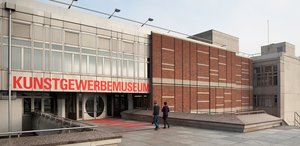
Acrylic On Canvas · Kunstgewerbemuseum, Berlin

The shimmering blue silk velvet gown displayed at the Kunstgewerbemuseum in Berlin stands as an emblem of a pivotal moment in fashion history – the genesis of haute couture, spearheaded by none other than Charles Frederick Worth. Born in Bourne, Lincolnshire, England, in 1825, Worth’s trajectory from modest beginnings to becoming the undisputed maestro of Parisian elegance exemplifies ambition coupled with unparalleled artistic vision.

4
Dinner Dress (1892) by Charles Frederick Worth

Dinner Dress

1892 · Textile · The Kyoto Costume Institute, Kyoto

The Dinner Dress is a garment created by the designer Charles Frederick Worth. This piece is a type of dress that dates to about 1892. It is currently held within the collection of The Kyoto Costume Institute in Kyoto, Japan.

5
Evening Dress (1894) by Charles Frederick Worth

Evening Dress

1894 · Photography · The Kyoto Costume Institute, Kyoto

The Evening Dress by Charles Frederick Worth is a garment of precise silhouette and deliberate movement. Created about 1894, this piece captures a specific moment in the evolution of high fashion. It is a dress defined by the architecture of its construction, designed to hold a particular shape against the body. The long skirt flows downward, meeting the voluminous, puffy elephant sleeves that characterize the era's silhouette.

6
Yellow evening gown (back) (1914) by Charles Frederick Worth

Yellow evening gown (back)

1914 · Painting · The National Museum of Denmark, Copenhagen

The light catches the sheen of yellow silk as the woman turns, her back to the viewer, revealing the intricate architecture of a 1914 evening gown. Every movement seems suspended in time, held within the delicate folds of the fabric. The dress flows downward in a long, sweeping train that pools around her, creating a sense of weight and grace. Pink roses are scattered across the silk, their soft petals…

7
Evening Ensemble\n\nFront View (1880) by Charles Frederick Worth

Evening Ensemble\n\nFront View

1880

Gown: Charles Worth evening reception bodice and skirt ensemble of velvet with jet beading: (A) Fitted bodice of velvet with long silk sleeves overlayed with beaded lace; flounce of lace attached at end of wrist banding; standing collar with three layers of lace ruffles; CF button closure; flounce of black lace applied on right side bust; lace over silk bust-level panel insertions; interior bodice lined in silk damask; steel boning;…

8
Yellow evening gown (front) (1952) by Charles Frederick Worth

Yellow evening gown (front)

1952 · Painting · The National Museum of Denmark, Copenhagen

In the realm of sartorial excellence, few pieces capture the ephemeral magic of a bygone era quite like the Yellow evening gown (front). This breathtaking work serves as a luminous window into the golden age of haute couture, presenting a vision of elegance that transcends mere clothing to become pure art. The gown, a masterpiece attributed to the legendary lineage of Charles Frederick Worth, is rendered with a delicate touch…

The Charles Frederick Worth selection continues, 11 to 15

Charles Frederick Worth's famous paintings, period by period

The subjects that held Charles Frederick Worth's eye

The four subjects that come back most often in these originals, each with its finest example.

The museums that keep Charles Frederick Worth's originals

The 6 museums that hold the most of the paintings on this page.

Museum City Works by Charles Frederick Worth Paintings from this list
The Kyoto Costume Institute, KyotoThe Kyoto Costume Institute Kyoto 7 Dinner Dress, Evening Dress, Ball Gown
The National Museum of Denmark, CopenhagenThe National Museum of Denmark Copenhagen 2 Yellow evening gown (back), Yellow evening gown (front)
Design Museum of Barcelona, BarcelonaDesign Museum of Barcelona Barcelona 1 Dress
Museum of Fine Arts, BostonMuseum of Fine Arts Boston 1 Afternoon dress
Kunstgewerbemuseum, BerlinKunstgewerbemuseum Berlin 1 Informal House Frock - Déshabillé
Fashion History Museum, CambridgeFashion History Museum Cambridge 1 Black and tan wool dress with black beadwork

Charles Frederick Worth decade by decade: the original that defines each

Works per decade

Pick a decade to see the original that defines it.

Collectors' questions about Charles Frederick Worth's paintings

Which work is Charles Frederick Worth most famous for?Reveal the answer

Dress (1868), Design Museum of Barcelona, Barcelona. Afternoon dress (1880) and Informal House Frock - Déshabillé come next.

What age was Charles Frederick Worth when Dress was made?Reveal the answer

43 years old: Dress dates from 1868, and Charles Frederick Worth was born in 1825.

What are the ten most famous Charles Frederick Worth paintings?Reveal the answer

Dress, Afternoon dress, Informal House Frock - Déshabillé, Dinner Dress, Evening Dress, Yellow evening gown (back), Evening Ensemble\n\nFront View, Yellow evening gown (front), Ball Gown and Black and tan wool dress with black beadwork. The ranking above gives each one's year and museum.

How many paintings did Charles Frederick Worth leave?Reveal the answer

Our catalog holds 15 works by Charles Frederick Worth, dated from 1868 to 1895.

In which museums do Charles Frederick Worth's masterpieces hang?Reveal the answer

Mostly in The Kyoto Costume Institute (Kyoto), The National Museum of Denmark (Copenhagen) and Design Museum of Barcelona (Barcelona). The museum table above lists them all.

In which years did Charles Frederick Worth paint the most famous works?Reveal the answer

In 1880s: 4 of the 15 works on this page were made then, Afternoon dress among them.

What are the first and the last famous originals of Charles Frederick Worth?Reveal the answer

On this page, the earliest is Dress (1868) and the latest Black and tan wool dress with black beadwork (1895).

Which subjects did Charles Frederick Worth choose most often?Reveal the answer

Haute couture (3), Dress (3) and Mannequin (2), across the 15 works on this page.

Which technique did Charles Frederick Worth use most?Reveal the answer

Painting, for 3 of the 15 works on this page.

Which Charles Frederick Worth works hang at the The Kyoto Costume Institute?Reveal the answer

Dinner Dress, Evening Dress and Ball Gown: the The Kyoto Costume Institute, Kyoto holds 7 of the works on this page.

Charles Frederick Worth: life and work

The Architect of Haute Couture: Charles Frederick Worth

Charles Frederick Worth, a name synonymous with the birth of haute couture, wasn’t merely a dressmaker; he was an orchestrator of style, a shrewd businessman, and arguably the first fashion designer to achieve celebrity status. Born in Bourne, Lincolnshire, England, on October 13, 1825, his journey from humble beginnings to becoming the arbiter of Parisian elegance is a testament to ambition, innovation, and an innate understanding of the desires of an evolving society. Young Worth initially apprenticed with London textile merchants, absorbing the intricacies of fabric and trade – knowledge that would prove invaluable. However, it was his move to Paris in 1845 that truly ignited his destiny. He found employment at Gagelin-Opigez & Cie, a prestigious establishment where he quickly distinguished himself not only as a skilled salesman but also as a creative force capable of transforming textiles into breathtaking garments. It wasn’t long before Worth persuaded the firm to allow him to establish a dressmaking department, marking his formal entry into the world of fashion design.

Revolutionizing Fashion and Establishing a Legacy

In 1858, Worth took a bold step, founding the House of Worth in partnership with Otto Bobergh. This wasn’t simply another atelier; it was a revolutionary concept. Prior to Worth, dressmaking was largely anonymous, garments were often adapted from existing styles or created by nameless seamstresses. Worth changed all that. He boldly presented his designs on live models – a radical departure from the use of wax figures common at the time – allowing clients to envision how the clothes would drape and move on a real body. This theatrical presentation elevated dressmaking to an art form, transforming it from a craft into a spectacle. Furthermore, Worth was the first to sign his creations with a branded label, establishing the designer as the central figure in the creation of a garment, rather than simply the anonymous artisan. His clientele quickly ascended to include European royalty and high society figures, drawn by his innovative designs and impeccable craftsmanship. Empress Eugénie, wife of Napoleon III, became one of his most devoted patrons, solidifying Worth’s position at the pinnacle of Parisian fashion.

Aesthetic Principles and Notable Creations

Worth's aesthetic was characterized by a lavish use of opulent fabrics – silks, satins, velvets, and brocades – often adorned with intricate embroidery, lace, and trimmings. He wasn’t afraid to draw inspiration from historical styles, particularly the Renaissance and Rococo periods, but he adapted these influences to suit the sensibilities of his contemporary clientele. His designs emphasized a sculpted silhouette, achieved through innovative construction techniques like boning and padding. The afternoon dress showcased at the Museum of Fine Arts, Boston, exemplifies his mastery of satin design, while the dinner dress held by the Kyoto Costume Institute, with its striking chrysanthemum pattern and voluminous sleeves, demonstrates his flair for dramatic effect. Even simpler designs, such as the dress housed in the Design Museum of Barcelona, reveal a refined elegance and attention to detail that defined his work. He is credited with popularizing several key fashion innovations, including the cage crinoline – a structure designed to hold skirts in an expansive shape – and the bustle, which created fullness at the back of the skirt.

Beyond the Gowns: A Lasting Impact

The influence of Charles Frederick Worth extends far beyond the exquisite gowns he created. He fundamentally altered the business of fashion, establishing the concept of seasonal collections and creating a demand for exclusive, designer-made clothing. The House of Worth continued to thrive after his death in 1895, carried on by his sons, Gaston Lucien and Jean Philippe, maintaining its reputation for luxury and innovation well into the 20th century. His legacy can be seen in the collections of museums worldwide, including the Russell-Cotes Art Gallery and Museum in the United Kingdom and the Ingram Collection of Modern British and Contemporary Art in London. Worth’s pioneering spirit paved the way for future generations of designers, establishing the foundations of the modern fashion industry as we know it today. He wasn't just designing clothes; he was crafting an image, a lifestyle, and ultimately, a legend that continues to resonate within the world of haute couture.