The Master of Canine Camaraderie
Cassius Marcellus Coolidge, known affectionately to his inner circle as "Cash", remains one of the most enduringly recognizable figures in the tapestry of American illustration. Born on September 18, 1844, in the quiet, abolitionist-leaning community of Antwerp, New York, Coolidge’s origins were rooted in the sturdy values of Quaker farming. Raised amidst the principled landscapes of upstate New York, his early life was far removed from the smoky, high-stakes atmosphere of the poker tables that would later define his legacy. While he lacked formal academic training in the fine arts, his journey to becoming a cultural icon was paved with a diverse array of experiences; before settling into his artistic calling, he navigated various roles as a druggist, a sign painter, and even a founder of both a bank and a newspaper.
This eclectic professional background provided him with a unique vantage point on American life, blending the precision required for pharmaceutical work with the visual storytelling essential to signage. As he moved toward Rochester, his creative impulses began to coalesce around a fascination with anthropomorphism—the art of imbuing animals with human characteristics. It was during this period that he began experimenting with what he called "comic foregrounds," a technique where he blended realistic textures and warm tones with whimsical, exaggerated scenarios. His ability to capture the subtle nuances of a canine's expression—a suspicious squint or a confident lean—allowed him to bridge the gap between mere caricature and genuine portraiture.
The Legacy of the Poker Dogs
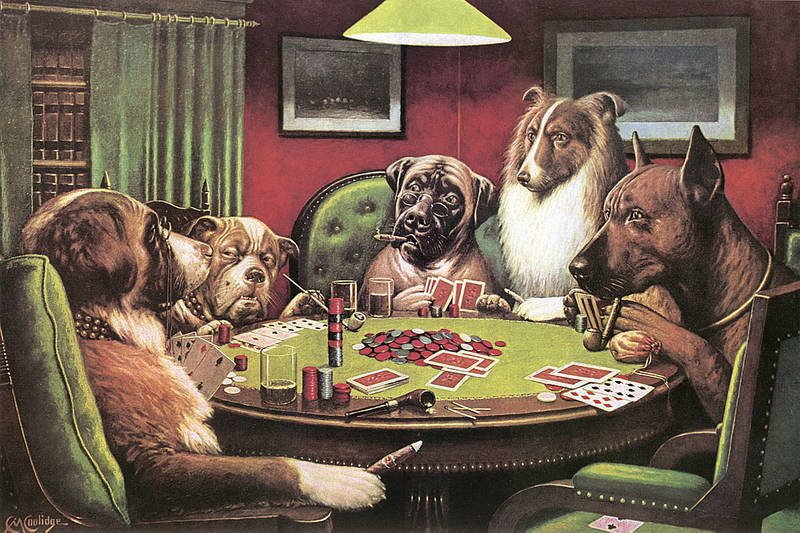
The zenith of Coolidge’s career arrived in the early 20th century, specifically through his monumental commission for the Brown & Bigelow advertising firm. Between 1903 and 1904, he produced a series of sixteen oil paintings that would forever alter the landscape of American pop culture. These works, most famously known as the "Dogs Playing Poker" series, depicted various breeds engaged in intense, humorous, and often clandestine gambling sessions. In masterpieces such as A Bold Bluff and Stranger In Camp, the viewer is not merely looking at animals; they are witnessing a sophisticated drama of bluffing, camaraderie, and tension.
What makes Coolidge’s work so profoundly impactful is its ability to evoke a sense of nostalgic Americana. His paintings do not exist in a vacuum of high art; rather, they thrive in the communal spaces of society—from basement billiard rooms to family living rooms. He possessed a rare gift for making the absurd feel intimate. By utilizing a style that married the grandeur of American Romanticism with the playful spirit of editorial cartooning, he created a visual language that was accessible yet technically impressive. Even when he playfully signed his name as "Kash Koolidge" for comedic effect, the underlying skill in his brushwork remained undeniable.
Historical Significance and Enduring Charm
Though some critics of his era might have dismissed his work as mere novelty, the historical significance of Cassius Marcellus Coolidge cannot be overstated. He was a progenitor of what we might today call meme culture—creating repeatable, highly recognizable imagery that carries deep emotional and social resonance. His work captures a specific moment in the American psyche: a time of burgeoning leisure, a fascination with the frontier spirit, and a love for the lighthearted storytelling that defines the nation's folk art traditions.
As we look back on his life, which concluded in 1934, we see an artist who successfully navigated the transition from the 19th-century tradition of illustration to the modern era of mass-media iconography. His achievements include:
- The Creation of a Cultural Icon: Establishing the "Dogs Playing Poker" motif as a permanent fixture in global visual vocabulary.
- Mastery of Anthropomorphic Realism: Developing a technique that allowed for deep emotional connection through animal subjects.
- Bridging Art and Commerce: Proving that advertising-driven commissions could result in lasting, high-quality fine art.
- Narrative Innovation: Using "comic foregrounds" to blend the boundaries between reality and whimsical storytelling.
Today, Coolidge’s paintings continue to fascinate collectors and casual observers alike, serving as a warm, humorous window into a bygone era of American life.