Portrait of Alexandre de Riquer

The 38 Most Famous Alexandre de Riquer Paintings, Each One of a Kind

Updated October 2026 · ranked by our popularity score (searches, visits and orders for each work) · 38 works by Alexandre de Riquer in our catalogue

In short

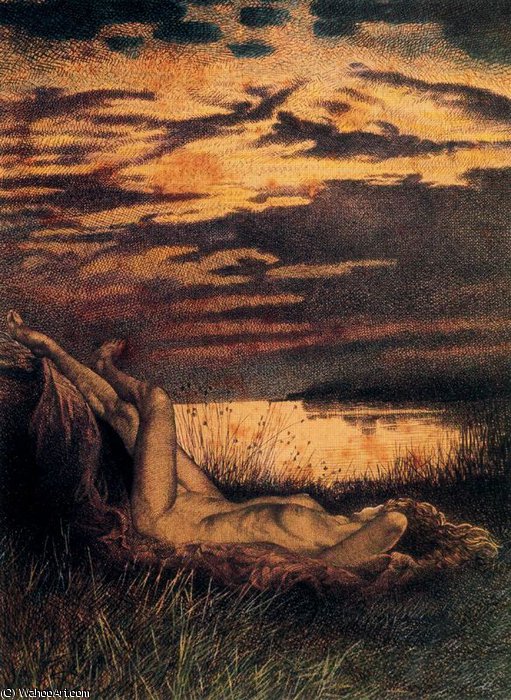
Composition with Winged Nymph Blowing Amongst Reeds (1887) is the Alexandre de Riquer painting that draws the most eyes; the original belongs to the Museu Nacional d'Art de Catalunya, Barcelona. After it, the eye goes to Composition with winged nymph at sunrise (1887) and Untitled (970). Among the 38 works of Alexandre de Riquer in our catalog, these 38 are the most famous, each a unique original presented with its year, its museum and the reason it endures.

1856 – 1920, Catalonia Most works: Museu Nacional d'Art de Catalunya

Top 10 paintings by Alexandre de Riquer, through the gallery's eye

Alexandre de Riquer's famous paintings, numbers 11 to 38

Alexandre de Riquer's famous paintings, period by period

The subjects that held Alexandre de Riquer's eye

The four subjects that come back most often in these originals, each with its finest example.

The museums that keep Alexandre de Riquer's originals

The 2 museums that hold the most of the paintings on this page.

Museum City Works by Alexandre de Riquer Paintings from this list
Museu Nacional d'Art de Catalunya, BarcelonaMuseu Nacional d'Art de Catalunya Barcelona 2 Composition with Winged Nymph Blowing Amongst Reeds, Composition with winged nymph at sunrise
Biblioteca Museu Víctor Balaguer, ViladecansBiblioteca Museu Víctor Balaguer Viladecans 1 Untitled (607)

Alexandre de Riquer across the years: the unique originals of each

All the dated Alexandre de Riquer originals shown here belong to a single year, 1887: they appear in order of fame.

Works per year

Pick a year to see its originals.

Alexandre de Riquer's paintings: questions for the gallery

What is the single most famous work of Alexandre de Riquer?Reveal the answer

Composition with Winged Nymph Blowing Amongst Reeds (1887), Museu Nacional d'Art de Catalunya, Barcelona. Composition with winged nymph at sunrise (1887) and Untitled (970) come next.

At what age did Alexandre de Riquer create Composition with Winged Nymph Blowing Amongst Reeds?Reveal the answer

31 years old: Composition with Winged Nymph Blowing Amongst Reeds dates from 1887, and Alexandre de Riquer was born in 1856.

Which ten paintings by Alexandre de Riquer are the most famous?Reveal the answer

Composition with Winged Nymph Blowing Amongst Reeds, Composition with winged nymph at sunrise, Untitled (970), Untitled (985), Untitled (176), Untitled (493), Untitled (435), Untitled (715), Untitled (540) and Untitled (413). The ranking above gives each one's year and museum.

How many works by Alexandre de Riquer are known?Reveal the answer

Our catalog holds 38 works by Alexandre de Riquer.

Where can the most famous Alexandre de Riquer originals be seen?Reveal the answer

Mostly in Museu Nacional d'Art de Catalunya (Barcelona) and Biblioteca Museu Víctor Balaguer (Viladecans). The museum table above lists them all.

During which period did Alexandre de Riquer create the best-known paintings?Reveal the answer

In 1887: 2 of the 38 works on this page were made then, Composition with Winged Nymph Blowing Amongst Reeds among them.

What subjects did Alexandre de Riquer favour?Reveal the answer

Woman figure (2) and Catalan art (2), across the 38 works on this page.

What Alexandre de Riquer originals can I see at the Museu Nacional d'Art de Catalunya?Reveal the answer

Composition with Winged Nymph Blowing Amongst Reeds and Composition with winged nymph at sunrise: the Museu Nacional d'Art de Catalunya, Barcelona holds 2 of the works on this page.

Alexandre de Riquer: a portrait of the artist

A Life Woven in Art and Intellect

Alexandre de Riquer i Ynglada, 7th Count of Casa Dávalos, was more than just an artist; he embodied a confluence of aristocratic lineage, intellectual curiosity, and artistic innovation that defined the Catalan Modernisme movement. Born in Calaf, Catalonia, in 1856, his life unfolded against a backdrop of political tension – his father, Martí de Riquer, being a prominent Carlist leader – yet was simultaneously nurtured by a mother, Elisea Ynglada, who fostered a deep appreciation for art and literature within the family. This duality shaped Riquer’s path, imbuing him with both a sense of tradition and a restless desire to forge new artistic expressions. His early education in France, first in Béziers and later at the School of Fine Arts in Toulouse, provided a foundational grounding in French artistic traditions, but it was his return to Barcelona and studies at La Llotja that truly ignited his creative spirit under the mentorship of figures like Tomas Padro, Claudi Lorenzale, and particularly Antoni Caba.

The Blossoming of a Multifaceted Talent

Riquer’s artistic journey wasn't confined to a single medium; it was characterized by an extraordinary versatility. He didn’t simply paint or illustrate – he designed jewelry, created decorative programs for events, embellished furniture, and even ventured into ceramic painting. This expansive approach stemmed from a belief in the interconnectedness of art forms and a desire to elevate the aesthetic quality of everyday life. His initial foray into the professional world came through collaboration with Apel·les Mestres, contributing ornamental lettering and cover illustrations that marked the beginning of his prolific career. However, it was a pivotal trip to London in 1894 that irrevocably altered the course of his artistic development. Encountering the Pre-Raphaelites sparked a profound shift in his style, introducing him to a world of romantic narratives, meticulous detail, and symbolic depth. Simultaneously, he became captivated by Japanese art and the burgeoning field of modern poster design, viewing both as avenues for revitalizing graphic arts and imbuing them with new artistic significance. He saw these influences not merely as stylistic choices but as part of a larger “missionary undertaking” to elevate the aesthetic standards of visual communication.

A Master of Graphic Design and Beyond

The sheer breadth of Riquer’s output is astonishing. He produced an extensive body of work encompassing posters, etchings, illustrations for books and magazines, certificates, postcards, stamps, menus, sheet music, business cards, and exquisitely crafted bookplates – over 142 documented articles between 1900 and 1924 alone attest to his relentless creativity. His posters, in particular, garnered international recognition, with two featured in the prestigious collection *Les Maîtres de l'Affiche*, solidifying his reputation as a leading figure in poster art. But Riquer’s talents extended beyond the purely visual realm; he was also a gifted writer and poet, contributing to literary publications and demonstrating a remarkable ability to seamlessly blend artistic disciplines. His work *Los Estudiants de Tolosa* (1886), for example, showcases his lyrical sensibility and deep connection to Catalan folklore. He wasn’t simply illustrating stories; he was actively shaping the cultural narrative of Catalonia through both image and word.

Legacy and Enduring Influence

Alexandre de Riquer's contributions were integral to defining the aesthetic and intellectual character of Modernisme in Catalonia, a movement that sought to reclaim and celebrate Catalan identity during a period of significant social and political change. His ability to synthesize diverse influences – from Pre-Raphaelite romanticism and Japanese aesthetics to Art Nouveau’s flowing lines and symbolic imagery – resulted in a uniquely personal style that resonated deeply with his contemporaries. Following his death in 1920, his extensive library and collections were thoughtfully acquired by the Barcelona Museums and the National Library of Catalonia, ensuring the preservation of his legacy for generations to come. Riquer’s work continues to inspire artists and designers today, serving as a testament to the power of artistic versatility, intellectual curiosity, and a unwavering commitment to cultural expression. He remains a pivotal figure in Catalan art history, a symbol of an era when art was not merely decoration but a powerful force for social and cultural renewal. His influence can still be felt in contemporary design and illustration, reminding us of the enduring beauty and relevance of his artistic vision.