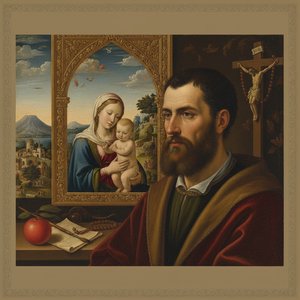
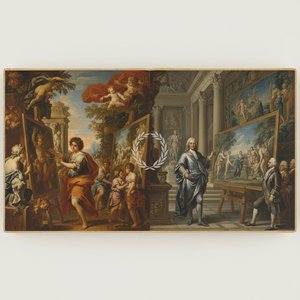
Alessandro Varotari (Padovanino) – Life & Legacy
Early Life and Training
- Born: Padua, Italy in 1588.
- Family Background: Padovanino was born into a family of artists. His father, Dario Varotari the Elder, was a local painter and architect who provided his initial training.
- Early influences included the style of Titian, which would remain central to his artistic approach throughout his career.
Career Development & Artistic Style
- Padovanino moved to Venice in 1614 and quickly established himself as a skilled painter.
- Artistic Period: He worked during the transition between Late Mannerism and Early Baroque, blending elements of both styles.
- He traveled to Rome twice (mid-1610s & 1625), gaining recognition for his ability to create high-quality copies of works by Renaissance masters.
- Key Characteristics: His paintings are known for their narrative strength, sensuality, and faithful adherence to the Titianesque tradition. He excelled in depicting mythological and historical scenes.
Major Works & Commissions
- Notable Paintings: Included “Samson and Delilah”, “Orpheus Enchanting the Animals”, “Sleeping Venus with Putti”, “The Three Graces” and “Semiramis called to arms”.
- He contributed mosaics to the Basilica of San Marco in Venice (1619).
- He also undertook decorative projects for the Church of Santa Maria Maggiore.
- “The Victory of the Carnuti over the Normans”: A significant large-scale battle scene demonstrating his skill in composition and dramatic storytelling.
Influence & Legacy
- Mentorship: Padovanino was a respected teacher, mentoring several prominent Venetian painters including Pietro Liberi, Bartolomeo Scaliger, Pietro della Vecchia, and Giulio Carpioni.
- His sister, Chiara Varotari, was also a well-known portraitist, further cementing the family’s artistic reputation.
- Caterina Tarabotti: A notable female intellectual of the time, was among his students.
- Although celebrated for his copying skills, Padovanino's original compositions and influence on subsequent generations secure his place in art history.
Historical Significance
- Bridging Styles: He represents a crucial link between the Mannerist and Baroque periods, adapting earlier traditions to evolving artistic tastes.
- His work reflects the vibrant cultural climate of 17th-century Venice, a major center for art and commerce.
- Preservation of Tradition: His dedication to Titian’s style helped preserve and disseminate the legacy of one of Italy's greatest masters.
Questions & Answers
What moods do Alessandro Varotari's artworks express?
The artist's Mood Room page shows Alessandro Varotari's artworks arranged by their atmosphere.
Where are Alessandro Varotari's artworks grouped by technique?
Alessandro Varotari's works can be browsed by medium on the artist's All Medium page.
Where can I see all artworks by Alessandro Varotari?
Every work by Alessandro Varotari on this website can be browsed from the artist's All Artworks page.
What colors did Alessandro Varotari use most often?
The color profile of Alessandro Varotari's work is shown on the artist's Palette Genome page.