The Weight of Light: Impressionist Atmosphere and the Ephemeral Moment
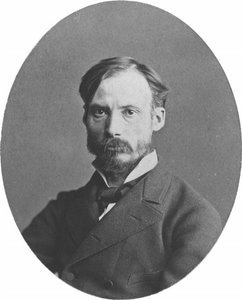 Pierre-Auguste Renoir
Renoir was an Impressionist master known for Luncheon of the Boating Party. Discover his luminous paintings today.
To observe an Impressionist landscape is to witness a departure from the rigid, somber shadows of the academic studio. In the late 19th century, painters such as Claude Monet and Pierre-Auguste Renoir abandoned the controlled environments of the past to embrace the unpredictable brilliance of the outdoors. This movement was less about documenting a specific location and more about capturing the very pulse of a moment—the way sunlight flickers across a lily pond or how a morning mist clings to riverbanks. In works such as Le Déjeuner des canotiers, Renoir demonstrates this focus through broken brushstrokes and a palette that prioritizes sensory experience over literal representation. Colors are not blended into smooth gradients but are instead juxtaposed to create an optical mix for the viewer, simulating the way light moves across surfaces in real-time.
This pursuit of the transient finds a historical echo in the early photographic experiments of the late 19th century. While not aligned with the French painters, photographers like George Davison adopted similar concerns for light and temporality. In his 1889 photograph The Onion Field, Davison utilized a pinhole camera to deliberately blur detail, creating an effect reminiscent of tonal painting. This approach sought to suggest an emotional or poetic state rather than narrative precision. Much like the Impressionist brushstroke, these photographic techniques used soft focus and atmospheric haze to capture the essence of change, proving that the most profound truths often reside in what is blurred and indistinct.
The Pastoral Ideal: From Renaissance Landscapes to English Gardens
 Joachim Patinir
Joachim Patinir: A master of atmospheric landscapes & fantastical scenes. Explore his dramatic vistas, influence on Netherlandish art, & collaborations with Dürer.
The pastoral landscape has long functioned as a sanctuary for the human psyche, offering an escape from urban constraints. These scenes, defined by rolling hills and grazing livestock, evoke a sense of harmony with the natural world. This tradition finds its roots in the Arcadian ideals of antiquity, but it gained significant formal structure during the Renaissance. Artists like Joachim Patinir began to treat the landscape as an independent entity capable of conveying meaning through expansive, dramatic vistas. By moving away from purely symbolic or religious backdrops, Patinir helped establish a way of seeing nature as a subject worthy of contemplation in its own right.
This reverence for the natural environment transitioned from the canvas into the physical earth through the development of the English Landscape Garden in the 18th century. Designers like Capability Brown moved away from rigid, formal symmetry toward an idealized version of nature, featuring sweeping lawns, lakes, and wooded groves. At estates such as Stowe and Stourhead, the landscape was engineered to appear entirely natural, often employing "ha-has"—sunken fences—to maintain uninterrupted views. This architectural approach mirrors the painterly goal of the pastoral movement: to create a seamless connection between the observer and the horizon, where the boundaries of human intervention are rendered invisible.
The Geometry of Peace: Minimalist Composition and Natural Order
 Little Stream Surrounded by Bushes
Captivating Subject and Tranquil Atmosphere This delicate sketch captures a serene natural landscape, inviting viewers into a quiet moment of reflection. The scene depicts a gentle stream surrounded by lush bushes and distant landforms, evoking a sen...
Atmospheric Depth: The Influence of Tonalism and Soft Focus
 Cecilia Vargas
A Quiet Resonance: The World of Cecilia Vargas Cecilia Vargas emerges as a compelling voice in contemporary landscape painting, an artist whose work isn’t about grand pronouncements but rather the subtle poetry found within nature's quiet moments. Th...
The Permanence of the Fleeting: Preserving Serenity Through Fine Art
 Wayne Bennett
Wayne Bennett: Captivating landscapes in vibrant hues – Ajanta, Golden, Red & Wessex scenes. Explore his evocative oil paintings capturing nature's beauty.
In an era defined by digital noise and constant connectivity, the ability of a physical artwork to command silence is its most precious attribute. The pursuit of serenity through art acts as a visual meditation, providing a rhythmic pause in a frantic world. Whether it is the heavy impasto of Wayne Bennett, which uses texture to catch light in unpredictable ways, or the meticulously detailed landscapes found in the Hart District Council collection, these works act as anchors of peace. They offer a way to hold onto the ephemeral, making the transient nature of a sunset or a passing cloud feel permanent upon the canvas.
This preservation of the moment finds its historical echo in the Dutch Golden Age, where the meticulous rendering of domestic interiors and quiet landscapes sought to freeze the passage of time within a frame. Just as those seventeenth-century painters used oil to capture the specific weight of light in a room, the tradition of hand-painted reproduction seeks to replicate the physical presence of a moment. Through the use of 100% hand-painted oils on cotton canvas, the tactile qualities of a work—the visible brushstroke and the depth of the tonal range—are maintained. This technical rigor ensures that a reproduction does more than mimic an image; it recreates the specific, material encounter with the original. For those seeking to integrate these classical textures into a modern environment, whether through a single custom portrait or a large-scale installation, the focus remains on the integrity of the paint and the permanence of the view.