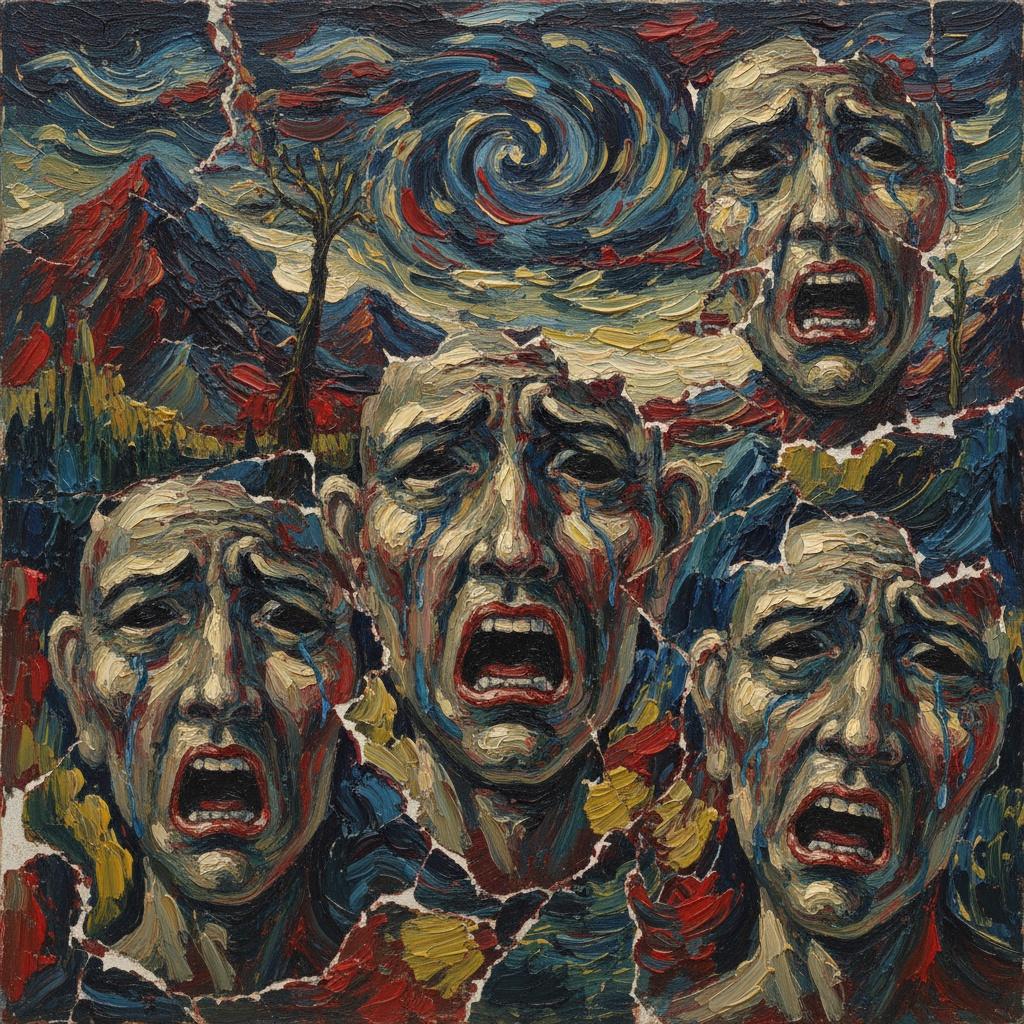
The Subjective Lens: Defining the Essence of Expressionism
To understand Expressionism is to step away from the tranquil observation of the external world and descend into the turbulent waters of the human psyche. Unlike the Impressionists, who sought to capture the fleeting dance of light upon a landscape, the Expressionists turned their gaze inward, seeking to render the invisible weight of anxiety, ecstasy, and profound longing. This movement emerged not as a mere stylistic choice, but as a visceral necessity—a rebellion against the perceived superficiality of naturalism. It is an art form where the objective reality is secondary to the subjective truth; where a sky need not be blue if the soul feels a crushing weight of indigo despair.
At its core, Expressionism functions as a visual language of the subconscious. It rejects the polished, academic precision of the past in favor of a raw, often jarring honesty. The movement invites the viewer to participate in an emotional dialogue, one that transcends mere sight and demands empathy. By distorting the familiar, these artists strip away the mask of social decorum to reveal the primal rhythms of existence. It is a profound exploration of what it means to feel, making the canvas a mirror for the most intimate and often unsettling aspects of our shared humanity.
A Symphony of Distorted Forms: The Psychological Language of Color and Line
In the hands of an Expressionist master, color ceases to be a descriptive tool and becomes a psychological force. One does not simply see color; one feels its temperature and its impact on the spirit. The palette is often characterized by jarring, non-naturalistic hues—acidic yellows that evoke sickness or deep, bruised purples that suggest mourning. These colors are applied with an intentionality designed to bypass the intellect and strike directly at the emotions. When a line wanders or breaks, it is rarely an accident of the hand; rather, it is a rhythmic pulse, a jagged edge reflecting the fragmentation of modern identity.
The structural elements of these works—the heavy contours and swirling, agitated lines—create a sense of movement that is often claustrophobic or expansive, depending on the artist's intent. There is a deliberate tension between form and void, where the very boundaries of objects seem to dissolve under the pressure of intense feeling. This manipulation of geometry and pigment creates a sensory experience that is almost tactile. The viewer is caught in a whirlwind of visual stimuli, where every stroke serves as a vessel for a specific, often overwhelming, emotional state, turning the act of looking into an act of profound psychological immersion.
Masters of Inner Turmoil: Analyzing Munch and Van Gogh’s Emotional Landscapes
Few names resonate with the haunting resonance of Edvard Munch and Vincent van Gogh. While their styles diverged, both shared a singular devotion to the truth of human suffering and passion. In Munch’s Lovers on the Resigned Beach II, we witness a masterclass in longing; through distorted forms and dramatic, somber lighting, he captures a sense of profound psychological depth that lingers long after the gaze has departed. His work, much like his seminal Passion, serves as a visceral window into the turmoil of the human condition, where the landscape itself seems to ache with the weight of unrequamed desire.
Similarly, Vincent van Gogh utilized the canvas to map the topography of his own intense spirituality and struggle. In works such as Pair of Shoes, A 2, we see how even the most mundane objects are imbued with a monumental significance. Through bold colors and expressive, rhythmic brushstrokes—heavily influenced by the structural clarity of Japanese art—Van Gogh transformed worn leather into a symbol of resilience and earthly toil. His technique does not merely depict a subject; it breathes life into it, imbuing every fiber of the canvas with a sense of movement and an almost divine energy that reflects his own turbulent internal landscape.
From Canvas to Soul: The Technical Mastery Behind Expressive Brushwork
The power of Expressionism is inextricably linked to the physical application of paint. To achieve such profound emotional resonance, the artist must employ techniques that emphasize the materiality of the medium. This is most evident in the use of impasto, where thick, heavy layers of oil paint are applied to create a three-dimensional texture. These raised ridges of pigment catch the light, creating shadows within the painting itself and adding a sculptural quality to the work. The visible, tactile brushstroke becomes a trace of the artist's physical movement, a rhythmic record of their emotional exertion.
This technical approach requires immense skill to ensure that the heavy application of paint does not obscure the underlying composition. It is a delicate balance of chaos and control. The layering process—often involving multiple stages of drying and re-application—allows for a depth of color that flat, modern printing can never replicate. When we observe these works, we are witnessing the alchemy of pigment, oil, and motion. The texture provides a "living" quality to the art, ensuring that the spirit of the original movement remains palpable, inviting the viewer to touch the very essence of the artist's passion through their eyes.
Curating Intensity: Integrating Expressionist Masterpieces into the Modern Interior
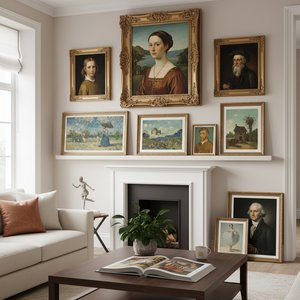
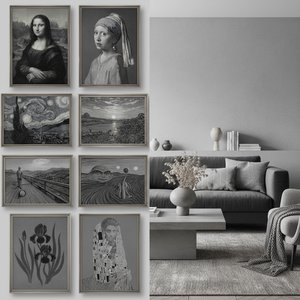
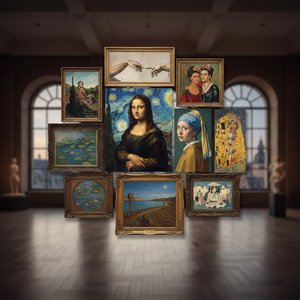
Integrating the raw intensity of Expressionist art into a contemporary living space requires a sophisticated approach to curation. Because these works are so emotionally potent, they act as powerful anchors within an interior design scheme. A single, large-scale reproduction of a Munch or Van Gogh can serve as the definitive focal point of a room, commanding attention and dictating the emotional temperature of the entire environment. For the discerning collector, the challenge lies in balancing this intensity with the surrounding architecture and decor.
One might consider pairing an expressive, textured oil painting with more minimalist, modern furniture to allow the artwork's energy to breathe. Alternatively, a multi-panel arrangement—splitting a single emotive landscape across three or five canvases—can create a cinematic effect that complements wide, contemporary walls. Whether through the use of dramatic lighting to highlight the impasto textures or through careful color matching with existing textiles, the goal is to create a cohesive dialogue between the historical weight of the masterpiece and the modern aesthetic of the home. In doing so, one does not merely decorate a room; one curates an atmosphere of profound reflection and timeless beauty.
At OriginalUniqueArt.com, we are dedicated to preserving this legacy of human creativity. From meticulously handcrafted oil reproductions that capture every tactile brushstroke to museum-quality Giclée prints, our mission is to make the profound depths of art history accessible to collectors worldwide. Whether you seek to transform a personal photograph into a Van Gogh-inspired masterpiece or wish to commission a custom portrait that echoes the emotional gravity of the Old Masters, our expert artists and dedicated project coordinators are here to guide your journey into the heart of art.