The Romantic Soul: Understanding the Emotional Depth of 19th-Century Landscapes
To step into a nineteenth-century landscape is to embark on a journey through the very psyche of an era defined by profound transformation. This was a period where the rapid onset of the Industrial Revolution cast long, smoky shadows over the traditional way of life, prompting artists to seek refuge in the untamed beauty of the natural world. The 19th-century scene painting is rarely just a depiction of topography; it is an emotional manifesto. Through the lens of Romanticism, the landscape became a mirror for the human condition, capturing feelings of awe, solitude, and even a touch of melancholy.
In these works, we find a deep reverence for the sublime—that breathtaking moment where beauty meets terror in the face of nature's overwhelming power. Whether it is the quiet contemplation of a pastoral meadow or the dramatic tension of a gathering storm, the artist invites the viewer to feel the pulse of the earth. This era moved away from the rigid, formal compositions of Neoclassicism toward a more fluid, visceral connection with the environment, allowing the brush to convey the fleeting whispers of wind through leaves or the heavy stillness of a summer afternoon.
Light and Atmosphere: The Technical Mastery of Period Scene Painting
The true magic of these historical masterpieces lies in the artist's ability to manipulate light and atmosphere, turning mere pigment into palpable air. Achieving such luminosity required an extraordinary command of color theory and layering techniques. Masters of the era understood that light is not a static element but a dynamic force that redefines form and mood with every passing minute. They utilized subtle glazes—thin, transparent layers of oil—to build depth, allowing light to penetrate the surface and reflect back from the lower strata of paint, creating a glow that seems to emanate from within the canvas itself.
Consider the way a sunset might be rendered; it is not merely an orange hue applied to a sky, but a complex orchestration of warm ochres, deep madders, and soft violets, meticulously blended to capture the diffusion of light through moisture-laden air. The technical precision required to render textures—the rugged bark of an ancient oak, the soft translucency of a cloud, or the reflective surface of a tranquil pond—demands an academic excellence that remains the gold standard for fine art. It is this interplay of light and shadow, often referred to as chiaroscuro, that breathes life into the scene, transforming a flat image into a window onto another world.
From Pastoral Serenity to Dramatic Grandeur: Exploring Key Sub-Genres
The breadth of 19th-century landscape painting is vast, spanning a spectrum from the gentle rhythms of rural life to the epic scale of untamed wilderness. One of the most beloved sub-genres is the pastoral scene, which celebrates the harmonious coexistence of man and nature. In works such as those by James Peel, we see a sincere depiction of the countryside, where cattle graze peacefully under the watchful gaze of ancient trees. These paintings offer a sense of stability and timelessness, evoking a nostalgia for a simpler, more rhythmic existence.
Conversely, the genre of the dramatic landscape seeks to provoke wonder through scale and intensity. Artists like James Arthur O’Connor mastered the art of capturing the transition of light during twilight, using sunset hues to imbue wooded tracks and distant figures with a sense of mystery and grandeur. In other corners of Europe, the Dutch Romantic tradition, exemplified by painters such as Frederik Marianus Kruseman, brought a unique intimacy to the genre, blending serene wooded landscapes with the quiet movements of peasants and animals. Each sub-genre serves a different emotional purpose, yet all are united by a profound respect for the natural stage upon which human history unfolds.
Curating History: Integrating Classical Masterpieces into Modern Interiors
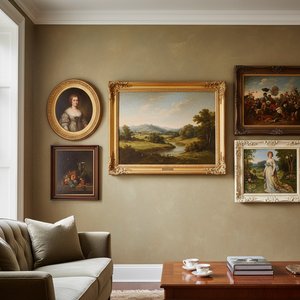
In the contemporary home, the inclusion of a 19th-century inspired piece acts as an anchor of sophistication. Integrating such classical elements into modern architecture requires a discerning eye for balance and contrast. A large-scale, dramatic landscape can serve as a commanding focal point in a minimalist living space, providing a necessary warmth and narrative depth that modern decor often lacks. The presence of a well-chosen scene painting introduces a sense of heritage and continuity, bridging the gap between the ancestral past and the present moment.
For the sophisticated collector, the challenge lies in curation. One might choose to create a gallery wall that juxtaposes different eras, or perhaps use a single, monumental canvas to define the character of an entire room. When paired with modern textures—such as smooth metals, polished stone, or contemporary textiles—the rich, tactile brushstrokes of a classical reproduction provide a stunning counterpoint. This dialogue between the old and the new creates an environment that feels both curated and lived-in, reflecting a deep appreciation for the enduring power of art history.
Preserving the Legacy: The Art of Fine Oil Reproductions and Longevity
The preservation of these historical aesthetics relies heavily on the quality of reproduction. To truly capture the spirit of a 19th-century master, one must look beyond the flat surface of a print and toward the tactile depth of a handmade oil reproduction. A true masterpiece is defined by its texture; it is found in the impasto—the raised, visible brushstrokes that catch the light and create a three-dimensional presence. This physical dimension is what allows a painting to possess a "living" quality, ensuring that the soul of the original remains intact.
Longevity is equally paramount when investing in art. The use of premium pigments with high lightfastness and heavy-duty cotton canvases ensures that the vibrancy of the colors remains undiminished by time. Furthermore, the application of protective finishes, such as a fine coat of Damar varnish, shields the artwork from the environmental pollutants and moisture that can threaten its integrity. By prioritizing these academic standards of craftsmanship, we ensure that the magic of the 19th century is not merely remembered in museums, but continues to inspire and enchant generations within our own homes.
At OriginalUniqueArt.com, we are dedicated to this legacy of excellence. From meticulously handcrafted oil reproductions to museum-quality Giclée prints, our mission is to make the grandeur of art history accessible to the modern connoisseur. Whether you are seeking a custom commission that transforms a personal memory into a classical masterpiece or looking for expert consultation to complete your interior design, OriginalUniqueArt provides the bridge between historical wonder and contemporary elegance.