The Specular Window: The Mirror as a Portal to the Infinite
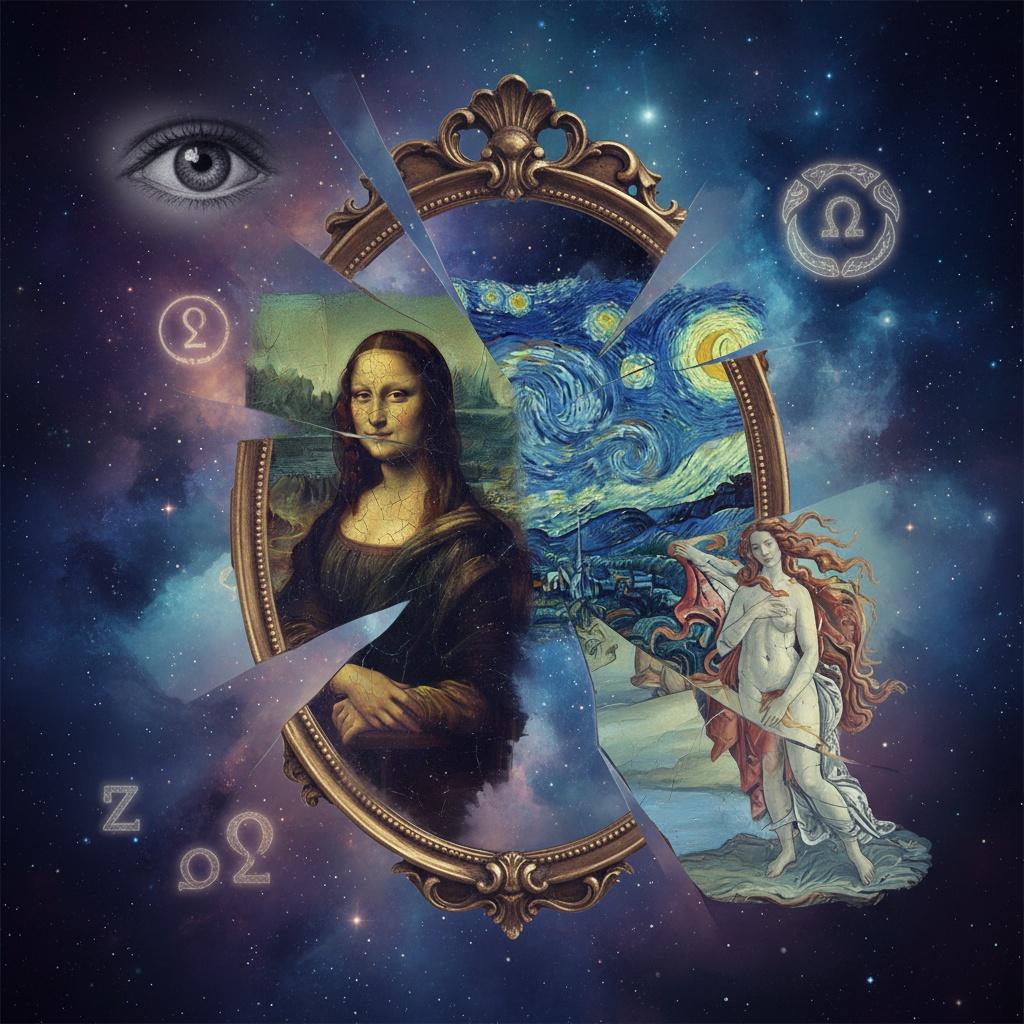
In the grand tapestry of art history, few devices possess the profound metaphysical weight of the mirror. Far more than a mere tool for vanity or a surface for checking one's visage, the mirror serves as a specular window—a threshold between the tangible world and the unseen realms of thought and spirit. When an artist directs their gaze toward a reflective surface, they are not simply documenting light; they and they are inviting the viewer to contemplate the boundaries of existence itself. The mirror offers a unique paradox: it provides a perfect likeness of reality while simultaneously presenting a world that is inherently inverted, a phantom realm where depth is suggested by nothing more than pigment and light.
Throughout the centuries, masters of the canvas have utilized this phenomenon to suggest the infinite. By capturing the way a mirror catches a distant landscape or a flickering candle flame, painters create an illusion of space that extends far beyond the physical confines of the frame. This technique transforms a static object into a portal, drawing the observer into a deeper state of contemplation. The reflection becomes a bridge, connecting the immediate presence of the viewer with the historical and imagined depths of the painted universe, making the act of looking a truly transformative experience.
Fractured Realities: Surrealism and the Distortion of Self
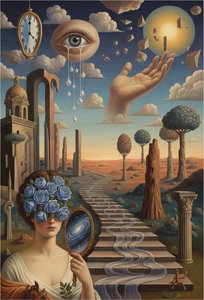
As we transitioned from the structured clarity of the Renaissance into the turbulent psyche of the twentieth century, the mirror underwent a radical metamorphosis. The smooth, predictable surface gave way to the fractured, the dreamlike, and the unsettling. In the hands of the Surrealists, the reflection ceased to be a reliable narrator of truth. Instead, it became a site of psychological distortion, where the boundaries between the conscious mind and the subconscious could dissolve entirely.
Consider the mesmerizing works of Salvador Dalí, particularly his explorations of layered reflections. In masterpieces such as DalH from the Back, Dalí employs a complex arrangement of virtual and real mirrors to create a kaleidoscopic reality. Here, the reflection is not a singular image but a fragmented multiplicity, where the subject is eternalized through six virtual corneas reflected in real mirrors. This technique does not merely depict a person; it deconstructs the very concept of identity, presenting a version of reality that is as fluid and unstable as a dream. Through these fractured reflections, the mirror becomes an instrument of subconscious exploration, challenging our perceptions of what is solid and what is merely a trick of the light.
The Dual Identity: Self-Portraiture through the Looking Glass
Perhaps no genre utilizes the power of reflection as intimately as self-portraiture. For the artist, the mirror is both a companion and a critic, providing the essential visual data required to map the contours of their own soul. This intimate dialogue between the creator and their reflected image allows for an exploration of dual identity—the tension between how we perceive ourselves from within and how we appear to the external world.
This introspective journey is beautifully captured in works that utilize multiple perspectives, such as watercolor profiles painted through the use of two mirrors. By painting the reflection of a reflection, the artist moves beyond simple representation into a realm of profound layered meaning. The process becomes an act of searching, where each layer of reflected light reveals a new facet of the self. In these works, the mirror acts as a medium for autobiographical truth, allowing the artist to navigate the complexities of their own existence, capturing not just the physical likeness, but the ephemeral essence of being.
Light, Depth, and Illusion: Technical Mastery in Reflective Painting
To achieve the convincing illusion of a reflective surface, an artist must possess an extraordinary command over the chemistry of light and the physics of texture. The technical challenge lies in the ability to render specular highlights—those brilliant, sharp points of light that define the presence of a mirror—while simultaneously maintaining the depth of the underlying subject. This requires a sophisticated understanding of tonal range and the delicate application of glazes.
In high-quality oil reproductions, this mastery is evident in the visible brushstrokes and the rich, tactile impasto that gives life to the light. The artist must manipulate the way light interacts with the surface of the paint, using specific oils like safflower to ensure that whites remain pure and do not yellow over time. When executed with academic excellence, the painting does not merely show a reflection; it creates a sensory experience where the viewer can almost feel the coolness of the glass and the depth of the reflected room. It is through this meticulous layering of pigment and varnish that the illusion of a three-dimensional window is truly realized.
Beyond the Surface: The Psychological Resonance of Symmetry and Reflection
Ultimately, the power of mirror images in fine art transcends mere visual trickery to touch upon the deepest psychological resonances of the human condition. There is an inherent symmetry in reflection that speaks to our innate desire for order, balance, and wholeness. Yet, there is also a profound sense of mystery in the way reflections can obscure as much as they reveal, prompting us to question the stability of our own perceptions.
When we stand before a painting that masterfully employs reflection, we are forced into a state of aesthetic introspection. We see ourselves reflected in the themes of identity, fragmentation, and infinity. The mirror in art serves as a permanent reminder that reality is rarely a single, unadorned truth, but rather a complex interplay of light, shadow, and perspective. It invites us to look past the surface, to embrace the beautiful distortions of our own perceptions, and to find meaning in the shimmering, ephemeral boundaries between the real and the reflected.
At OriginalUniqueArt.com, we celebrate this enduring fascination with the profound. Our mission is to bring the majesty of these historical explorations into the modern home through authentic, hand-painted reproductions. Whether you are drawn to the surrealist distortions of Dalí or the intimate self-reflections of the masters, our artists utilize traditional techniques on premium cotton canvas to ensure that every brushstroke preserves the soul of the original work. We invite you to explore our vast library and discover a piece that reflects your own passion for the timeless beauty of fine art.