The Dawn of Impressionism: Breaking from Academic Tradition
To understand the magic of Impressionism, one must first envision the rigid, somber world of the nineteenth-century French Academy. For decades, the Académie des Beaux-Arts dictated that true art resided in historical grandeur, mythological perfection, and a polished, invisible brushstroke that left no trace of the artist's hand. The canvases were dark, heavy with studio shadows and meticulous detail, designed to instruct rather than to evoke. However, a group of rebellious visionaries—men and women who would later become legends—began to feel stifled by these suffocating boundaries. They sought not to document the past, but to capture the pulse of the present.
This movement was born from a desire to break free from the controlled environment of the studio. These artists looked toward the changing world around them: the industrial revolution, the expansion of railways, and the burgeoning leisure culture of Paris. They rejected the "finished" look of academic works in favor of something far more radical—the impression. By prioritizing the sensory experience over anatomical or historical accuracy, they paved the way for a new era where the subjective perception of reality became just as important as reality itself. This shift was not merely a change in style, but a profound revolution in how humanity perceives the passage of time and the essence of existence.
The Science of Sight: Capturing Fleeting Light and Atmosphere
At the heart of the Impressionist movement lies an almost scientific obsession with light. These painters understood that light is never static; it is a living, breathing entity that transforms a landscape every second of the day. To capture this, they moved away from the traditional use of black and earth tones for shadows, discovering instead that shadows are composed of reflected colors—deep blues, violets, and cool greens. This realization allowed them to achieve a luminosity that had never before been seen on canvas.
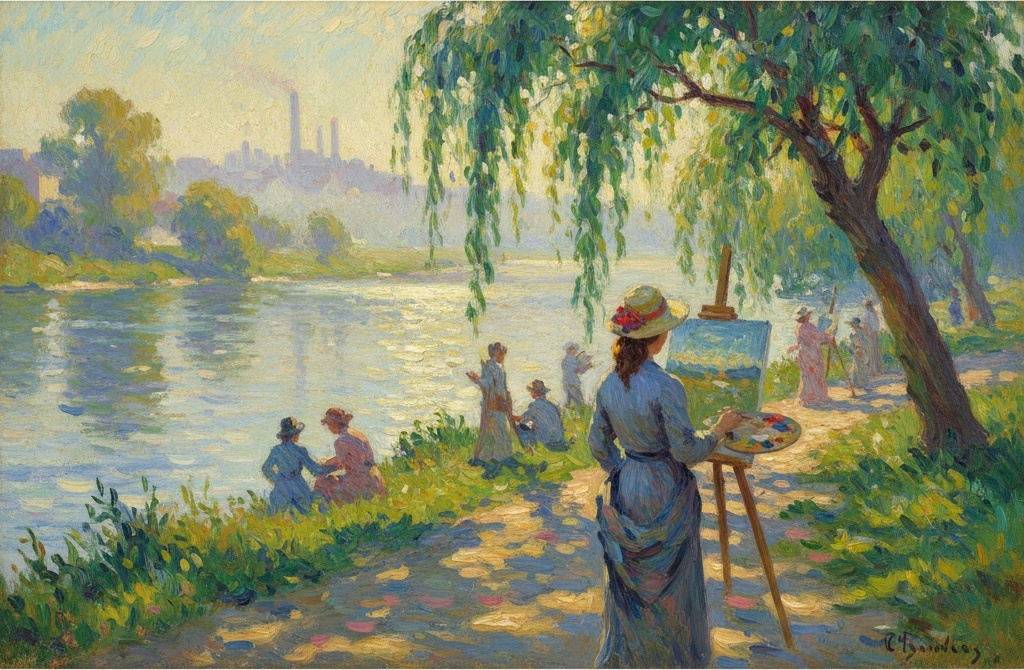
The technique relied heavily on the optical effects of color. Rather than blending pigments smoothly on a palette until they reached a uniform shade, Impressionists often applied dabs of pure, unmixed color side-by-side. From a distance, the viewer's eye performs the work of blending these distinct strokes, creating a shimmering, vibrating effect that mimics the way light dances upon water or filters through leaves. This method captures the atmosphere—the very air between the painter and the subject—allowing the viewer to feel the warmth of a summer afternoon or the crisp chill of a spring morning along the Seine.
En Plein Air: The Revolution of Outdoor Painting
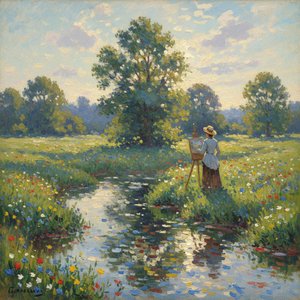
The true catalyst for this revolution was the practice of en plein air, or painting outdoors. Before the advent of portable tin paint tubes, artists were largely tethered to their studios, relying on sketches made outside but completed in controlled environments. The invention of these collapsible tubes liberated the masters, allowing them to carry their entire world upon an easel into the heart of nature. This mobility allowed for a direct, unmediated confrontation with the elements.
Painting outdoors presented immense challenges: shifting clouds, sudden rain, and the relentless movement of the sun. Yet, it was within these challenges that the Impressionist spirit flourished. By working in situ, artists like Eugène Boudin could witness the precise moment a tide receded or a mist rolled over the coast. This immediacy demanded a rapid execution, leading to the development of shorter, more spontaneous brushstrokes. The landscape was no longer a static backdrop but a dynamic participant in the creative process, captured in its most authentic and ephemeral state.
Mastering the Brushstroke: Texture, Color, and Movement
The physical texture of an Impressionist painting is perhaps its most tactile characteristic. Unlike the smooth, porcelain-like surfaces of Neoclassical works, Impressionist canvases celebrate the impasto technique—the thick, sculptural application of paint that rises from the surface. These visible ridges and grooves catch actual light within the room, adding a three-dimensional quality to the work. When you look closely at a masterpiece, you see the rhythmic dance of the brush, each stroke a record of a specific moment in time.
This emphasis on texture works in harmony with a vibrant, high-key palette. The use of complementary colors—placing oranges against blues or yellows against purples—creates a visual tension that drives the eye across the canvas. This movement is not just visual but emotional; the swirling strokes in a sky or the broken lines of a water lily pond evoke a sense of life and energy. The brushstroke becomes a signature of the artist's soul, conveying the urgency and passion required to freeze a fleeting moment before it vanishes forever.
Luminosity in Landscape: Lessons from Monet, Sisley, and Boudin
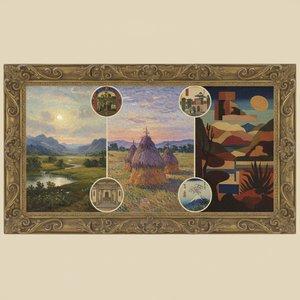
The lineage of Impressionist light can be traced through the works of its most influential practitioners. Claude Monet remains the undisputed master of this luminous study; his devotion to capturing the variations of light on a single subject—be it haystacks or water lilies—demonstrates an unparalleled dedication to the ephemeral. His work, often supported by the talent of artists like Blanche Hoschedé Monet, showcases a world drenched in color and soft, atmospheric edges.
In contrast, Alfred Sisley brought a profound sense of serenity to the movement. His landscapes, such as his depictions of the Loing Canal, utilize a delicate touch to capture the quiet, rhythmic beauty of the French countryside during spring. Meanwhile, the influence of Eugène Boudin cannot be overstated; as a pioneer of seascape painting, his ability to render the atmospheric interplay between sea and sky provided the foundational blueprint for the movement. Together, these artists taught us that light is not merely something that illuminates objects, but is an object in itself—a subject worthy of the highest devotion.
Preserving the Impression: Bringing Historical Light into Modern Interiors
Today, the legacy of Impressionism continues to breathe life into modern spaces. The movement’s ability to evoke emotion and tranquility makes it a timeless choice for collectors seeking to infuse their homes with warmth and historical depth. Whether through a large-scale oil reproduction that serves as a focal point or a delicate Giclée print that adds a touch of elegance, these works bridge the gap between the nineteenth century and the present day.
Integrating such masterpieces into contemporary architecture requires an appreciation for both color and texture. A well-placed Impressionist piece can harmonize with modern palettes, providing a soft, organic counterpoint to the clean lines of minimalist design. By surrounding ourselves with these studies of light and atmosphere, we do more than decorate a room; we invite the enduring magic of the masters into our daily lives, ensuring that the fleeting beauty they once captured remains eternally vibrant.
At OriginalUniqueArt.com, we are dedicated to preserving this legacy of human creativity. From meticulously handcrafted oil reproductions that capture every tactile brushstroke to museum-quality Giclée prints, our mission is to make the world's most beloved masterpieces accessible to all. Whether you wish to transform a personal memory into an Impressionist-style painting or find the perfect historical piece for your collection, our expert artists and consultants are here to guide your journey through the wonders of art history.