
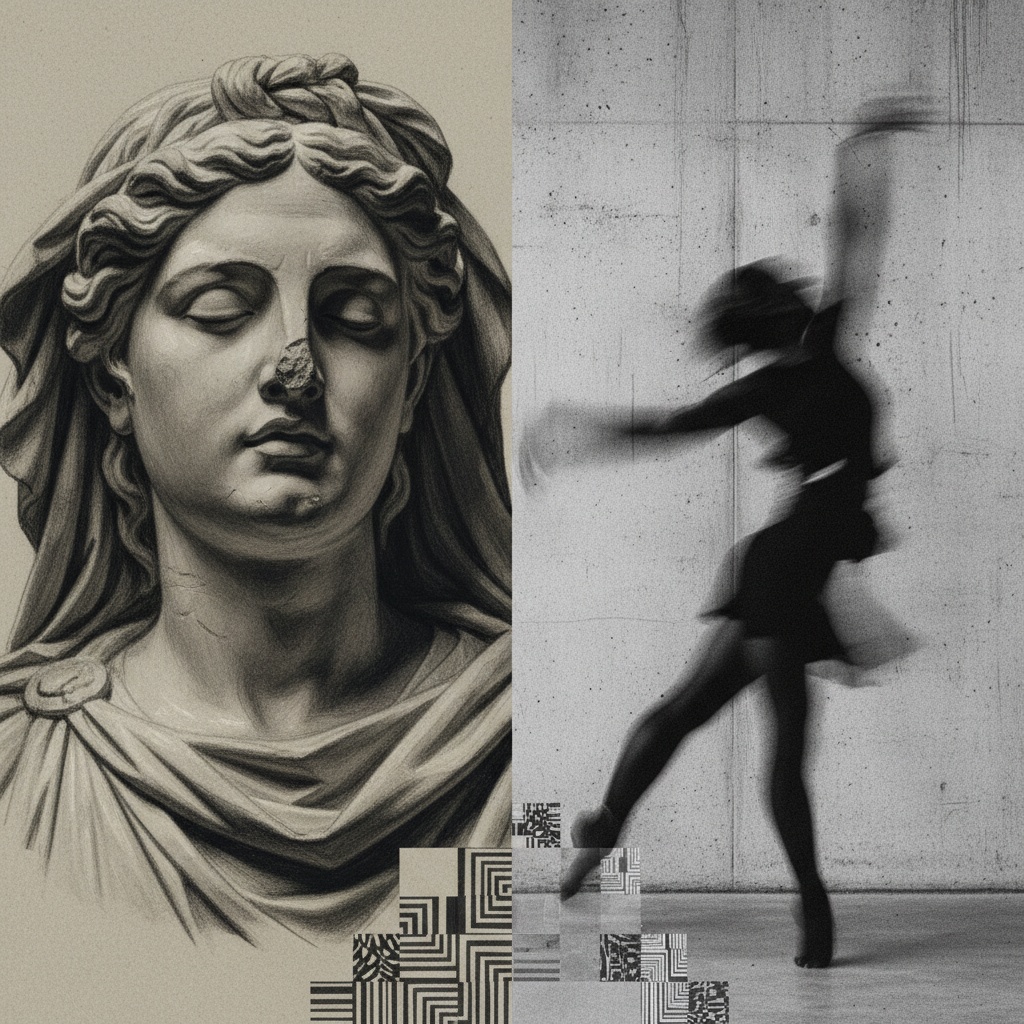
The Genesis of Monochrome: From Early Experiments to Radical Statements
Monochromatic painting has played a significant role in modern and contemporary Western visual art, originating with the early 20th-century European avant-gardes. Artists have explored the non-representational potential of a single color, investigati...
The allure of a single color, deceptively simple yet profoundly resonant, has captivated artists for centuries. While often associated with the radical movements of the 20th century, the roots of monochrome stretch back far earlier than many realize. The impulse to strip away ornamentation and focus on pure form wasn’t born in a vacuum; it was a gradual evolution, a questioning of representation itself. One might trace its earliest whispers to the chiaroscuro drawings of the Renaissance, where artists used gradations of light and dark – essentially a monochrome palette – to sculpt volume and evoke drama. However, the deliberate embrace of *complete* chromatic reduction finds an intriguing, if often overlooked, precedent in the 17th-century work of physician Robert Fludd, whose “Darkness,” created in 1617, sought to visualize the void preceding creation. This wasn’t about aesthetic beauty, but a conceptual exploration of nothingness.
Fast forward to the Incoherents exhibitions in Paris during the 1880s, and we encounter more explicit experiments with monochrome. Poet Paul Bilhaud's “Combat de Nègres pendant la nuit,” rediscovered only recently, stands as a pivotal moment – a black painting intentionally provocative and challenging conventional notions of art. Alphonse Allais followed suit with similarly audacious works, pushing the boundaries of taste and expectation. These early forays were less about refined artistic expression and more akin to Dadaist provocations, questioning the very definition of what constituted an artwork. They laid the groundwork for a future where the absence of color could be as powerful – or even *more* powerful – than its presence.
The seeds sown in these early experiments truly blossomed with Kazimir Malevich’s “Black Square” (1915). This iconic work, often misinterpreted as mere simplicity, was a revolutionary act. It wasn't about depicting an object; it was about the supremacy of pure feeling, a rejection of the material world in favor of spiritual abstraction. Malevich sought to liberate art from its representational obligations, and “Black Square” became the ultimate symbol of this ambition – a zero degree of painting, a gateway to a new artistic consciousness.
Chiaroscuro's Influence: Modeling Form Through Light and Shadow
In art, chiaroscuro (English: kee-AR-ə-SKOOR-oh, -SKURE-, Italian: [ˌkjaroˈskuːro]; lit. 'light-dark') is the use of strong contrasts between light and dark, usually bold contrasts affecting a whole composition. It is also a technical term used by ...
To understand the power of monochrome, one must acknowledge its historical kinship with chiaroscuro, the dramatic use of light and shadow. Originating in Renaissance painting, masters like Leonardo da Vinci employed subtle gradations of tone to create a sense of depth, volume, and emotional intensity. This wasn’t merely about technical skill; it was about manipulating perception, guiding the viewer's eye, and imbuing their subjects with life-like presence. The technique reached its zenith in the Baroque period, particularly in the works of Caravaggio, whose paintings are characterized by stark contrasts and a theatrical intensity.
While chiaroscuro typically involved a range of tones within a limited palette, it established a fundamental principle: light defines form. By controlling the interplay of illumination and shadow, artists could create compelling narratives and evoke powerful emotions. This principle resonated deeply with subsequent generations of painters who sought to explore the expressive potential of monochrome. The reduction to a single color wasn’t necessarily an abandonment of modeling; rather, it was a distillation of that principle – focusing solely on the nuances of value and texture to achieve similar effects.
Consider the works of Georges de La Tour, whose candlelit scenes demonstrate a masterful command of chiaroscuro. The limited palette—often just blacks, browns, and creams—forces the viewer to focus intently on the interplay of light and shadow, creating an atmosphere of quiet contemplation and spiritual depth. This emphasis on tonal variation foreshadows the concerns of later monochrome artists who sought to explore the inherent properties of paint itself, independent of representational subject matter.
Minimalism and the Pursuit of Pure Abstraction
In visual arts, music, and other media, minimalism is an art movement that emerged in the post-World War II era in Western art. It is often interpreted as a reaction to abstract expressionism and modernism. The movement anticipated various post-minim...
The post-World War II era witnessed a seismic shift in artistic sensibilities, giving rise to minimalism. Reacting against the emotional intensity and subjective expression of Abstract Expressionism, minimalist artists sought to reduce art to its essential elements – form, color, material. This wasn’t about eliminating emotion; it was about stripping away extraneous layers to reveal a more fundamental truth. Donald Judd, Agnes Martin, Dan Flavin, and Robert Morris became leading figures in this movement, creating sculptures and paintings characterized by geometric simplicity and industrial materials.
Minimalism shared a crucial affinity with monochrome painting: both prioritized the object itself over representation. Artists like Judd eschewed traditional painterly techniques, opting instead for clean lines, precise forms, and unadorned surfaces. The focus shifted from *what* was being depicted to *how* it was being depicted – the materiality of the work, its spatial relationship to the viewer, and the inherent qualities of color itself. The use of a single color further emphasized this emphasis on pure form, eliminating any distractions that might detract from the object’s essential nature.
Agnes Martin's subtle grid paintings, often executed in pale shades of gray or white, exemplify this pursuit of quiet contemplation and reductive simplicity. Her work wasn’t about creating visually arresting images; it was about evoking a sense of stillness and inner peace. The delicate variations in tone and texture invite the viewer to slow down, to contemplate the subtle nuances of form, and to experience the artwork on a purely visceral level.
Emotional Resonance in a Single Hue: Exploring Psychological Impact
Despite its apparent simplicity, monochrome painting possesses a remarkable capacity for emotional expression. The absence of color doesn’t equate to an absence of feeling; rather, it allows for a more nuanced and subtle exploration of the human psyche. The choice of color itself becomes paramount – black often evokes feelings of mourning, mystery, or power, while white can symbolize purity, innocence, or emptiness. But even within these broad associations, individual artists imbue their monochrome works with unique emotional resonances.
Ad Reinhardt’s “black paintings,” for example, are far from uniform in tone. Upon closer inspection, subtle variations emerge – hints of red, green, and blue that create a sense of depth and complexity. These seemingly imperceptible nuances challenge the viewer's perception, forcing them to question their own assumptions about color and form. Reinhardt’s work isn’t about creating visually striking images; it’s about exploring the limits of vision and the nature of consciousness.
Similarly, Yves Klein's signature International Klein Blue (IKB) – a vibrant ultramarine hue – became synonymous with his artistic philosophy. He believed that blue possessed a unique spiritual quality, capable of evoking feelings of transcendence and infinity. His monochrome paintings weren’t simply about the color itself; they were about creating an immersive experience that transported the viewer to another realm.
Monochrome Today: Contemporary Artists and its Lasting Legacy
The influence of monochrome painting continues to resonate in contemporary art. While the radical fervor of the mid-20th century has subsided, artists continue to explore the expressive potential of single-color palettes, pushing the boundaries of form and perception. Many contemporary artists are revisiting the techniques and ideas pioneered by their predecessors, recontextualizing them for a new generation.
Artists like Robert Ryman continue to refine the principles of minimalism, creating subtle monochrome paintings that explore the materiality of paint itself. His work is characterized by delicate variations in texture and tone, inviting the viewer to contemplate the inherent qualities of the medium. Others are using monochrome as a vehicle for social commentary, employing single-color canvases to address issues of identity, politics, or environmental concerns.
The enduring appeal of monochrome lies in its ability to challenge conventional notions of art and perception. It forces us to look beyond representation, to focus on the essential elements of form, color, and texture. It’s a testament to the power of simplicity – a reminder that sometimes, less truly is more. Explore the captivating world of monochrome painting at OriginalUniqueArt.com, where you can discover museum-quality reproductions of iconic works and commission custom paintings tailored to your unique vision.




