The Enduring Human Quest: Spirituality as a Foundation of Artistic Expression
Religious art is a visual representation of religious ideologies and their relationship with humans. Sacred art directly relates to religious art in the sense that its purpose is for worship and religious practices. According to one set of definition...
From the earliest cave paintings depicting shamanic rituals to the soaring Gothic cathedrals reaching for the heavens, art has served as an indispensable conduit for humanity’s deepest spiritual aspirations. Long before codified religions and philosophical systems took shape, our ancestors sought to understand their place in the cosmos through visual representation – a primal urge to connect with something larger than themselves. This inherent need isn't merely about illustrating faith; it’s about embodying experience, translating the intangible into forms that resonate with the soul. The very act of creation—the deliberate shaping of matter—becomes a sacred gesture, imbued with intention and a desire for meaning. Consider the Paleolithic depictions of animals, not simply as hunting guides but as totemic spirits possessing power and wisdom. This foundational impulse continues to echo through millennia, manifesting in diverse styles and cultural contexts, yet always rooted in that fundamental human quest.
Iconography & Symbolism: Deciphering Sacred Languages in Art
A halo (from Ancient Greek ἅλως, hálōs, 'threshing floor, disk'), also called a nimbus, aureole, glory or gloriole (Latin: gloriola, lit. 'little glory'), is a crown of light rays, circle or disk of light that surrounds a person in works of art. Th...
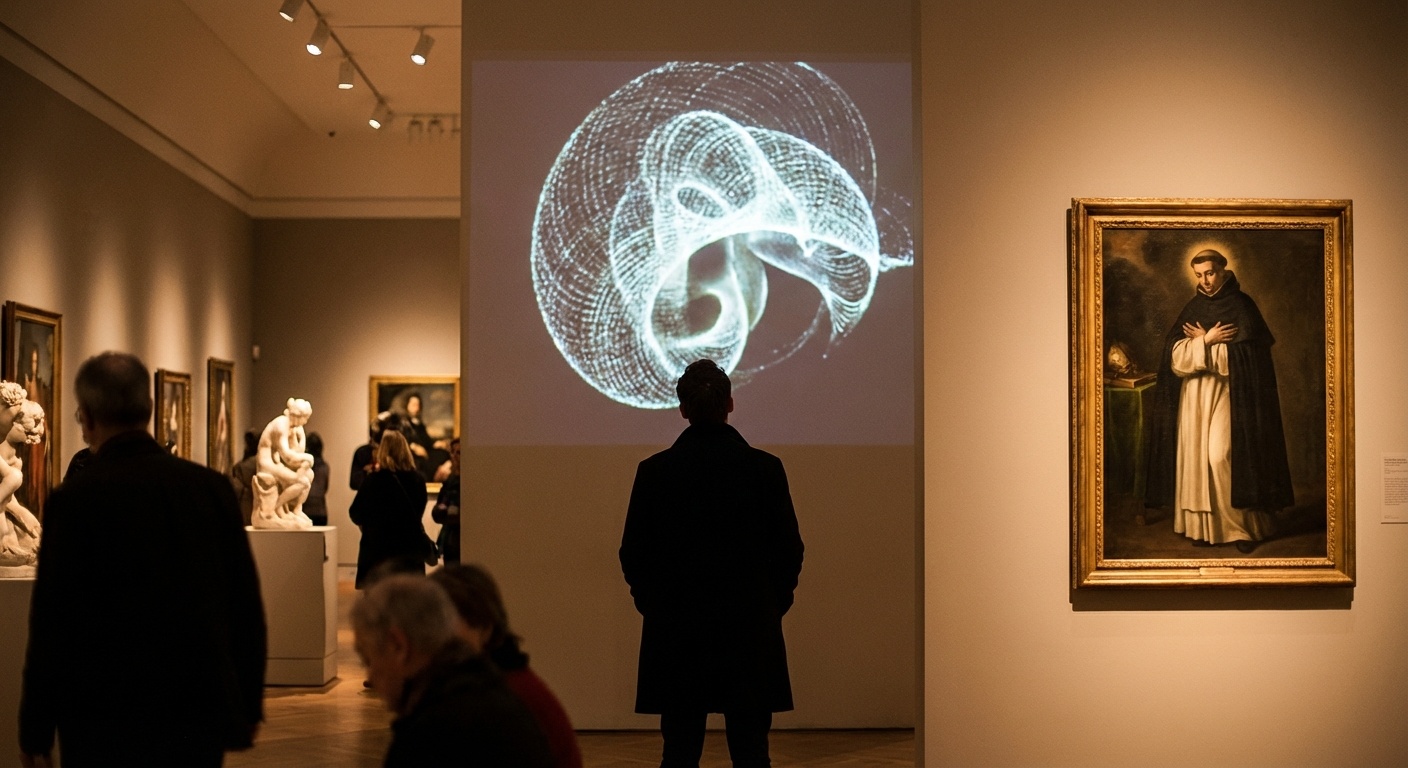
As societies evolved, so too did the languages of spiritual expression. Iconography—the visual vocabulary used to represent religious figures, narratives, and beliefs—emerged as a powerful tool for communicating complex theological ideas. The halo, originating in ancient Greek art and adopted by Roman emperors before becoming synonymous with Christian saints, is a prime example. Initially signifying power and authority, it transformed into a luminous disk representing divine grace and holiness. But iconography isn’t simply about recognizing figures; it's about understanding the *layers* of meaning embedded within each symbol. Take, for instance, the recurring motif of water in baptismal scenes – symbolizing purification, rebirth, and spiritual cleansing. Beyond individual symbols lies the broader realm of symbolism itself—the use of objects, colors, and gestures to represent abstract concepts. The dove representing the Holy Spirit, the lamb signifying Christ’s sacrifice, or even specific color palettes evoking particular emotions all contribute to a rich tapestry of visual allegory. Religious art, in its essence, is a coded language, inviting contemplation and requiring a degree of understanding to fully appreciate its depth.
From Renaissance Devotion to Modern Abstraction: Evolving Representations of the Divine
Symbolism or symbolist may refer to: Symbol, any object or sign that represents an idea == Arts == Artistic symbol, an element of a literary, visual, or other work of art that represents an idea Color symbolism, the use of colors within various cu...
The Renaissance witnessed an extraordinary flourishing of religious art, driven by both fervent piety and a renewed interest in classical aesthetics. Artists like Duccio di Buoninsegna masterfully depicted biblical scenes with breathtaking detail and emotional realism, as seen in his *Maestà* back panel portraying Pontius Pilate washing his hands – a poignant moment laden with guilt and moral conflict. However, the Renaissance wasn’t simply about replicating existing iconography; it was about imbuing those symbols with human emotion and psychological depth. Fast forward to the 19th and 20th centuries, and we see a radical shift in artistic representation. The rise of abstraction challenged traditional notions of figuration, prompting artists to explore spirituality through form, color, and texture rather than literal depictions. Artists like Mikhail Nesterov, a key figure in Russian Symbolism, sought to capture the essence of religious experience through evocative landscapes and portraits imbued with mystical atmosphere. This move away from representational imagery wasn’t a rejection of faith but an attempt to access its underlying emotional core—to convey the *feeling* of spirituality rather than simply illustrating its narratives.
Artists as Visionaries: Exploring Spiritual Themes in Contemporary Painting
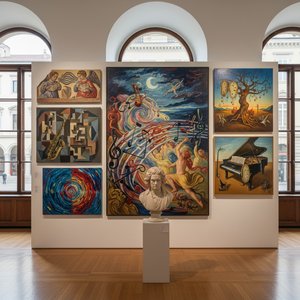
Contemporary artists continue to grapple with spiritual themes, often drawing inspiration from diverse sources – folklore, mythology, personal experiences, and even scientific inquiry. Ștefan Pelmuș stands out as a foremost Romanian painter whose work is deeply rooted in Orthodox Christian faith and Arthurian legend, creating surreal compositions that invite viewers into a world of symbolic resonance. His paintings aren’t didactic; they are evocative landscapes of the soul, filled with fragmented figures and dreamlike imagery. Similarly, Mark Luyten explores biblical narratives through an intensely personal lens, using bold colors and expressive brushstrokes to convey emotional depth and spiritual longing. These artists demonstrate that spirituality isn't confined to traditional religious frameworks—it can be found in the natural world, in human relationships, and even within the depths of our own subconscious minds. They are visionaries who use their art as a means of exploring these profound questions.
Color, Light, and Atmosphere: Evoking Transcendence Through Artistic Technique
Beyond subject matter and symbolism, artistic technique plays a crucial role in evoking spiritual experience. Color, light, and atmosphere can profoundly impact our emotional response to an artwork, creating a sense of awe, serenity, or even unease. Paul Klee’s *Domestic Requiem*, for example, utilizes a warm color palette and intricate line work to create a deeply contemplative mood. The painting isn't overtly religious, yet it resonates with a profound sense of spiritual longing—a feeling achieved through the artist’s masterful manipulation of form and color. The use of chiaroscuro – the dramatic contrast between light and shadow – has long been employed by artists to emphasize emotional intensity and create a sense of divine presence. Consider Viktor Vasnetsov's pencil sketch, *Savior in the Crown of Thorns*, where subtle shading and delicate lines convey profound suffering and empathy. These techniques aren’t merely aesthetic choices; they are tools for accessing deeper levels of consciousness and evoking transcendent emotions.
Collecting with Intention: Building a Spiritual Narrative Through Art
For art collectors, acquiring works that resonate with their own spiritual beliefs can be a deeply rewarding experience. It's not simply about owning beautiful objects; it’s about creating a personal sanctuary—a space filled with images that inspire contemplation and emotional connection. When selecting artwork, consider the artist’s intention, the symbolism embedded within the piece, and its overall emotional impact. Do you gravitate towards works that evoke serenity and peace? Or do you prefer pieces that challenge your perceptions and provoke deeper questions? At OriginalUniqueArt.com, we offer a curated selection of handmade oil paintings and museum-quality prints designed to inspire and uplift. Our team provides free art consultations to help you discover artworks that align with your personal aesthetic and spiritual values. Whether you’re seeking a Renaissance masterpiece, a contemporary abstract expression, or a custom reproduction of a cherished image, we are committed to helping you build a collection that reflects your unique journey—a visual narrative that speaks to the soul.